
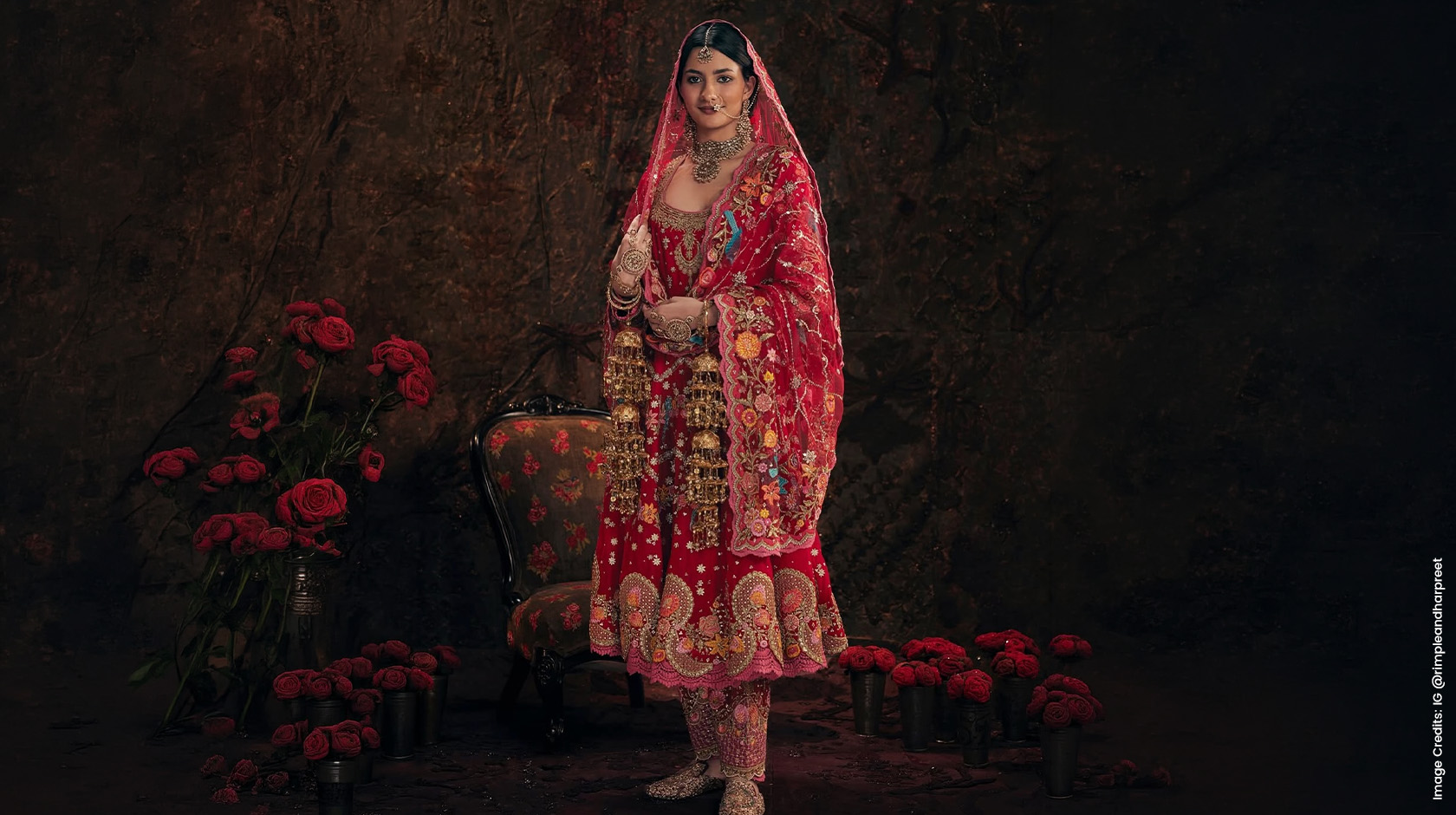
Gone are the days when the Punjabi bridal suit was believed to be the quiet cousin of the lehenga. They were neatly packed and saved for the sangeet, the courtyard functions, the days between the "big" events. But the same bridal kurta sets found a new meaning. Somewhere between the sharara's comeback and the gharara's second act, the suit has walked itself right up to centre stage. And it's brought a battalion of designers with it, from Ludhiana ateliers steeped in old-world dori work to Delhi studios reviving Kashmiri tilla thread by thread.
This is the story of that shift, told through fifteen names shaping what a Punjabi bridal suit looks like today: some rooted in royal Punjab, some borrowing from Rajasthan's dyeing vats, some rewriting silhouettes altogether. Consider this your designer dictionary for the wedding season ahead.
The Royalists: Where Heritage Wears the Crown
For these designers, tradition isn't something to preserve behind glass. It's a living language of embroidery, architecture and heirloom-worthy silhouettes, reworked for the modern Punjabi bride.

1. Rimple and Harpreet Narula
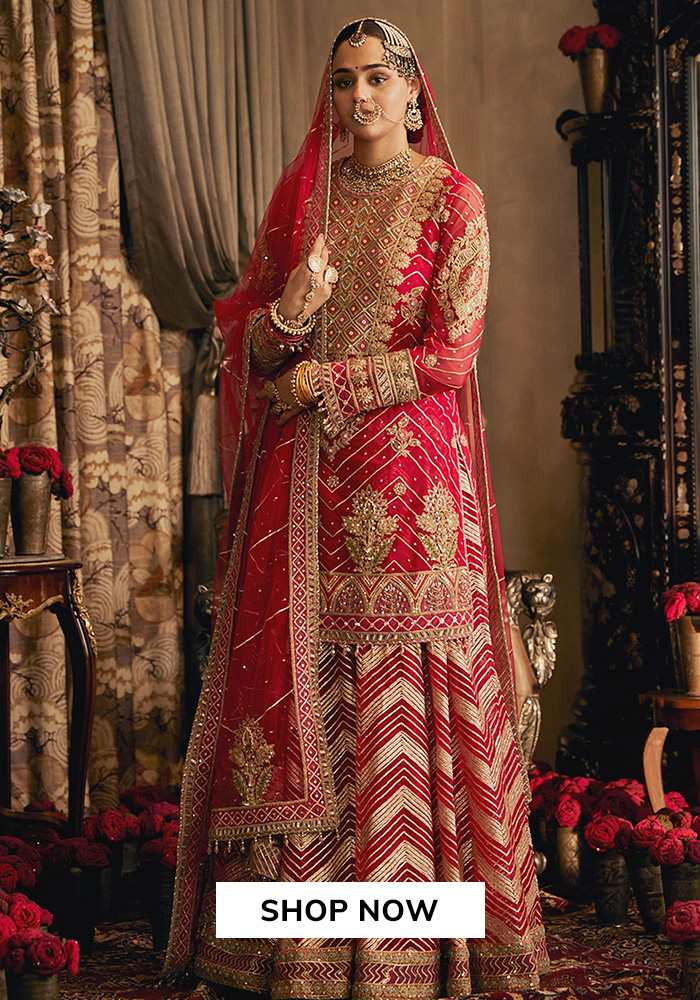
Rimple and Harpreet Narula don't design suits so much as excavate them. From manuscripts, from Mughal miniatures, from the architecture of a Punjab that existed long before either of them was born. Ludhiana-born and history-obsessed, the duo behind Heeramandi's costumes treat dori and marodi embroidery as sacred text, not surface decoration. Their sharara sets carry the weight of an era, gold thread standing in for memory, every silhouette a small act of preservation.
2. Sheetal Batra
Sheetal Batra asks herself one question with every design: will the bride's daughter want to inherit this in twenty-five years? That single sentence has built an entire label. Rooted in Kashmiri Tilla embroidery, a craft she rescued from near-obscurity, her suits carry the hush of a bygone royal household, filtered through a "slow fashion" conviction that refuses to chase seasons.
3. Angad Singh
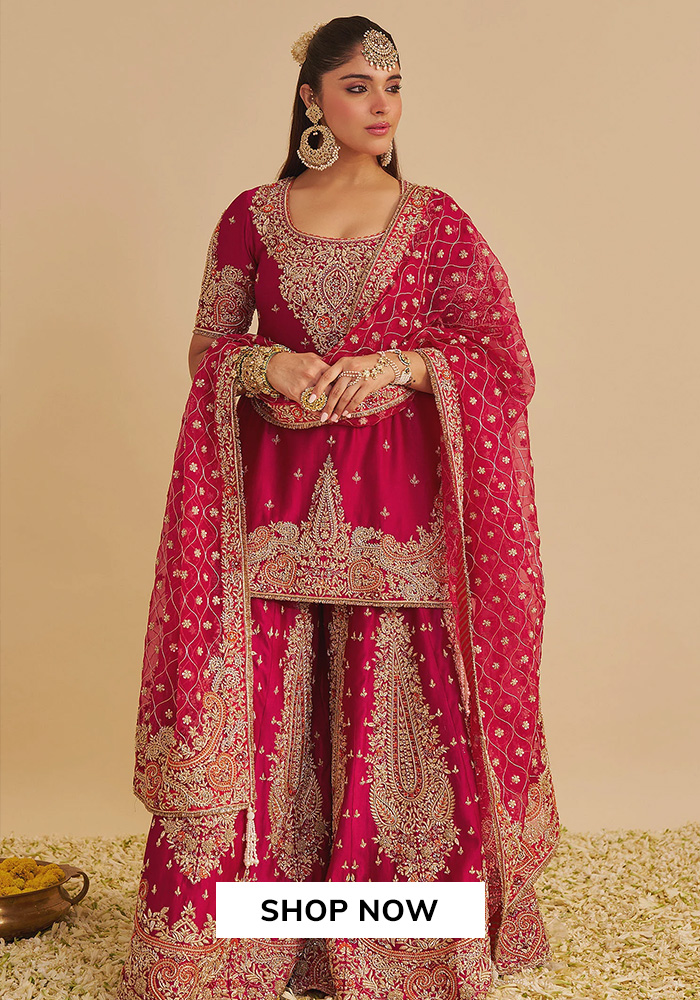
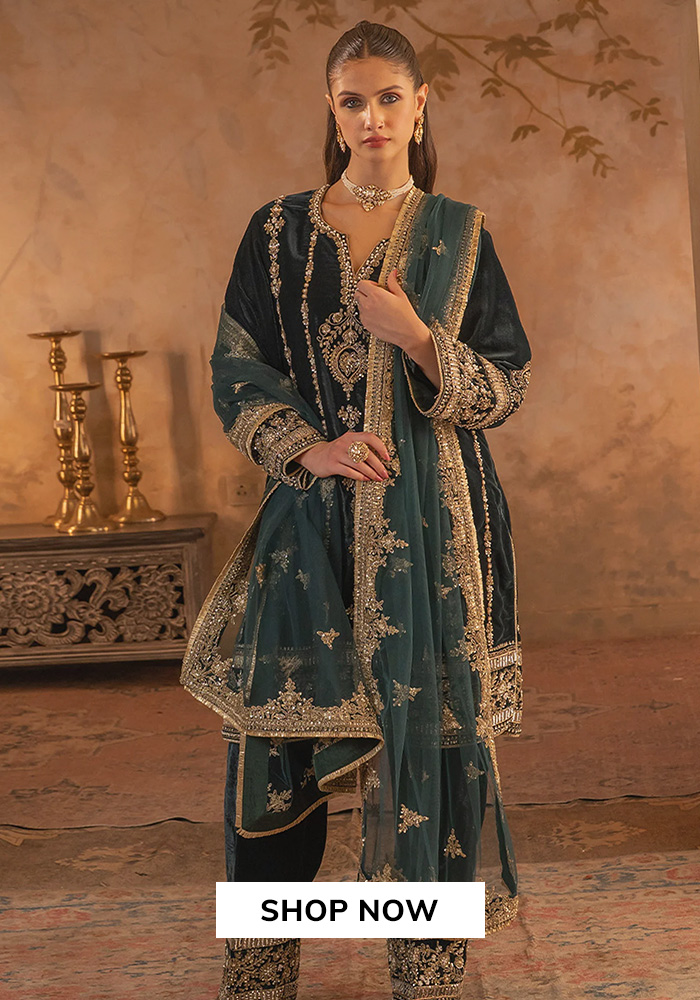
Angad Singh wears his inheritance literally, born into a family steeped in textile bridal couture, trained at Parsons, and drawing his design language from Sikh architecture layered with Mughal, Rajput and European accents. His is a couture vocabulary built on divinity and legacy in equal measure, where every embroidered panel nods to 18th and 19th century Punjab.
The Storytellers: Suits With a Narrative Arc
Some suits tell stories before the bride says a word. These designers weave nostalgia, regional craft, and memories of home into pieces that feel personal, poetic and beautifully lived-in.
4. Torani
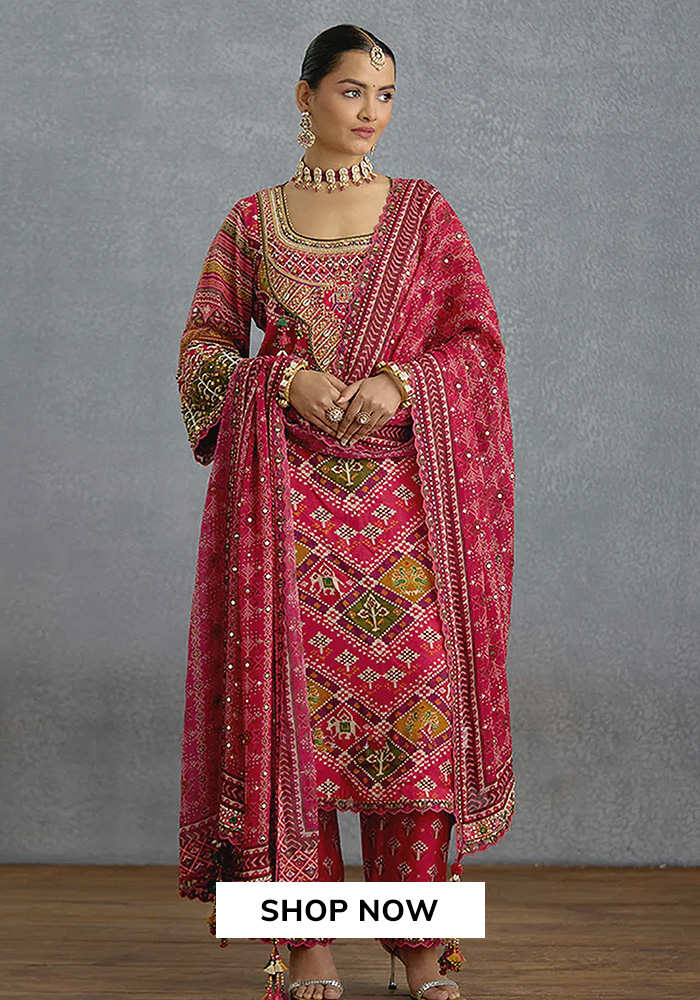
Torani, helmed by Karan Torani, is built entirely on nostalgia, specifically, the kind that lives in a grandmother's afternoon spent in a Chanderi saree. Torani rejects fast fashion outright, choosing instead to resurrect Madhubani, Bandhej and handloom weaves as heirloom-worthy suits in earthy, sun-warmed palettes that feel more like folklore than fashion.
5. Sue Mue
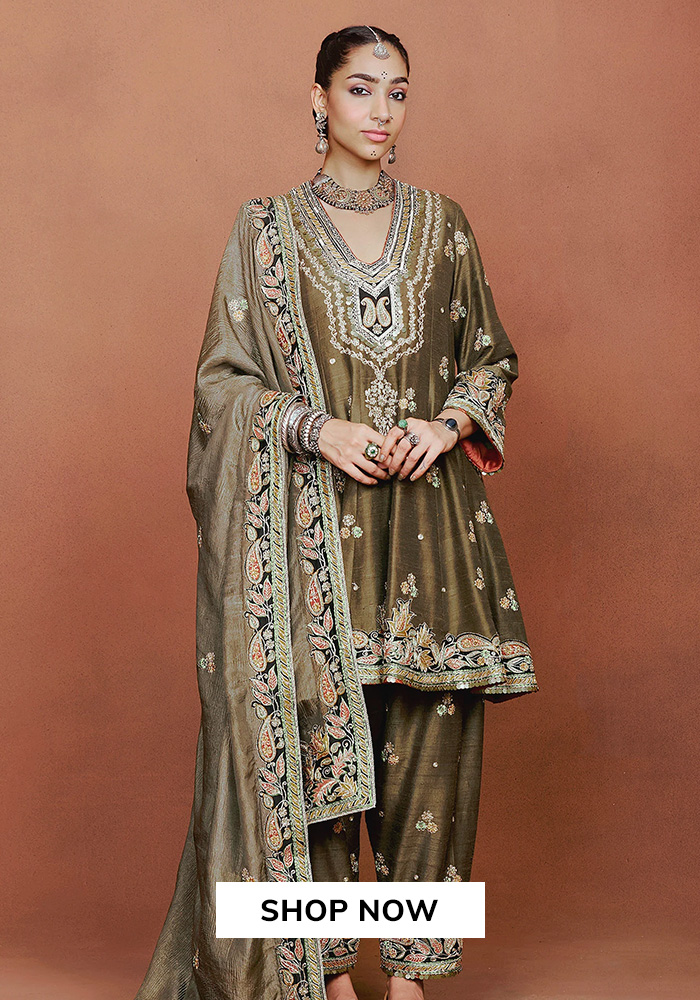
Sue Mue has been quietly writing Delhi's bridal history since 1968, when it began life as a bespoke boutique called Priyadarshini. Three generations later, under Mahima Gujral Wadhwa, the label still carries that founding instinct, clothes made with the intimacy of a family tailor, now dressed up in Zari, Parsi and Chanderi embroidery for a new generation of brides.
6. Jigar Mali
Jigar Mali channels dance, classical music and a decade-plus fascination with vintage Indian couture into suits that read as riotous, jewel-bright mosaics. His philosophy, distilled into a single Hindi line on his own website, born of tradition, shaped for the present, sums up a label devoted to reviving heritage crafts without letting them feel museum-bound.
The Modernists: Redrawing the Silhouette
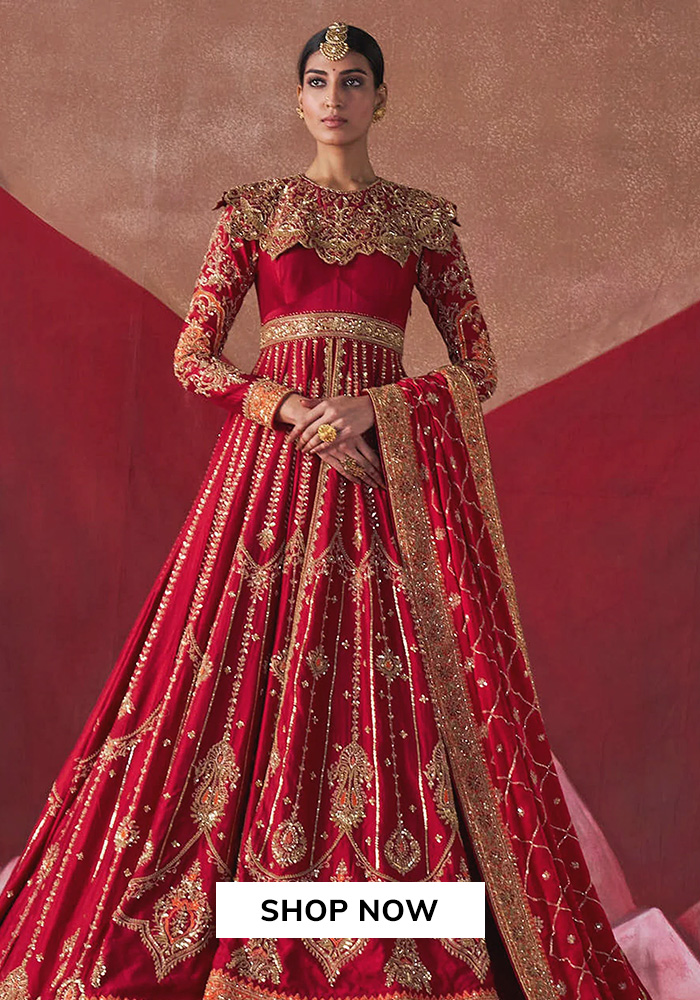
The Punjabi suit doesn't have to mean predictable. These designers are reshaping proportions, playing with structure and stripping back embellishment to give bridal dressing a decidedly modern point of view.
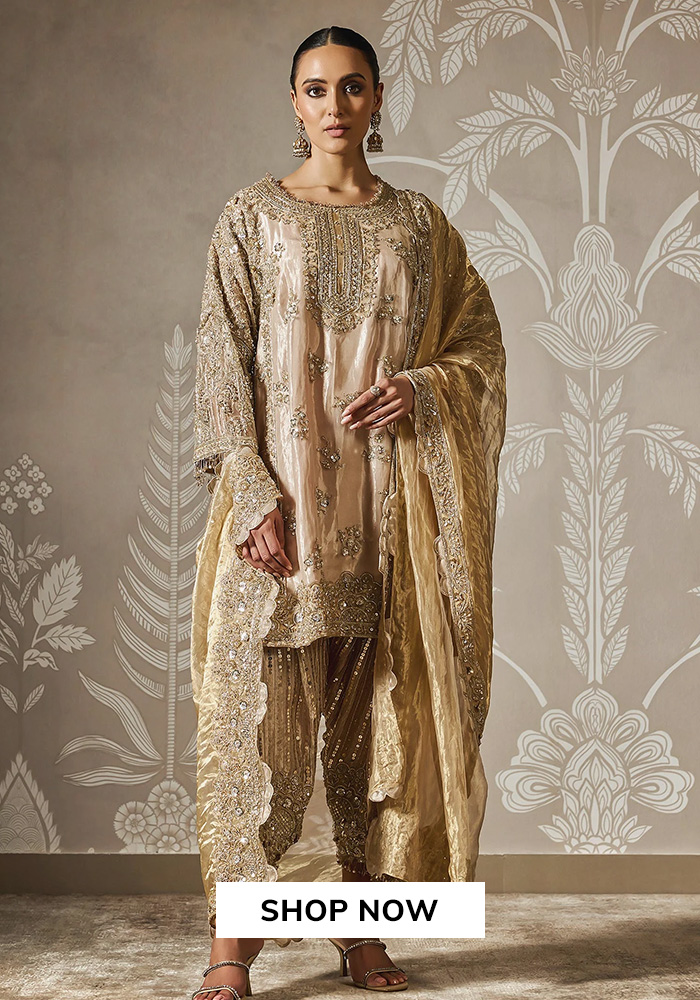
7. Ridhi Mehra
Ridhi Mehra trades in restraint, clean lines, Parisian and Grecian accents, a "hint of drama" instead of a shout. Since 2012, her label has become shorthand for the Indian bride who wants craftsmanship without excess: pre-draped silhouettes, sculpted structure, embroidery that whispers rather than announces itself.
8. Seema Gujral
Seema Gujral has spent three decades convincing brides that heavy embellishment doesn't have to feel heavy. Self-taught and famously credited with normalising ivory, pastel and metallic bridal palettes in a market once ruled by red, her suits are built to shimmer up close and read clean from across a room — glamour, fully wearable.
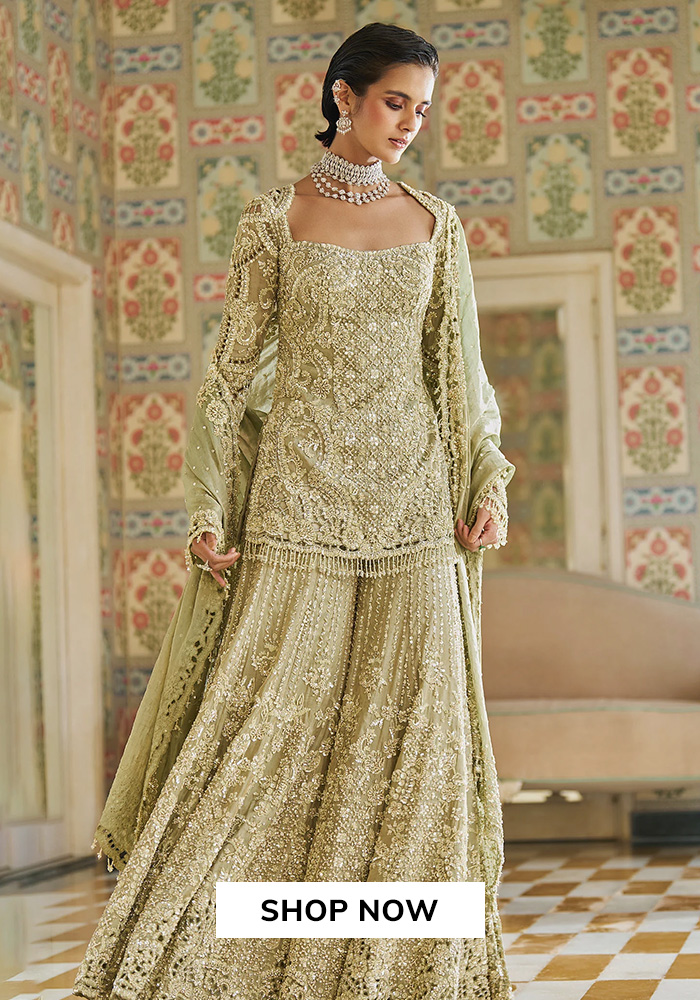
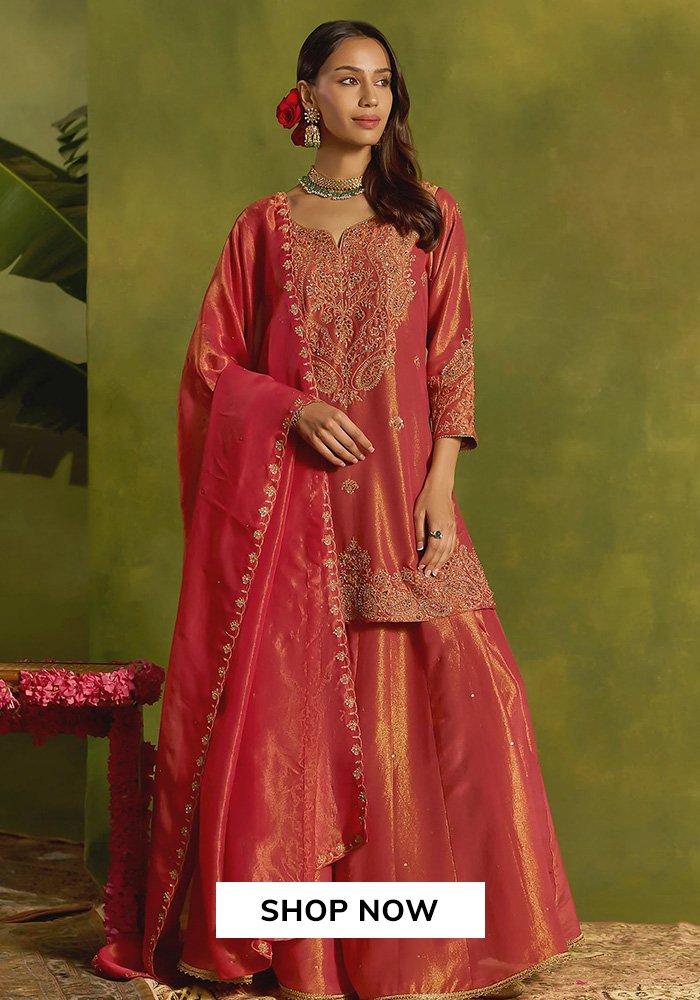
9. Kritika Dawar
Kritika Dawar, a Pearl Academy graduate with a sustainability research paper to her name, treats every suit as a study in balance. Think rich embroidery against fabric that stays light, indigenous crafts mixed and remixed until they feel entirely her own. Hers is a studio built on collaboration with block makers and embroiderers, craft credited as co-author.
The Colour Poets: Suits Steeped in Region and Ritual
Colour is more than decoration here. Drawing from Rajasthan, Punjab and India's rich textile traditions, these designers turn bandhani, leheriya, heritage hues and handcrafted details into fresh bridal statements.
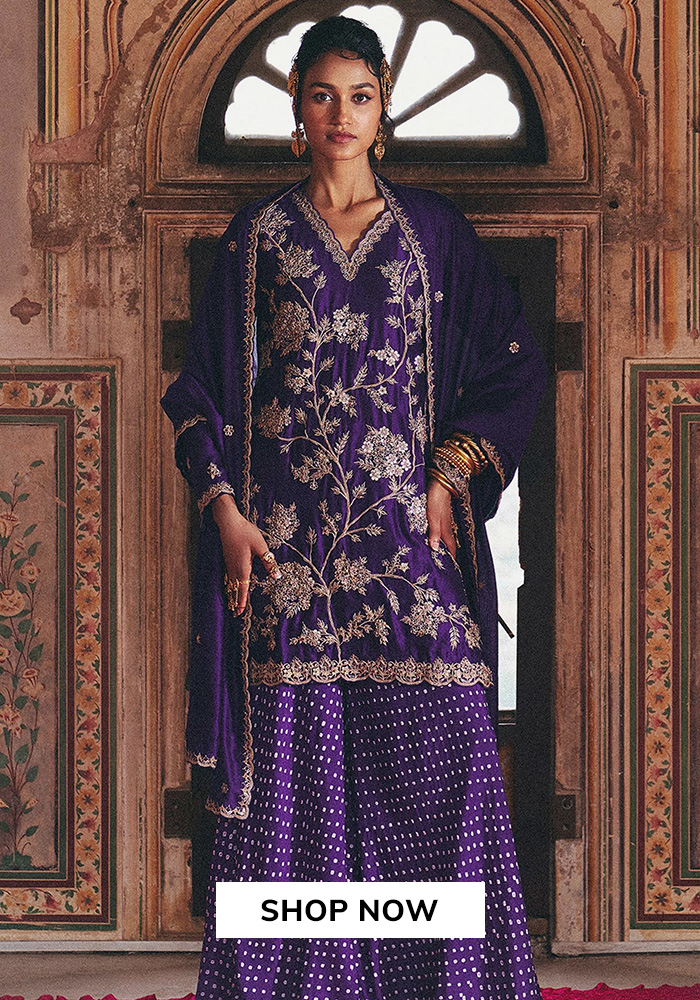
10. Pink City by Sarika
Pink City by Sarika was born from a mother-daughter shopping trip to Jaipur that went sideways. Sarika Kakrania's daughter thought the bandhani and leheriya textiles she loved looked outdated. So Sarika set out to prove otherwise. The result is a label soaked in Jaipur's own palette: peacocks, jharokhas, lotuses, and the tie-dye techniques of Rajasthan translated into suits built for a much younger bride.
11. Sabe
Sabe carries two decades of door-to-door hustle in its bones. Founded by Beenu Makhija and now co-helmed by her son Sanil, the label's roots in accessible, handcrafted wedding wear have grown into a full bridal proposition — heritage technique meeting a more contemporary sensibility with every collection.
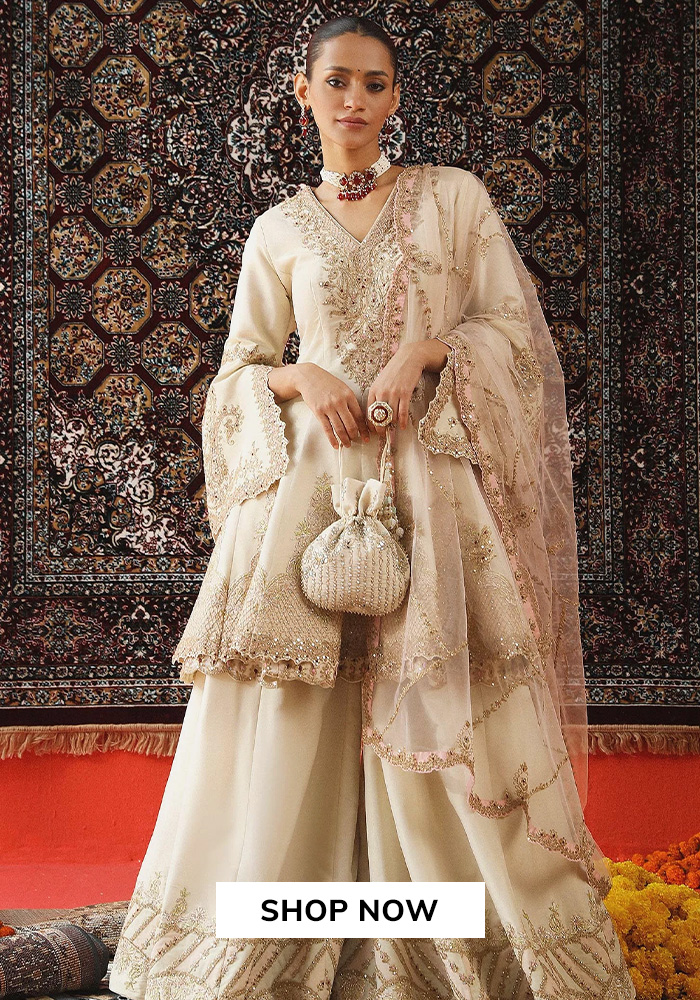
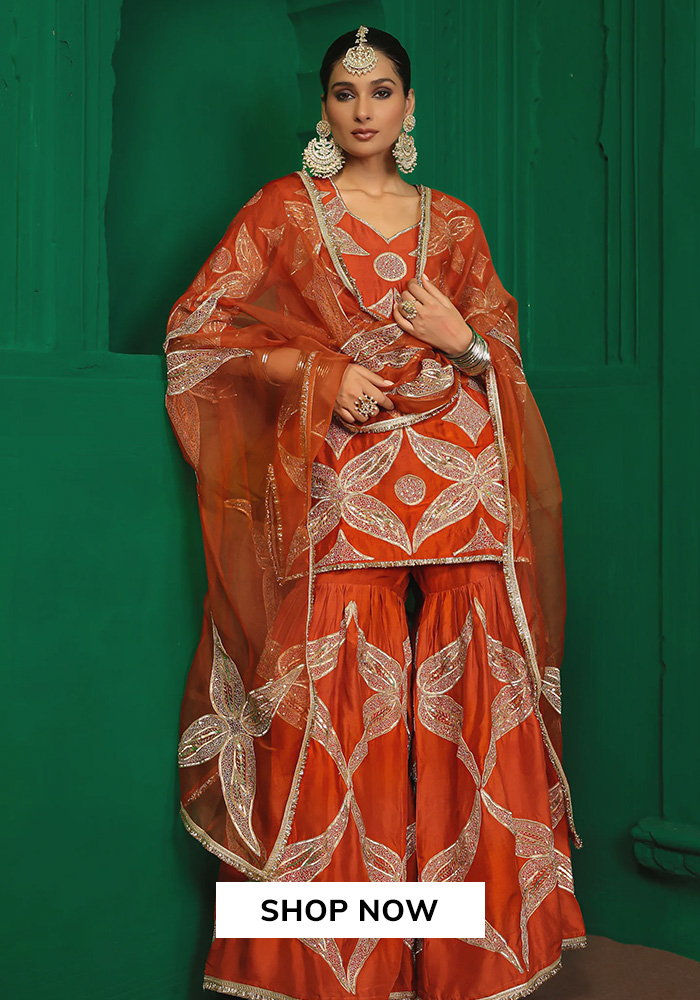
12. Charu Makkar
Charu Makkar brings the Pink City's craft legacy straight into the modern bridal wardrobe. Handcrafted by local artisans, her suits pair intricate detailing and regional influences with wearable silhouettes designed to live beyond the wedding day.
The Craft Specialists: One Technique, Perfected
When a designer finds a craft worth obsessing over, the results can be extraordinary. From gota patti to zardozi, these names have turned signature techniques into defining bridal vocabularies.
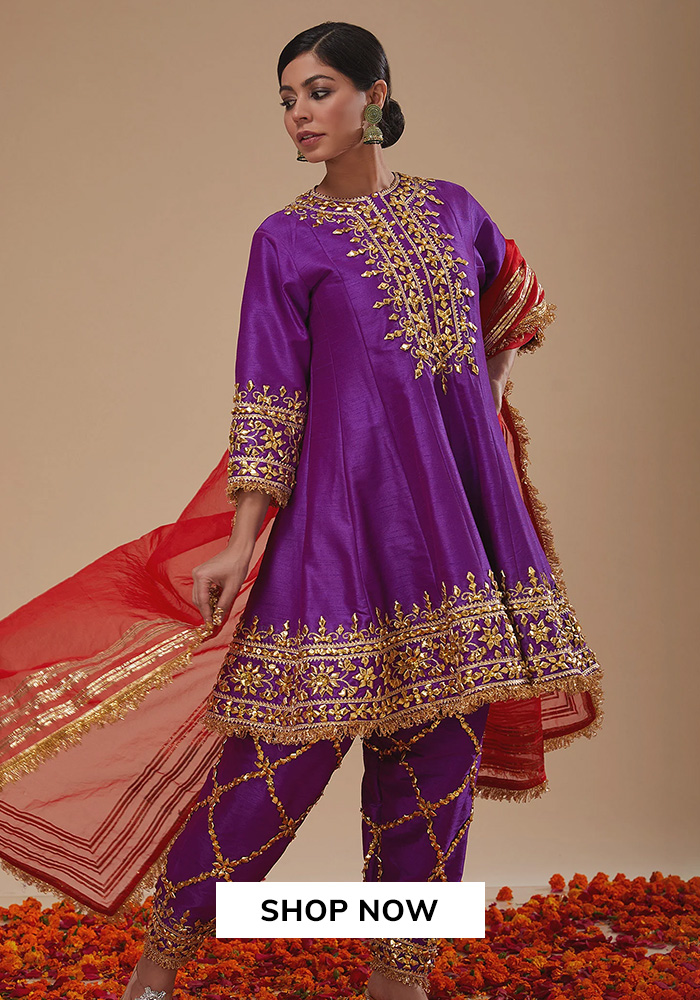
13. Preeti S Kapoor
Preeti S Kapoor has built an entire couture identity around a single embroidery form; gota patti. Her label pulls references from Mughal and Victorian design vocabularies. A former design director at Ogaan and a NIFT graduate, she rebranded her label at Lakme Fashion Week in 2008 and has spent the years since becoming the name synonymous with gold and silver ribbon work on bridal trousseaus.
14. Nitika Gujral
Nitika Gujral deals in grandeur that still feels warm; pearls, cutdana, resham and mirror work layered onto suits that lean romantic rather than rigid. Her label's guiding idea is craft as storytelling: every embellished panel meant to read like a chapter, not just a flourish.
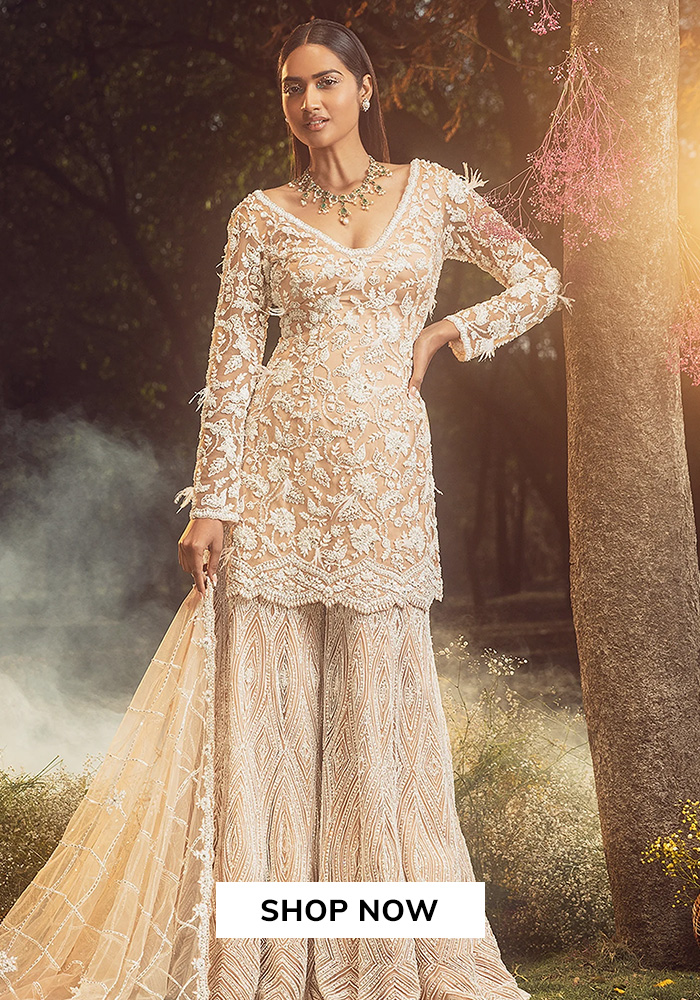
15. Tamanna Punjabi Kapoor
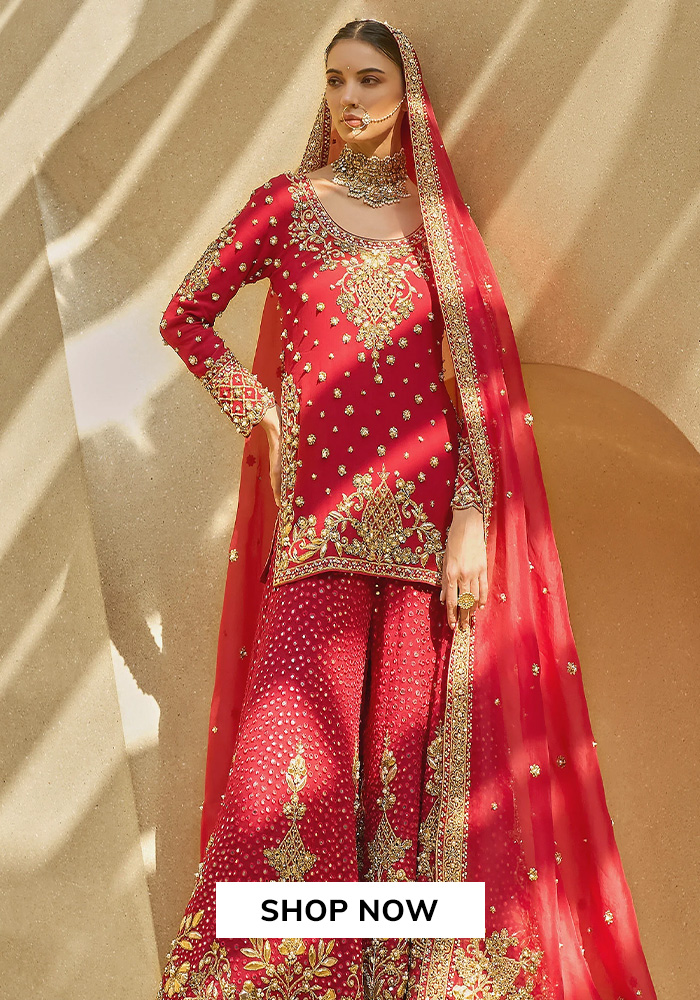
Tamanna Punjabi Kapoor, running her eponymous label since 2002, closes out this edit with what might be its most quietly confident philosophy: reuse the classics, keep the palette rooted in pastels, creams and timeless red, and let zardozi and hand embroidery do the talking on contemporary silhouettes built for the new-age bride.