


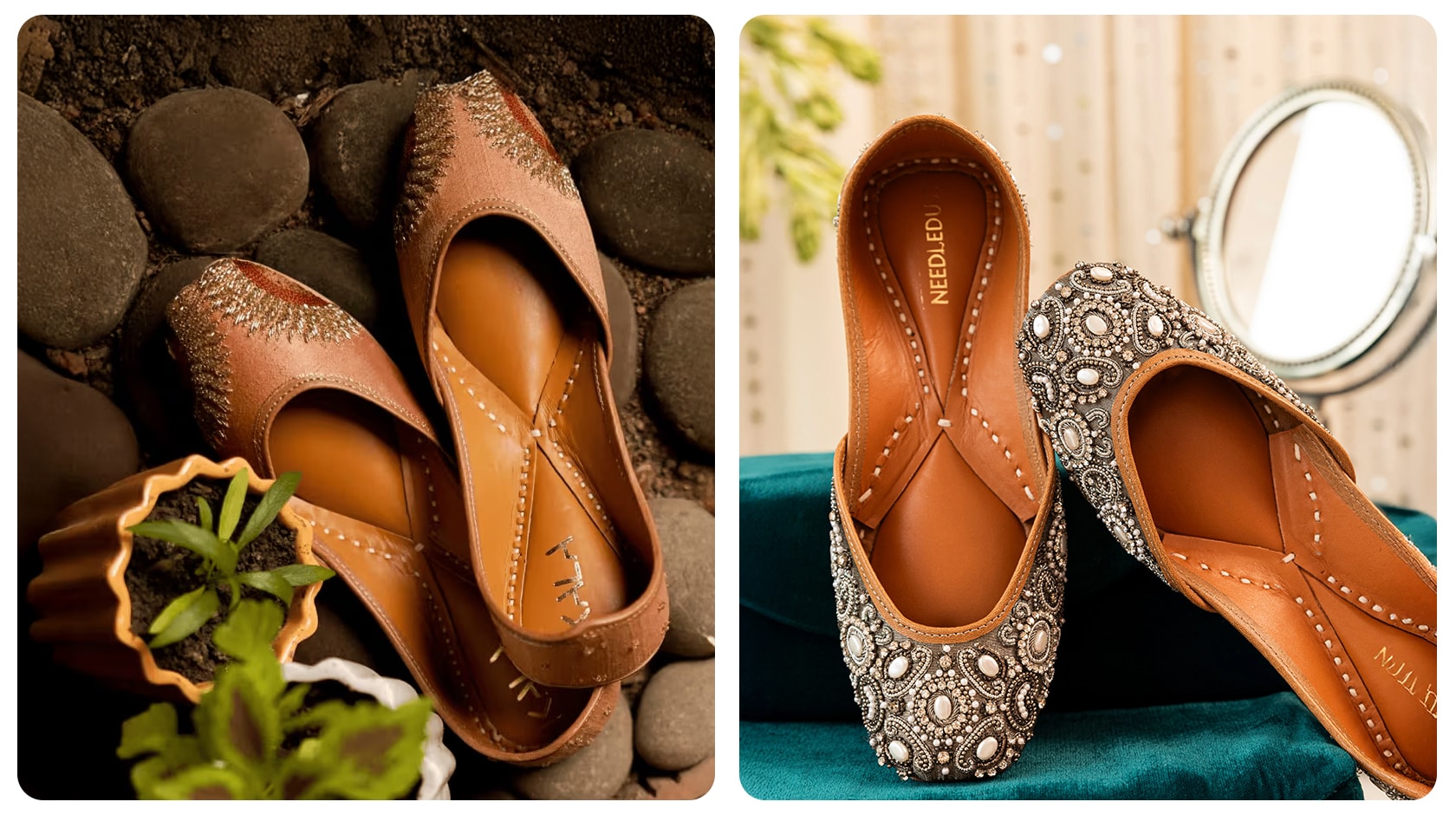

Walk through any Indian market, and you will find a footwear style that has gracefully stood the test of time: the Punjabi Jutti. With its elegant curved toe, intricate embroidery, and unmatched comfort, this traditional shoe has found a permanent spot in the modern wardrobe. Once worn exclusively by kings and queens, the jutti is now a versatile staple, effortlessly pairing with everything from wedding lehengas to everyday jeans.
This handcrafted leather footwear is more than just a shoe; it is a piece of cultural heritage, a testament to the skill of artisans who have perfected their craft over centuries. This guide will explore the royal origins of the Punjabi jutti, the meticulous process behind its creation, and why this centuries-old design continues to be a favorite among fashion lovers today.
What is a Punjabi Jutti?
A Punjabi jutti is a type of traditional, handcrafted flat footwear originating from the Punjab region of India. It is typically made of leather and is distinguished by its closed upper and a flat sole. One of its most unique features is that there is no distinction between the left and right foot—both shoes are identical and will mold to the shape of the wearer's feet over time.
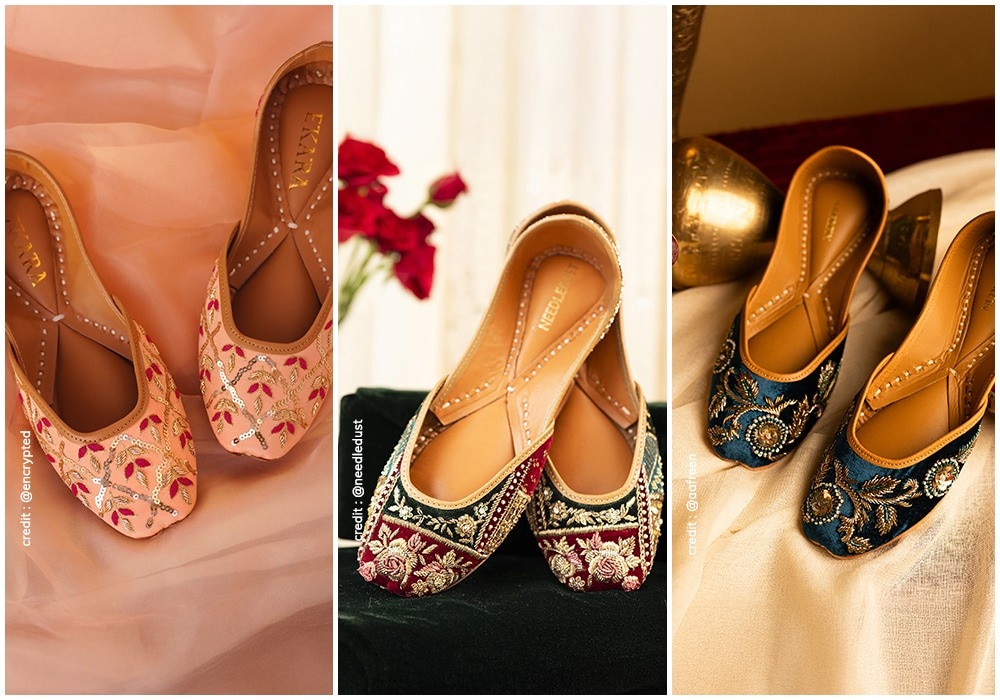
The name "jutti" is derived from an Urdu word for a shoe with a closed upper. While various styles exist, the most famous are known for their rich embroidery, often done with silk threads, beads, sequins, and sometimes even gold and silver zari.
Tracing the Origins: Footwear for Royalty
The story of the Punjabi jutti is a royal one, with a history stretching back over 400 years to the Mughal era. These were not everyday shoes; they were originally designed for the wealthiest and most powerful figures in society, including Maharajas, Maharanis, Nawabs, and wealthy landlords.
- A Symbol of Status: The earliest juttis were incredibly ornate, embroidered with real gold and silver threads (zari) and embellished with precious pearls and gemstones. The complexity and richness of the embroidery on a person's juttis were a direct reflection of their social standing.
- Mughal Influence: The distinctive curved toe, which is a hallmark of many jutti designs, is believed to be inspired by the footwear worn by Mughal royalty.
- Skilled Artisans: The craft was perfected by skilled artisans in remote areas of Punjab, particularly in cities like Amritsar, Patiala, Ludhiana, and Fazilka. This expertise was honed and passed down through generations, making it a highly specialized family craft.
Over time, variations of the jutti emerged, such as the mojri or khussa, which often have an extended, curled-up toe. While these were initially made for royalty, the elegant and practical design was eventually embraced by civilians, transforming the jutti from an imperial luxury into a beloved cultural icon.
How a Punjabi Jutti is Made: A Masterclass in Craftsmanship
Creating a pair of juttis is a meticulous, multi-step process that relies entirely on handcraft. It is a beautiful collaboration between different artisans, each specializing in a specific part of the shoemaking process.
1. The Foundation: Leather Processing
The process starts with raw leather, which is vegetable-tanned. This traditional method uses natural tannins found in plants, making the leather soft and eco-friendly.
2. Cutting and Structuring (The Rangaar)
A skilled artisan, known as the Rangaar, cuts the tanned leather into the different components of the shoe:
- The Upper: The top part of the shoe that covers the foot.
- The Sole: The bottom of the shoe.
- The Insole: The inner lining for comfort.
3. Embroidery and Embellishment (The Chitrakar)
This is where the jutti gets its personality. The cut leather pieces for the upper are passed on to another group of artisans, often women, who specialize in embroidery. These Chitrakars hand-stitch intricate patterns onto the leather using a variety of materials:
- Zardozi: Rich embroidery using gold and silver threads.
- Phulkari: A traditional embroidery style from Punjab featuring colorful silk threads in geometric patterns.
- Sequins and Beads: For a more festive and glamorous look.
4. Assembling and Stitching (The Mochi)
Once the embroidery is complete, all the components are given to a master craftsman, the Mochi. This artisan assembles the shoe by hand. Using a strong cotton thread, they meticulously stitch the upper to the sole. No nails are used in the process. The stitching is done from the inside out and then the shoe is turned, so the seams are not visible. This technique results in a durable yet flexible shoe.
Because the process is entirely manual, no two pairs of juttis are ever perfectly identical. These slight variations are the hallmark of a true handcrafted product.
Design Elements and Modern Variations
While the basic structure of the jutti has remained unchanged, its design has evolved dramatically over the years to suit contemporary tastes.
The Traditional Look
Classic juttis feature elegant embroidery on a natural leather base. The motifs are often inspired by nature (flowers, leaves, birds) or Mughal architecture.
The Modern Makeover
Today, designers are experimenting with a wide range of materials and styles:
- Fabric Uppers: Juttis are now made with printed fabrics, velvets, and denim for a more casual and laid-back appeal.
- Cruelty-Free Materials: To cater to conscious consumers, many juttis are now made with cruelty-free leather or vegan materials.
- Contemporary Embellishments: Modern designs might feature quirky motifs, abstract patterns, or even hand-painted art.
- Comfort First: Many brands now incorporate cushioned insoles to provide extra comfort, making juttis suitable for all-day wear.
Punjabi Juttis Today: From Tradition to Global Trend
The Punjabi jutti has successfully navigated the shift from a traditional, regional craft to a global fashion accessory. It is no longer just for ethnic wear; sartorially enlightened women around the world are styling it in creative and versatile ways.
Why They Are So Popular
- Versatility: A single pair of juttis can be styled with almost anything. They look just as good with a pair of jeans and a t-shirt as they do with a heavy wedding lehenga.
- Comfort: Being flat and made of soft leather, juttis are incredibly comfortable once broken in. They are the perfect fuss-free footwear for long festive days.
- Cultural Connection: For many, wearing a jutti is a way to connect with their cultural roots while still looking chic and modern.
- Supporting Artisans: The growing demand for handcrafted juttis helps support the artisan communities that have kept this craft alive for centuries.
Styling Your Juttis
- For a Casual Day: Pair a simple printed or denim jutti with jeans, shorts, or a summer dress.
- For a Festive Occasion: Opt for a heavily embroidered zardozi or sequined jutti to complement your saree, lehenga, or Anarkali suit.
- For Work: A plain, solid-colored leather jutti can be a stylish and comfortable alternative to formal flats.
Conclusion
The Punjabi jutti is a perfect example of how traditional craftsmanship can thrive in the modern world. It is a shoe that tells a story—of royal courts, skilled artisans, and a culture that values beauty and artistry. Its journey from the feet of emperors to the closets of fashionistas is a testament to its timeless design and enduring appeal.
So, the next time you slip on a pair of these elegant flats, remember that you are not just wearing a shoe. You are wearing a piece of history, an art form that has been lovingly preserved for over 400 years, and a symbol of the rich cultural tapestry of Punjab.

