


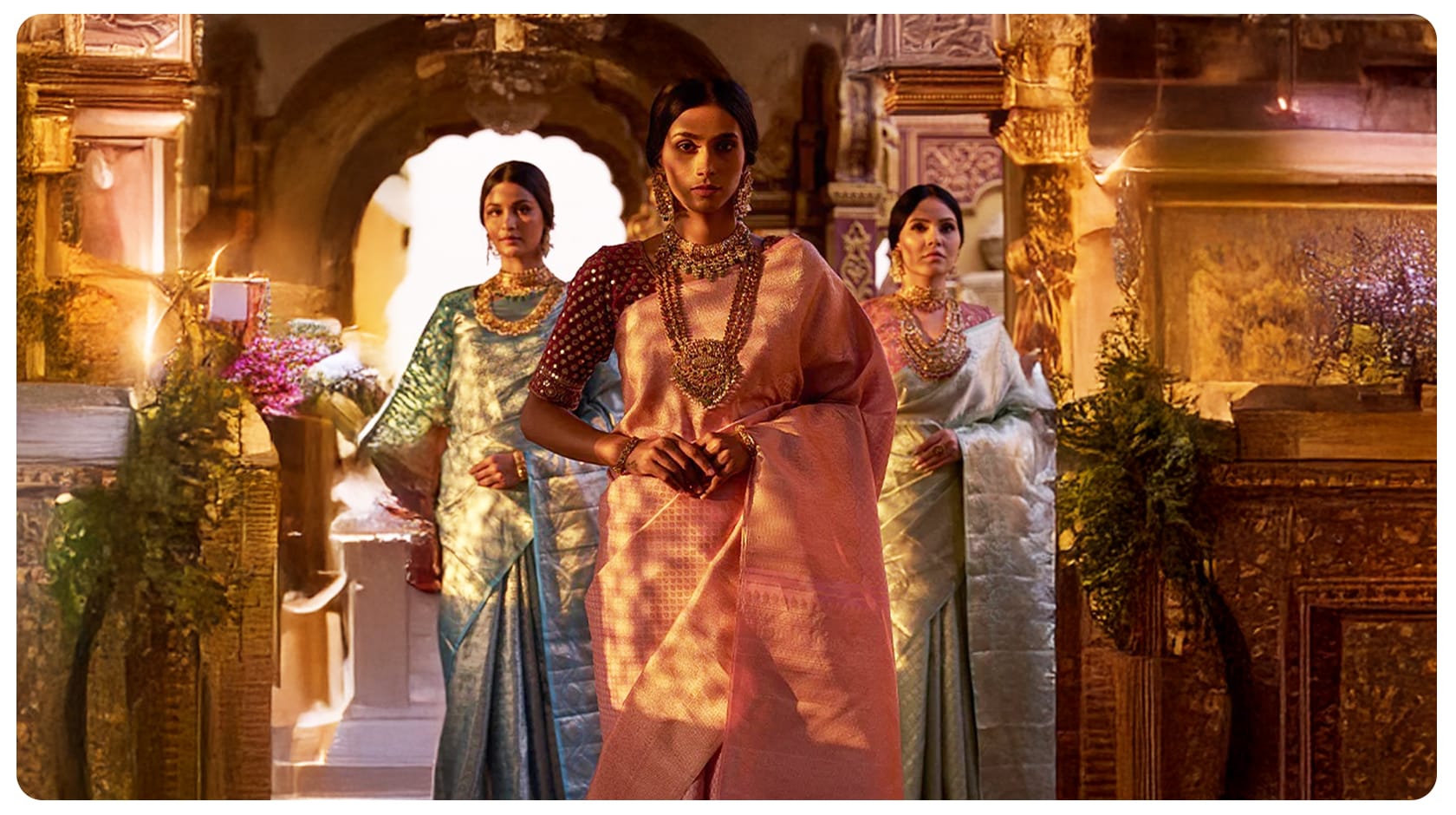

In the ancient, holy city of Varanasi, a craft has been perfected over centuries, creating a textile so luxurious it was once reserved for royalty. This is the story of the Banarasi Saree, a garment that represents the pinnacle of Indian handloom weaving. More than just a piece of clothing, a Banarasi saree is a treasured heirloom, often passed down from mother to daughter, carrying with it memories, traditions, and the unmatched artistry of its weavers.
With its shimmering silk, intricate gold and silver zari work, and Mughal-inspired motifs, the Banarasi saree is a symbol of opulence, grace, and timeless beauty. It is an essential part of an Indian bride's trousseau and a masterpiece of sartorial heritage. This guide will journey into the world of Banarasi sarees, exploring their royal history, the meticulous craftsmanship behind them, and their celebrated place in modern fashion.
What is a Banarasi Saree?
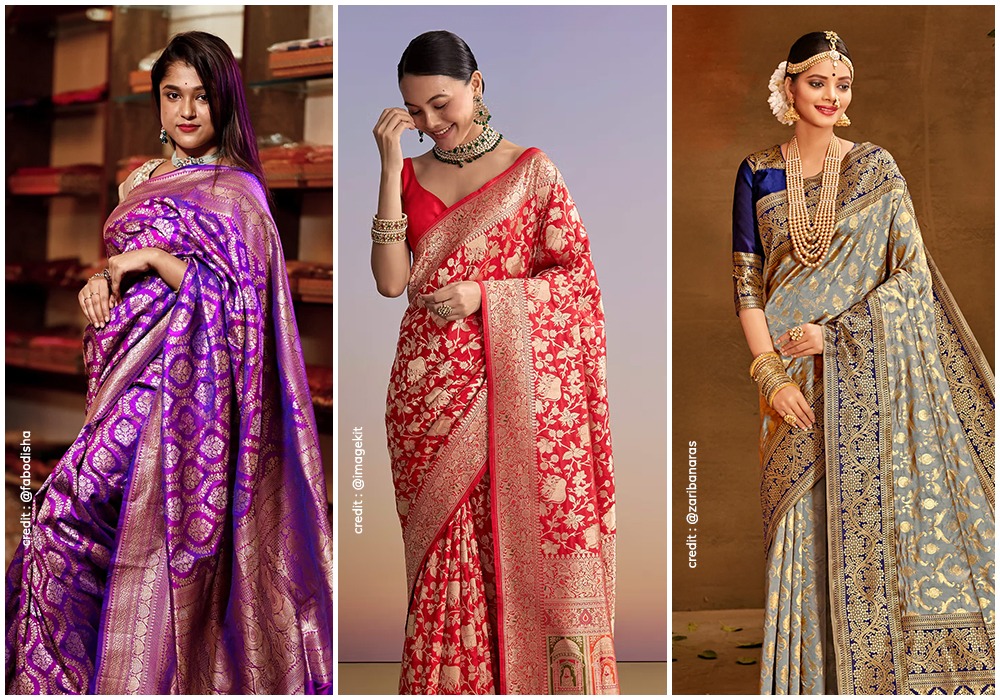
A Banarasi saree is a handwoven saree made in Varanasi (formerly known as Banaras), a city in Uttar Pradesh, India. These sarees are renowned for their fine silk, opulent embroidery, and intricate designs made with gold or silver brocade, known as zari. The fabric is characterized by its elaborate motifs, metallic sheen, and luxurious feel, making it one of the most sought-after sarees in India.
The key features that define a traditional Banarasi saree include:
- Fine Silk: The base fabric is usually a high-quality silk that gives the saree its rich texture and drape.
- Zari Work: Intricate patterns are woven into the fabric using gold or silver metallic threads.
- Mughal-Inspired Motifs: Designs often feature detailed floral and foliate patterns (kalga and bel), and a string of upright leaves (jhallar) at the edge of the pallu.
- Heavy and Opulent: Due to the extensive brocade work, these sarees are generally heavy and reserved for special occasions like weddings and festivals.
Tracing the Origins: A Blend of Cultures
The legacy of Banarasi textiles is ancient, with mentions that can be traced back to the era of the Mahabharata. However, the craft as we know it today flourished much later, thanks to a unique blend of Indian artistry and Mughal patronage.
The turning point came in the 17th century, during a famine in Gujarat in 1603. Many skilled silk weavers from the region migrated to Banaras, bringing their craft with them. This migration laid the foundation for a new era of silk weaving in the city.
The craft reached its zenith during the Mughal era (16th to 19th century). The Mughal emperors were great patrons of the arts and had a deep appreciation for luxurious textiles. They brought with them Persian design sensibilities, which the Indian weavers masterfully integrated with their own techniques. The fusion of intricate Persian motifs with Indian craftsmanship led to the creation of the exquisite brocades that Banaras is famous for. The city soon became the textile capital of the region, and its sarees became a symbol of royalty and high status.
How a Banarasi Saree is Made: The Art of the Loom
Creating a Banarasi saree is a labor of love that requires immense skill, patience, and the collaborative effort of at least three artisans. A single saree can take anywhere from 15 days to six months, and sometimes even a year, to complete, depending on the complexity of the design.
1. The Design Process
The journey begins with the design. An artist first creates the intricate pattern on graph paper. This blueprint, known as a naksha, maps out every single thread and color needed to form the motif. This pattern is then translated into a series of punch cards, similar to how early computers worked. These cards guide the loom, dictating which threads to lift during the weaving process to create the design.
2. Preparing the Silk and Zari
The raw silk yarn is dyed in the desired colors and then loaded onto the handloom. The metallic zari threads—traditionally made from real gold or silver, but now more commonly from silver-electroplated copper—are prepared and spooled, ready to be woven into the fabric.
3. The Weaving Process
The saree is woven on a pit loom, a traditional handloom where the weaver sits with their feet in a pit to operate the pedals. As one artisan weaves the base fabric, another works on the brocade patterns using the punch-card system to guide the supplementary weft threads (the zari). The process is slow and meticulous, with every line of the pattern being woven thread by thread.
4. The Finishing Touches
Once the weaving is complete, the saree is inspected. Any loose threads on the reverse side are carefully cut away. The saree is often passed through a brightener to enhance its natural shine. The signature jhallar, or tassels, are sometimes added to the edge of the pallu, adding to the saree's beauty.
Design Elements and Types of Banarasi Sarees
The motifs and patterns on a Banarasi saree are a language in themselves, reflecting a rich history of cultural exchange.
Key Motifs
- Jangla: This features intricate floral and vegetal patterns that are spread across the entire saree, creating a dense, jungle-like design.
- Tanchoi: Known for its colorful silk weft threads that create a "floating" look against the base fabric, often forming maze-like patterns.
- Butidar: This is one of the most classic styles, featuring a dark blue or black silk body sprinkled with small, individual motifs (or butis) of gold or silver zari.
- Cutwork: A less expensive version where the pattern is woven along with the base fabric, and loose floating threads on the back are cut away by hand.
Types by Fabric
While silk is the most common, Banarasi sarees are also woven from other materials:
- Katan (Pure Silk): The most traditional and luxurious type.
- Organza (Kora) with Zari: A sheer, lightweight version perfect for modern tastes.
- Georgette: A fine, crinkly fabric that offers a beautiful drape.
- Shattir: A more affordable and contemporary fabric.
Banarasi Sarees Today: A Royal Legacy Reimagined
For centuries, Banarasi sarees were the exclusive domain of royalty and the elite. Today, while still considered a luxury, they are more accessible and remain a cherished part of Indian culture. However, the craft has faced its share of challenges. In 2009, the rise of cheap, machine-made imitations posed a serious threat to the livelihood of handloom weavers.
The Revival Movement
In response, skilled artisans and revivalist designers have worked tirelessly to keep the glory of handwoven Banarasi sarees alive. Designers like Sabyasachi Mukherjee and brands such as Ekaya, Raw Mango, and Tilfi Banaras have played a crucial role in this revival. They have brought the Banarasi weave to the forefront of modern fashion, creating contemporary designs that appeal to a new generation while honoring the traditional craftsmanship.
To protect its authenticity, the Banarasi saree was granted a Geographical Indication (GI) tag. This ensures that only sarees woven in Varanasi and its surrounding districts can be legally sold as "Banarasi," helping to preserve the integrity of the craft and support its artisans.
Conclusion
The Banarasi saree is more than just a textile; it is a piece of living history. It is a testament to the unparalleled skill of Indian weavers who transformed silk and metal threads into works of art. To own a Banarasi is to own a fragment of a royal legacy, a craft that has been nurtured and perfected over centuries.
Whether it is a vintage saree passed down as a family heirloom or a contemporary design from a modern couturier, the Banarasi continues to be the ultimate classic. It is a symbol of India's rich cultural heritage, a fabric that drapes you in elegance, history, and the timeless magic of the handloom.

