


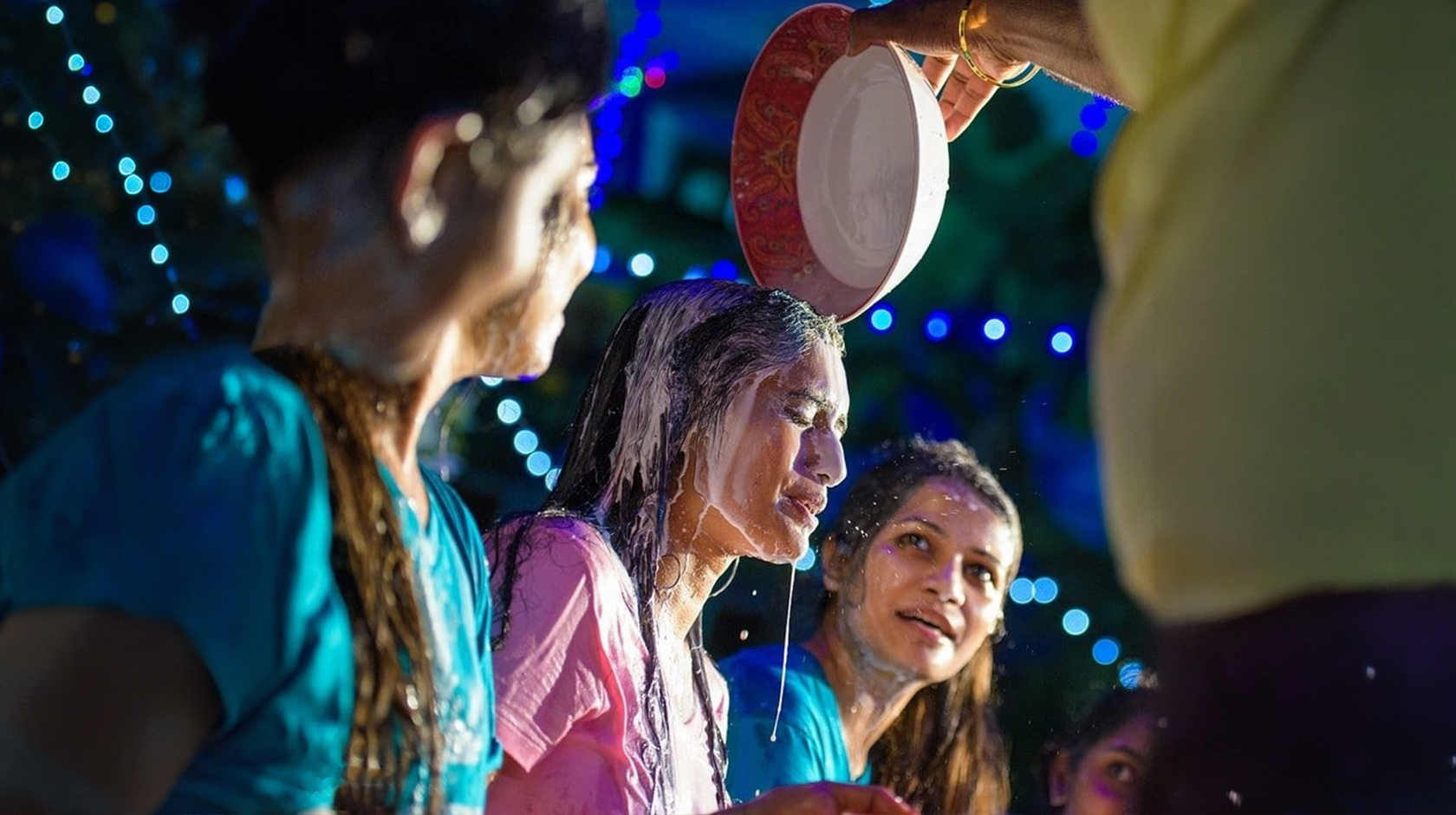
If there is one pre-wedding ritual that captures the soul of Goa its warmth, its music, its deep Catholic faith, and its irrepressible love for celebration it is the Roce Ceremony. Held on the eve of a Goan Catholic wedding, the Roce is a sacred coconut milk anointing ritual that has been performed in Konkani households for centuries.

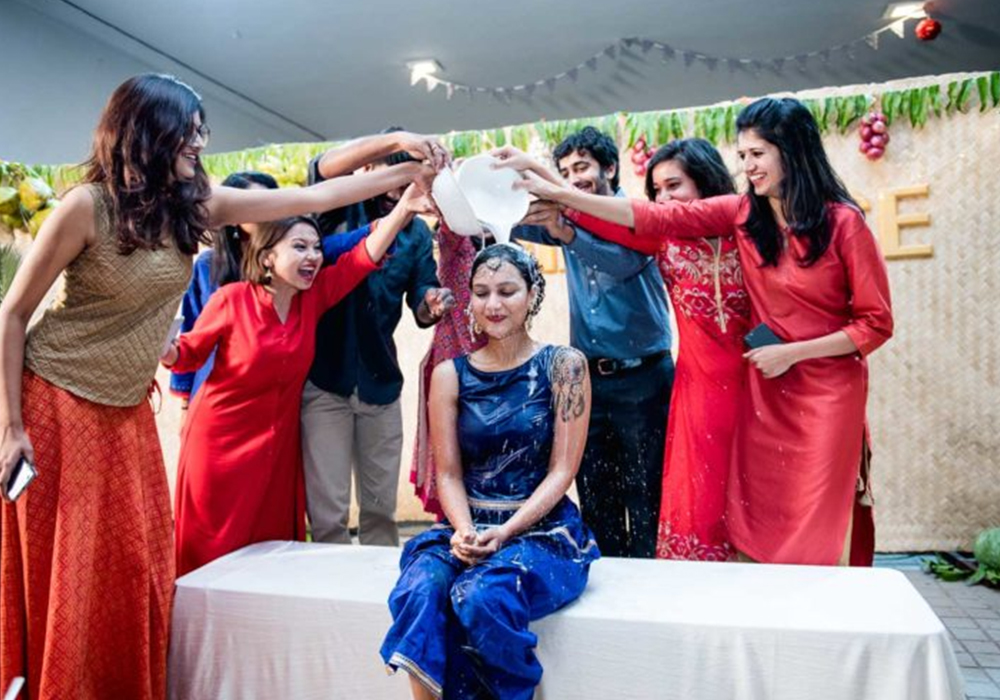
Part prayer, part blessing, part joyful family reunion the Roce ceremony is the moment when a Goan wedding truly comes alive. In 2026, as Goan weddings continue to enchant couples and guests from across the world, understanding the Roce is understanding the heart of Goan wedding culture.
What Is the Roce Ceremony?
The Roce (pronounced roh-say) is a traditional pre-wedding ritual observed primarily in Goan Catholic Konkani communities. The word "Roce" comes from the Konkani word meaning "to anoint" derived from the Portuguese roça or the Latin ros (dew/moisture). During the ceremony, a mixture of fresh coconut milk, coconut oil, and sometimes turmeric is applied to the bride and groom separately, at their respective homes by their family members as an act of blessing, purification, and beauty preparation before the wedding.
The Roce is one of the most beloved pre-wedding ceremonies in Goan Catholic weddings and is observed by the Konkani Catholic communities of Goa, coastal Karnataka (Mangalore), and the Goan diaspora worldwide. It is the Catholic Konkani community's equivalent of the Hindu Haldi ceremony though its origins, symbolism, and execution carry their own unique spiritual and cultural identity.
Historical & Cultural Roots of the Roce
The Roce ceremony is believed to be a pre-Christian indigenous Konkani tradition that predates the arrival of Portuguese missionaries in Goa. The use of coconut the tree of life in coastal Indian culture as the central element of a blessing ritual reflects the deep connection between Goan coastal communities and the coconut palm, which has sustained their food, economy, and culture for millennia.
When the Goan Konkani communities converted to Catholicism from the 16th century onward, they did not abandon this beloved tradition. Instead, they wove it seamlessly into their Catholic wedding culture the ceremony is now preceded by a Church blessing in many families, and crosses, statues of Our Lady, and candles often decorate the Roce venue alongside traditional coconut fronds and flower arrangements. This beautiful fusion of indigenous coastal tradition and Catholic faith is precisely what makes the Roce ceremony so uniquely Goan.
Who Observes the Roce Ceremony?
The Roce is primarily observed by:
- Goan Catholic communities including the GSB (Goud Saraswat Brahmin) converts and other Konkani Catholic groups
- Mangalorean Catholic communities of coastal Karnataka, where the ceremony is similarly practiced
- Goan diaspora worldwide in Mumbai, Pune, the Gulf, UK, USA, Canada, and Australia where Goan families recreate the Roce with great devotion and nostalgia
It is worth noting that Goan Hindu communities observe a parallel version of this coconut anointing ritual in their own weddings, reflecting the shared coastal cultural roots of all Goan communities regardless of religion.
When Is the Roce Ceremony Held?
The Roce is traditionally held on the evening before the wedding day making it the climactic pre-wedding celebration. In many families, it is held two days before the wedding to allow the bride and groom time to recover and prepare. The ceremony typically begins in the late afternoon or early evening and flows seamlessly into a night of music, dancing, and feasting.
Unlike Hindu pre-wedding ceremonies where the muhurat (auspicious moment) is determined by astrology, the timing of the Roce is guided by family custom, the Church wedding schedule, and practical logistics. Many families choose a Saturday evening Roce ahead of a Sunday Church wedding a tradition that has held steady across generations.
The Roce Ceremony: Step-by-Step Rituals
Step 1 Preparation of the Roce Mixture
The ceremony begins with the preparation of the sacred anointing mixture. Senior women of the family typically the bride's or groom's aunts and grandmothers extract fresh coconut milk from freshly grated coconuts. This is combined with coconut oil and, in some families, a pinch of turmeric or rosewater. The freshness of the coconut is non-negotiable store-bought coconut milk is considered inauspicious and is never used.
The mixture is prepared in a new clay pot or brass vessel, decorated with flowers and placed on a banana leaf at the center of the ceremony space.
Step 2 Decoration of the Ceremony Space
The Roce venue traditionally the family home's main hall or courtyard is decorated with coconut fronds (maad), banana leaves, marigolds, and white tuberose flowers. A decorated chair or stool is placed at the center where the bride or groom will be seated. Candles, oil lamps, and in Catholic families, a framed image of Our Lady or the family's patron saint, are placed on a decorated table nearby.
Step 3 Dressing of the Bride or Groom
The bride wears a simple white or cream dress for the Roce a color symbolizing purity before the wedding. In many families, she wears a traditional Goan pano bhaju (blouse and skirt) or a simple cotton dress. The groom similarly wears light, simple clothing typically a white shirt and trousers. Neither wears bridal or formal wedding attire, as the Roce mixture will be applied to their hair and skin.
Step 4 Opening Prayers
Before the anointing begins, the family gathers for a short prayer session. In Catholic families, this typically includes the recitation of a decade of the Rosary, a prayer to Our Lady, and a blessing by the eldest family member or a family friend who is a priest or deacon. The prayer grounds the ceremony in its spiritual purpose asking God's blessing on the couple as they prepare for the sacrament of marriage.
Step 5 The Roce Anointing (The Main Ritual)
The heart of the ceremony begins. Family members starting with the most senior (grandparents, parents, aunts, uncles) and moving to siblings and cousins take turns dipping their fingers or a small bunch of flowers into the coconut milk mixture and applying it to the bride's or groom's:
- Head and hair the oil is massaged gently into the scalp
- Forehead a blessing mark applied with the thumb
- Cheeks and neck gently patted
- Hands and arms smoothed from wrist to elbow
Each family member applies the Roce while offering a personal blessing whispered, spoken, or simply felt in the touch. Some family members sing traditional Konkani Roce songs as they anoint. This sequence continues until every family member present has had their turn sometimes numbering thirty, forty, or more people in large Goan families.
Step 6 Roce Songs (Mando & Folk Songs)
Music is inseparable from the Roce ceremony. As the anointing proceeds and after it concludes, families traditionally sing Roce songs a genre of Konkani folk music composed specifically for this ceremony. These songs, passed down through oral tradition, describe the beauty of the bride, the emotion of the parents, and the joy of the impending union. The most beloved Roce songs are sung in Konkani and carry a wistful, melodic quality that makes even the most stoic uncles reach for a handkerchief.
Traditional Mando the classical dance-song form of Goan Catholics is also performed at Roce celebrations, with family members dancing in pairs in the graceful, swaying style unique to Goa.
Step 7 The Roce Feast
No Goan ceremony is complete without a feast, and the Roce is no exception. After the anointing and music, families sit down to a traditional Goan spread that typically includes:
- Pork Sorpotel Goa's iconic spiced pork curry
- Chicken Cafreal green-spiced grilled chicken
- Prawn Balchão a tangy prawn pickle preparation
- Sannas steamed rice cakes, the Goan answer to idli
- Bebinca the legendary layered Goan dessert, essential at every celebration
- Feni Goa's native spirit made from cashew or coconut, offered to adult guests
The feast is served with great generosity Goan hospitality at its most quintessential.
Significance of the Roce Ceremony
- Spiritual Purification Before Marriage
The coconut milk anointing is an act of sacred cleansing preparing the bride and groom's body and soul for the holy sacrament of marriage. In Catholic theology, the body is a temple; the Roce honors that belief through the physical act of anointing.
- Nourishment and Natural Beauty Preparation
Coconut oil is one of nature's finest moisturizers and hair conditioners. The Roce is the original Goan bridal beauty treatment ensuring the bride glows naturally on her wedding day without a single commercial product.
- A Gathering of the Entire Family
The Roce is often the first and only time the entire extended family cousins from Mumbai, aunts from the Gulf, grandparents from the village gathers in one place before the wedding. For Goan families scattered across the world, the Roce is as much a family reunion as it is a wedding ritual.
- Cultural Continuity in the Diaspora
For Goan families living outside Goa, performing the Roce is one of the most powerful acts of cultural preservation. Whether held in a flat in Bandra, a community hall in Dubai, or a backyard in Toronto the Roce carries the smell of fresh coconut, the sound of Konkani songs, and the feeling of home.
- The Last Night of Carefree Joy
The Roce night is famously the most fun of the entire wedding louder, more relaxed, and more spontaneous than the formal Church wedding the next day. It is the bride and groom's last night surrounded by only their own families, in the ease of home, before the world of marriage officially begins.
Roce Ceremony: Catholic vs. Hindu Goan Traditions
|
Aspect |
Goan Catholic Roce |
Goan Hindu Equivalent |
|
Anointing substance |
Coconut milk + coconut oil |
Turmeric paste + coconut oil |
|
Religious element |
Rosary prayer, patron saint's blessing |
Vedic mantras, Ganesh Puja |
|
Music |
Konkani Roce songs, Mando |
Konkani folk songs, bhajan |
|
Timing |
Evening before wedding |
Morning before the wedding |
|
Occasion name |
Roce |
Haldi / Pithi |
|
Central symbol |
Coconut (life and abundance) |
Turmeric (purity and auspiciousness) |
Despite their differences, both communities share the coastal Goan reverence for the coconut palm making the anointing tradition a beautiful thread of cultural unity across religious lines.
Modern Roce Ceremonies in 2026: What Has Changed?
While the soul of the Roce remains unchanged, the way Goan families celebrate it has evolved:
- Venue shift Many urban Goan families now host the Roce at banquet halls or beach resorts rather than at home, accommodating larger guest lists
- Professional décor Coconut frond backdrops, fairy lights, and floral mandaps now complement the traditional setup
- DJ and live band Traditional Mando and Roce songs are still sung but are now often followed by Bollywood, English pop, and Goan trance music
- Coordinated outfits Families dress in matching colors or themes for the Roce, creating spectacular group photographs
- Reels and cinematic videos The coconut milk anointing moment has become one of the most cinematic pre-wedding ritual shots in Indian wedding photography
Frequently Asked Questions (FAQ)
Q1. What is the Roce ceremony in Goan weddings? The Roce is a traditional pre-wedding ritual in Goan Catholic Konkani weddings where fresh coconut milk and coconut oil are applied to the bride and groom by family members as an act of blessing, purification, and beauty preparation on the eve of the wedding.
Q2. What does "Roce" mean? Roce comes from the Konkani word meaning "to anoint." It refers to the act of applying the sacred coconut mixture to the bride or groom's head, face, and arms as a ceremonial blessing.
Q3. Is the Roce ceremony only for Catholics? The Roce in its Catholic form is primarily observed by Goan and Mangalorean Catholic communities. However, Goan Hindu communities observe a similar coconut anointing ritual in their own wedding traditions, reflecting the shared coastal cultural heritage of all Goan communities.
Q4. What is used in the Roce mixture? The traditional Roce mixture consists of freshly extracted coconut milk and coconut oil. Some families add a small amount of turmeric or rosewater. Freshly made coconut milk from whole coconuts is essential packaged or canned coconut milk is considered inauspicious.
Q5. What songs are sung during the Roce? Traditional Konkani Roce songs a genre of folk music composed specifically for this ceremony are sung during and after the anointing. The Mando, a classical Konkani dance-song form, is also performed. These songs describe the beauty of the bride and the joy and emotion of the wedding.
Q6. How is the Roce different from the Haldi ceremony? The Roce uses coconut milk and oil rather than turmeric paste, is observed in Catholic Konkani communities rather than Hindu communities, includes Catholic prayers and Konkani folk songs rather than Vedic mantras, and is typically held in the evening rather than the morning. Both ceremonies share the purpose of blessing and beauty preparation before the wedding.

