


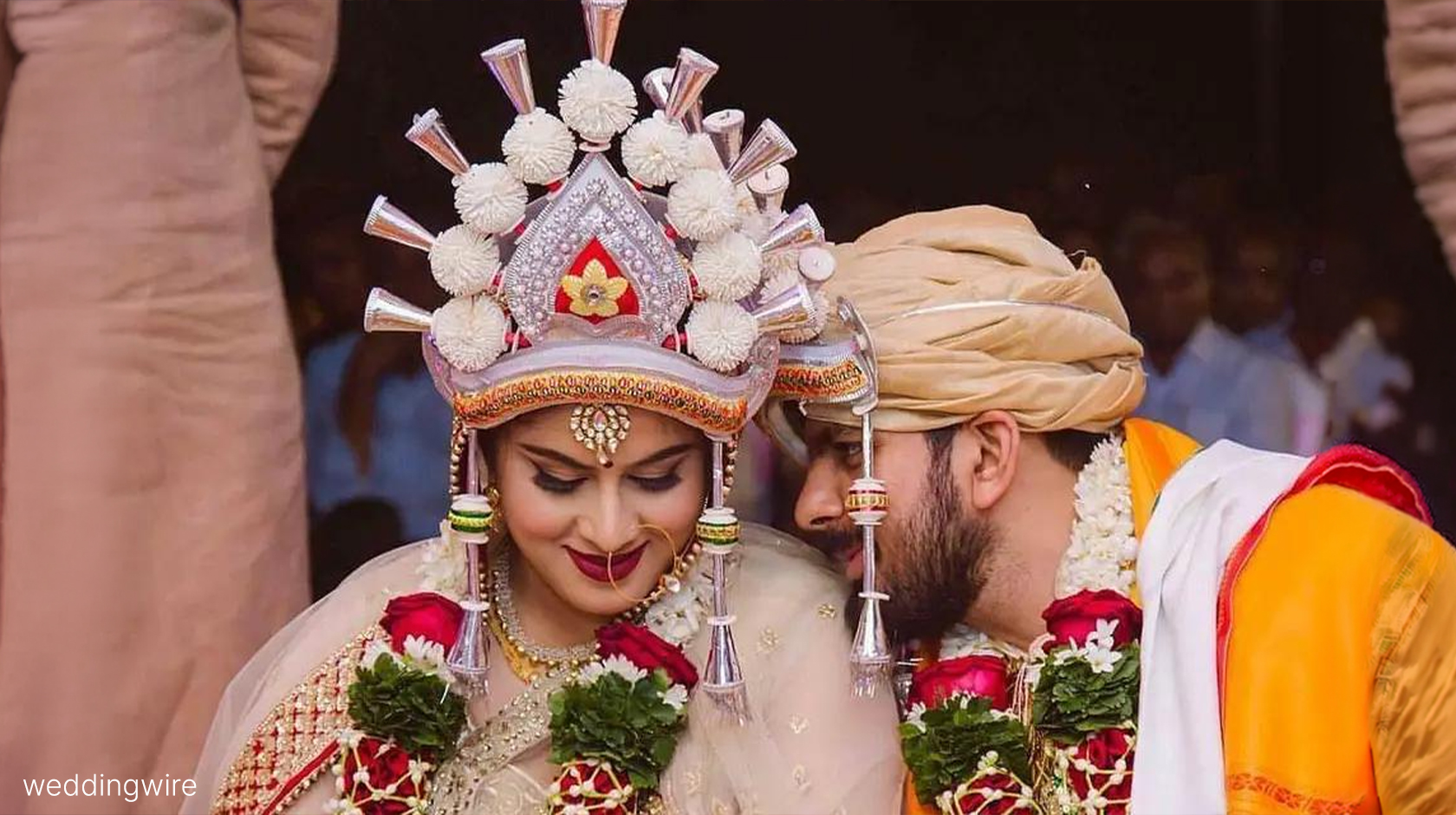
Every great Odia wedding has a moment where the playfulness stops and the sacred begins where laughter gives way to reverence, and two families formally cross the threshold from guests to relatives. That moment is the Nirbandh Ceremony. One of the most distinctive and spiritually significant rituals in Odisha's wedding tradition, Nirbandh is the sacred binding of the groom a ritual that officially marks the groom's formal entry into the wedding process and establishes his commitment before God, family, and community.

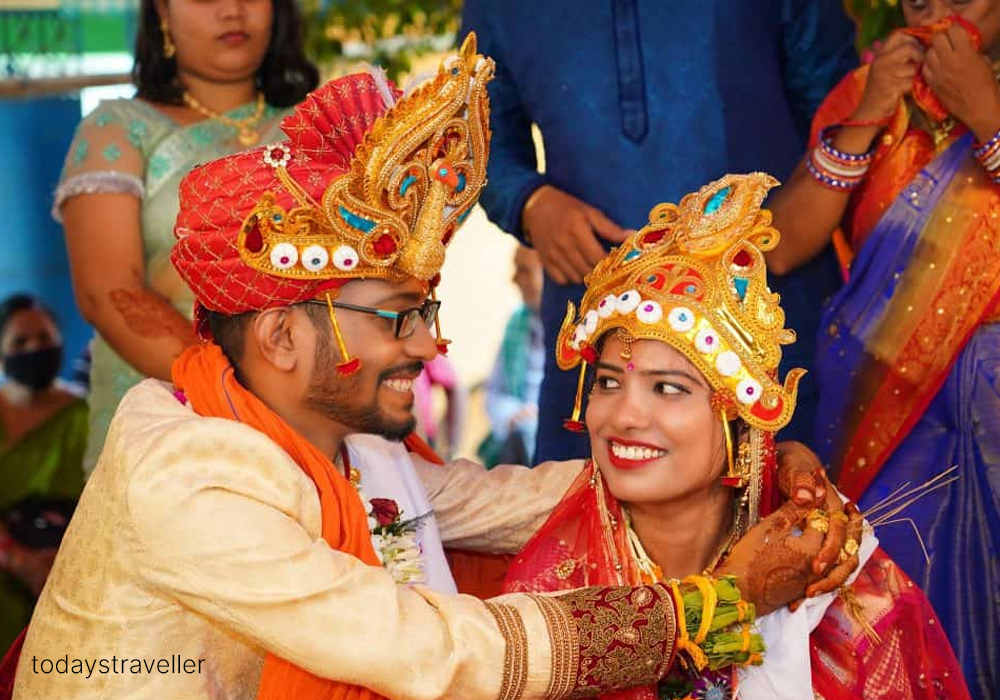
In 2026, as Odia weddings celebrate their rich cultural heritage with renewed pride, understanding the Nirbandh ceremony is essential to understanding what makes a Biye (Odia wedding) truly complete.
What Is the Nirbandh Ceremony?
Nirbandh derived from the Sanskrit word meaning "to bind" or "to tie" is a pre-wedding ritual in Odisha in which the groom is ceremonially bound or restrained by the bride's family, preventing him from leaving until certain conditions and rituals are fulfilled. It is simultaneously a playful social custom and a deeply symbolic spiritual act.
In its most traditional form, the bride's maternal uncle (Mama) physically holds or ties the groom often using a cloth or sacred thread signaling that the groom has now entered the custody and responsibility of the bride's family. The groom can only be "released" once the ceremonies are completed and the wedding vows are exchanged.
Nirbandh is one of the core rituals within the main Odia wedding ceremony (Biya) and is distinct from engagement or other pre-wedding events it takes place on the actual wedding day, typically just before or during the main ceremony at the bride's home.
The Meaning & Symbolism of Nirbandh
- The Binding as a Sacred Vow
The act of binding the groom is not meant to be threatening it is profoundly symbolic. By allowing himself to be bound by the bride's family, the groom acknowledges their authority, expresses his willingness to enter this marriage on their terms, and demonstrates that he has come not to take their daughter away, but to be accepted into their family. It is an act of voluntary surrender and respect.
- The Mama's Central Role
The Mama (maternal uncle) of the bride is the central figure in the Nirbandh ceremony. This reflects the extraordinary importance of the maternal uncle in Odia social and cultural tradition. In Odia families, the Mama is not just a relative he is the guardian of the bride's honor, the bridge between her parental home and her marital home, and the family member most deeply invested in ensuring she is married well and treated with dignity. His act of binding the groom is a declaration: I vouch for this alliance, and I hold you accountable.
- A Public Commitment
Nirbandh transforms the groom's presence at the wedding from that of a visitor into that of a participant bound by duty. Once the ceremony is performed, the groom is no longer a guest he is a partner in the unfolding of the sacred wedding rituals, formally and irreversibly part of the day's proceedings.
- Humorand Humanity in Ritual
Unlike many solemn wedding rituals, Nirbandh has a uniquely playful dimension. The "binding" of the groom is accompanied by laughter, teasing, and good-natured banter between the bride's family and the groom's side. This lightness is intentional it humanizes the ceremony, relieves wedding-day tension, and creates a memory both families will laugh about for years. It is one of the finest examples of how Odia culture weaves joy into the sacred.
- The Bride's Family Asserts Its Position
Nirbandh is also a subtle but powerful expression of the bride's family's dignity. By ceremonially holding the groom, they are asserting that their daughter is not simply being handed away she is being exchanged in a relationship of mutual respect, where the groom must earn his place. It is the bride's family's final, ceremonial act of guardianship before they entrust their daughter to her new life.
When Is the Nirbandh Ceremony Performed?
Nirbandh is performed on the main wedding day (Biye), at the bride's home, typically after the groom's procession (Barajatraa) has arrived and the formal welcome (Dwarcharita) has been completed. It takes place in the period between the groom's arrival and the beginning of the main ritual sequence serving as the ceremonial bridge between the social welcome and the spiritual wedding ceremony.
The exact timing is guided by the family pandit in accordance with the wedding muhurat 2026 and the Panchangam (Hindu almanac). In many families, Nirbandh is performed within the first hour of the groom's arrival, before the Lagna (auspicious moment) for the main vows is declared.
How Is the Nirbandh Ceremony Performed? Step-by-Step
Step 1 Arrival and Initial Welcome (Dwarcharita)
The ceremony begins after the groom has been formally welcomed at the entrance of the bride's home through the Dwarcharita ritual where the bride's mother performs an aarti and offers tamul-paan (betel nut and betel leaf). Once the groom has been ushered inside and seated at the ceremonial space, the Nirbandh begins.
Step 2 Seating of the Groom at the Mandap
The groom is led to the Biya Ghar (the decorated wedding canopy or mandap) and seated on a wooden piri (ceremonial low stool) facing the priest. The bride remains inside the home she will be brought out only after the Nirbandh is complete. The priest begins with an invocation of Lord Ganesha and the family deity.
Step 3 Mama Takes His Position
The bride's Mama (maternal uncle) takes his ceremonial position beside the groom. This moment marks the beginning of the Nirbandh proper. The Mama is dressed formally often in a new dhoti and kurta presented to him by the bride's family specifically for this role signaling the gravity of his ceremonial responsibility.
Step 4 The Binding Act (Nirbandh)
The Mama ceremonially holds, restrains, or ties the groom using a sacred red or white cloth, a cotton thread, or sometimes simply by gripping the groom's wrist or arm firmly. The priest chants specific Sanskrit mantras during this act, consecrating the binding with divine sanction. In some Odia communities, a sacred thread (nada sutra) is used, which is later untied only after the Sampradaan (Kanyadaan) ceremony is completed.
The groom accepts this binding willingly and respectfully any resistance, even playful, is considered inauspicious.
Step 5 Conditions and Exchanges (Prashna-Uttar)
Following the binding, a ritual exchange of questions and answers (Prashna-Uttar) takes place between the Mama and the groom guided by the priest. The Mama formally asks the groom to state his identity, his lineage (gotra), his intentions, and his commitment to the bride. The groom answers each question clearly, confirming his readiness and worthiness to proceed with the wedding. This verbal declaration, made while bound, carries significant spiritual weight.
Step 6 Release and Blessings
Once the Prashna-Uttar is complete to the Mama's satisfaction, and after the priest's confirmation that the auspicious moment (Lagna) is approaching, the Mama formally releases the groom untying or releasing his hold. He then places both hands on the groom's head and offers a heartfelt blessing for his happiness, health, and lifelong devotion to the bride. This release marks the transition into the main wedding ceremony.
Step 7 Gifts for the Mama (Mama Dakshina)
After his role in the Nirbandh ceremony, the Mama is honored with Mama Dakshina a gift of new clothing, cash, sweets, and sometimes jewelry presented by both the bride's family and the groom's family in recognition of his central ceremonial role. This gifting of the Mama is considered an essential part of the ritual sequence and must not be skipped.
Nirbandh and the Role of the Mama: A Deeper Look
The role of the Mama in Nirbandh is not incidental it is the defining feature that distinguishes this ceremony from similar "binding" rituals in other Indian wedding traditions. Across Odisha, the maternal uncle's position in wedding ceremonies is unlike almost anywhere else in India.
The Mama participates in the Juron (engagement), Dwarcharita (welcome), Nirbandh, Sampradaan (giving away the bride), and Saat Paak (seven circles) a ceremonial presence that spans the entire wedding. This deep involvement reflects the Odia belief that the maternal family carries a unique, irreplaceable responsibility for the welfare of the bride one that does not end at marriage but continues throughout her life.
In many Odia families, the Mama's role at the wedding is discussed and planned months in advance. Being the Mama at a niece's wedding is considered one of the highest honors a man can receive in his lifetime.
Nirbandh vs. Similar Rituals in Other Indian Weddings
|
Ritual |
State/Community |
Similarity to Nirbandh |
|
Chunni Ceremony |
Punjab |
Groom's family binds bride symbolically with cloth |
|
Haath Pakdna |
North India |
Groom's hand held by bride's father at kanyadaan |
|
Kankana Dharana |
Gujarat/Rajasthan |
Sacred thread tied to groom's wrist before ceremonies |
|
Granthi Bandhan |
Sikh weddings |
Dupatta tied together during Anand Karaj |
|
Mangalsutra tying |
Pan-India |
Binding of bride through sacred necklace |
What makes Nirbandh unique is the active, central role of the Mama and the verbal commitment (Prashna-Uttar) that accompanies the physical binding making it both a social ceremony and a formal declaration of intent.
What to Wear at a Nirbandh Ceremony?
The Groom: Traditional Odia attire white or cream dhoti with silk uttariya, pagdi (turban), and gold accessories. The groom must be dressed in complete ceremonial attire before the Nirbandh begins.
The Mama: New dhoti and kurta, typically gifted by the bride's family for this specific role. Wearing the family's gift is itself an act of honor.
The Bride's Family: Silk sarees and formal traditional attire for women; dhoti-kurta or sherwani for men. As hosts of this sacred ceremony, the bride's family dresses to reflect the gravity and joy of the occasion.
Guests: Traditional Indian attire is always appropriate sarees, salwar suits, or lehengas for women; kurta-pajama or sherwani for men.
Frequently Asked Questions (FAQ)
Q1. What is the Nirbandh ceremony in Odisha weddings? Nirbandh is a pre-main-ceremony ritual in Odia weddings where the bride's maternal uncle ceremonially binds or restrains the groom, symbolizing the groom's formal commitment and the bride's family's authority before the wedding vows are exchanged.
Q2. What does "Nirbandh" mean? Nirbandh comes from the Sanskrit root meaning "to bind" or "to tie." In the context of the Odia wedding, it refers to the ceremonial binding of the groom by the bride's maternal uncle as a symbol of commitment and mutual alliance.
Q3. Who performs the Nirbandh ceremony? The Mama (maternal uncle of the bride) is the central figure who performs the binding of the groom. The family pandit guides the ritual with Vedic mantras, and the groom's family witnesses the ceremony.
Q4. When does the Nirbandh ceremony take place? Nirbandh is performed on the main wedding day, after the groom's arrival and formal welcome at the bride's home, but before the Lagna (auspicious moment) for the main wedding vows begins.
Q5. Is the Nirbandh ceremony playful or serious? It is both. While rooted in deep spiritual symbolism and conducted with Vedic mantras, Nirbandh also carries a naturally playful, humorous dimension with good-natured banter between both families making it one of the most memorable and human moments of the Odia wedding day.
Q6. What is Mama Dakshina in Nirbandh? Mama Dakshina is the ceremonial gift typically new clothing, cash, and sweets presented to the maternal uncle after his central role in the Nirbandh ceremony. It is considered mandatory and is offered by both the bride's and groom's families.

