
Read this blog in Arabic: https://www.azafashions.com/blog/saudi-women-creative-workshop-fashion-ar/
A quiet creative transformation is unfolding across Riyadh, Jeddah, and Al-Ula. In pottery studios where hands are permanently dusted with earth, in calligraphy workshops where ink-stained fingers trace centuries-old scripts, in contemporary art classes alive with pigment and possibility, Saudi women are showing up not just to create, but to express themselves through what they wear while they do it.
For generations, the abaya, jalabiya, and kaftan defined the public wardrobe of Saudi women with elegance and purpose. These garments remain beautiful and culturally significant. But as Vision 2030 has opened new cultural institutions, creative festivals, and experiential workshops across the Kingdom, a new kind of dressing has emerged alongside the traditional, one that is practical, expressive, artistically conscious, and entirely a woman's own.
This is a look at how Saudi women are navigating that wardrobe evolution, workshop by workshop.
The Pottery Studio: Earthy Tones and Breathable Fabrics
The pottery studio demands a certain humility from clothing. You will be seated at a wheel or a workbench, your arms moving freely, your body leaning forward, the air warm and thick with the smell of wet clay. What you wear must give way.This is where loose maxi dresses in natural fibres have become the quiet favourite. Cotton, in particular, works beautifully. It breathes in the heat, washes easily after a session, and moves generously with the body.
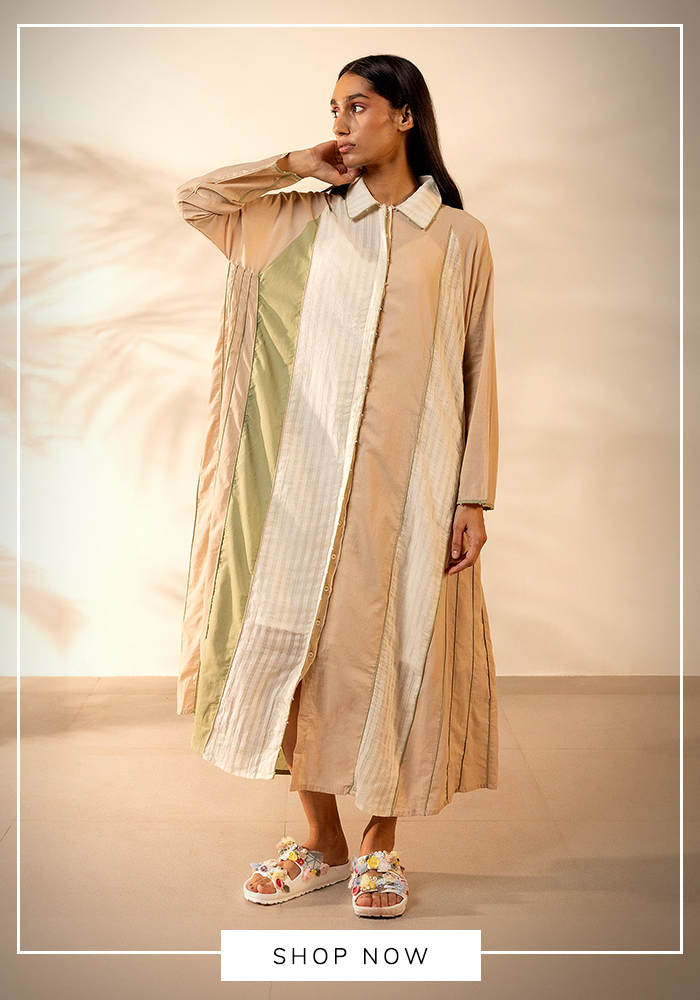
The OurDv Mango Cotton Dress in beige, green, and off-white is exactly this kind of garment — a long-line, free-flowing silhouette with subtle panelling and delicate bead detailing that manages to feel artisanal in its own right, as if it belongs in the same space as handcrafted objects.

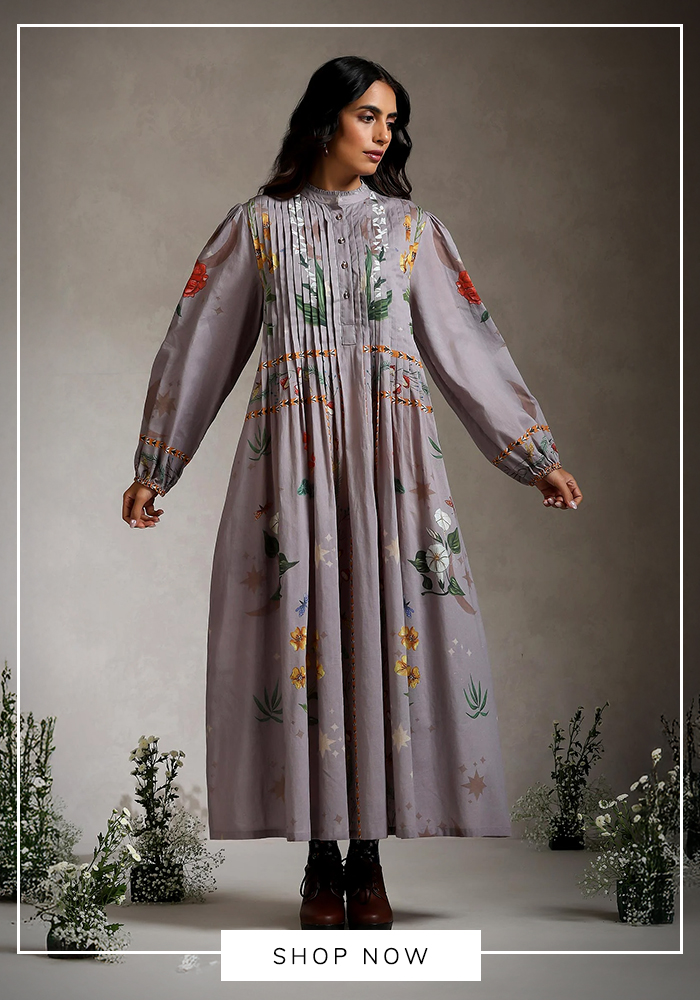
Similarly, the Raiman Botanical Print PLeat Dress, a purple cotton maxi with balloon sleeves, a pleated yoke, and all-over botanical print, carries the warmth of nature into the studio, appropriate company for a craft born from the earth itself.
The key principles for pottery workshops: full coverage that protects the skin, opaque fabric, pockets if possible, and a silhouette that doesn't restrict shoulder and arm movement.
A kaftan-like shape works well too, and here the evolution is interesting, the Siddhartha Bansal Night Fever Kaftan in black dull satin with flowy bell sleeves and bold floral print shows how the kaftan itself has been reimagined. It retains the coverage and modesty of its traditional form while becoming something unmistakably contemporary, with black bead embroidery at the neckline and a keyhole back. This is not your grandmother's kaftan. It is a designer's statement.
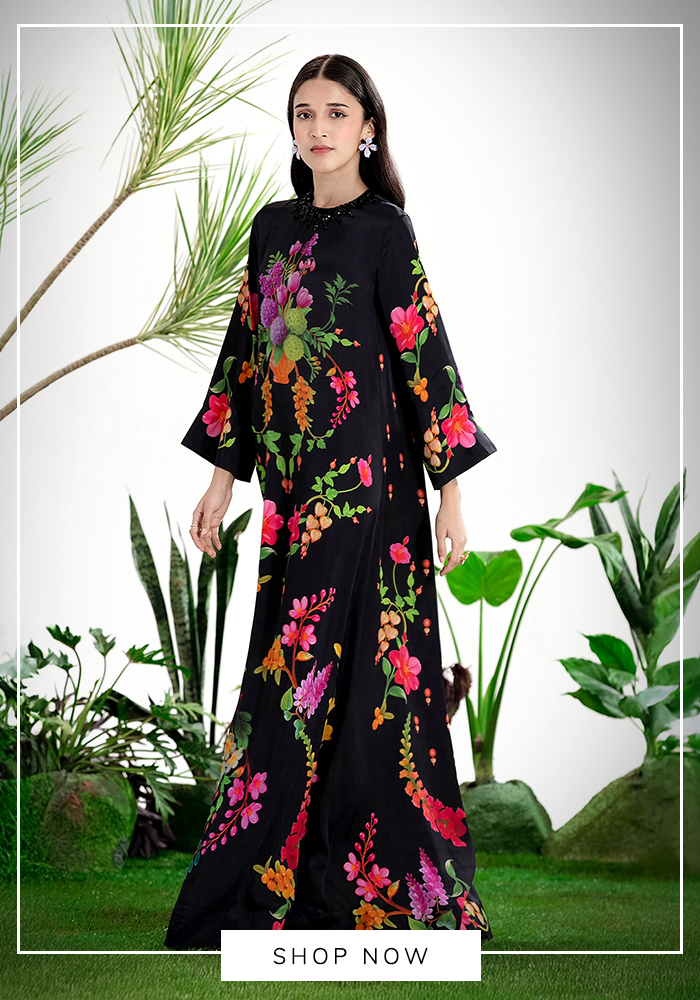
The Art Class and Painting Workshop: Prints That Speak
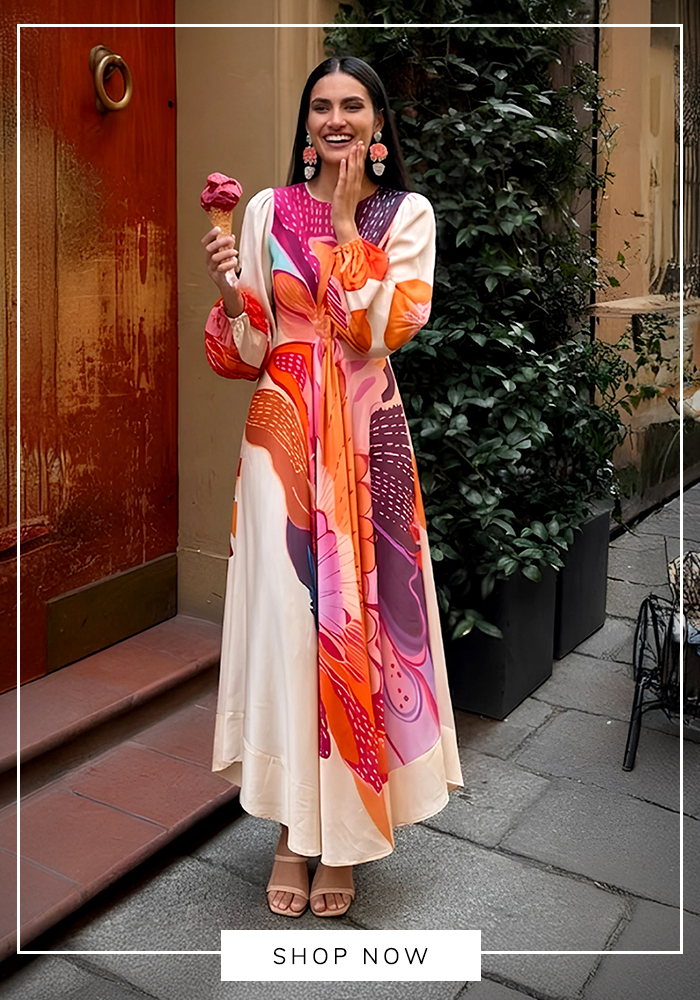
There is a pleasing logic to wearing vivid prints to a painting workshop. You arrive already in conversation with colour. The Poppi Floral Print Dress, a multicolour Bemberg silk maxi with a cinched waist, three-quarter balloon sleeves, and asymmetrical hem, is the sort of dress that looks as if it was designed in an artist's studio, expressive, fluid, unafraid of colour.
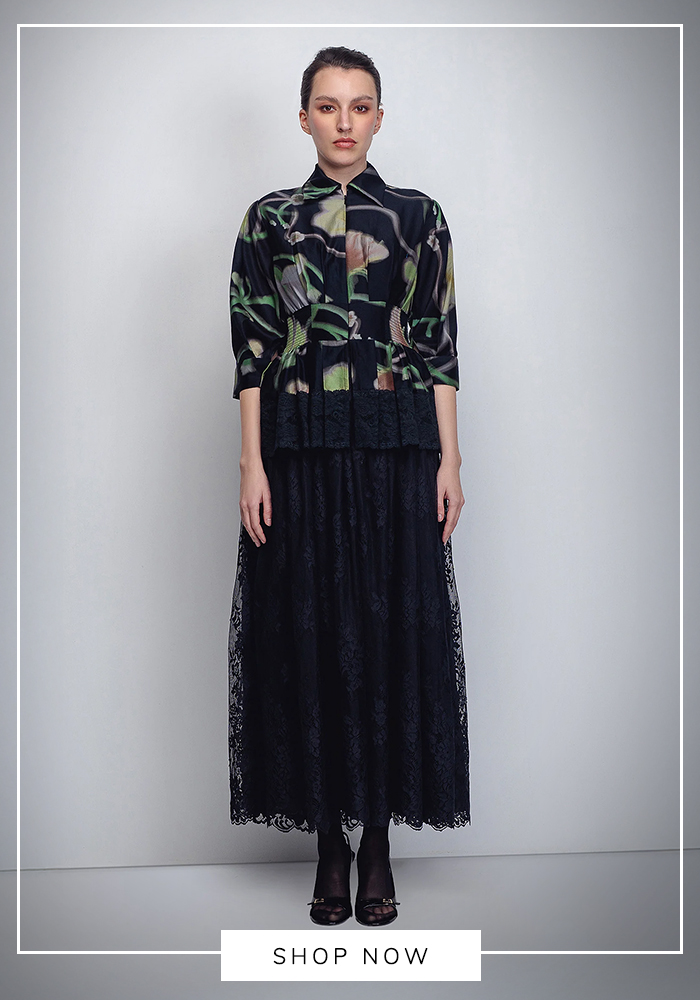
The Leh Studios Paron Print Ame Dress, a black silk-cotton dress with lace collar, flared lace skirt, and floral print bodice, takes a different approach, the drama is in the contrast between structured tailoring and soft lace volume, between a precise bodice and a full skirt. It is the kind of dress that invites a second look, and that is exactly the energy an art class should welcome.
For painting workshops where physical movement is minimal and aesthetic conversation is everything, these printed maxi dresses offer something practical and beautiful at once: full coverage, freedom from fuss, and a visual personality that signals creative intent.
The Textile and Embroidery Workshop: Celebrating Craft With Craft
There is something deeply right about wearing embroidered or embellished clothing to a workshop dedicated to textile arts. When hands are learning to create patterns with thread and needle, wearing the finished product of such skill is a tribute in its own right.
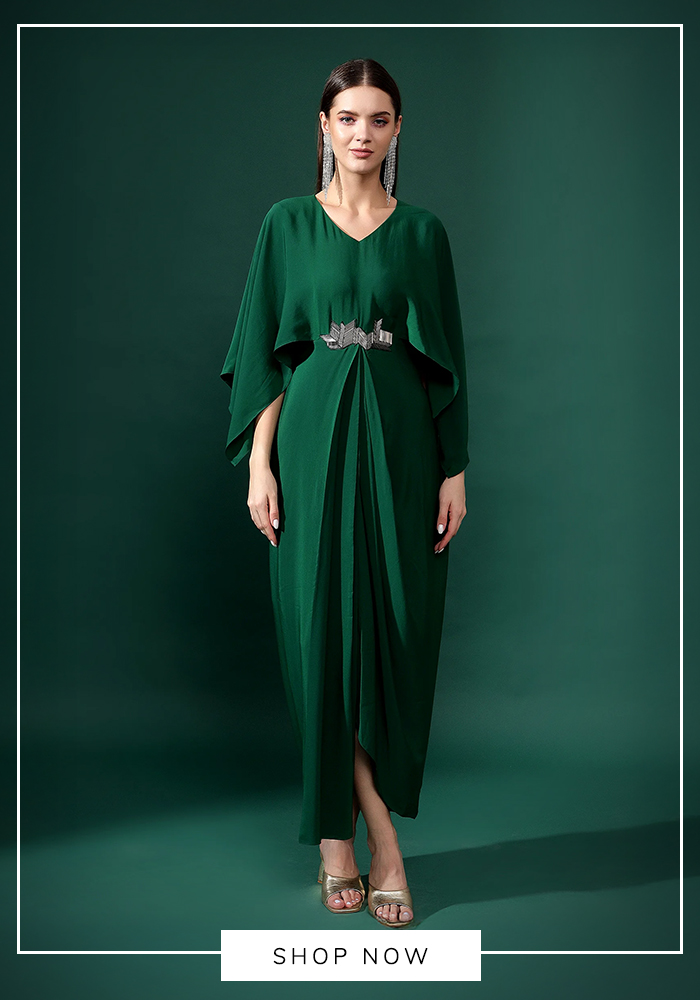
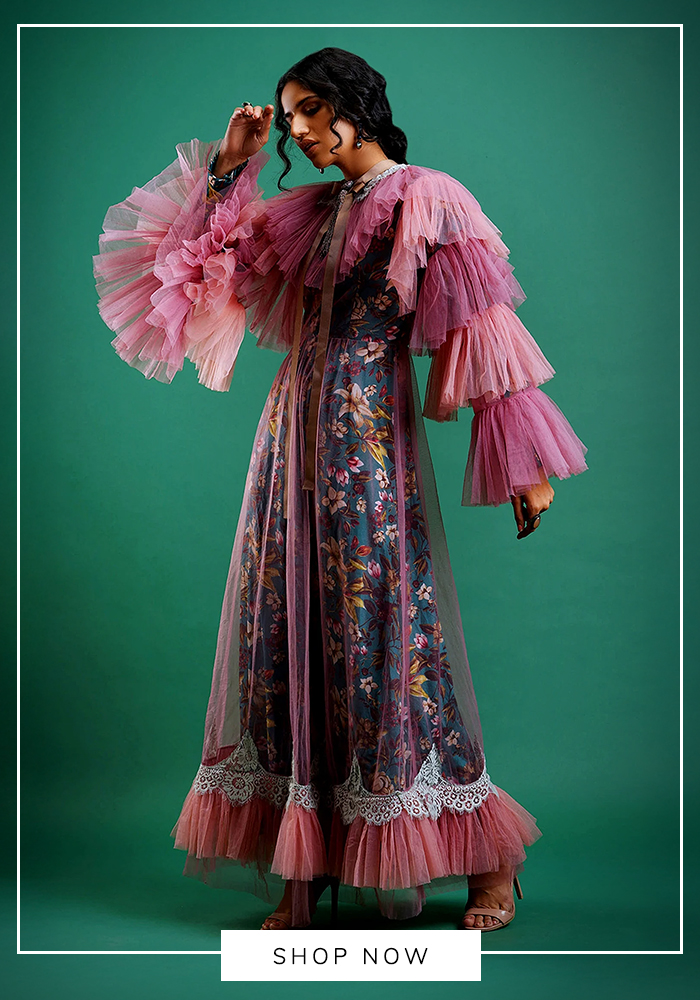
The Aakaar metallic-embellished draped dress brings exactly this energy — its metallic embellishments and draped silhouette reference both tradition and modernity, the kind of piece that textile artisans immediately appreciate.
The Pankaj and Nidhi pleated ruffle dress adds another dimension — ruffles and pleats are themselves textile techniques made visible, structure transformed into softness.
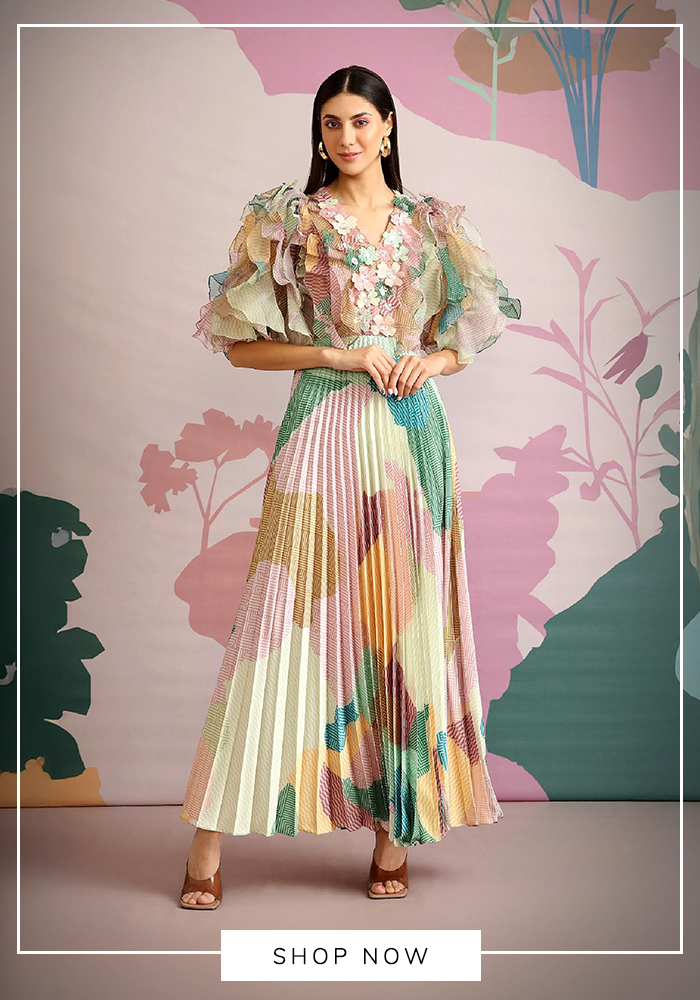
And the Nidhi and Yasha printed dress is a reminder that print itself is a textile art with a long and rich history across the Islamic world — wearing a considered printed garment to a textile workshop is an entirely coherent aesthetic choice.
The Calligraphy and Cultural Heritage Workshop: Elegance Without Restriction
Calligraphy workshops are often the most contemplative of the cultural spaces Saudi women are exploring. The body is relatively still; the concentration is intense; the aesthetic of the space tends toward the refined and the historical. What you wear here should reflect that same quality of intention.
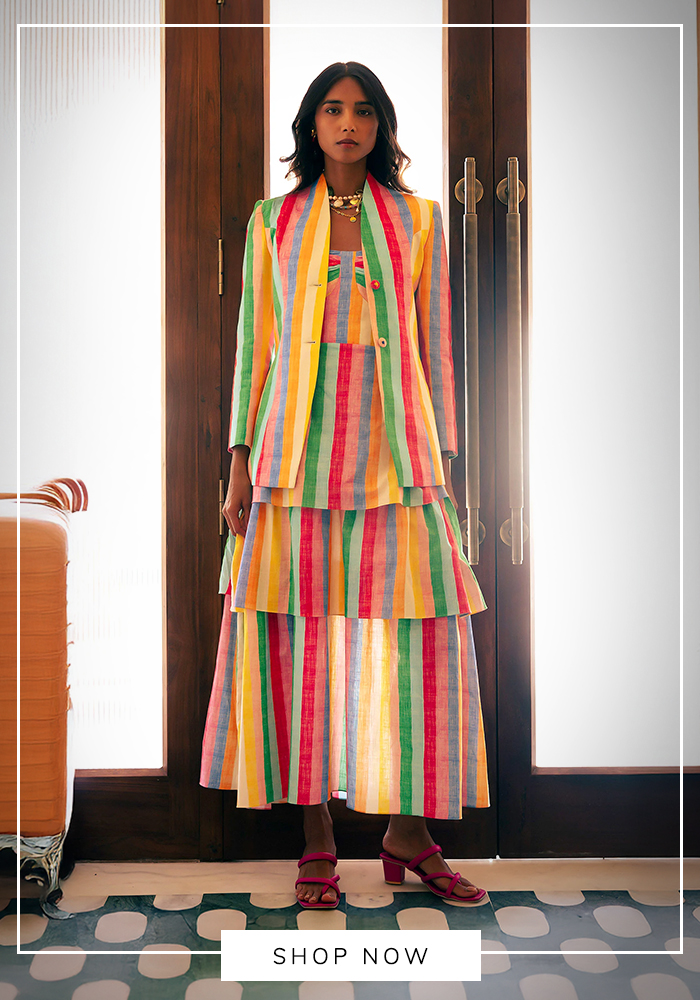
The Studio Rigu leher print dress, a multicolour cotton off-shoulder dress in Leheriya print with tiered layers and gathered back detailing, brings something interesting to this context. The Leheriya — a traditional wave or ripple print from Rajasthan — has its own long history as a craft of resistance-dyeing, and wearing it to a workshop exploring the art of Arabic letters creates a cross-cultural dialogue that feels right for this particular moment in Saudi cultural life. The colours shift across the fabric the way light moves, which is not an irrelevant observation in a space dedicated to the beauty of line and form.
A Word on the Transition
What is most notable about how Saudi women are dressing for these workshops is not that they have abandoned traditional dress — many still layer an abaya over their workshop outfit when travelling to and from the space, and many others wear the jalabiya and kaftan in updated designer forms, as the Siddhartha Bansal kaftan shows. The transition is not a rejection but an expansion. The wardrobe is growing to hold more contexts, more selves, more possibilities.

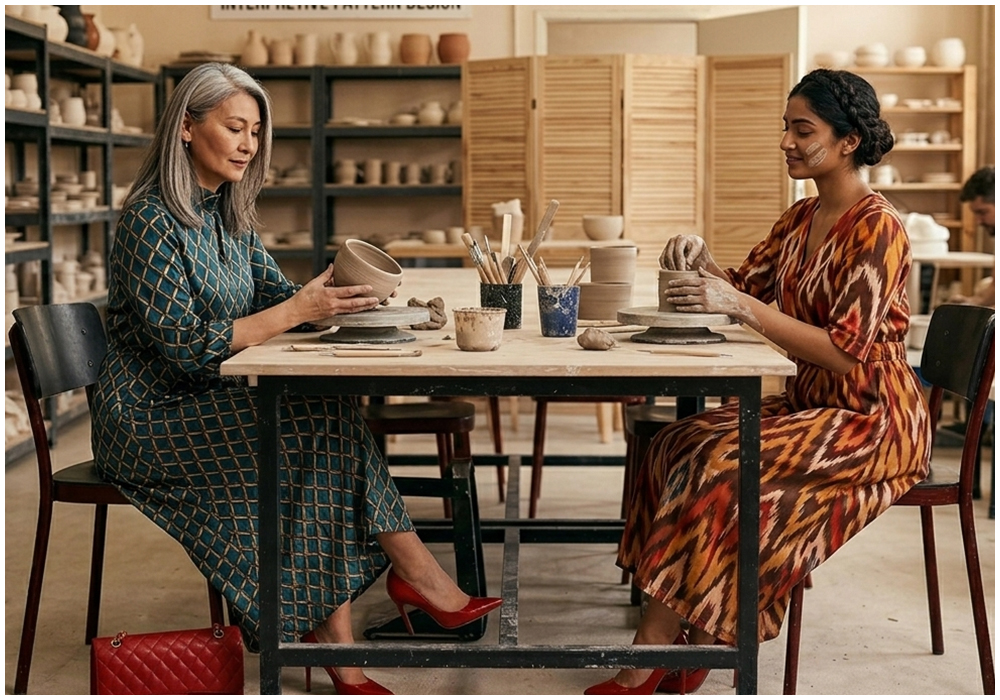
The modern maxi dress — full length, opaque, often long-sleeved or with balloon sleeves — has become the natural bridge: it meets modest dressing standards while offering designers full creative latitude in print, silhouette, embellishment, and fabric. This is why so many of the pieces finding favour in workshop settings are precisely maxi dresses rather than shorter Western silhouettes. They offer what is needed — freedom, coverage, and character — without compromise.
Creative workshops in Saudi Arabia are not simply places to learn a skill. They are places where a new cultural identity is being shaped, stitch by stitch, stroke by stroke, and yes, seam by seam. Dressing for them thoughtfully is itself a creative act.
Shop the full collection of modern dresses featured in this blog at Aza Fashions.