
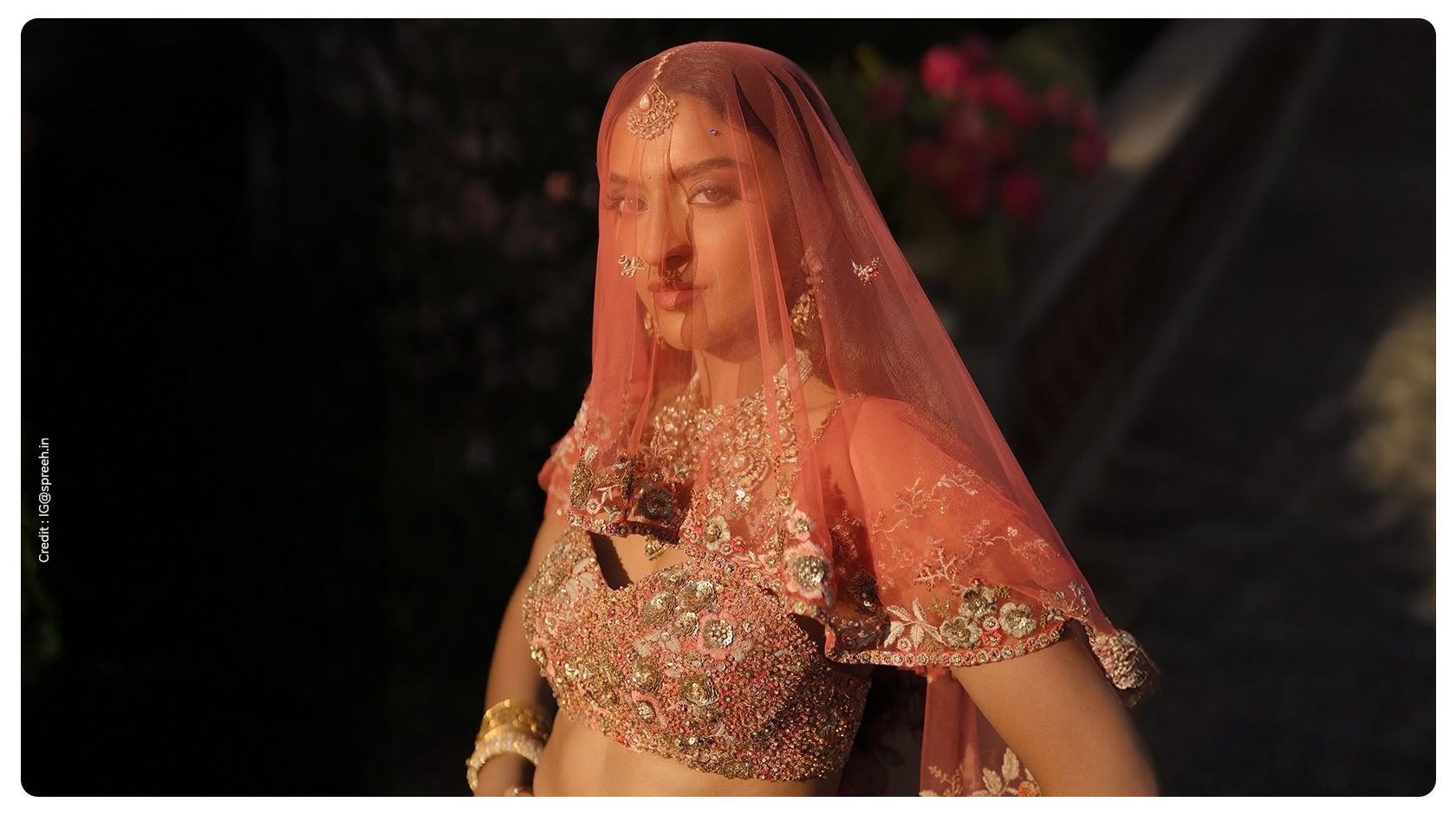
There is a particular kind of magic that happens when a bridal outfit is perfectly calibrated to the woman wearing it. Not just the embroidery, not just the color — but the proportion, the structure, the way the fabric falls. For the petite bride, that calibration is everything.
Great bridal style has never been about concealing or correcting. The finest designers in Indian luxury fashion understand that petite frames carry incredible elegance — the key lies in working with the natural line of the body rather than overwhelming it. Balance, craftsmanship, and proportion are the three pillars every petite bride should build her look around.
What Silhouettes Work Best for a Petite Bridal Lehenga?
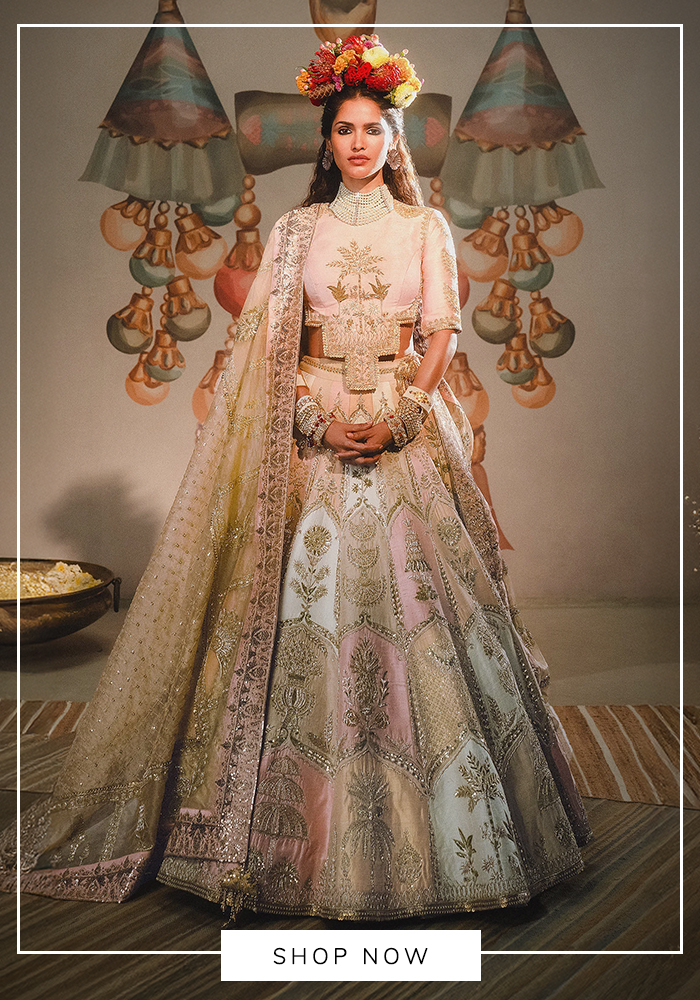
The silhouette is the foundation of any bridal outfit, and for petite brides, it determines everything that follows. A-line lehengas remain the most consistently flattering option: the gradual flare from the waist creates clean vertical movement without adding bulk. Panelled lehengas offer a similar effect, using structured vertical lines to give the eye a clear upward and downward journey.
A well-tailored mermaid silhouette — when kept lean through the hips and controlled at the flare — can be equally striking. Aisha Rao's unconventional silhouettes and signature embroidery are a strong example of how a structured, body-conscious lehenga can feel both modern and bridal without relying on volume.
The silhouettes to approach with caution? Heavily flared circular lehengas with dense can-can underlayers. The drama is undeniable, but excessive volume tends to visually shorten the frame rather than extend it. Proportion, not restriction, is the guiding principle.

How Should a Petite Bride Choose Embroidery and Prints?
Embroidery choice is where many petite bridal looks either come together or lose their footing. The most flattering approach involves delicate, evenly distributed handwork rather than heavily concentrated borders or oversized motifs.
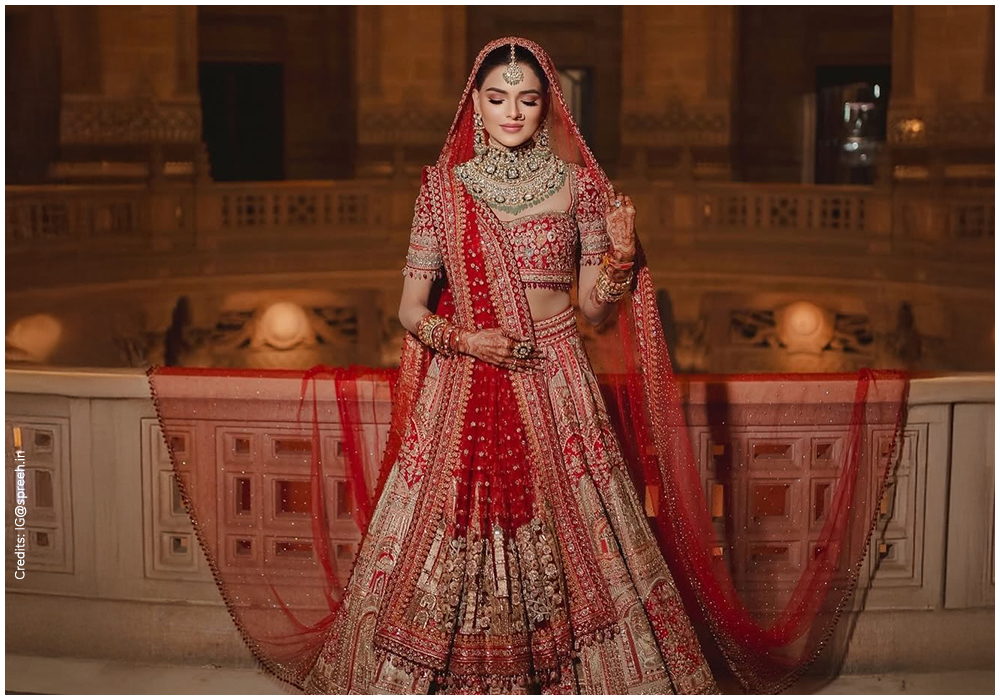
Consider the restrained elegance of Jayanti Reddy's lehengas — regal hand embroideries rendered in traditional patterns with careful placement across the skirt. Or the nature-inspired, finely crafted motifs that define Anita Dongre's bridal work. These pieces speak clearly without overwhelming the frame they dress. Mishru's use of intricate handwork across pure silk is another example of embroidery that rewards proportion: detailed enough to be extraordinary, deliberate enough to preserve balance.
Vertical motif placement and tone-on-tone embellishments are particularly effective for petite brides. They direct the gaze along the length of the outfit rather than anchoring it at the hem.
Why High-Waisted Lehengas Work for Petite Frames
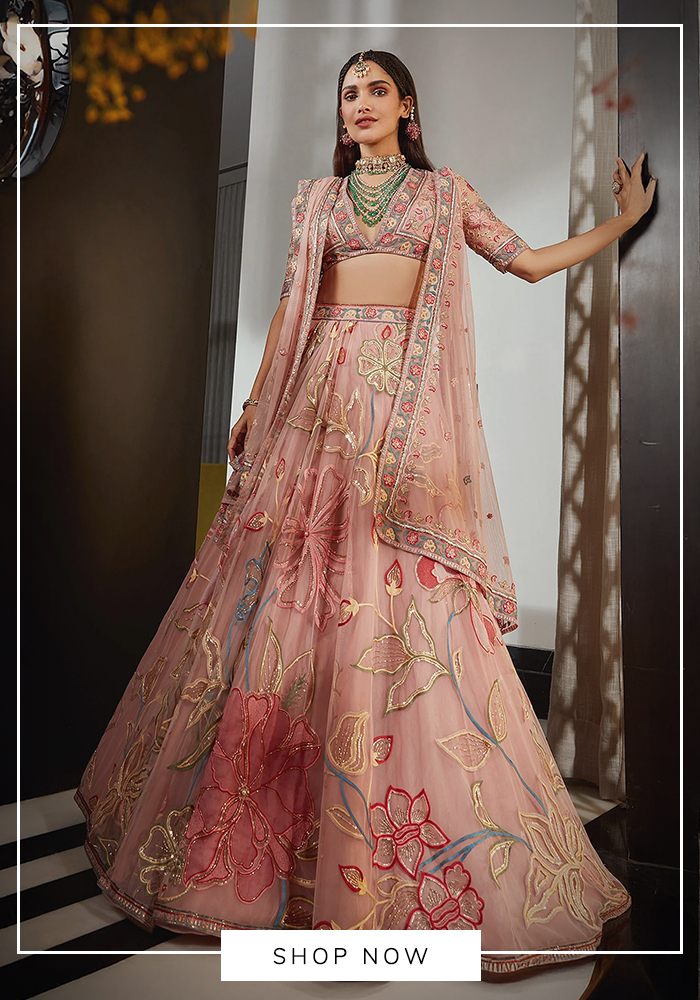
The waistline placement of a lehenga has a direct and measurable impact on how tall the wearer appears. A high-waisted lehenga effectively lengthens the visual proportion of the legs — a simple structural decision with significant results.
Paired with a fitted blouse, this combination defines the waist while maintaining a clean, elongated line through the lower body. The blouse itself should sit precisely and feel tailored, not simply stitched: Ridhi Mehra's mastery of intricate textures and structured craftsmanship is a strong reference point for how a beautifully constructed choli can anchor an entire look.

How to Style a Dupatta for a Petite Bride
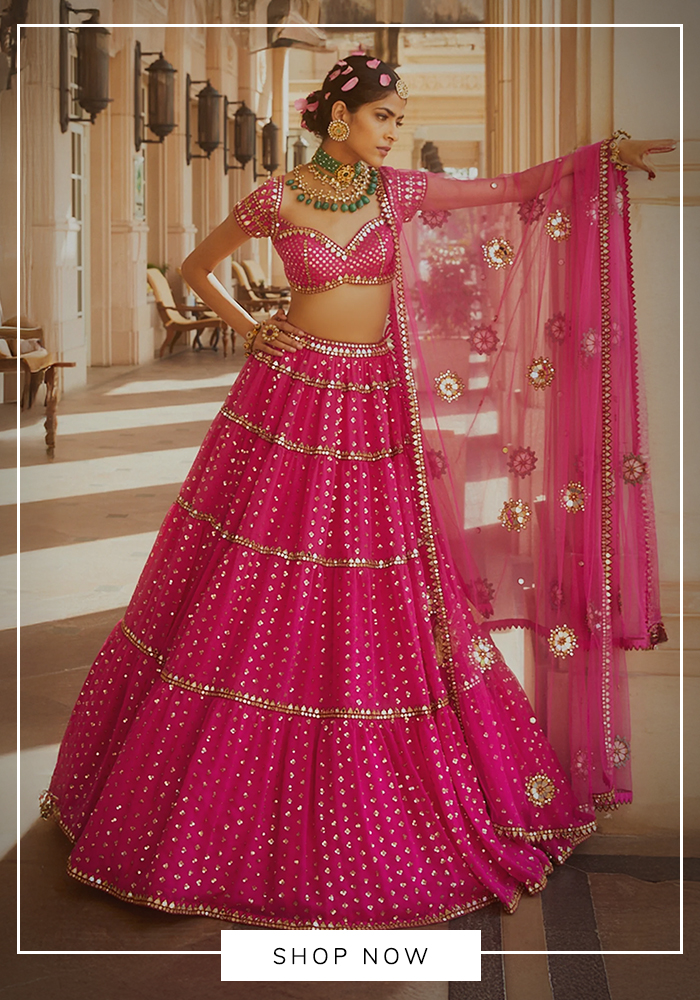
The dupatta is where many petite bridal looks acquire unnecessary weight. A heavily layered dupatta, draped across both shoulders and pooling at the feet, adds horizontal volume that can interrupt the vertical line the rest of the outfit works to create.
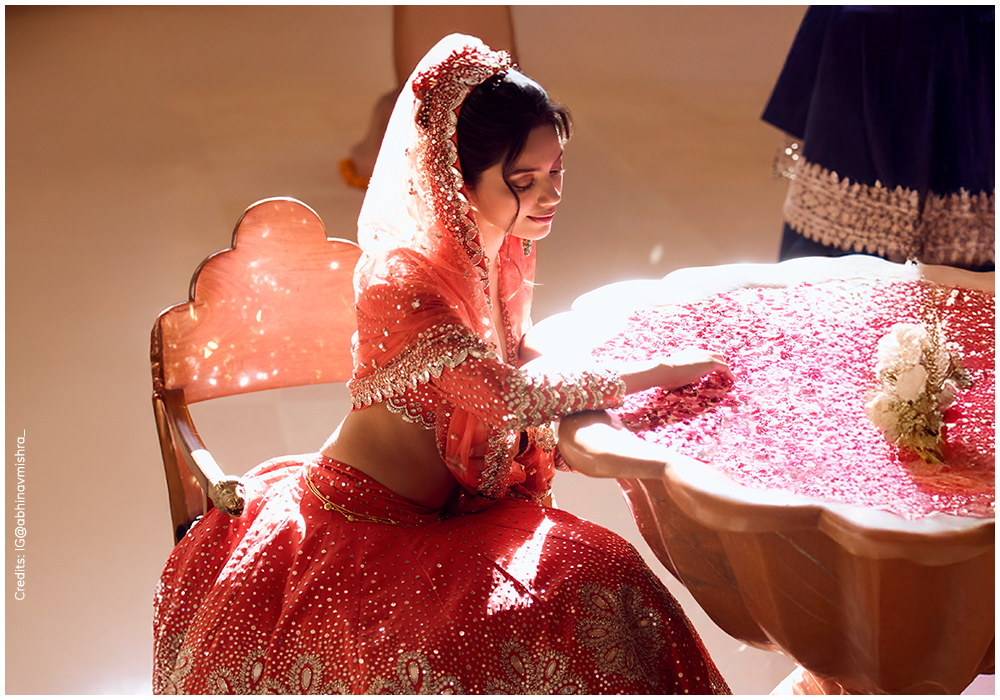
The more elegant choice is deliberate minimalism — a single-shoulder drape, a sleek veil pinned at the crown, or a softly gathered trail along one side. Tarun Tahiliani's mastery of draping, a signature element of his bridal work, demonstrates how fabric placement creates elongating lines without sacrificing grandeur. The dupatta should feel like a continuation of the outfit, not a separate layer placed on top of it.
How Does Color Choice Affect Bridal Styling for Petite Brides?
Monochromatic dressing is one of the most effective — and most underused — tools in petite bridal styling. An uninterrupted color story, from blouse through lehenga to dupatta, extends the visual line of the body. A sharp contrast at the waist or hem breaks that line and foreshortens the silhouette.
Vvani by Vani Vats' use of tonal embroidery and cohesive color palettes is a strong reference for how this works at the luxury level. Soft pastels, deep jewel tones, and warm neutrals all carry this effect beautifully — the success lies in continuity, not any specific shade. Torani's bridal aesthetic, often described as a love letter to Indian wedding traditions, shows how rich color story-telling can feel both emotionally resonant and visually precise.
Blouse Styling Tips for a Petite Bride
A perfectly fitted blouse is non-negotiable. Even the most exquisite lehenga is undermined by a blouse that pulls, gaps, or falls short of the natural waist. For petite brides, sleeve lengths deserve particular attention — three-quarter sleeves and cap sleeves tend to maintain the vertical line better than full-length heavy sleeves, which can feel proportionally heavy on a smaller frame.
Necklines should balance the bust without creating a strong horizontal break. A subtle sweetheart, a refined V, or a structured square neckline all carry elegance while directing the eye vertically.
Bridal Jewellery and Footwear for Petite Brides
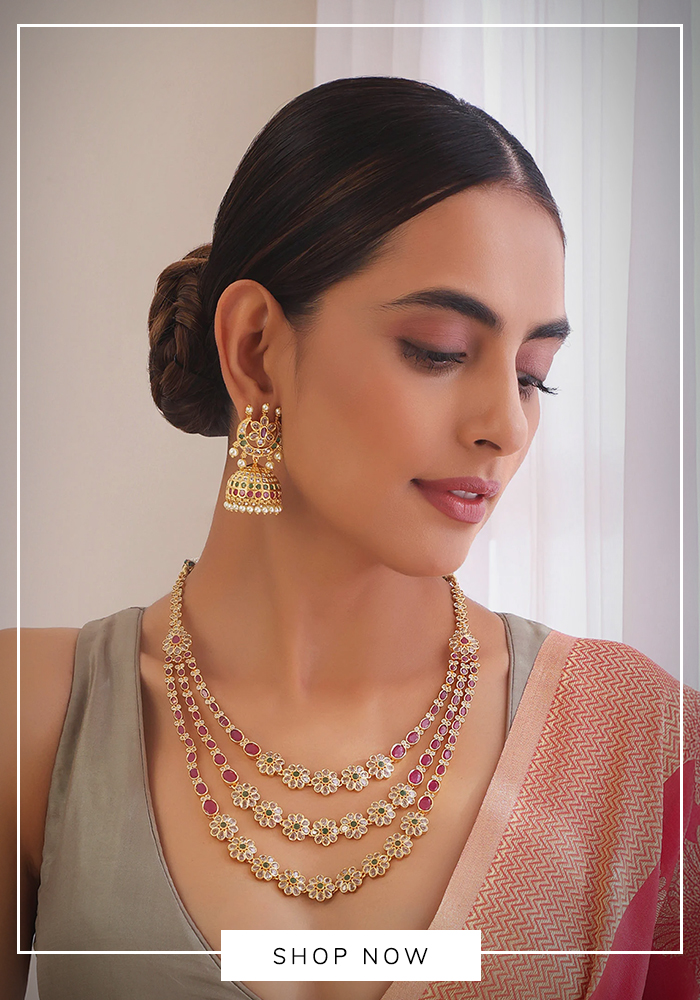
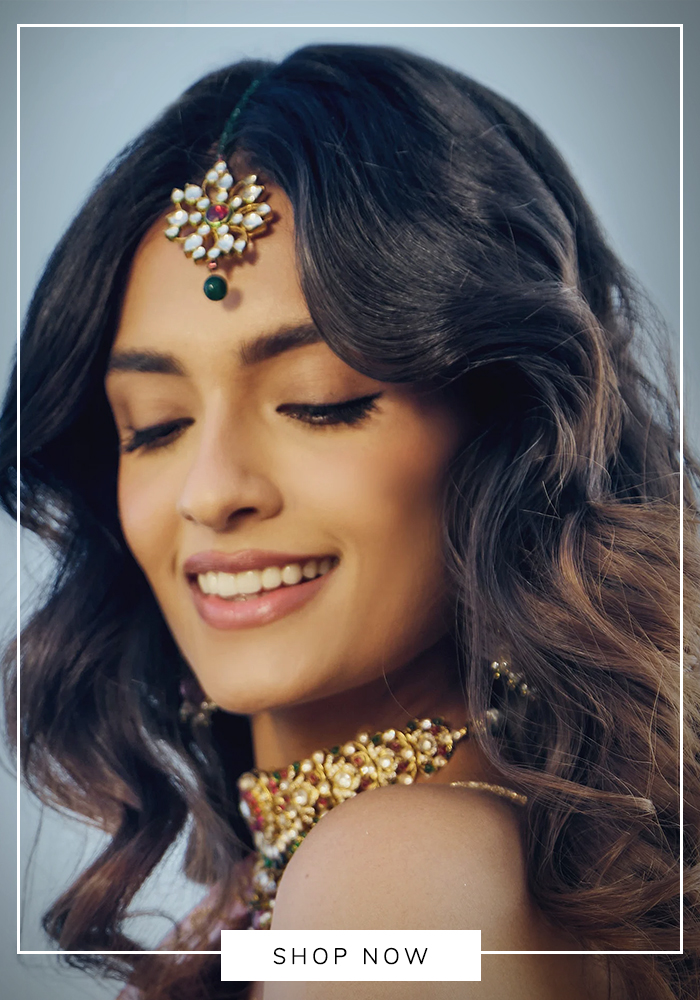
Jewellery should complement the outfit's scale, not compete with it. Mahima Mahajan's refined approach to bridal accessorizing is instructive here — layered pieces, delicate proportions, and a clear visual hierarchy between statement and subtle. A striking choker or tiered necklace works well; heavily stacked sets across the décolletage can sit too heavy on petite frames.
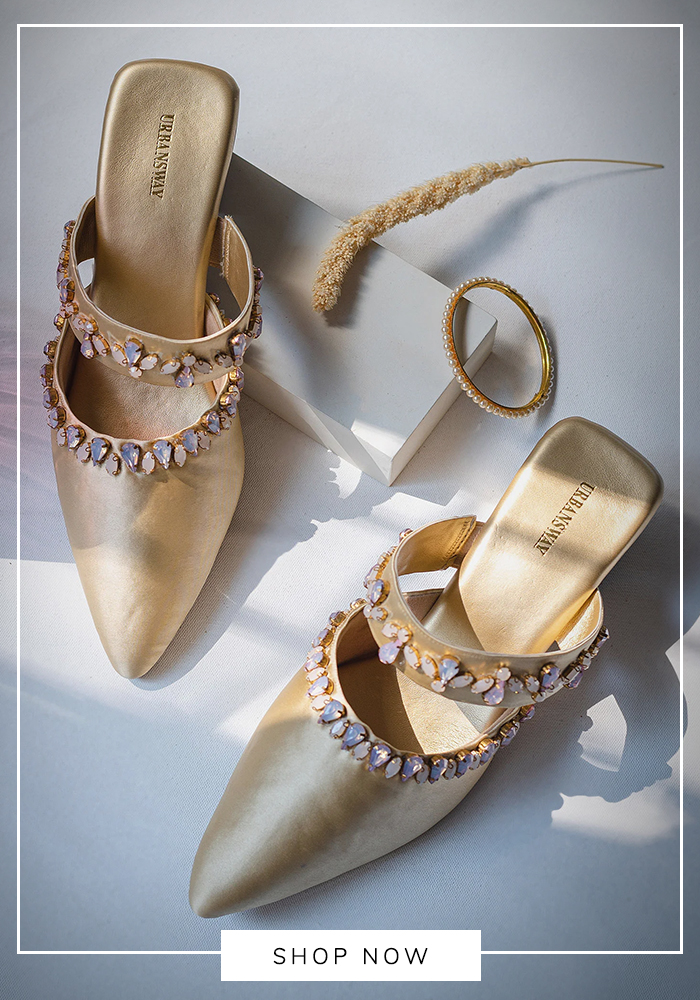
For footwear, embellished platforms, wedges, and well-constructed heels offer height without sacrificing the hours of ceremony, photography, and celebration that a wedding demands. Comfort and proportion are equally important here.
Hair, Veil, and the Power of Tailoring
The hairstyle's relationship to the overall silhouette is often overlooked in bridal styling conversations. A sleek bun or softly pinned updo draws attention to the neck and décolletage, creating vertical length. Loose, voluminous curls, while beautiful, can add width rather than height.
Kiara Advani and Alia Bhatt, both noted for choosing lean, considered bridal looks over volume-heavy silhouettes, illustrate how styling restraint from head to toe creates a coherent, elongated line.
Above all else, tailoring is the most powerful tool available to a petite bride. Seema Gujral's three-dimensional floral embroidery and crystal-encrusted lehengas prove that even the most dramatic designer bridal lehenga looks finest when the fit is architectural. Precise alterations — at the waist, the hem, the blouse structure — translate a beautiful garment into an extraordinary personal statement.
Your Bridal Look Begins at Aza
The petite bride who understands proportion, embroidery placement, and the architecture of a well-fitted lehenga carries something powerful: the knowledge that her look was made for her, not simply made to impress.
Aza Fashions' curated collection of designer bridal lehengas brings together the finest Indian luxury bridal fashion under one roof. Explore the full bridal edit at Aza — and let every stitch, every drape, and every detail be exactly as it should be.