


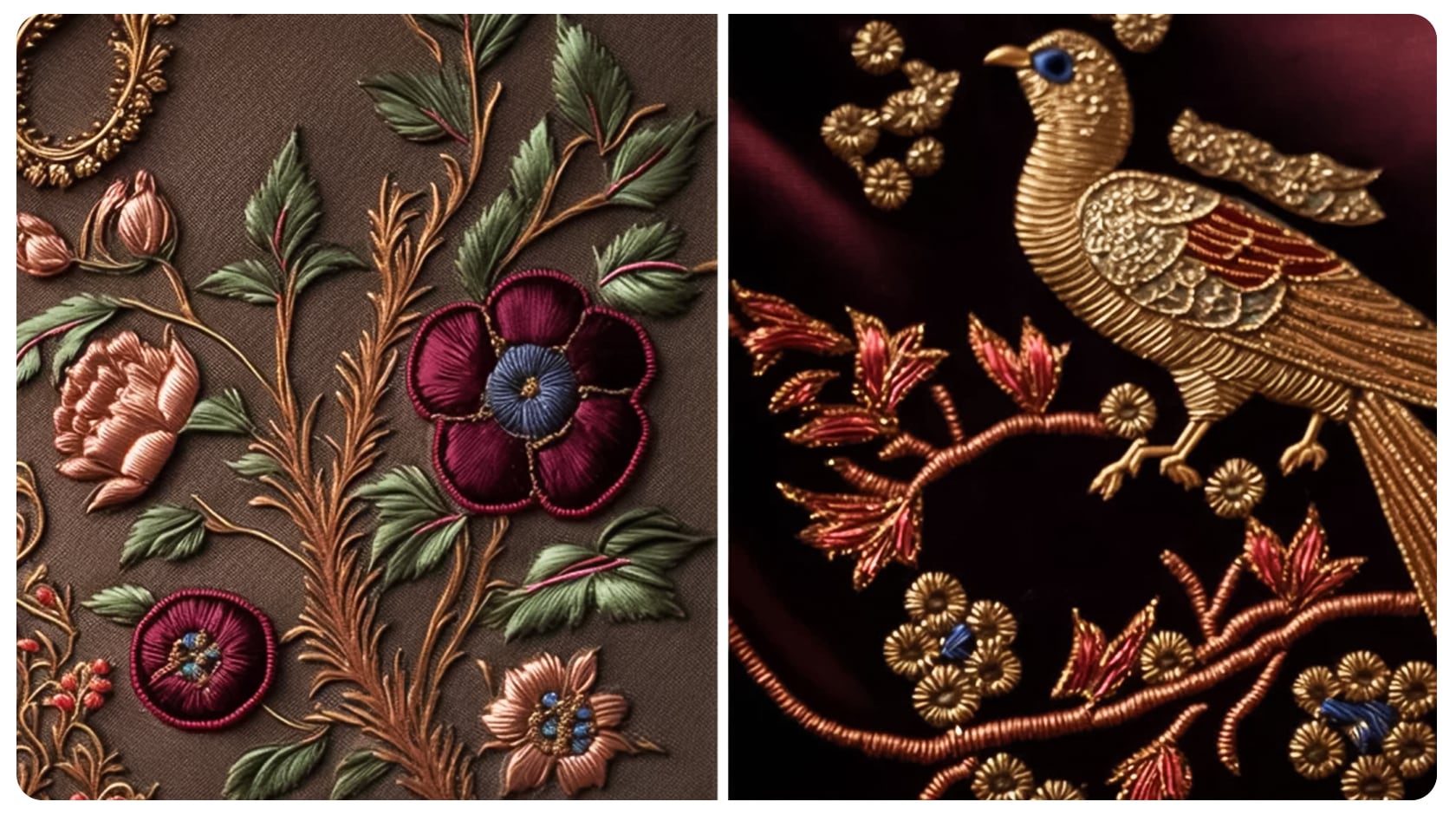

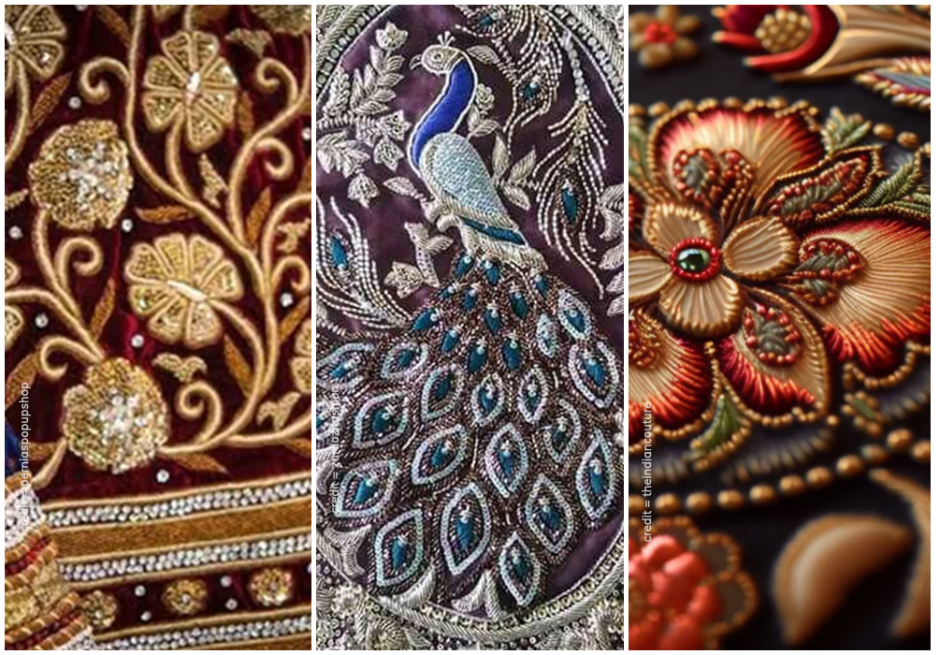
Imagine wearing a piece of clothing that shines like real gold. For centuries, kings and queens in India did exactly that. They wore garments decorated with Zari Zardozi. This is not just regular embroidery; it is an ancient art form that uses metallic threads to create stunning, raised patterns on fabric.
If you have ever seen a heavy bridal lehenga or a royal sherwani that glimmers under the lights, you have likely seen Zari work. While it looks expensive and grand, the story behind it is even more fascinating. From the courts of Persia to the streets of Bhopal in Madhya Pradesh, this craft has traveled a long way.
In this post, we will explore the history of Zari Zardozi, understand exactly how it is made using traditional tools like the 'adda,' and look at how this art form is surviving in the modern world.
What is Zari Zardozi?
Before we dive into history, let us understand the name. The term comes from the Persian language.
- Zari refers to gold.
- Zardozi comes from "zar" (gold) and "dozi" (sewing or embroidery).
So, literally, it means "sewing with gold."
Originally, artisans used real gold and silver wires to stitch patterns onto fabric. These threads were so pure that the clothes were heavy and incredibly valuable. Today, while some high-end pieces still use precious metals, most artisans use copper wires polished with a golden or silver sheen. This makes the art more affordable but keeps the royal look alive.
This embroidery is unique because it is three-dimensional. Unlike flat stitching, Zari Zardozi uses beads, pearls, and metallic springs to create a raised effect on the cloth. It feels rich to the touch and looks majestic.
A Journey from Persia to India
The roots of Zari Zardozi go back at least 300 years to Persia (modern-day Iran). It came to India with travelers and trade, but it truly flourished during the Mughal Empire in the 17th century.
The Golden Era under Akbar
The Mughal Emperor Akbar was a great lover of arts and crafts. Under his rule, Zari Zardozi became very popular. He encouraged artisans to use this embroidery on everything—from royal garments and court tents to the scabbards of swords and the trappings of elephants. The workshops, known as karkhanas, were busy and full of life.
The Decline under Aurangzeb
However, times changed when Emperor Aurangzeb came to power. He was an austere ruler and did not support the lavish arts as his predecessors did. He stopped the royal patronage (funding) for many crafts. Because Zari Zardozi used expensive raw materials like gold and silver, the artisans could not afford to keep working without the Emperor's money.
This lack of support led to a massive migration. Many talented craftsmen left Delhi in search of new homes where their art would be appreciated. They moved to states like Rajasthan, Punjab, and significantly, Madhya Pradesh.
The Madhya Pradesh Connection
When the artisans left Delhi, many found a welcoming home in Madhya Pradesh. The cities of Bhopal and Ujjain became new hubs for this craft.
The history of Zari in Bhopal is special. It was heavily promoted by the Begums of Bhopal (the female rulers). They were patrons of the arts and wanted to keep the tradition alive. They encouraged locals to learn the skill.
The Begums themselves used items made with Zari. A famous example is the Batua, a small, fancy purse used to carry cash, betel nuts (paan), or cloves. These batuas became a signature item of Bhopal, heavily embroidered with gold threads. Because of this royal support, the art survived in Central India and became a key part of the state's culture.
How is Zari Zardozi Made?
The process of making Zari Zardozi is long and requires a lot of patience. It is not done by machines; it is done entirely by hand. Even today, artisans in India follow the same steps their ancestors used hundreds of years ago.
Here is a simple breakdown of how a piece of fabric is turned into a masterpiece.
Step 1: The Design (Khaka)
Everything starts with a sketch. The designer draws a pattern on a sheet of butter paper. These designs are often inspired by nature—flowers, leaves, birds, or geometric shapes. Once the drawing is done, the artisan uses a needle to prick small holes along the lines of the design. This perforated paper is called the Khaka.
Step 2: Tracing the Pattern
The next step is transferring the design onto the fabric.
The artisan spreads the fabric (usually silk, velvet, or organza) on a flat table.
They place the Khaka (butter paper) on top of the fabric.
They take a cloth pad dipped in a solution of kerosene and chalk powder (or indigo for light fabrics).
They rub this pad over the paper. The solution seeps through the pinholes and marks the fabric with the design.
Step 3: Setting up the Adda
This is one of the most distinct tools of the trade. The fabric cannot be held in hand like knitting. It must be stretched tight, like a drum skin.
To do this, artisans use a wooden frame called an Adda. It is usually made of bamboo or wood. The fabric is stitched to the sides of the frame and pulled tight so it does not sag. The frame is raised off the ground, allowing artisans to sit around it on the floor. Often, 4 to 6 artisans will sit around one large Adda and work on the same piece of cloth at the same time.
Step 4: The Embroidery
Now, the magic happens. The artisans use a specialized needle, often a hooked needle similar to a crochet hook (sometimes called an aari).
They work with various materials:
Metallic wires (dabka): Coiled wires that look like springs.
Sequins (sitara): Small shiny discs.
Beads and Stones: For decoration.
The artisan passes the needle through the fabric, catches the thread from below, and secures the decorative material on top. It is a rhythmic process. Pass the needle, catch the thread, pull it up. Because the wires are delicate, they must be handled gently.
Depending on the complexity of the design, a single piece can take anywhere from three to ten days to finish. A heavy bridal outfit can even take months!
Step 5: Finishing
Once the embroidery is done, the fabric is taken off the wooden frame. The artisans inspect it carefully. They snip off any loose threads and polish the metal if needed. The fabric is then sent to be stitched into a garment, a bag, or a wall hanging.
Design Elements and Motifs
What do these golden threads actually depict? In the old days, the designs were heavily influenced by Persian and Mughal art.
Common traditional motifs included:
- Floral patterns: Vines, roses, and lotuses.
- The Paisley (Ambi): A teardrop shape with a curved upper end.
- Birds: Peacocks and parrots.
- Paan leaves: Betel leaves were a common cultural symbol.
In modern times, the designs have evolved. While you can still find traditional flowers, many designers now ask for geometric shapes, abstract lines, and cleaner looks. However, the technique remains exactly the same.
Challenges in the Modern World
Despite its beauty, Zari Zardozi faces challenges today.
1. It is Time-Consuming
In a world of "fast fashion" where clothes are made in minutes by machines, Zari takes days. A simple border on a saree might take a week. This makes the production slow.
2. High Cost
Because it requires skilled human labor and expensive materials, Zari Zardozi is costly. Many customers prefer cheaper, machine-made embroidery that looks somewhat similar but lacks the quality.
3. The Struggle of Artisans
The work is hard on the eyes and the back. Artisans sit hunched over the Adda for hours. Unfortunately, they are not always paid well for their skill. Many younger people in artisan families prefer to take up office jobs rather than learn this difficult craft.
Revival: Keeping the Art Alive
The good news is that Zari Zardozi is not disappearing. In fact, it is finding new life.
Indian fashion designers are playing a huge role in this. Designers like Tarun Tahiliani, Sabyasachi, and Ritu Kumar regularly use Zari Zardozi in their collections. When Bollywood stars wear these outfits at weddings, it creates a huge demand.
Furthermore, the government and NGOs are stepping in. They are setting up training centers in places like Bhopal to teach this skill to new people. This ensures that the secrets of the craft are not lost. By training amateur artisans, they can speed up production slightly and ensure that more people can earn a livelihood from this heritage art.
Conclusion
Zari Zardozi is more than just thread on cloth. It is a connection to our past. It reminds us of a time when patience and beauty were valued above speed.
From its birth in Persia to its home in Madhya Pradesh, this art form has survived the rise and fall of empires. Today, it remains a symbol of celebration in India. Whether it is on a velvet batua from a Bhopal market or a designer bridal lehenga, the glimmer of Zari tells a story of skill, tradition, and timeless elegance.
So, the next time you see that golden shimmer on a piece of fabric, remember the artisan sitting by the wooden adda, carefully stitching history one thread at a time.

