


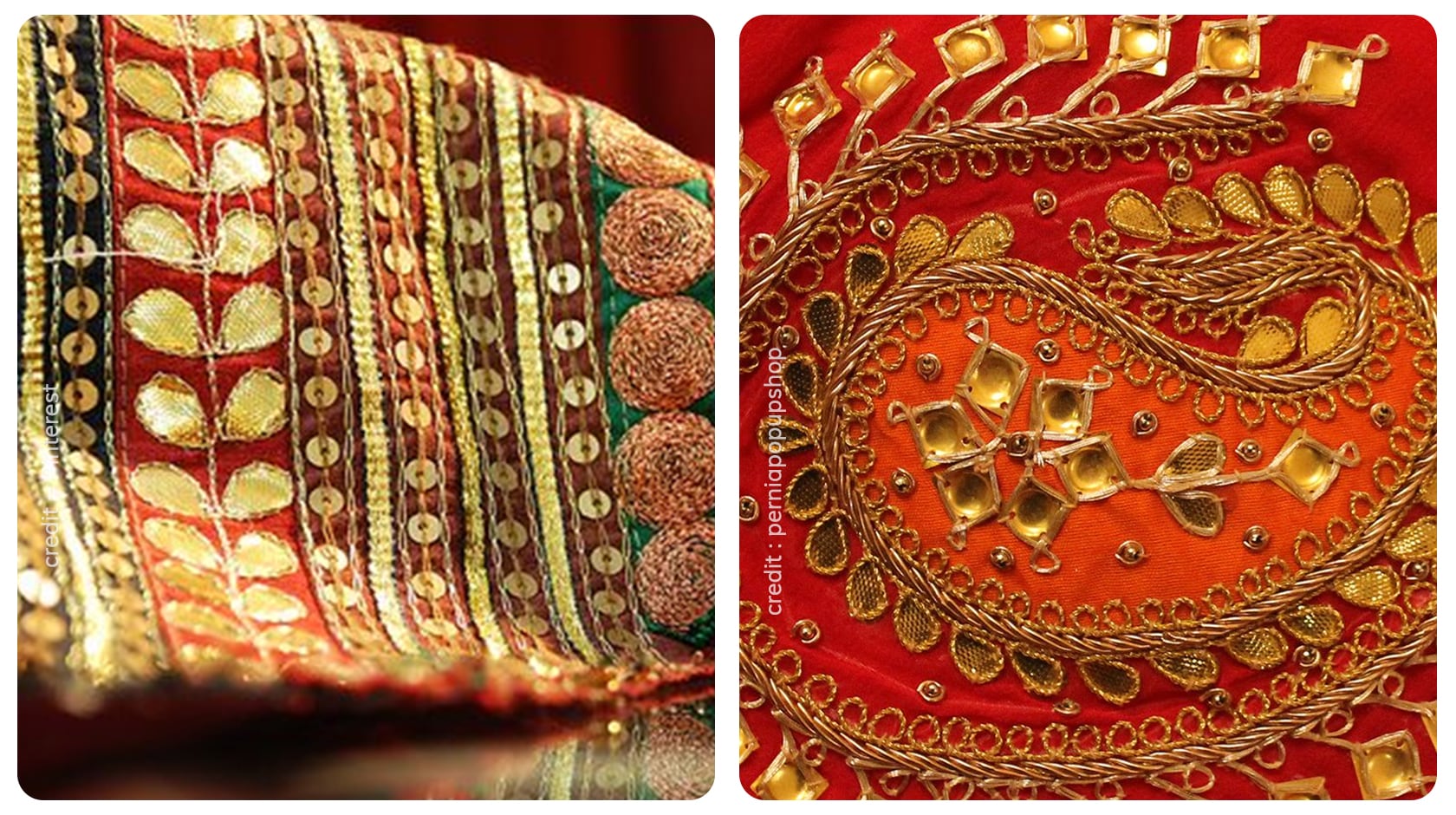

When you think of a traditional Indian wedding or a festive celebration in Rajasthan, one specific style of clothing often comes to mind. It is bright, colorful, and it shines brilliantly when the light hits it. This is the magic of Gota Patti.
Gota Patti is not just embroidery; it is the art of appliqué. Instead of just stitching thread into fabric, artisans cut shapes from gold or silver ribbons and sew them onto the cloth to create dazzling patterns. It is famous for being lightweight yet looking incredibly heavy and rich.
In this post, we will take a journey into the heart of Rajasthan to understand where this art came from, how it is painstakingly created by hand, and why it remains a favorite for fashion lovers today.
What is Gota Patti?
Let us break down the name to understand it better.
- Gota refers to the gold and silver lace or ribbon.
- Patti means "leaf" or the shape of the motif.
So, Gota Patti is essentially the art of applying gold and silver leaves onto fabric. It is also known by other names in Rajasthan, such as Lappe ka Kaam or Aari Tari. While it looks like heavy zari work, it is actually much lighter to wear, making it perfect for the hot climate of Rajasthan while still looking grand enough for royalty.
The Royal Roots of Rajasthan
Gota Patti is believed to have originated in Rajasthan, the land of kings. Historians trace its roots back hundreds of years, potentially between the 3rd and 5th centuries.
Traditionally, this craft was the exclusive property of the royal families. The Rajput kings and the Mughal emperors loved garments that displayed wealth and power. In those days, the Gota ribbons were made of real gold and silver metals. This made the clothes incredibly expensive and precious.
The main centers for this craft were—and still are—cities like Jaipur, Ajmer, Kota, Udaipur, and Bikaner. It wasn't just used for clothes; it adorned temple idols, royal altars, and prayer offerings, weaving divinity into the fabric of daily life.
How is Gota Patti Made?
The beauty of Gota Patti lies in its process. It is a long, detailed journey from a simple ribbon to a masterpiece. Unlike machine embroidery, this is done entirely by hand, often requiring a team of skilled artisans.
Here is a simple look at the steps involved:
1. Preparing the Gota
First, the ribbon itself is made. Originally metal, today’s gota is usually made from polyester fibers woven with a metallic-looking yarn (called zari). These ribbons are woven on looms and then cut into specific lengths.
2. Tracing the Design (Chapaayi)
Before any sewing happens, the design must be drawn. Artisans take a tracing paper with the design sketched on it. They poke tiny holes along the lines of the drawing.
This paper is placed on the fabric. A paste made of chalk powder (and sometimes kerosene) is rubbed over the paper. The powder seeps through the holes, leaving a white outline of the design on the fabric.
3. The 'Adda' Framework
Just like Zari Zardozi, Gota Patti requires the fabric to be stretched tight. The cloth is tied to a wooden frame called an Adda (or sometimes a Khat). This keeps the fabric flat and taut, allowing the artisans to work with both hands free.
4. Appliqué and Hemming (Takaayi)
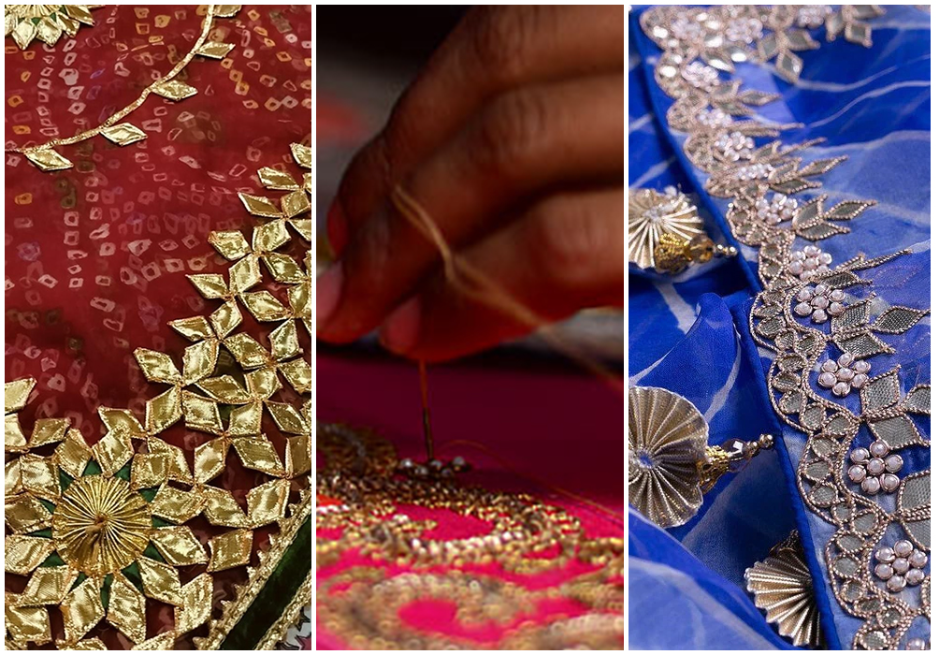
This is the core step. The artisan takes the Gota ribbon, cuts it into small shapes (usually diamond or leaf shapes), and folds them. These small pieces are then pasted or tacked onto the traced design on the fabric.
Once in place, the edges of the ribbon are stitched down using colorful threads or metallic wires. This ensures the ribbon stays flat and becomes part of the fabric.
5. Beating the Fabric (Peetaayi)
This is a unique step in Gota work. Once the embroidery is finished, the fabric might look a bit puffy or uneven. To fix this, a wooden hammer or block (called a Peetan) is used to gently beat the embroidery. This flattens the Gota, pressing it firmly into the fabric and giving it a polished, finished look.
Design Elements: More Than Just Shine
Gota Patti designs are deeply connected to nature and Rajasthani culture. Since "Patti" means leaf, many designs start with simple leaf-shaped folds. These leaves are arranged together to create larger, intricate patterns.
Common motifs you will see include:
- Flora: Flowers and vines.
- Fauna: Peacocks, sparrows, elephants, and horses.
- Geometric Patterns: known as Jaal (mesh) or Butas (dots).
- Paisleys: The classic curved teardrop shape.
The fabric used is usually lightweight—like chiffon, georgette, or satin—because the heavy metal look of the Gota needs a flowing base to drape beautifully.
Modern Evolution: From Royalty to Runway
For a long time, Gota Patti was reserved for traditional ghagra-cholis and odhnis (headscarves) worn by women in Rajasthan. But fashion never stays still.
Today, Gota Patti has evolved. You can find it on:
- Jackets and Capes: Adding a festive touch to western wear.
- Handbags and Clutches: Perfect for wedding guests.
- Kurtas and Tunics: For everyday elegance.
- Sarees: A staple for North Indian weddings.
The biggest change, however, is in the material. Since real gold and silver are too expensive for most people, modern Gota is made using polyester films coated with metal. This makes it affordable, durable, and resistant to tarnishing. It allows everyone, not just royalty, to enjoy the shimmer of Gota work.
Challenges Facing the Craft
Despite its popularity, the art of Gota Patti faces hurdles in the modern world.
1. Time and Patience
Authentic hand-done Gota work is slow. A heavy bridal lehenga can take weeks to complete. In an era where people want "fast fashion," waiting weeks for a garment is becoming rare.
2. Machine Imitations
Machines can now mimic the look of Gota Patti. While these are cheaper and faster to produce, they lack the soul and durability of the hand-stitched craft. This makes it harder for traditional artisans to compete on price.
3. The Skill Gap
The younger generation in artisan families often moves away from this profession because it requires long hours of sitting and meticulous eye-work, often for low pay compared to other modern jobs.
Conclusion
Gota Patti is a shining example of India's textile heritage. It manages to be two things at once: grand and royal, yet light and fun. It transforms simple fabrics into festive masterpieces without weighing the wearer down.
Whether you are walking through the colorful markets of Jaipur or browsing a high-end designer store online, spotting Gota work is easy. It is the embroidery that catches the light and dances with you. By choosing authentic Gota Patti, we keep the skilled hands of Rajasthan's artisans busy and ensure this golden tradition continues to shine for centuries to come.

