The Ultimate Guide to Uttarakhand – Heritage, Textiles & Traditional Style
Here, the terrain dictates the textile. The biting cold of the upper reaches necessitates the use of thick, handwoven wools, while the vibrant festivals call fo
Uttarakhand, known as Devbhoomi or "Land of the Gods," is a realm where the Himalayas touch the sky and spirituality flows as freely as the Ganges. It is a state of breathtaking dualities: from the snow-clad peaks of Nanda Devi to the lush valleys of flower-filled meadows. But beyond the pilgrimages and the trekking trails lies a cultural fabric as resilient and beautiful as the mountains themselves.
The style of Uttarakhand is defined by warmth, practicality, and deep-rooted symbolism. Living in the lap of the Himalayas, the people have mastered the art of weaving comfort into elegance. The state is home to the iconic Rangwali Pichhaura, a garment that wears the color of joy, and a rich tradition of woolen weaving that has kept communities warm for centuries.
Here, the terrain dictates the textile. The biting cold of the upper reaches necessitates the use of thick, handwoven wools, while the vibrant festivals call for an explosion of color and silver ornamentation. Today, the rustic charm of Uttarakhand’s heritage is finding new life. Its intricate gold jewelry and sustainable woolens are inspiring a fresh wave of fashion that values slow creation and authentic beauty.
Traditional Clothing / Ethnic Wear
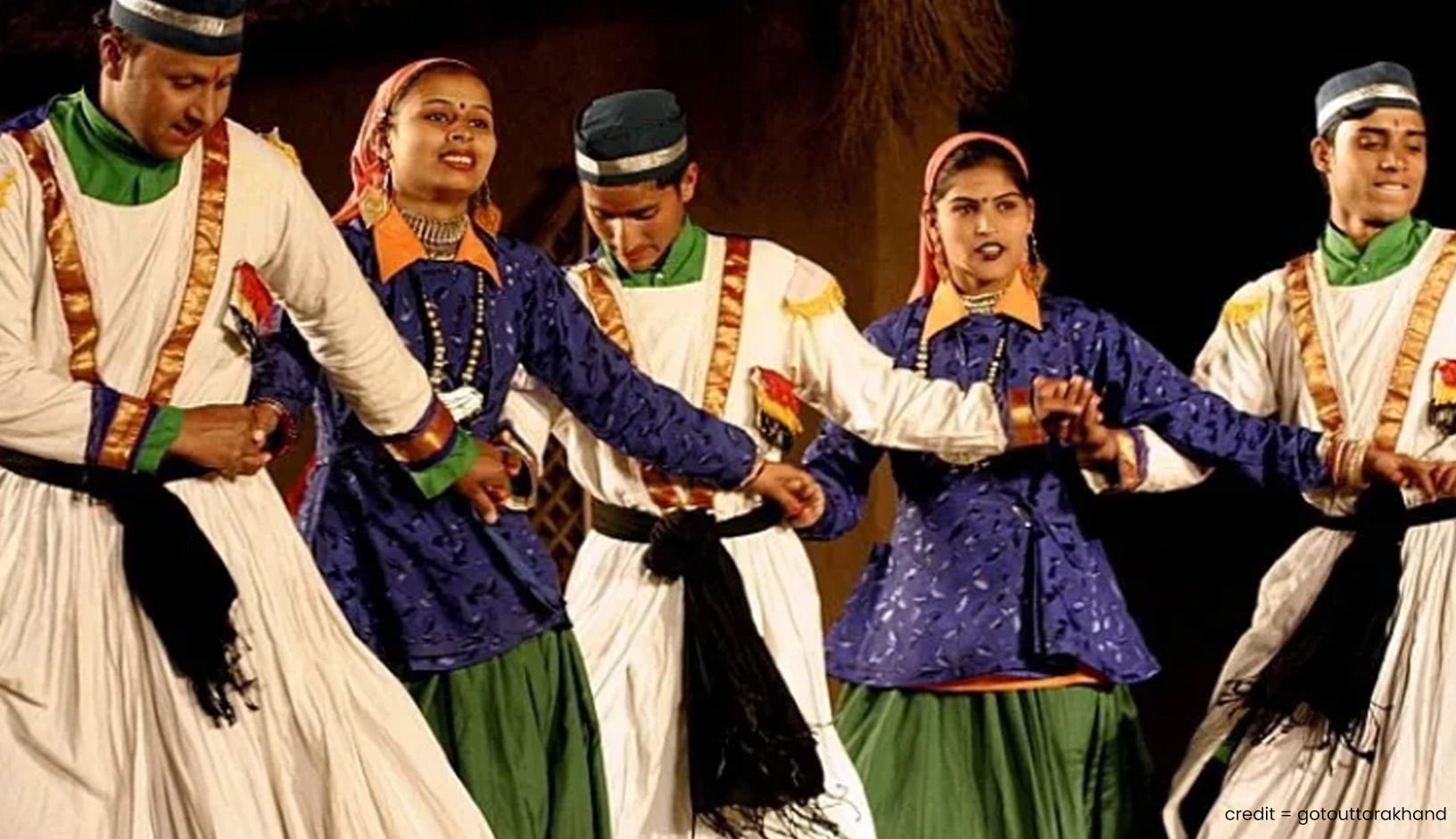
The traditional attire of Uttarakhand is a harmonious blend of the two main regions: Kumaon and Garhwal. While they share cultural similarities, their sartorial expressions have distinct flavors, united by a need for warmth and durability.
Women’s Attire
For the women of Uttarakhand, clothing is a marker of identity, marital status, and celebration.
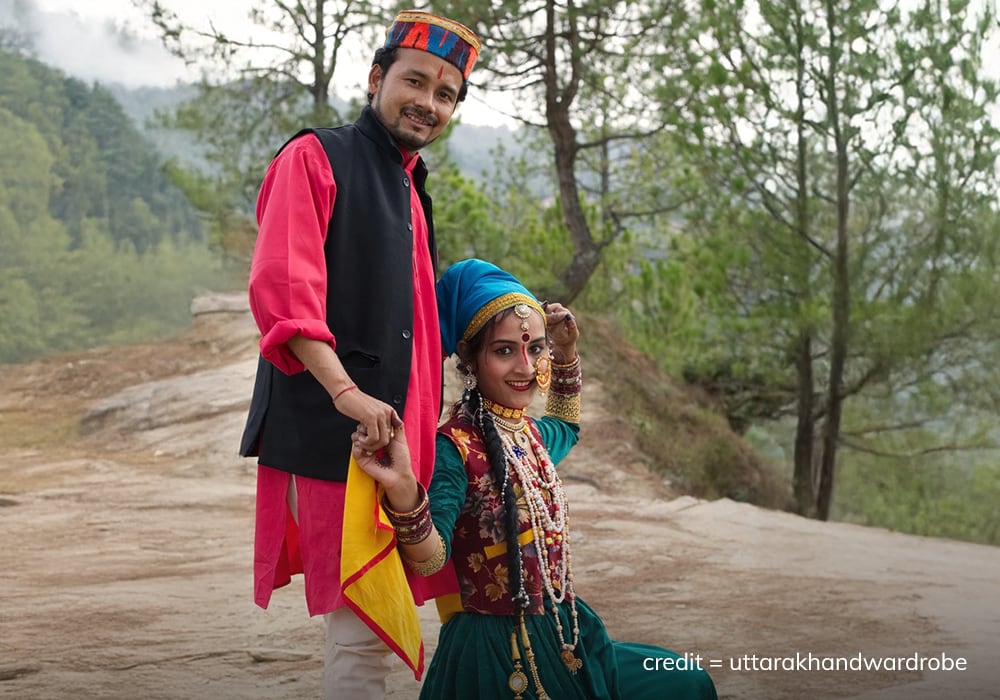
Rangwali Pichhaura: This is the crowning glory of Kumaoni attire. It is a large dupatta or shawl, dyed in a vibrant saffron-yellow and printed with red polka dots and motifs using a traditional method. It is worn by married women during weddings, festivals, and auspicious ceremonies. The yellow represents holiness, while the red symbolizes energy and marital bliss.
Ghagri and Choli: Traditionally, women wore a long, gathered skirt known as a Ghagri (or Ghagra) paired with a blouse (Choli). These were often made of sturdy cotton for daily wear or silk for special occasions.
Woolen Shawls: Given the climate, no outfit is complete without a shawl. These are not just functional; they are often beautifully woven with geometric patterns.
Colors: The palette is often inspired by nature—deep greens, bright reds, and sunny yellows stand out against the stark mountain backdrop.
Men’s Attire
Men’s traditional fashion in Uttarakhand is rugged and dignified, built for a life of activity in difficult terrain.
Dhoti and Kurta: The standard lower garment is the Dhoti or a Churidar pyjama, paired with a long Kurta.
Woolen Jackets and Coats: To combat the cold, men layer their kurtas with woolen jackets (often called Sadri or Baskat) or long knee-length coats. These are typically tailored from locally woven tweed or wool.
Topi (Cap): The headgear is an essential part of the identity. The Pahari Topi (cap) varies by region but is worn with immense pride. It is usually black or earthy in color and helps keep the head warm.
Jewelry & Accessories
Jewelry in Uttarakhand is massive, intricate, and largely gold, serving as a family’s wealth and a woman’s pride.
Nath (Nose Ring): The Nath is perhaps the most distinctive piece of jewelry. The Tehri Nath (from Garhwal) is a massive gold nose ring, often featuring intricate filigree work and motifs of peacocks or flowers. It is a bridal essential.
Guluband: This is a traditional choker worn around the neck. It typically consists of square gold pieces strung together on a red velvet belt.
Hansuli: A solid silver or gold collar worn around the neck, common in rural areas.
Crafts, Textile Techniques & Prints
The textile traditions of Uttarakhand are born from necessity but elevated by artistry. The state is a hub for wool processing and unique folk art.
Wool Weaving
The high-altitude regions of Uttarakhand are home to sheep rearing communities like the Bhotiyas. They produce high-quality wool, which is hand-spun and hand-woven into shawls, carpets (Dan), and blankets (Thulma). The Thulma is a thick, furry blanket that is incredibly warm and durable, made using a specialized felting technique.
Hand-Knitted Woolens
Knitting is a household skill across the state. Women can often be seen knitting intricate patterns into sweaters, socks, and caps while going about their daily chores. These hand-knitted items are prized for their warmth and the personal touch embedded in every loop.
Aipan Art-Inspired Textiles
Aipan is a traditional folk art form of the Kumaon region, historically painted on floors and walls using red ochre and white rice paste. In recent years, this geometric and ritualistic art has migrated to textiles. You can now find beautiful stoles, kurtas, and bags featuring Aipan motifs, turning sacred floor art into wearable heritage.
Cultural Context – Lifestyle, Tradition & Heritage Influences
In Uttarakhand, fashion is a survival strategy as much as it is a style statement. The plummeting temperatures in winters make layering essential. The use of pure wool is not a luxury; it is a shield against the elements. The clothing is designed to be practical skirts are gathered to allow movement on steep slopes, and fabrics are durable enough to withstand rugged use.
Spirituality pervades every thread. The Rangwali Pichhaura is not just a piece of cloth; it is considered a blessing. Before it is worn by a bride, it is offered to the deities. Social norms emphasize modesty and community belonging, with jewelry often indicating the village or district a woman belongs to.
Historically, the trade routes with Tibet influenced the wool industry, bringing in techniques and motifs that are still visible in the border districts. The royal traditions of the Chand and Panwar dynasties also left a legacy of refined jewelry and ceremonial attire that continues to influence wedding fashion today.
When & How These Styles Are Worn Today
While heavy traditional attire is reserved for special days, elements of Uttarakhand’s style are woven into daily life.
Everyday vs. Special Occasions: In cities like Dehradun, western wear or salwar kameez is common. However, in the hills, women still wear the Ghagri and Pichhaura for festivals like Harela or weddings. The massive gold Nath remains a non-negotiable part of a bride's trousseau.
Modern Reinterpretations: Designers are taking the raw, organic textures of Uttarakhand’s wool and turning them into chic winter wear. Tweed jackets from the region are gaining popularity as sustainable alternatives to synthetic winter coats. Aipan art is becoming a trendy motif for home decor and accessories.
Styling Tips:
Winter Chic: Pair a traditional handwoven Uttarakhandi shawl with a modern trench coat and boots for a sophisticated winter look.
Statement Jewelry: Wear a Guluband choker with a simple black dress to let the gold work stand out.
Fusion Flair: Drape a Rangwali Pichhaura over a white kurta-palazzo set during a festival for an instant connection to tradition.
Why It Matters – Heritage, Identity & Fashion Inspiration
Preserving the crafts of Uttarakhand is vital for the economic survival of hill communities. Buying a hand-knitted sweater or a handwoven Thulma directly supports the women artisans who keep these skills alive. It prevents migration from the hills by creating sustainable livelihoods in the villages.
Moreover, Uttarakhand’s style offers the world a lesson in "slow fashion." The wool is locally sourced, the dyes are often natural, and the production is manual. This low-carbon footprint approach is exactly what the modern fashion industry needs. The bold geometry of Aipan and the timeless elegance of the Nath prove that heritage is not static; it is a constantly evolving source of inspiration.
Conclusion
The style heritage of Uttarakhand is a warm embrace from the mountains. It is a narrative written in wool, gold, and sacred red dye. From the cozy durability of a Thulma blanket to the divine symbolism of the Pichhaura, every element reflects a life lived in harmony with nature and the divine.
We encourage you to bring a piece of the Himalayas into your life. Whether it’s wearing a hand-knitted cap on a cold morning or adorning yourself with the artistry of Pahari jewelry, you are celebrating a culture that stands tall and proud, just like its peaks.