
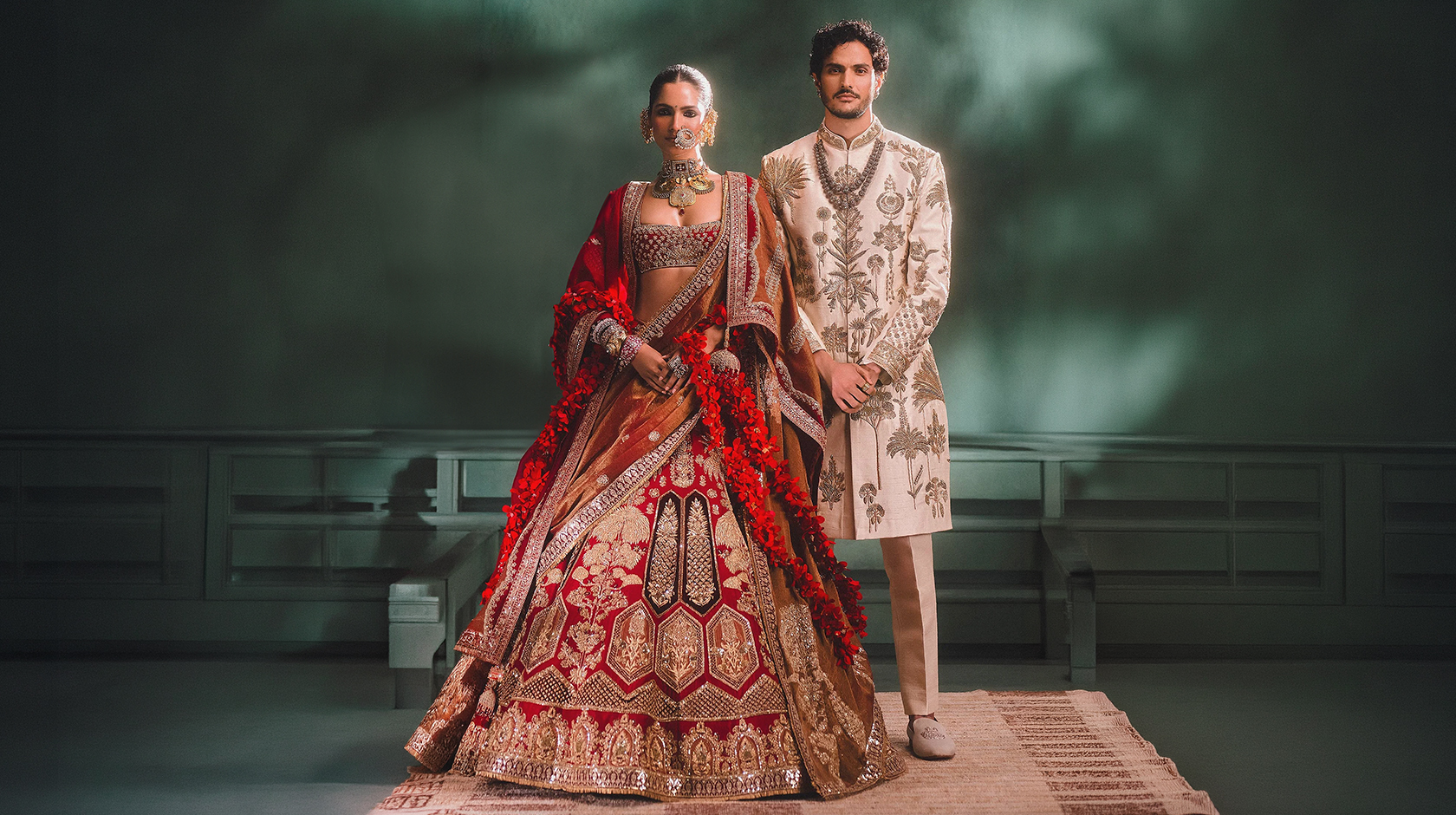
The modern Indian wedding isn't one event—it's a season. And dressing for it requires a wardrobe as layered, emotional, and considered as the celebrations themselves. Wedding Stories by Aza understands this completely.
Spanning everything from saffron-soaked haldi mornings to glamorous reception nights, Aza's wedding fashion edit for 2026 is the most thoughtfully curated shaadi season collection the platform has offered yet. Organized not by designer, but by moment, it mirrors the way weddings are actually lived—as a sequence of stories, each with its own mood, palette, and emotional register.
Every Wedding Has More Than One Story
The contemporary Indian wedding calendar has expanded far beyond the traditional three-day format. Destination celebrations stretch across hillside resorts and coastal villas. Intimate rituals—the haldi, the mehendi—have become highly styled events in their own right. Cocktail evenings call for fashion that sits confidently between festive and formal. Grand receptions demand nothing short of spectacle.
Each chapter of a wedding demands a different kind of dressing. Wedding Stories by Aza is built around exactly that truth—offering distinct edits that speak to the aesthetic and emotional requirements of every celebration, not just the one headline event. The result is a wedding fashion resource that functions like an editorial guide: opinionated, cohesive, and genuinely useful.
The Bride's Story: From Heritage Reds to Contemporary Couture
Regal Dressing and the Evolution of Bridal Red

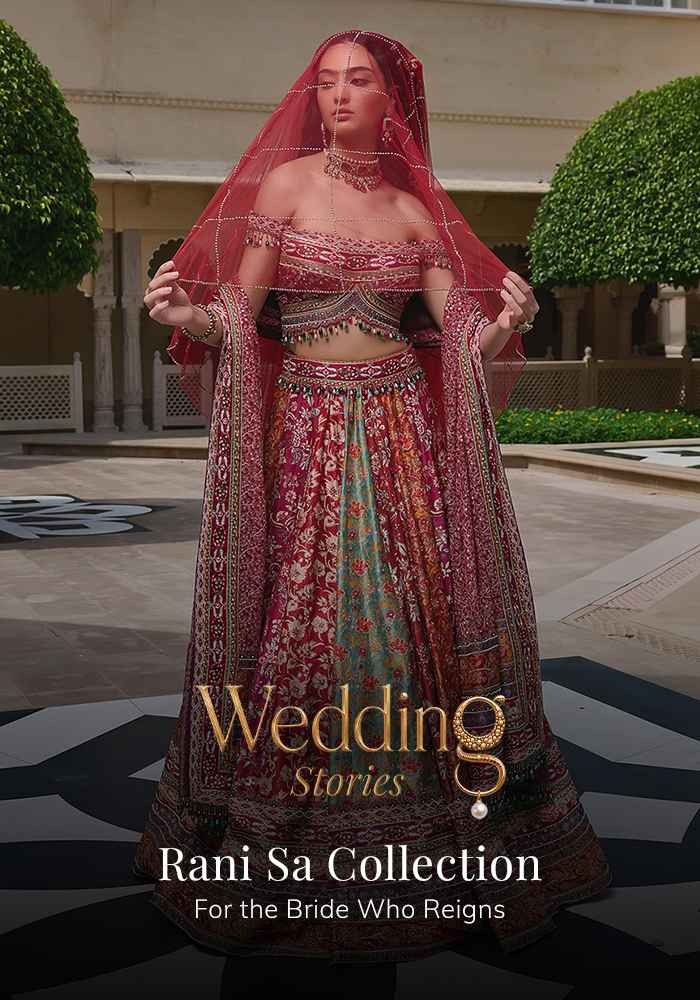
Bridal fashion in 2026 is in a fascinating moment of tension—between tradition and reinvention, between heirloom weight and wearable lightness. The Rani Sa Collection within Wedding Stories by Aza anchors itself firmly in regal dressing. Expect the kind of lehengas and sarees that carry the visual grammar of royal Indian courts—dense zardozi, structured silhouettes, and an authority in their construction that feels ceremonial without being stiff.
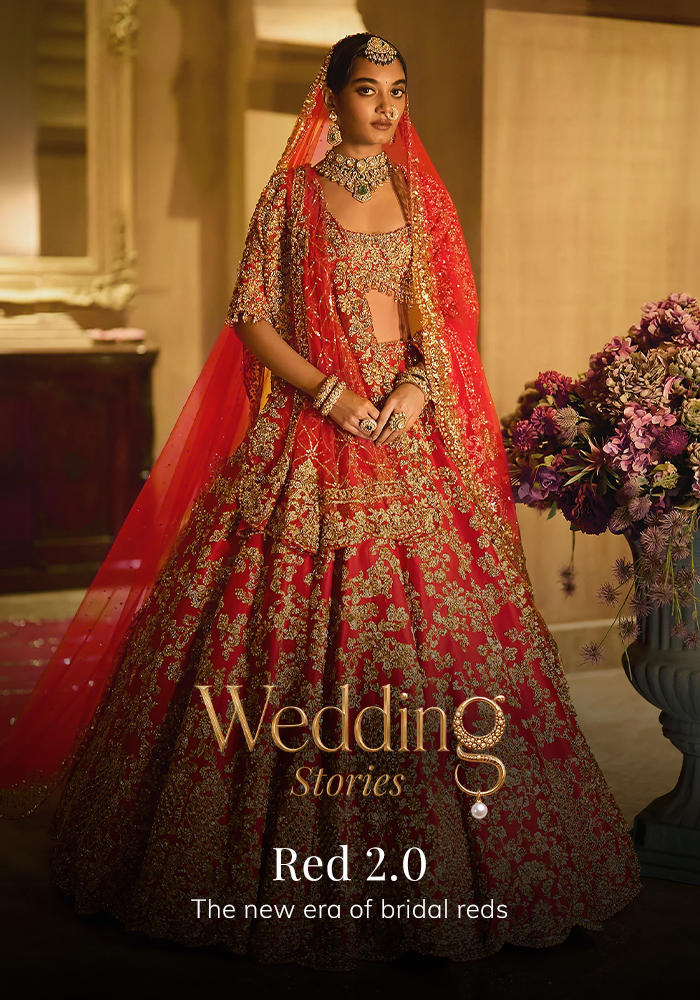
Then there's Red 2.0, perhaps the most compelling conversation in contemporary bridal fashion. The bridal red is evolving. Ivory-tinted reds, oxblood, tomato, and deep garnet are all entering the conversation, worn in cuts that range from the dramatically traditional to the refreshingly modern. This isn't a departure from the red bridal lehenga—it's an expansion of what it can be.
Romantic Couture and Timeless Moments
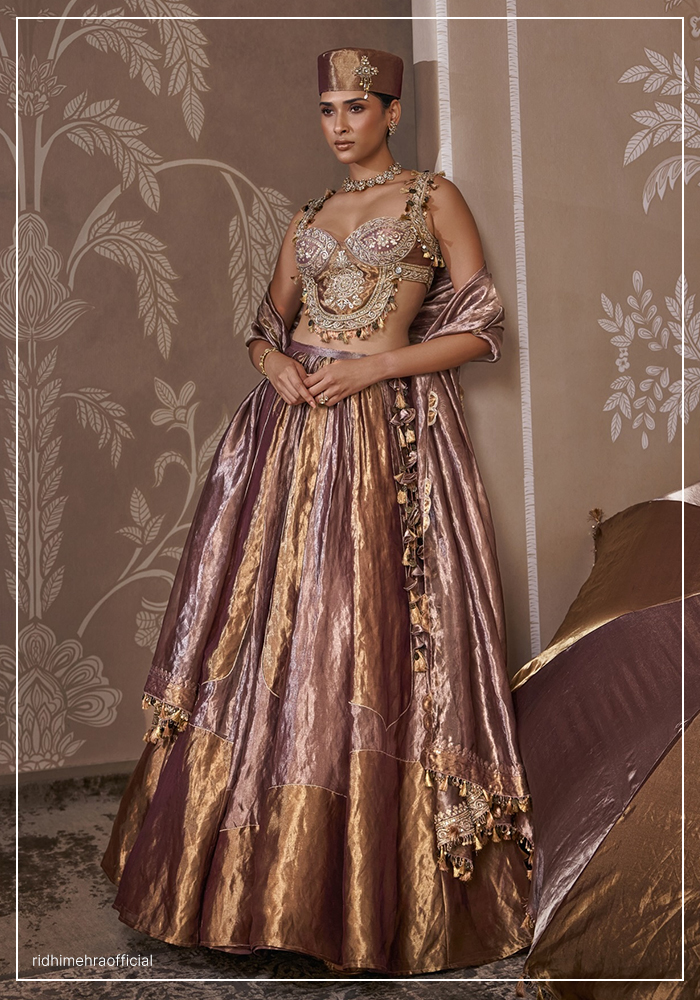
Ridhi Mehra's pieces within the edit bring a softness that functions as a counterpoint to maximalist bridal dressing. Her silhouettes favor the romantic—sheer organzas layered over delicate embroidery, pastels blush-tinted to near-white, and a sense of lightness that photographs beautifully across formats. For brides who want couture without ceremony-level heaviness, this is the direction.
Tarun Tahiliani, predictably, delivers the timeless. His craftsmanship sits at the intersection of Indian textile heritage and contemporary tailoring sensibility—the kind of bridal dressing that requires no trend context to understand, because it exists entirely outside of trend cycles.
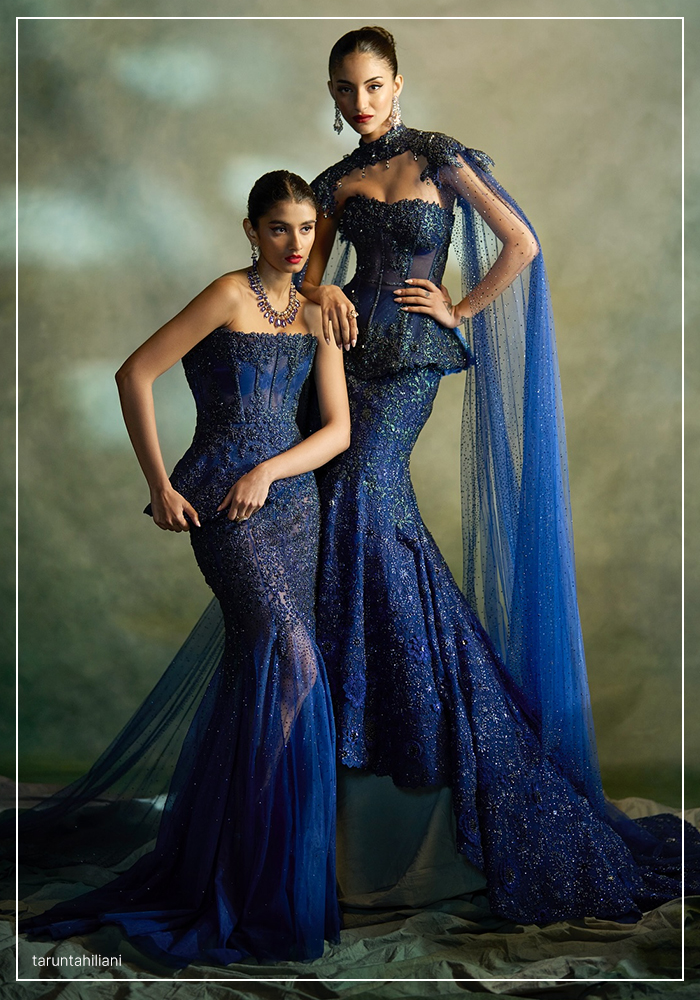
The Contemporary Bride and the Glamorous Reception
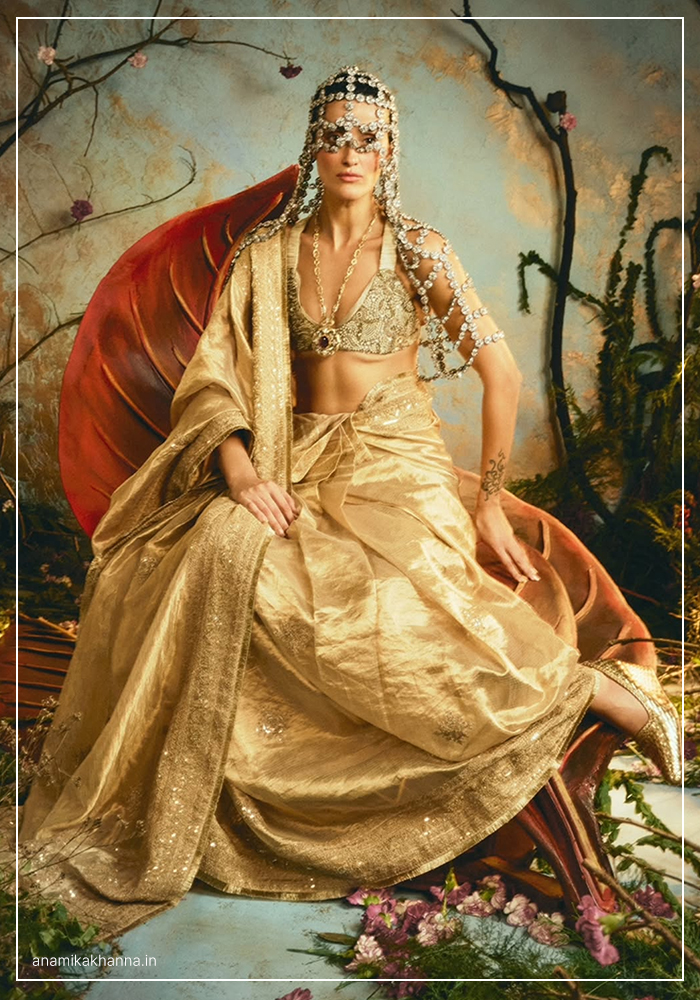
Anamika Khanna's offering speaks to the bride who approaches her wedding wardrobe the way she approaches the rest of her wardrobe: with personal authority. Unexpected fabric combinations, architectural drape, and an instinct for the unconventional make her pieces among the most discussed in the edit.
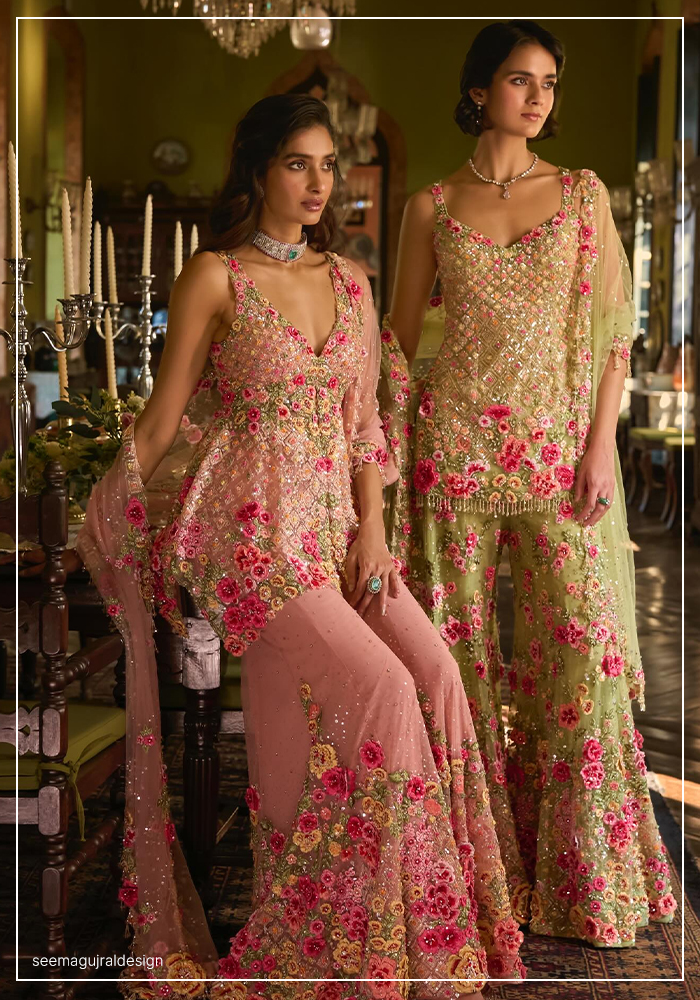
For the reception—often the evening where brides feel most liberated to experiment—Seema Gujral delivers the glamour. Sequin-heavy, high-impact, and unapologetically festive, her reception looks understand that the final night of a wedding calls for fashion that matches the energy of the room.
The Celebration Story: Dressing the Events That Build the Wedding
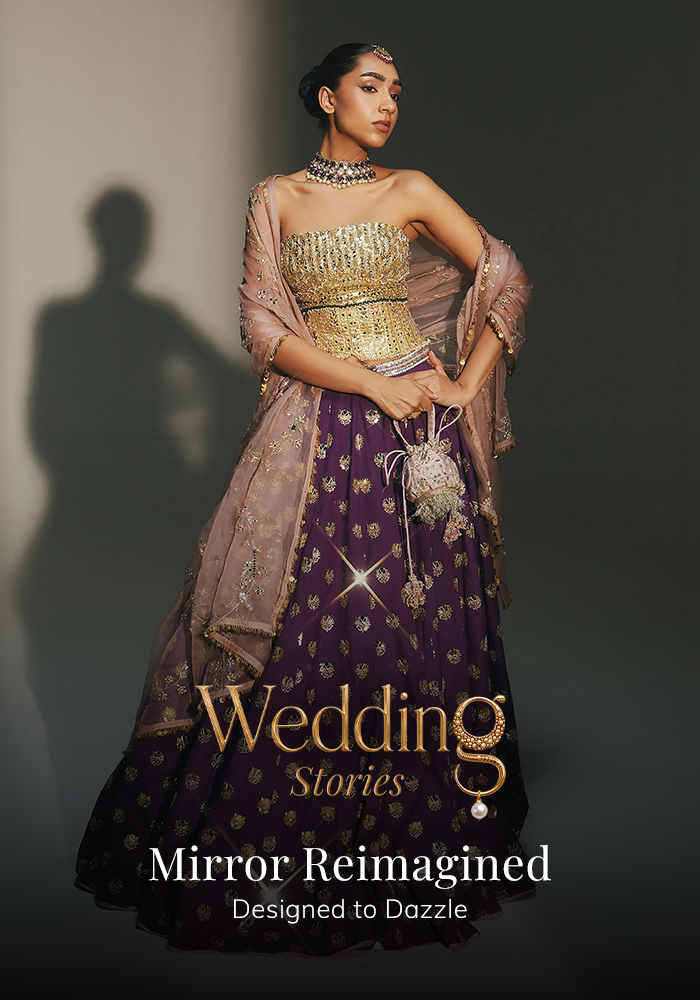
Mirror Reimagined is one of Wedding Stories by Aza's most visually striking edits. Built around mirror-work embroidery in contemporary configurations, it brings old craft technique into sharp, modern focus. Sangeet dressing has always had license to be bold—these pieces meet that permission with both hands.
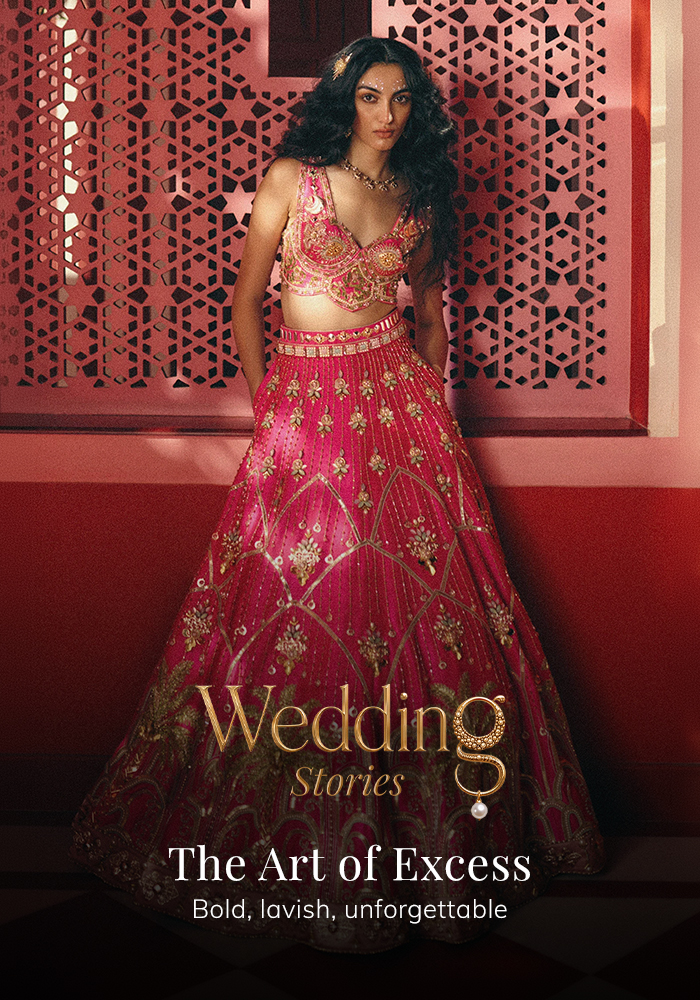
The Art of Excess pushes further. This edit is a full-throated endorsement of maximalism—layered embroidery, clashing textures, scale-defying silhouettes. It is, deliberately, a lot. And on the right evening, at the right wedding, it is exactly right.
Pastels, Florals, and Daytime Festivity
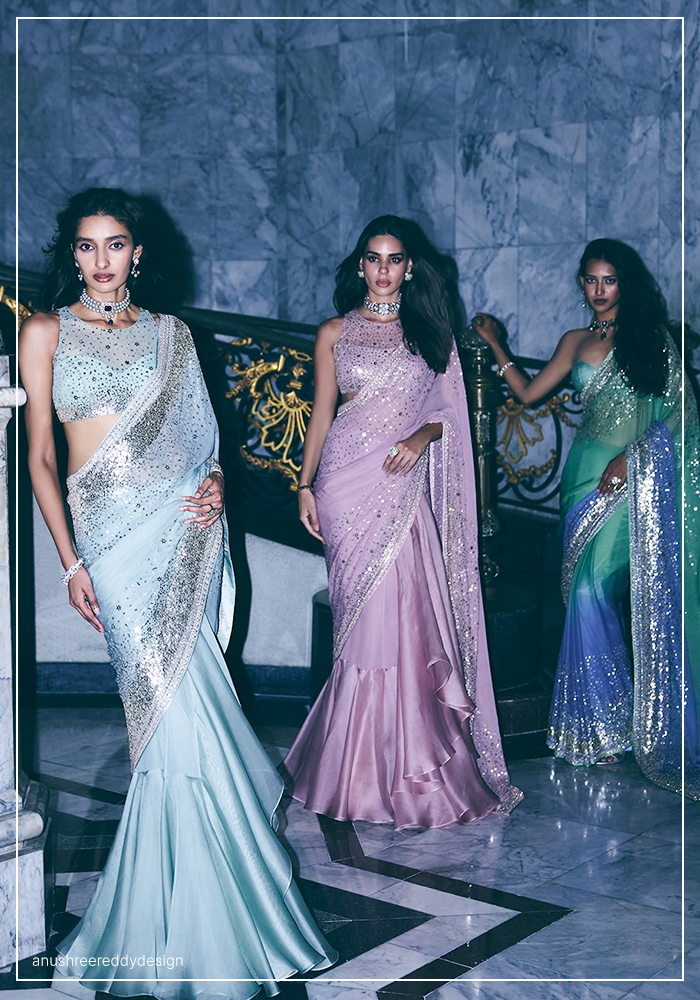
Haldi and mehendi dressing has developed its own distinct aesthetic language—one that wedding fashion 2026 continues to refine. Pastel Parade addresses this moment beautifully, gathering soft yellows, dusty pinks, muted mints, and lavenders into an edit built for daylight and outdoor ceremony settings.
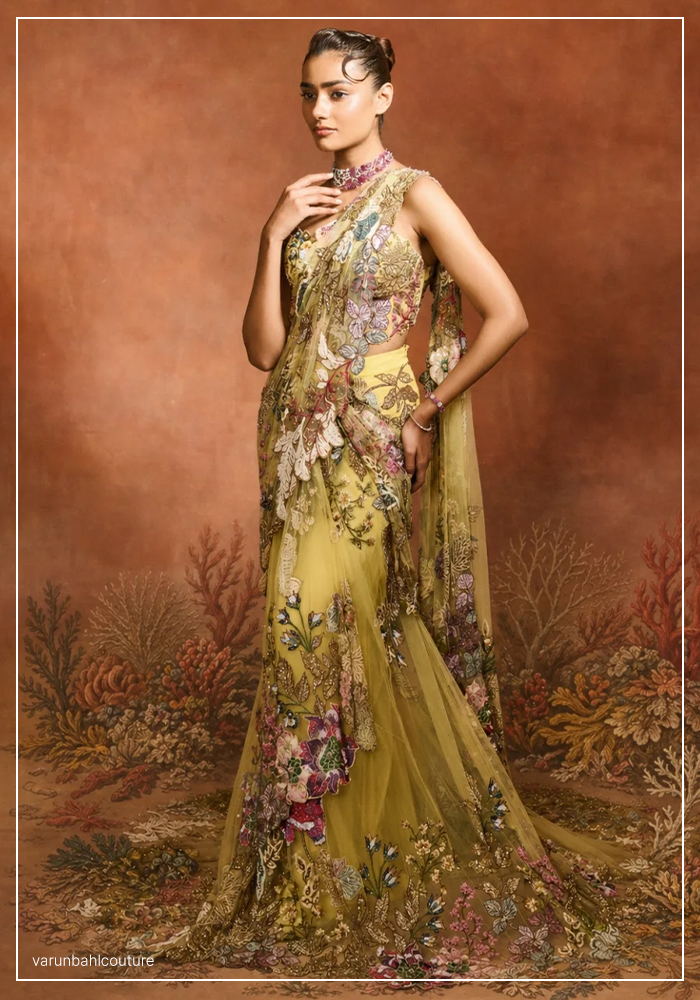
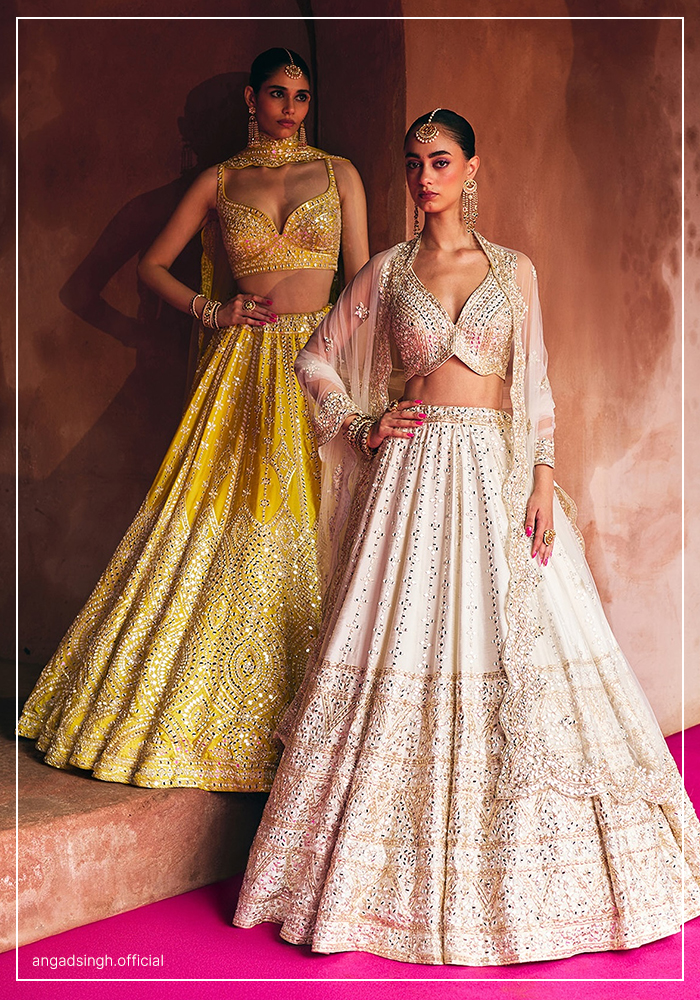
Varun Bahl's floral embroidery speaks naturally to daytime wedding aesthetics. His pieces feel garden-appropriate without feeling casual—a balance that is genuinely difficult to strike in Indian festive fashion. Angad Singh brings vibrancy to the same daytime space, his palette running warmer and his energy more celebratory.
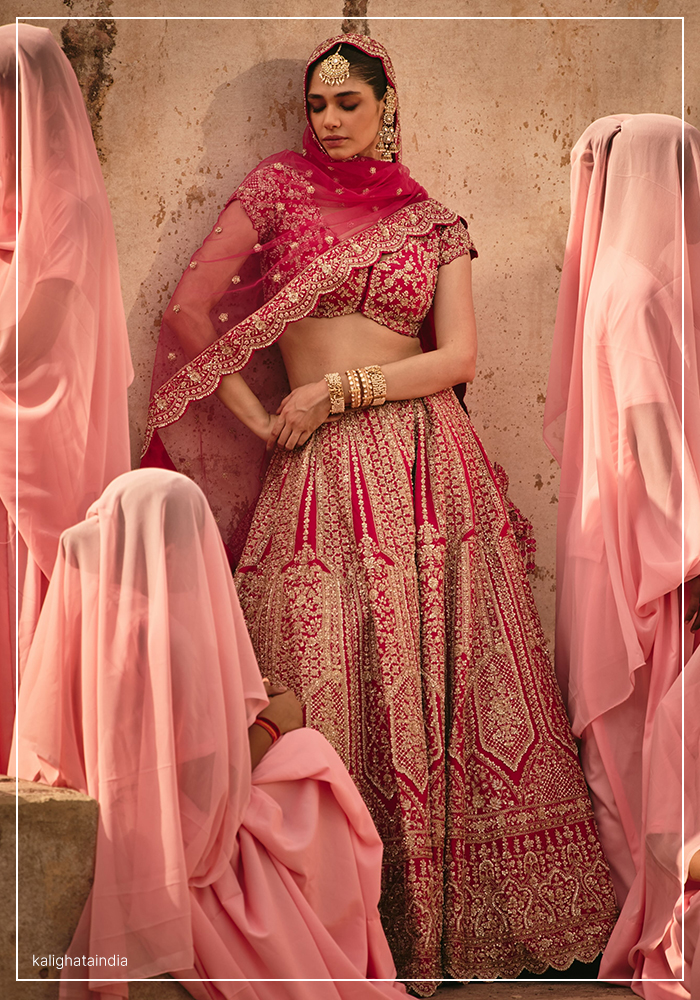
For intimate ceremonies and understated luxury, Kalighata occupies territory that few wedding fashion edits bother to address: the quiet, considered, beautifully made piece that whispers rather than shouts. Increasingly, this register is exactly what some guests and hosts want.
Cocktail Evenings Done Right
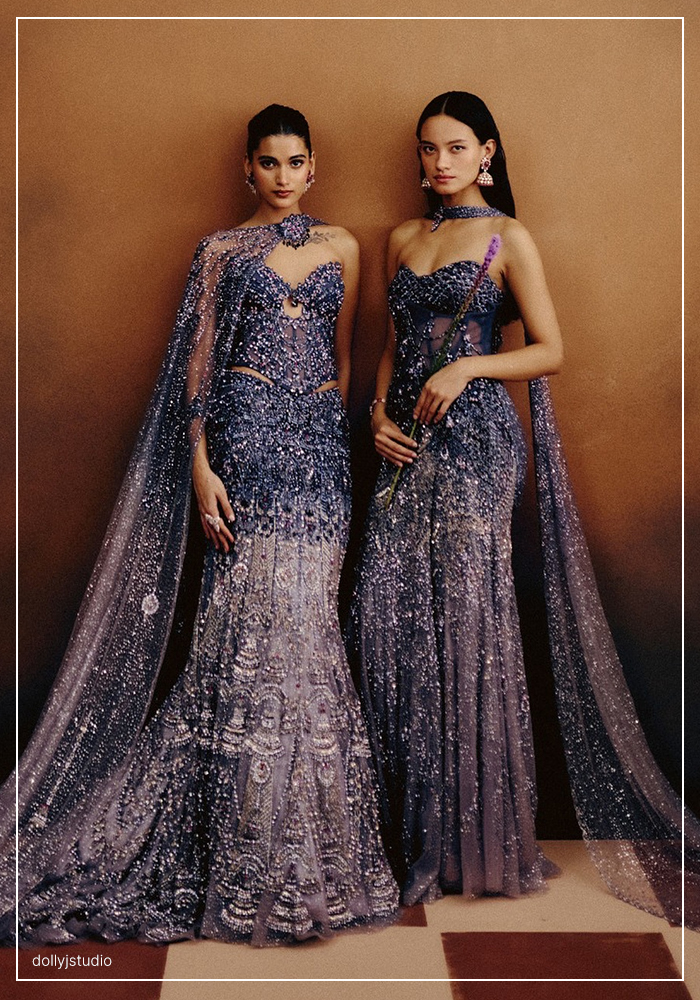
Dolly J understands the cocktail brief. Her pieces within Wedding Stories by Aza are glamorous in the way cocktail evenings require—polished, considered, and dressed up enough to register without competing with the bride. For wedding guest outfits that need to work across multiple celebrations, her range also offers the kind of versatility that rewards repeat wearing.
The Groom's Story: Heritage Craft in Modern Silhouettes
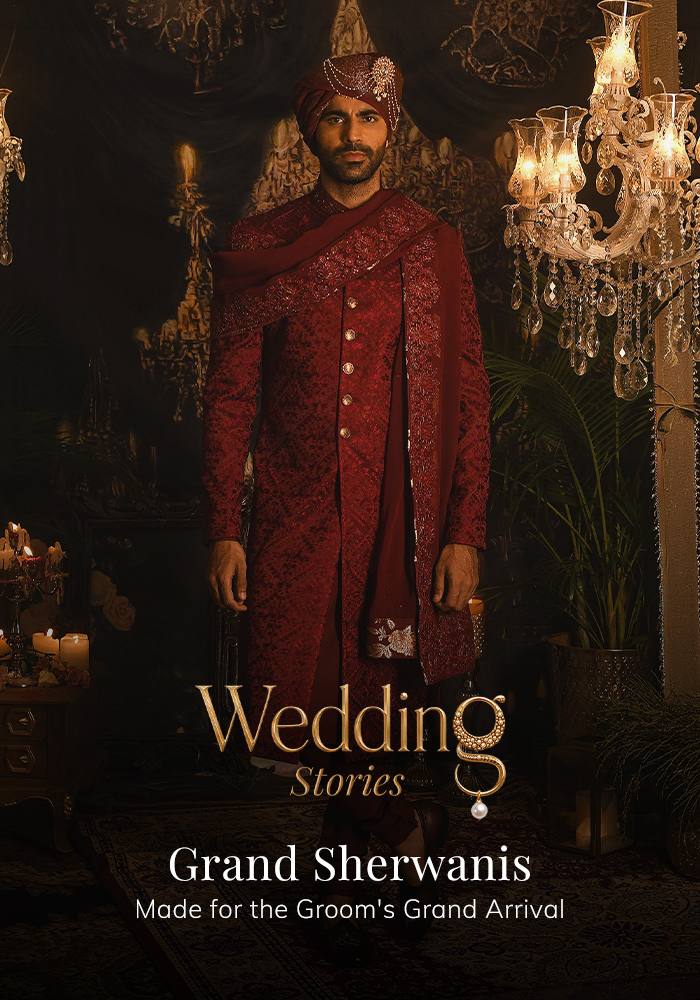
Groom dressing is having a genuine renaissance in Indian wedding fashion, and Wedding Stories by Aza reflects this with unusual depth. Grand Sherwanis anchors the edit in the ceremonial—embroidered sherwanis with the kind of craftsmanship that recalls the ateliers of Lucknow and Banaras, worn in cuts that have been quietly updated for 2026 proportions.
Mahima Mahajan brings a different sensibility entirely: contemporary tailoring that draws on menswear traditions both Eastern and Western. Her suits and bandhgala jackets sit comfortably in international contexts while remaining rooted in Indian textile and craft heritage.
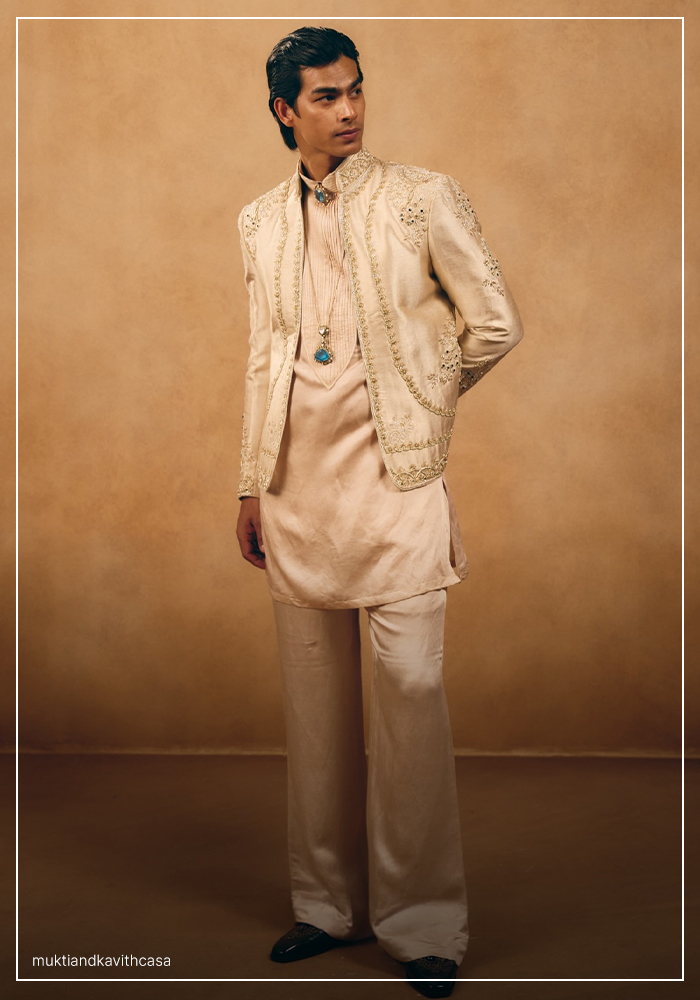
The Gentlemen's Circle functions as the broader menswear curation—a range of silhouettes, fabrics, and price points that acknowledges grooms are not a monolith. From the traditionalist who wants full ceremonial weight to the minimalist who wants a single perfectly cut kurta, the edit has a considered answer.
The Inner Circle: Bridesmaids, Guests, and the Fashion That Bridges Everything
The Bridesmaid Collective addresses one of the most genuinely difficult styling challenges of any wedding: dressing a group of women with different bodies, aesthetics, and budgets in a way that reads cohesive without reading identical. Wedding Stories by Aza approaches this with flexibility—offering color families and silhouette categories rather than prescriptive matching.
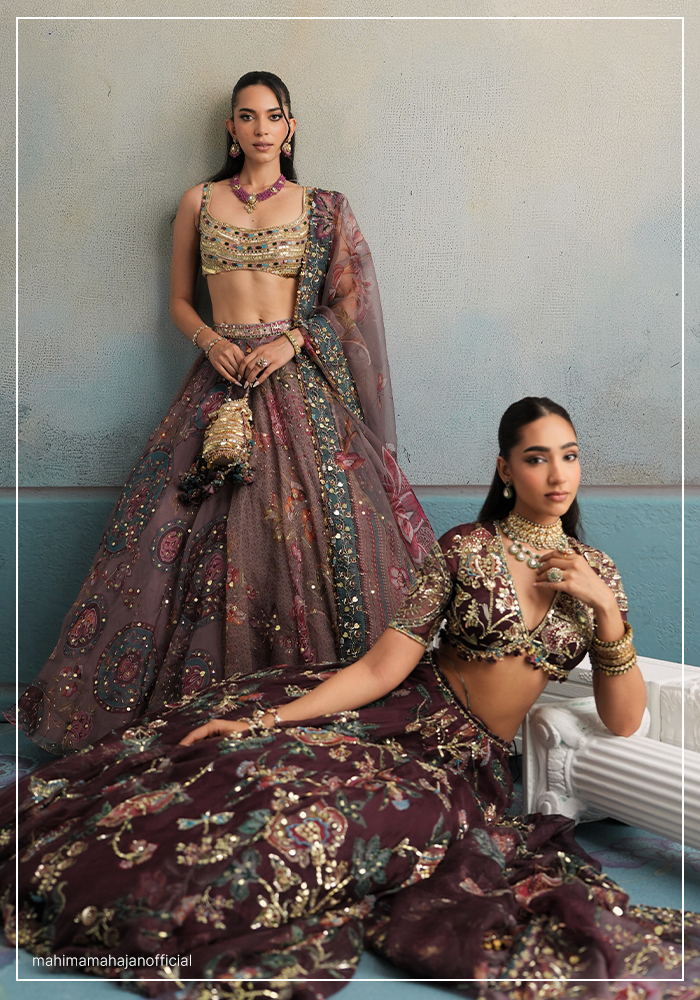
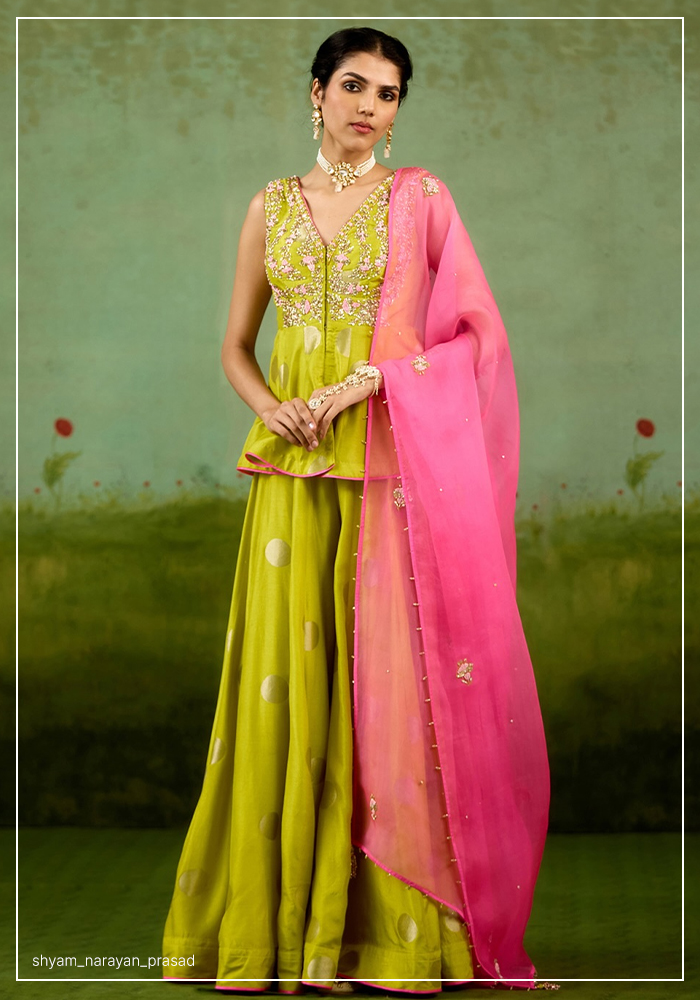
Wedding guest dressing across the wider edit is equally considered. The best pieces function across multiple events, transitioning from afternoon mehendi to evening cocktails with a change of jewellery and footwear rather than an entire outfit. Statement looks exist for guests who want them; quieter, more versatile options exist for those attending five weddings this season and need a wardrobe that works harder.
Why Wedding Stories by Aza Feels Different This Season
Most wedding fashion content is organized around designers or product categories. Wedding Stories by Aza is organized around lived experience—the actual sequence of events that make up a modern Indian wedding, and the emotional register of each one.
That distinction matters. It means a bride shopping for her reception doesn't have to wade through haldi looks to find what she needs. It means a groom looking for contemporary menswear finds it in a context that speaks directly to his aesthetic. It means a guest attending four events across a long weekend can understand, clearly, what the edit is offering her for each one.
The curation is considered, the range is wide, and the editorial intent is evident throughout. That combination is rarer than it should be.