


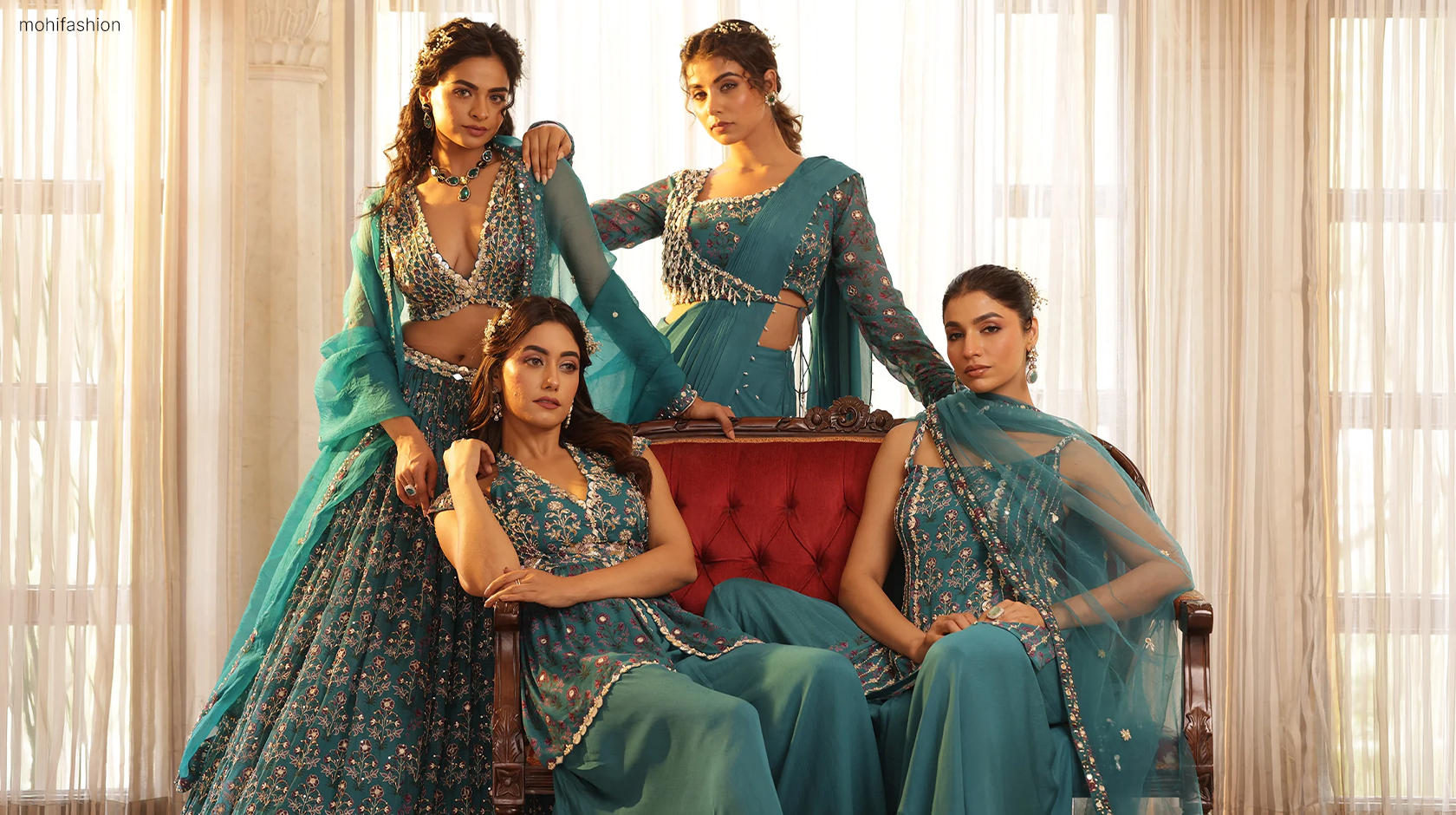
For winter Indian weddings in the USA (November–December), prioritize fabrics like velvet, silk, brocade, and heavy georgette that hold up in cold weather while looking ceremonial indoors. Layer thoughtfully—a structured dupatta or embroidered jacket handles the transition from outdoor chill to heated banquet halls. Avoid white, black, and red as guest colors.
November and December Indian weddings in the USA come with a specific challenge: it's cold outside, but the banquet hall is not. You'll walk from a parking lot in 35°F weather straight into a reception buzzing with lights, music, and body heat. Your outfit needs to do double duty—warmth for the journey, elegance for the event.
This guide covers the best fabrics and silhouettes for winter wedding functions, from sangeet to reception, so you can dress appropriately for every occasion without sacrificing comfort or style.

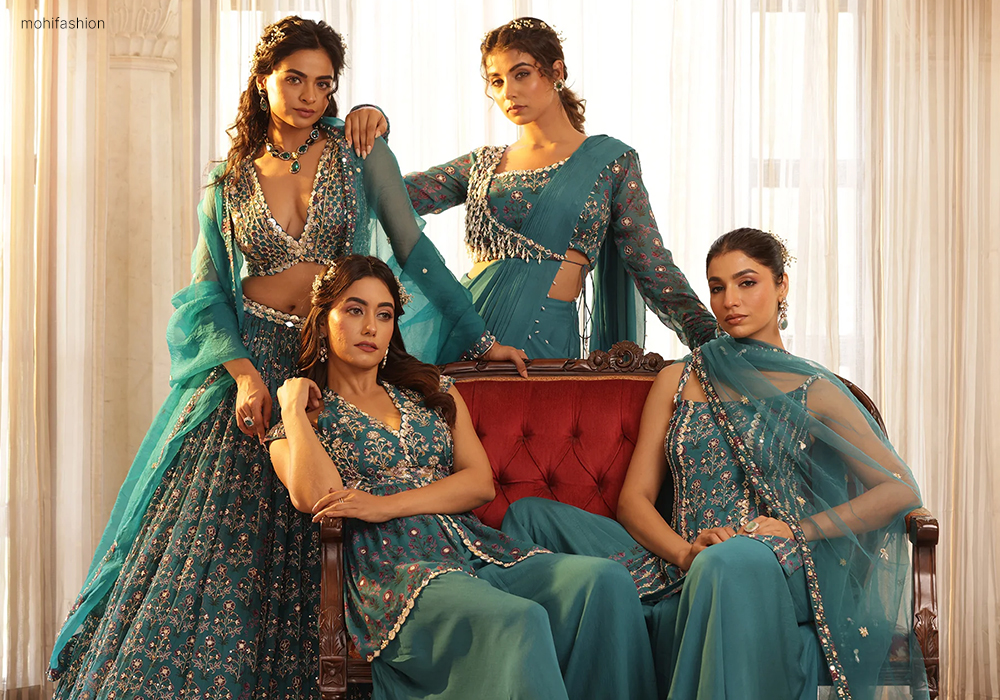
Which Fabrics Work Best for Winter Indian Wedding Outfits?
Fabric is everything when dressing for cold-weather celebrations. The right choice keeps you warm outdoors without overheating under ballroom lighting.
Velvet
Velvet is the strongest cold-weather option in Indian occasion wear. Heavy, rich, and naturally insulating, velvet lehengas and anarkalis photograph beautifully under warm lighting and feel appropriately luxurious for formal winter functions. Deep jewel tones—emerald, sapphire, plum, and burgundy—are particularly striking in this fabric.
Silk and Brocade
Silk sarees and brocade lehengas carry the weight and structure that lighter georgette or chiffon cannot in December weather. Banarasi and Kanjivaram silks, in particular, are a natural fit for winter ceremonies—they're substantial enough to provide warmth and refined enough for a formal wedding setting.
Heavy Georgette and Wool Blends
Heavy georgette sits between silk and chiffon in terms of weight, making it a practical choice for sharara sets and anarkalis at winter sangeets and receptions. Wool-blend kurta sets are gaining traction for daytime ceremonies—warmer than you'd expect and easier to style for venues where the dress code is slightly relaxed.
How Should You Layer for an Indoor Banquet Hall Wedding?
Most winter Indian weddings in the USA take place inside heated venues, which means heavy coats are left at the door. The layering strategy here is about transitional warmth, not survival outerwear.
Dupattas as layers: A heavily embroidered or velvet dupatta draped over the shoulders functions as a stylish alternative to a shawl. It adds warmth between the car and the venue without disrupting the outfit.
Embroidered jackets and capes: A structured jacket over a gown or pant set is one of the most practical winter wedding styling choices. Remove it once inside; the outfit underneath still looks complete.
Shawls: A silk or pashmina shawl over a saree is a time-tested winter solution. Choose one in a coordinating tone rather than a contrasting color for a more polished effect.
What to Wear to Each Winter Wedding Function
Sangeet
Sangeet calls for something festive and free-moving. Sharara sets, anarkalis, and embroidered kurta sets in heavy georgette or printed silk all work well. This is the function with the most room to experiment—vibrant colors, bold prints, and playful silhouettes are all fair game.
Wedding Ceremony
The ceremony is the most formal function of the weekend. Velvet or silk lehengas, brocade sarees, and floor-length anarkalis in rich winter tones are all appropriate. Keep embellishment one notch below the bridal level, and choose colors that photograph well under candlelight and string lights—deep fuchsia, teal, gold, and burnt orange all stand out.
Reception
Receptions allow for slightly more creative outfit choices. A gown in an embellished fabric or an Indo-Western pant set works as well as a traditional lehenga or saree here. Kaftans in heavily embroidered fabrics are an underrated reception option—elegant, comfortable, and distinctive.
Colors to Wear (and Avoid) at Winter Indian Weddings
Winter weddings lend themselves to a naturally rich color palette. Emerald, navy, plum, gold, mustard, burnt orange, and deep rose are all strong seasonal choices. Blush and champagne work well for those who prefer softer tones.
Three colors to avoid as a guest: white, black, and red. White and black are traditionally considered inauspicious at Indian celebrations, and red is generally reserved for the bride.
Shop Winter Wedding Looks at Aza Fashions
Aza Fashions' Celebration Closet is a strong starting point for winter wedding dressing. Browse across lehengas, sarees, sharara sets, anarkalis, gowns, and pant sets, with new arrivals added regularly from leading Indian designers.
Frequently Asked Questions
What fabrics are best for winter Indian wedding outfits in the USA?
Velvet, silk, brocade, wool blends, and heavy georgette are the best fabrics for winter Indian weddings. They provide warmth outdoors and hold up well under heated indoor conditions, while still looking ceremonial.
How do you layer an Indian wedding outfit in cold weather?
The most effective options are embroidered dupattas draped over the shoulders, structured jackets or capes layered over gowns or pant sets, and silk or pashmina shawls over sarees. These add warmth between the car and the venue without disrupting the overall look.
What colors should guests avoid at Indian weddings?
Guests should avoid white, black, and red. White and black carry inauspicious connotations in many South Asian traditions, and red is typically reserved for the bride.
What is appropriate to wear to a winter sangeet in the USA?
Sharara sets, anarkalis, and embroidered kurta sets in heavy georgette or silk are well-suited to a winter sangeet. The sangeet allows more flexibility in color and silhouette than the ceremony or reception.
Can I wear a gown to an Indian wedding reception?
Yes—an embellished or Indo-Western gown is an increasingly popular reception option and is widely accepted at Indian weddings in the USA. Pair it with statement jewelry and a structured jacket or embroidered dupatta for a complete look.

