1. The Timeless Bandhani Saree
Bandhani, also known as Bandhej, is the iconic tie-dye craft of Rajasthan and Gujarat. The technique involves plucking the cloth with fingernails into tiny bindings, which are then tied with thread before dyeing. This creates a beautiful pattern of dots on the fabric.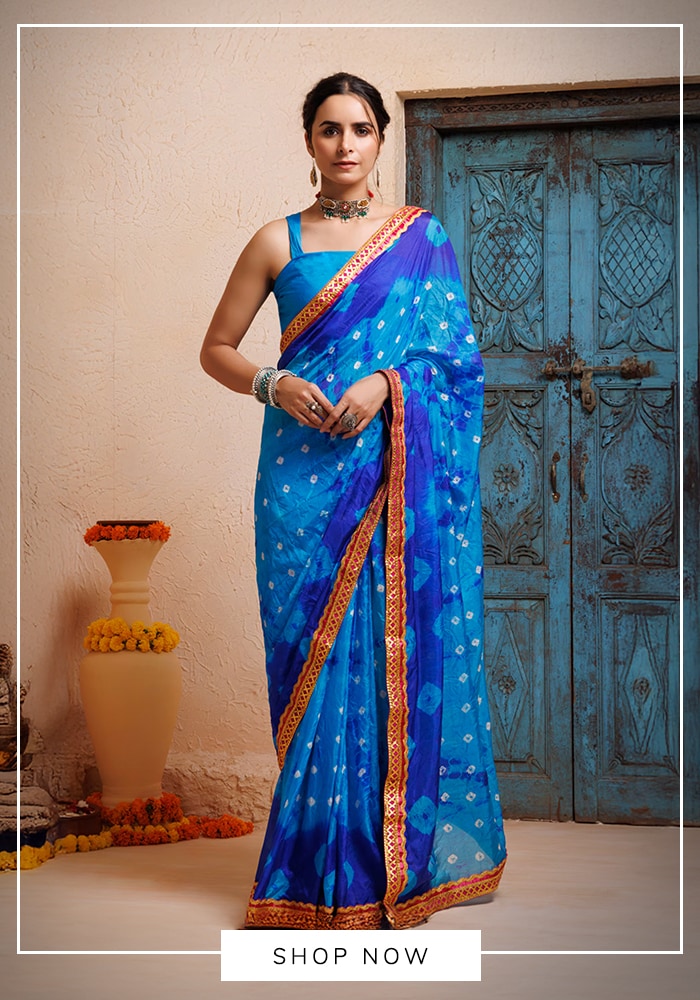
- The Traditional Touch: Classic Bandhani sarees feature intricate patterns like chandrakala (moon shape) or shikari (hunting scenes) in vibrant reds, yellows, and greens. They are a staple at weddings and religious ceremonies.
- The Modern Blend: Today’s designers are taking Bandhani to a new level. You will find sarees that combine Bandhani with other crafts like mirror work or Chikankari. Modern Bandhani sarees often feature unconventional color combinations like pastels, greys, and indigo. Instead of all-over patterns, you might see Bandhani used on just the pallu or border of a georgette or crepe saree, creating a chic, minimalist look.
- Aza Fashions Tip: Pair a modern Bandhani saree with a simple, solid-colored blouse to let the intricate tie-dye pattern shine. These sarees are perfect for festive gatherings and pre-wedding functions.
2. The Wave-Like Leheriya Saree
Leheriya, which means "wave-like," is another form of tie-dye unique to Rajasthan. Instead of dots, this technique creates diagonal or chevron stripes. The fabric is rolled diagonally and tied at intervals before being dyed.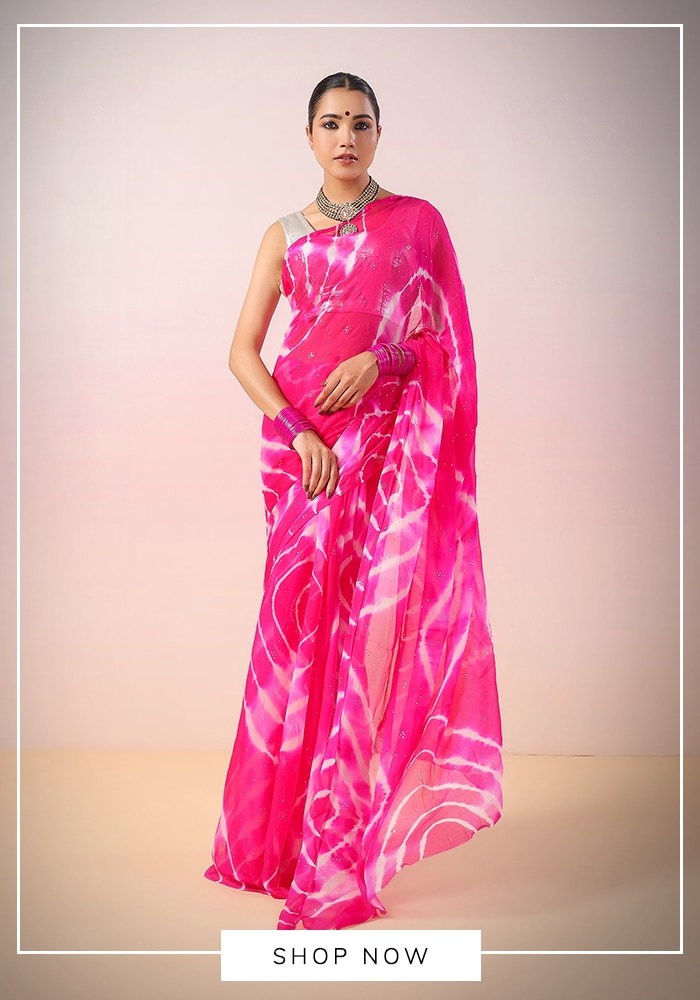
- The Traditional Touch: Traditionally, Leheriya sarees were made in bright, auspicious colors and worn during the monsoon festival of Teej. The flowing wave patterns symbolized the rain and prosperity.
- The Modern Blend: Modern Leheriya is all about experimentation. Designers are creating multi-colored Leheriya sarees, where each section of stripes has a different hue, resulting in a stunning rainbow effect. You will also see Leheriya patterns on luxurious fabrics like silk organza and chiffon, making them lighter and more elegant. Some sarees even feature Leheriya combined with subtle embellishments like sequins or pearls along the stripes for a touch of glamour.
- Aza Fashions Tip: A Leheriya saree is perfect for daytime events like a brunch or a puja. Its vibrant pattern requires minimal accessorizing. Opt for simple pearl or diamond studs to complete the look.
3. The Feather-Light Kota Doria Saree
Originating from Kota, Rajasthan, Kota Doria is a unique fabric known for its distinctive square-checked pattern, called 'khat.' The fabric is woven with a blend of cotton and silk threads, making it incredibly lightweight, airy, and translucent.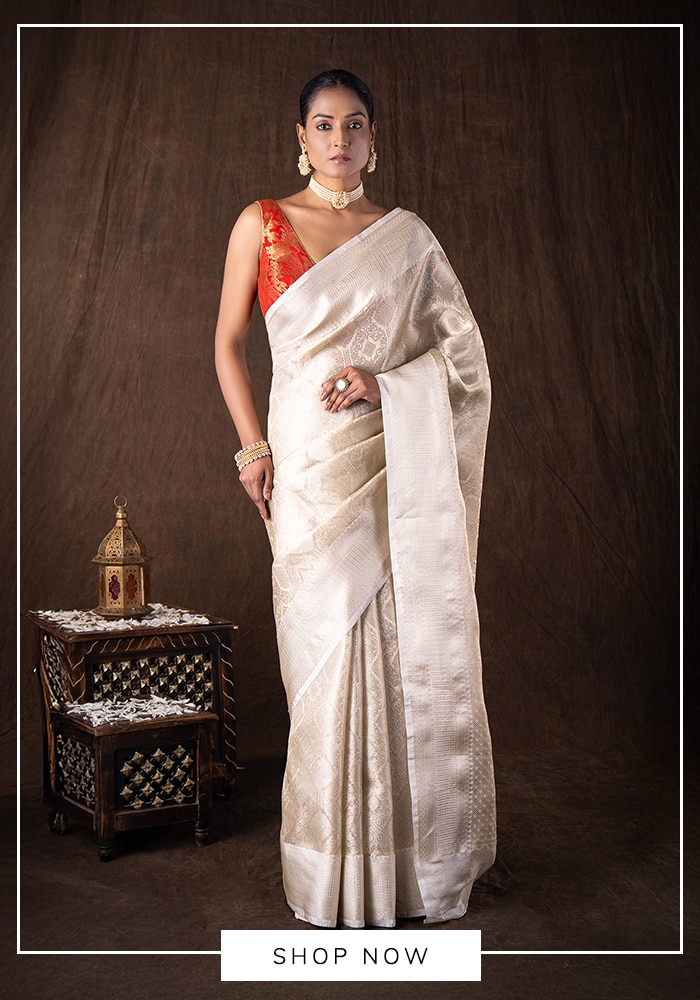
- The Traditional Touch: Simple Kota Doria sarees in soft, pastel shades with a plain zari border have been a summer favorite for generations. Their sheerness and comfort are unmatched.
- The Modern Blend: The modern Kota Doria saree is a canvas for innovation. Designers are now embellishing this delicate fabric with hand-block prints, floral embroidery, and appliqué work. You can find Kota sarees with bold, contemporary motifs or intricate threadwork that adds texture and richness without compromising the fabric's lightness. These sarees are no longer just for casual wear; an embellished Kota Doria saree is a sophisticated choice for formal office events or summer parties.
- Aza Fashions Tip: Due to its sheer nature, a Kota Doria saree looks best with a well-fitted, opaque petticoat and blouse. These sarees offer a very graceful and understated elegance.
4. The Artistic Gota Patti Saree
Gota Patti work is a form of embroidery that originated in Rajasthan. It involves applying small pieces of zari ribbon (Gota) onto fabric in elaborate patterns. The Gota is cut into shapes like leaves, flowers, and diamonds, creating a rich and textured surface.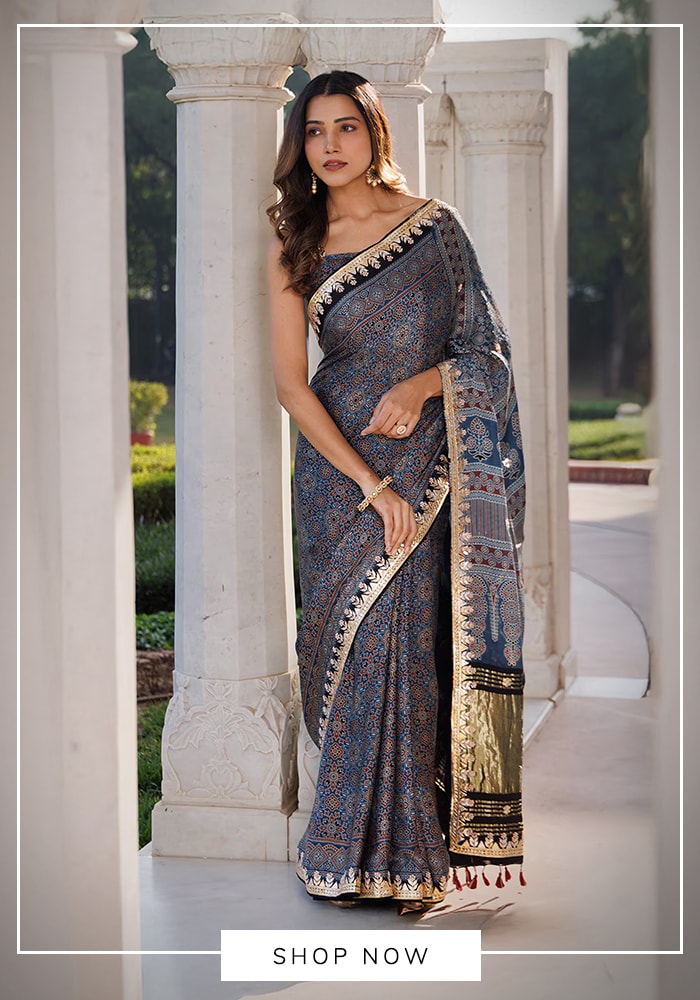
- The Traditional Touch: Heavy Gota Patti work on bright chiffon or georgette sarees is a classic look for Rajasthani brides and is a popular choice for weddings and grand festivals.
- The Modern Blend: Contemporary Gota Patti work is more subtle and refined. Instead of dense, all-over patterns, you will find sarees with scattered Gota motifs or a delicate Gota Patti border. Designers are also using lighter, silver-toned Gota instead of the traditional gold for a more modern feel. This toned-down approach makes Gota Patti sarees versatile enough for cocktail parties and evening receptions.
- Aza Fashions Tip: A saree with minimal Gota Patti work is incredibly elegant. Pair it with polki or kundan jewelry to complement the traditional craft while maintaining a modern aesthetic.
5. The Bold Block-Printed Saree
While block printing is practiced across India, the block prints from towns like Sanganer and Bagru in Rajasthan are world-famous. These prints are known for their fine lines and intricate floral and paisley motifs.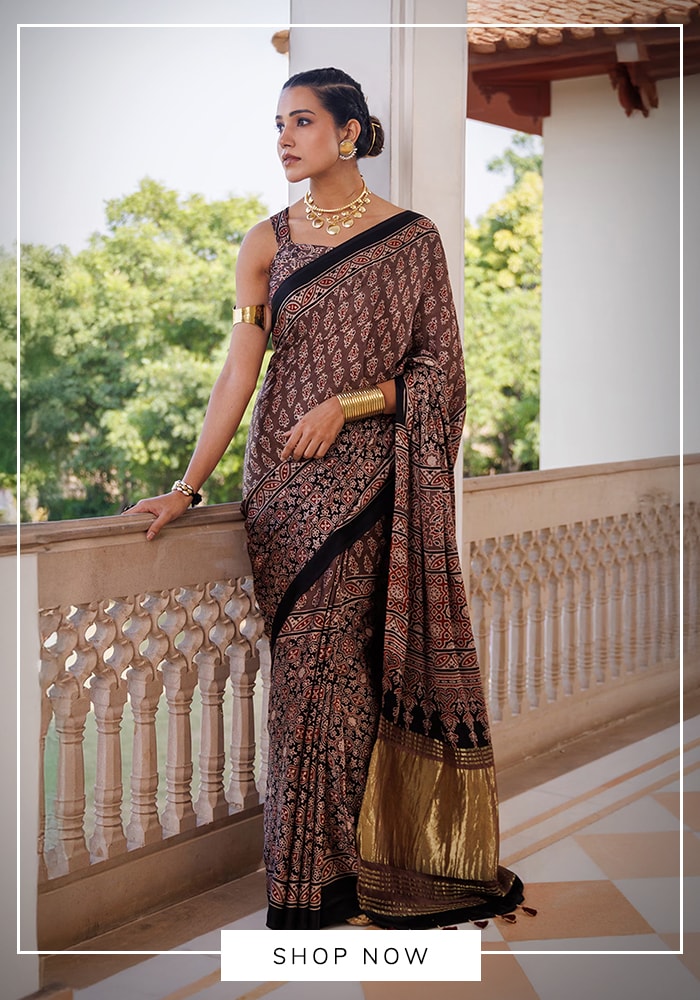
- The Traditional Touch: Sanganeri prints typically feature delicate floral patterns on a white or off-white background, while Bagru prints use natural dyes like black and red on a beige base. These cotton sarees are a staple for daily wear.
- The Modern Blend: Modern block-printed sarees are all about fusion. You will find traditional Rajasthani motifs printed on unconventional fabrics like Chanderi silk or linen. Designers are also experimenting with geometric and abstract block-print patterns for a more contemporary vibe. Pairing a block-printed saree with a contrasting blouse, like an Ajrakh print with a plain silk blouse, is a popular modern trend.
- Aza Fashions Tip: A block-printed saree is incredibly versatile. Dress it down with silver jewelry for a casual look or dress it up with a heavy necklace and a stylish belt for a semi-formal event.