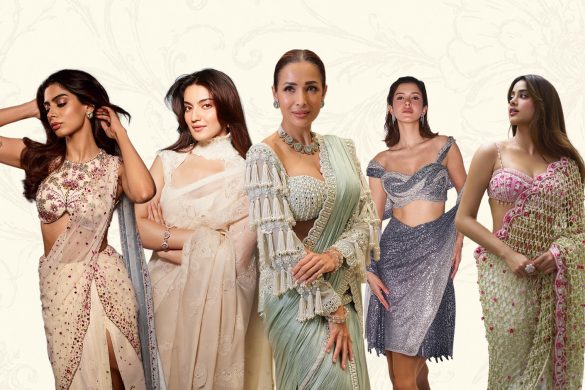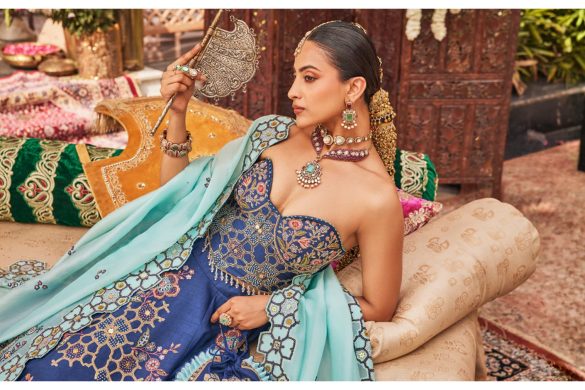
Have you ever looked at a bridal lehenga and wondered what makes it shine so brilliantly? It isn't just the fabric or the color; it is often the intricate, metallic embroidery that catches the light. This art of weaving gold and silver threads into fabric is known as Zari Work.
For centuries, Zari work has been the symbol of royalty in India. From the heavy, majestic robes of Mughal emperors to the dazzling sarees worn at modern Indian weddings, this craft has stitched its way through history. While it is famous across the country, the state of Rajasthan—specifically cities like Jaipur, Tonk, Ajmer, and Jodhpur—remains a beating heart for this golden art form.
In this post, we will unravel the history of Zari, explore the different styles like Zardozi and Gota, and understand the incredible patience required to create these masterpieces.
What is Zari Work?
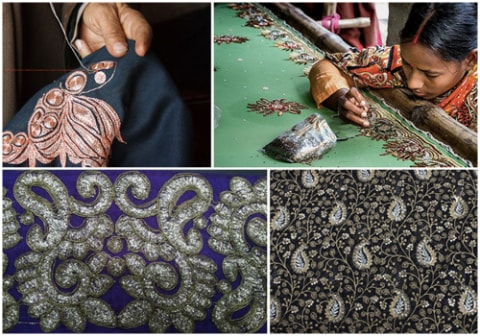
Zari work, often referred to interchangeably as Zardozi or Kalabattu, is the art of weaving fine metallic threads into fabrics like silk, velvet, and satin.
The term comes from the Persian language, where "Zar" means gold and "Dozi" means embroidery. Historically, artisans used pure gold and silver wires to create elaborate patterns. These threads were sewn onto the fabric along with beads, pearls, and precious stones to create garments that were literally worth their weight in gold.
Today, while the essence remains the same, the materials have evolved to make the craft more accessible. But the goal is still the same: to create patterns that look regal, precise, and breathtakingly beautiful.
A Journey from Persia to Rajasthan
The story of Zari is as rich as the embroidery itself. It didn't start in India; its roots trace back to ancient Persia (modern-day Iran).
The Ancient Origins
It is believed that the word 'Zari' originated in a Persian village of the same name. Migrants brought this skill to India between 1700 and 1100 B.C., during the Rigvedic period. However, for a long time, it remained a niche skill.
The Mughal Golden Age
The true golden age of Zari work began during the Mughal Empire. Emperor Akbar, known for his love of art and culture, was a huge patron of Zardozi. Under his rule, the royal karkhanas (workshops) buzzed with artisans creating majestic robes, scabbards, and court hangings. The intricate floral motifs and geometric patterns we see today are heavily influenced by this era.
The Decline and Revival
Unfortunately, art often relies on patronage. When Emperor Aurangzeb came to power, he cut funding for many arts. Creating Zari required expensive raw materials like real gold, and without royal money, the craftsmen could not afford to continue. The art nearly went extinct.
It wasn't until after India's independence that the government took steps to revive this heritage. Today, it has flourished again, becoming a key cultural identity for states like Rajasthan, Gujarat, Madhya Pradesh, and Maharashtra.
The Art of Making Zari
Creating a Zari masterpiece is not a quick task. It requires a steady hand, sharp eyes, and immense patience.
The Tools of the Trade
The main tool used in Zari work is a specialized curved hook or needle, often called an Aari. Artisans also use:
- Dabka thread: A very thin, coiled metallic wire that acts like a hollow tube.
- Sitaraas: Small sequins.
- Beads: Glass or plastic beads to add color and texture.
The Process
- Tracing: First, the design is drawn onto a tracing paper. This design is then transferred onto the fabric (usually heavy fabrics like silk or velvet).
- The Adda: The fabric cannot be held in the hand. It is stretched tightly over a wooden frame called an Adda. This tension is crucial so the heavy embroidery doesn't pucker the fabric.
- Embroidery: The artisan sits on the floor around the frame. Holding the thread underneath the fabric and the hook on top, they pull loops of the metallic thread through the fabric, locking them in place. Each bead, pearl, or piece of dabka wire is hand-stitched into the design.
Types of Zari Work
Zari is a broad term. Depending on the technique and the look, it is categorized into different styles. Here are the most popular ones found in Rajasthan:
1. Zardozi
This is the heavy-hitter of the group. Zardozi is elaborate, 3D, and dense. It involves sewing gold threads along with seed pearls, beads, and heavy stones.
- Best for: Wedding lehengas, sherwanis, and heavy coats.
2. Kamdani
If Zardozi is heavy, Kamdani is its lighter cousin. This technique uses flattened wire and regular thread pressed down to create a satin-stitch effect. It creates small, delicate patterns often called hazara butti.
- Best for: Scarves, caps, and lighter dupattas.
3. Mina Work
This style is all about color. In Mina work, gold threads are used in a way that mimics enamel work (Minakari). It looks like precious jewellery embedded into the cloth.
4. Gota Work
In this variation, ribbons made of flattened gold or silver wire (Gota) are woven with silk or cotton threads. These ribbons are then used as trims or appliqued onto the garment. This is a staple in Rajasthani festivals.
Real vs. Imitation: Knowing Your Zari
Not all that glitters is gold! Zari threads are categorized into three types based on the materials used:
- Real Zari: This is the authentic, old-school version. It is made from fine silver wire that is electroplated with real gold. It is heavy, expensive, and usually made to order for high-end clients.
- Imitation Zari: This looks like the real deal but is friendlier to the wallet. It uses copper wire that is electroplated with silver. It shines brilliantly but costs a fraction of real gold.
- Metallic Zari: This is what you see most often in affordable fashion. It is made from slitted polyester film coated with aluminum or metallic color. It is light, durable, and resistant to tarnishing.
Zari in the Modern World
Today, Zari work is a blend of tradition and modernity. While the era of kings is over, the "royal" feeling of Zari is still very much in demand.
In Rajasthan, Zari is not just a craft; it is a status symbol. It is an essential part of the trousseau for brides. However, because it is labor-intensive, high-quality hand-done Zardozi remains a luxury item, often restricted to the upper class or special occasions.
Beyond Clothing
While sarees, lehengas, and kurtas remain the primary canvas for Zari, designers are getting creative. You can now find Zari work on:
- Clutch bags and potlis
- Statement shoes (Juttis)
- Wall hangings and home decor
- Belts and headbands
Caring for Your Zari
Because Zari involves metal (even if it is just a coating), it can react with air and moisture. To keep your Zari garments shining for years:
- Wrap them up: Store them wrapped in soft cotton or muslin cloth. This protects the metal from reacting with the air.
- Avoid Perfume: Never spray perfume directly onto the embroidery, as the alcohol can tarnish the metal.
- Dry Clean Only: Never wash heavy Zari work at home. Professional dry cleaning is the safest way to maintain the shine.
Conclusion
Zari work is more than just embroidery; it is a golden thread that connects us to our history. Every loop and stitch carries the legacy of Persian travelers, the grandeur of Mughal courts, and the skill of Rajasthani artisans.
Whether you are wearing a light Kamdani scarf for a party or a heavy Zardozi lehenga for your wedding, you are wearing a piece of art. In a world of fast fashion, Zari stands out as a reminder that true beauty takes time, patience, and a little bit of sparkle.
So, the next time you see a Zari garment, take a moment to appreciate the centuries of tradition woven into its folds. It is truly a craft capable of dazzling not just your wardrobe, but your heart.