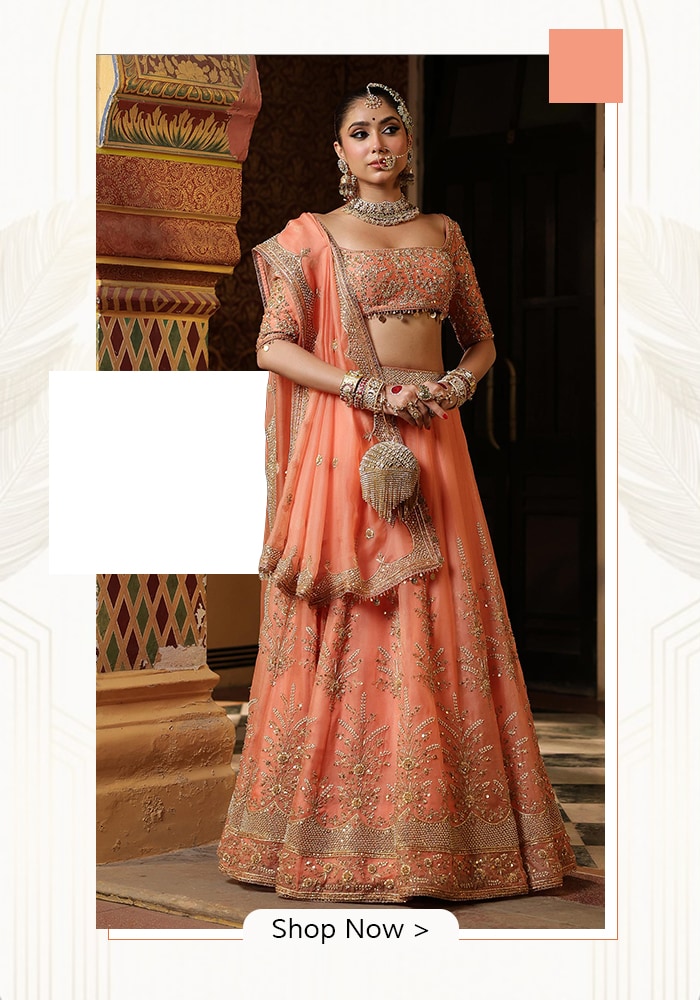
Nupur Sanon got everybody talking about her wedding to Stebin Ben, and we are still gushing over her outfits. Dual tones, triple-layered dupattas with heavy zardozi, all in a shade of peach, unfamiliar in the world of pinks and red wedding couture.
The highlight is that she isn't making a statement with her look or simply following trends; instead, she is creating her own. And the result of that, a wedding wardrobe with a personal touch, curated and deeply considered instead of being performative. Here is everything that is working with her styling and everything you can take from it.
The Peach Effect
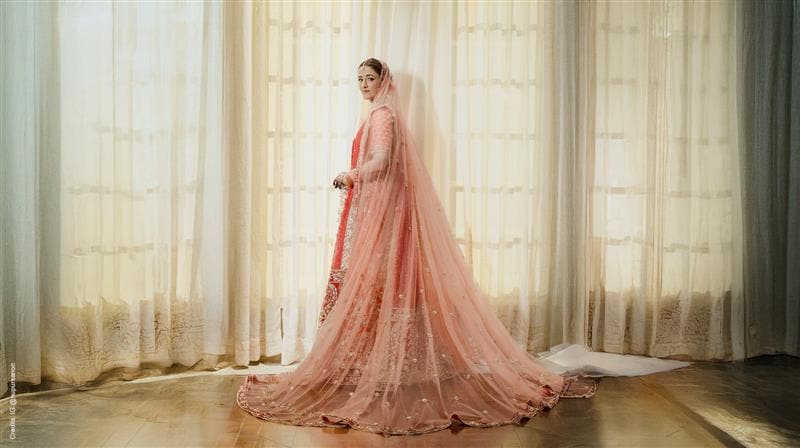
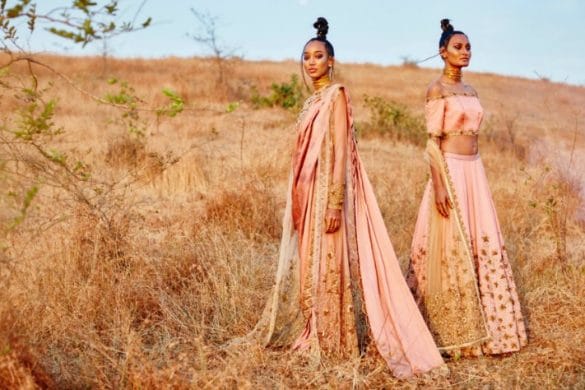
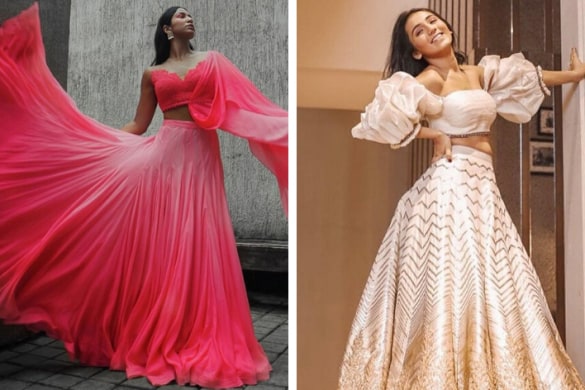
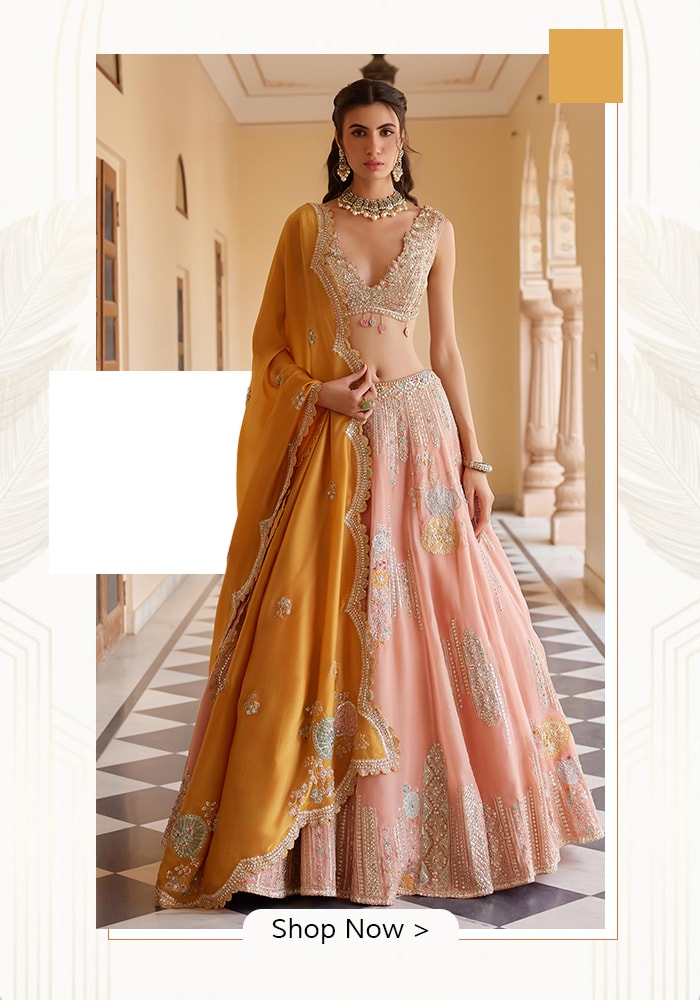
Today, brides are using wedding attire to express their identity, rather than conforming to templated wedding formalities, and peach is a comfortable middle ground. Peach dresses feature warm-toned hues, ranging from soft apricot and champagne peach to deeper coral shades, each adding a sense of warmth and softness to the occasion. These tones sit beautifully between traditional reds and contemporary blush pinks, offering a refreshing alternative for brides who want something timeless yet unconventional.
Moreover, peach wedding outfits look stunning in photographs. They are extremely photogenic in natural light, especially during golden hour ceremonies, when the fabric catches warmth and glow without overpowering the bride. Variations like blush peach and muted champagne peach allow embroidery and textures to shine while keeping the overall look light and elegant.
The uniqueness of Nupur’s style lies in the way she pulls off a subtle balance between the softness of peach and the richness of embroidered elegance on the lehenga and dupatta borders. The color isn’t washed out or overpowering, instead it brings out the beauty of craftsmanship. The blending of peaches and reds works together beautifully.
As 2026 takes root, it's time to step away from the old into a newer imagination of wedding collections, whether for the main ceremony or daytime rituals.
Elegance of the Triple Dupatta
The triple dupatta is an embodiment of a finished statement. This style of layering allows for a refined and complete look while adding a sense of royalty and ceremony to the bridal wear. That’s the beauty of layering multiple dupattas. They create a fuller and more voluminous silhouette, giving the bride a regal look. While double dupattas have become common in contemporary bridal dressing, the choice of a triple dupatta layering instantly elevates the look and makes it feel unique. When paired with heavy zardozi work, the effect becomes even more striking, reinforcing the sense of grandeur and heritage. Nupur Sanon gave us the feeling that she used three layers of dupatta with intention.
- The first was an orange-toned dupatta with heavy zardozi work along the border, grounding the look with richness.
- The second, in a soft peach shade, was pinned to her shoulder in an open style, adding movement and balance.
- The third dupatta, also in peach, was draped over her head like a veil, completing the bridal look with grace and restraint.
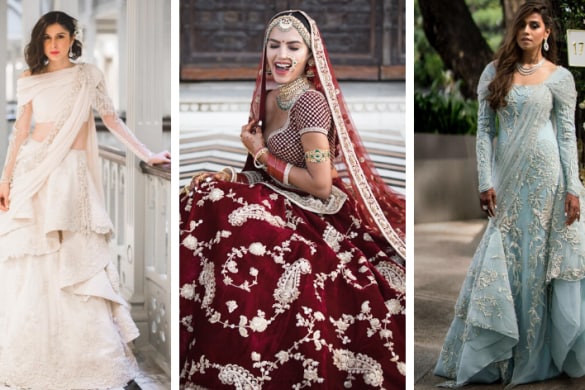
The tradition of wearing heavy reds and predictable pinks is slowly giving way to fresher and more personal palette choices. Peach lehengas are becoming an essential part of modern bridal wardrobes and deserve a place on every bride’s radar. Nupur Sanon’s wedding wardrobe is a lesson in clarity of vision and thoughtful styling. The intermarriage of color and craft, paired with a strong sense of heritage, results in a celebration that holds both memory and meaning.
The Grace of Zardozi Embroidery
Zardozi is a Persian term for gold embroidery and has long been an expression of royalty and celebration and has graced prestigious occasions for centuries. It can be traced back to the Mughal era, when artisans meticulously crafted intricate designs using real gold and silver threads. Though materials may have evolved, the essence of zardozi remains unchanged. It continues to evoke a timeless elegance rooted in heritage and craftsmanship. Nupur’s lehenga skirt featured heavy zardozi work that added depth and richness to the outfit, while her veil carried a delicate zardozi border that tied the entire look together. The embroidery felt intentional and ceremonial rather than excessive. Zardozi is an excellent choice for a wedding trousseau as it enhances the overall look and turns an outfit into a statement piece, tailored and crafted specifically for a once-in-a-lifetime occasion.
Accessories: The Refining Touch
Nupur’s jewellery choices perfectly complemented her outfits. Despite the heavy zardozi work on the lehenga borders, she chose not to overload her look with heavy jewellery sets. Instead, she focused on subtle elegance, allowing the craftsmanship of her outfit to take center stage.
Interestingly, she opted for polki jewellery which carries a raw, uncut beauty and an understated sense of luxury. Polki pieces blend seamlessly with traditional bridal wear while maintaining a softness that does not overpower the look. Along with matching earrings, her maang tika, haath phool, and kaleeras added a traditional touch, completing the bridal wear while maintaining balance and harmony.
Reception Radiance
For her reception, Nupur Sanon chose a maroon off-the-shoulder maroon off-the-shoulder gown with a mermaid silhouette. The cut highlighted her curves beautifully and brought contemporary elegance to the celebration.
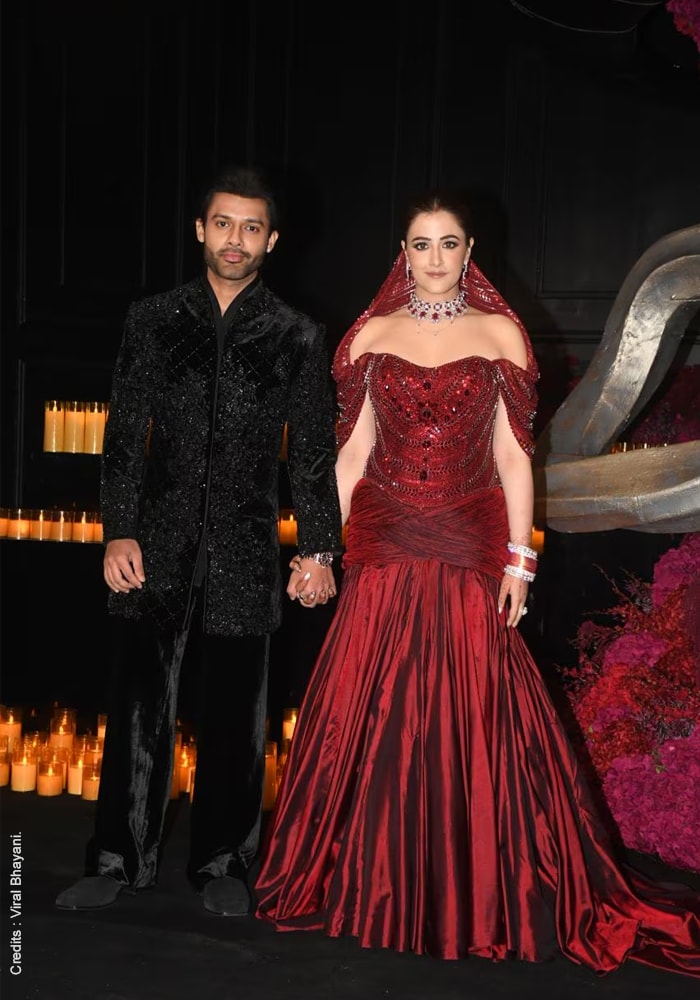
Dressing well often means enhancing what is already present, and this silhouette achieved exactly that. The mermaid cut created fluidity and structure at the same time, adding drama without excess. The deep maroon palette was an elegant choice, bringing richness and romance to the evening festivities. The next time you think of a color to look glam for your evening, think maroon, for it adds depth and intensity to them. Nupur’s reception further reinforces the idea that traditional bridal rules no longer define wedding wardrobes.