There's a particular kind of pressure that comes with being India's most-watched presence at the Cannes Film Festival. Every outfit is studied and judged, every styling choice dissected, every cultural reference either celebrated or debated. Most celebrities, faced with this weight, play it safe. They reach for the obvious, a grand European couture house, a maximalist red carpet gesture, something loud enough to drown out the noise.
Alia Bhatt, L'Oréal Paris ambassador and Bollywood's most quietly strategic global export, did the opposite. Across five looks at the 2026 Cannes Film Festival, she built something rarer than a viral red carpet moment. She built a narrative, one that moved fluidly between watercolour romance and sculptural lace, between Western bridalwear couture and the timeless grace of an ivory saree, between fashion as spectacle and fashion as identity. By the time she left the Croisette, Bhatt hadn't just shown up at Cannes. She had made her case, beautifully and completely, as one of India's most compelling global style ambassadors.
Here's how she did it, look by look.
Look One — The Watercolour Dream: Custom Yash Patil Gown, Hand-Painted by Basuri Chokshi
The Mood: A love letter to the French Riviera, written in pastel
Alia opened her Cannes 2026 fashion run not with a dramatic red carpet statement but with something far more considered — a photocall at the Hôtel Martinez that set the tone for everything that would follow. The custom Yash Patil gown, hand-painted by artist Basuri Chokshi as a homage to the French Riviera, was exactly the kind of opening act that makes you lean forward rather than sit back.
The watercolour-style landscape print felt genuinely site-specific — you could practically smell the sea and the sun-faded gardens in the soft pastel palette. The airy volume of the skirt caught the Riviera light with the ease of something that had always belonged here; the print evoked those romantic old Cannes photographs from decades past, slightly washed out, beautiful, and full of feeling.
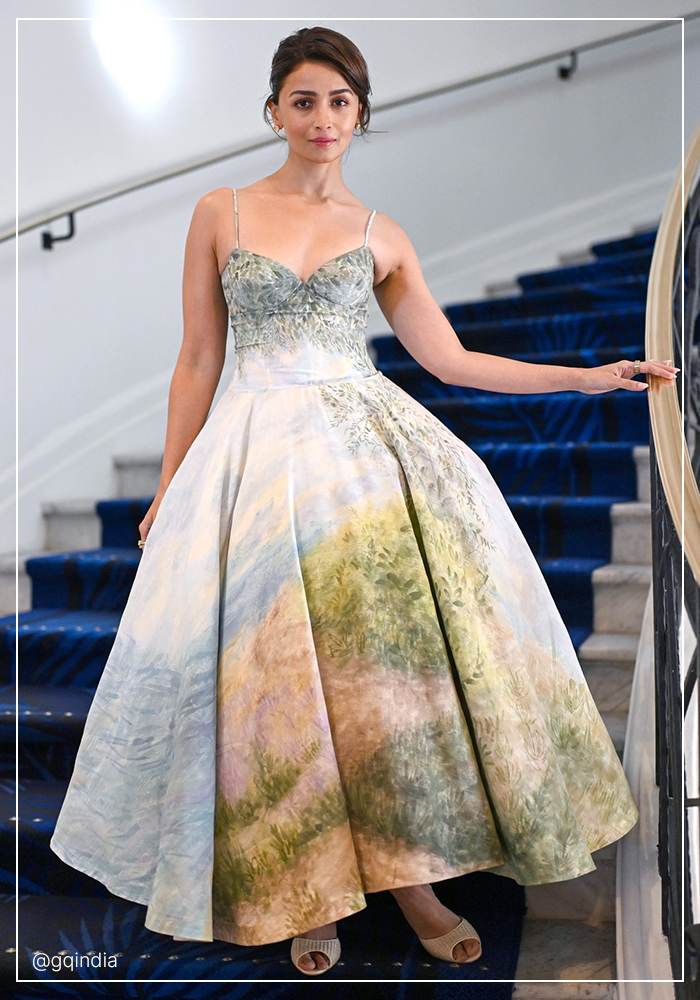
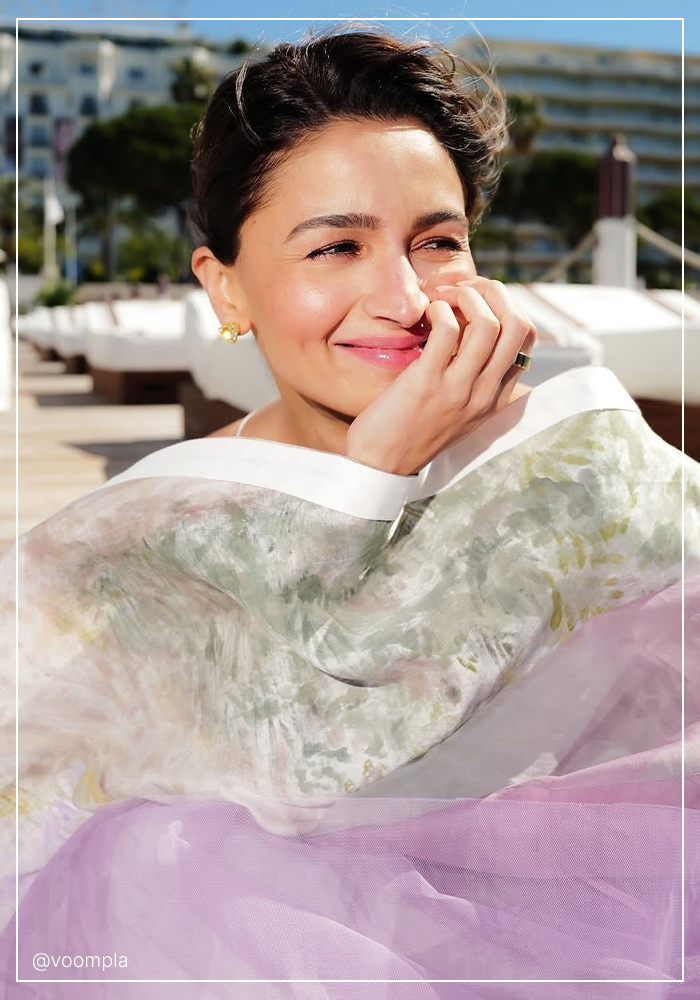
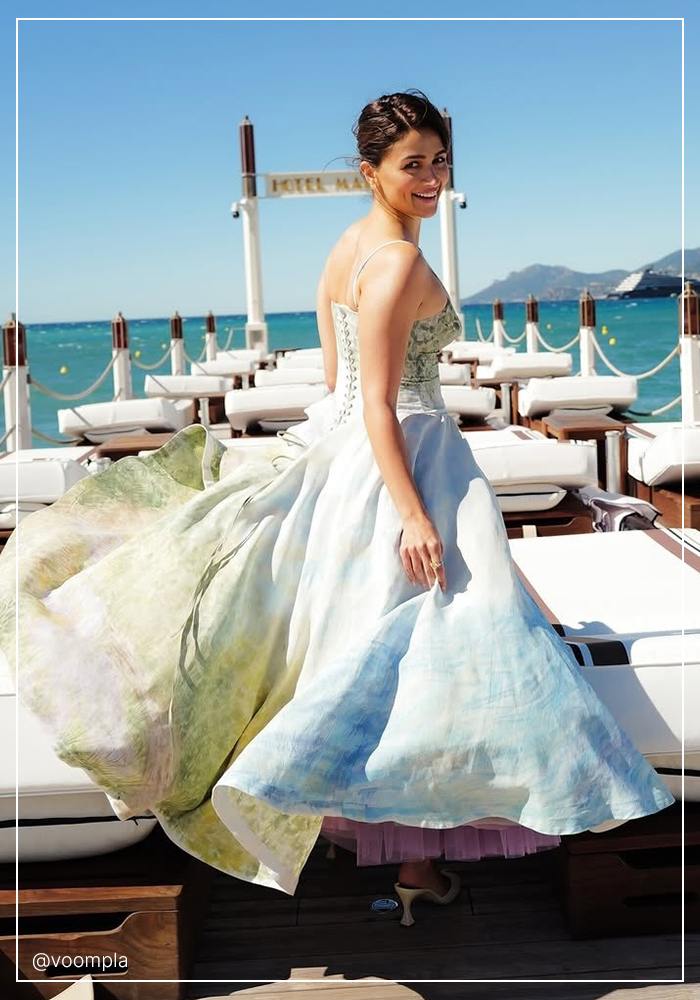
What was striking about this first look was its restraint. In a context where ambassadors often arrive guns blazing, Alia chose softness and story — a gown that said I understand this place rather than look at me. Chopard yellow diamonds played perfectly against the hushed tones; Manolo Blahnik mules completed the picture of an elegant, effortless Croisette afternoon. An introduction, not an announcement. And a very deliberate one at that.
Look Two — The Bridge Between Worlds: Custom Tamara Ralph Gown with Chiffon Dupatta
The Mood: Western couture meets South Asian heritage — worn as a declaration
If Look One whispered, Look Two spoke — quietly, carefully, and with enormous intent. For her first evening red carpet appearance, Alia arrived in a custom strapless peach gown by Tamara Ralph, its corseted silhouette defined by a daring cutout neckline that gave the look its modern edge. On its own, it was a beautiful red carpet dress. A masterpiece of construction, polished and precise.
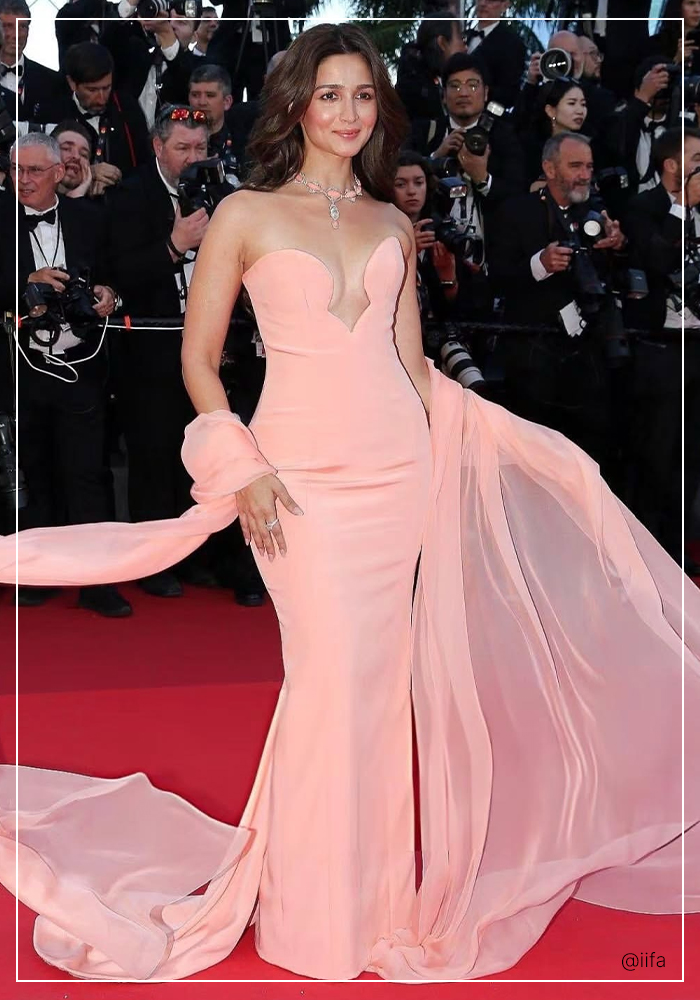
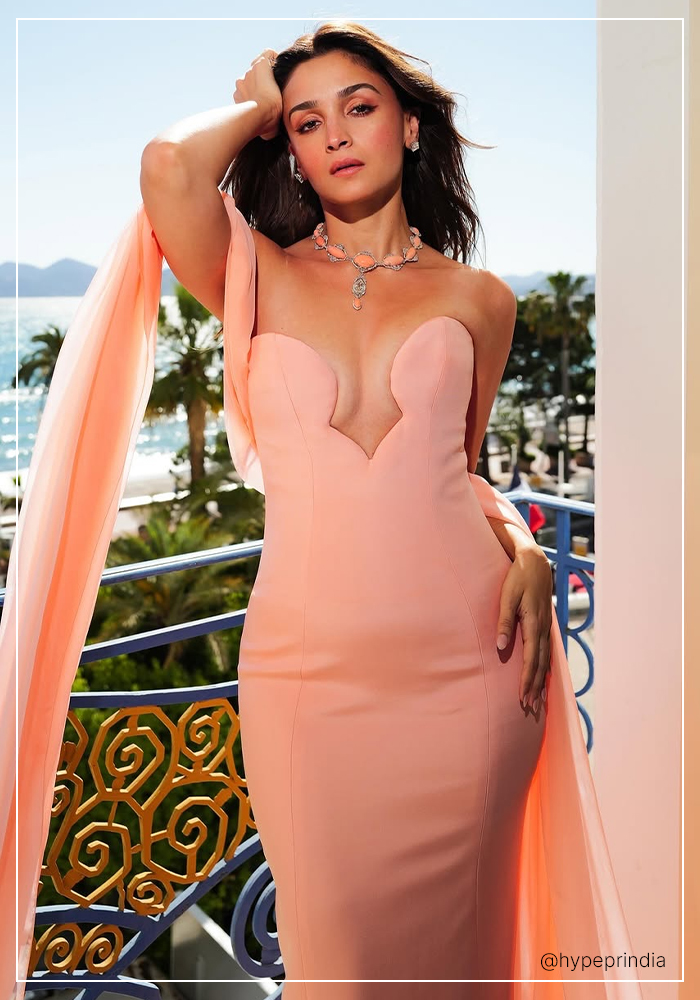
But the masterstroke came from a single addition: a matching chiffon dupatta — India's traditional draped scarf — worn with elegant, purposeful intention over the Western couture silhouette.
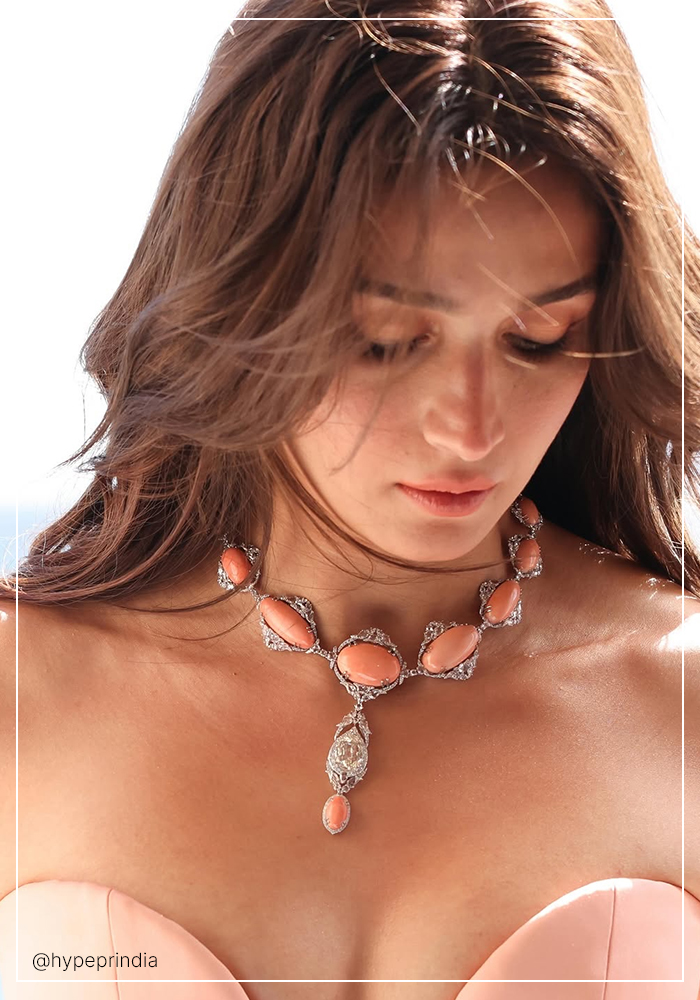
This is the kind of styling decision that looks effortless but is anything but. The dupatta didn't clash with the gown; it completed it. It transformed a beautiful dress into a statement of identity, a bridge between two worlds worn on one of fashion's most internationally scrutinised stages. There was no awkwardness in the meeting of traditions — only grace. The Amrapali Golconda Rose necklace, centred on a rare diamond set among pink coral, completed the conversation with the quiet authority of fine Indian jewellery that knows its own worth.
Look Three — Coming Home: Ivory Saree with Bindi & Hathphool at the India Pavilion
The Mood: Minimalism as the most powerful form of cultural pride
Step away from the grand staircase and the photographer scrum for a moment, and you find the India Pavilion, a quieter stage, but in many ways a more significant one. This is where Alia Bhatt appeared alongside director Ashutosh Gowariker in an elegant ivory saree touched with soft peach hues and delivered what may have been her most important Cannes fashion moment of the week.
No corseted bodice. No voluminous skirt. No couture house credit to anchor the conversation. Just a saree, worn beautifully, with a striking bindi and delicate hathphool hand jewellery, the traditional Indian ornament that traces from ring to wrist in fine chains and florals. The styling was minimal. The intention was enormous.
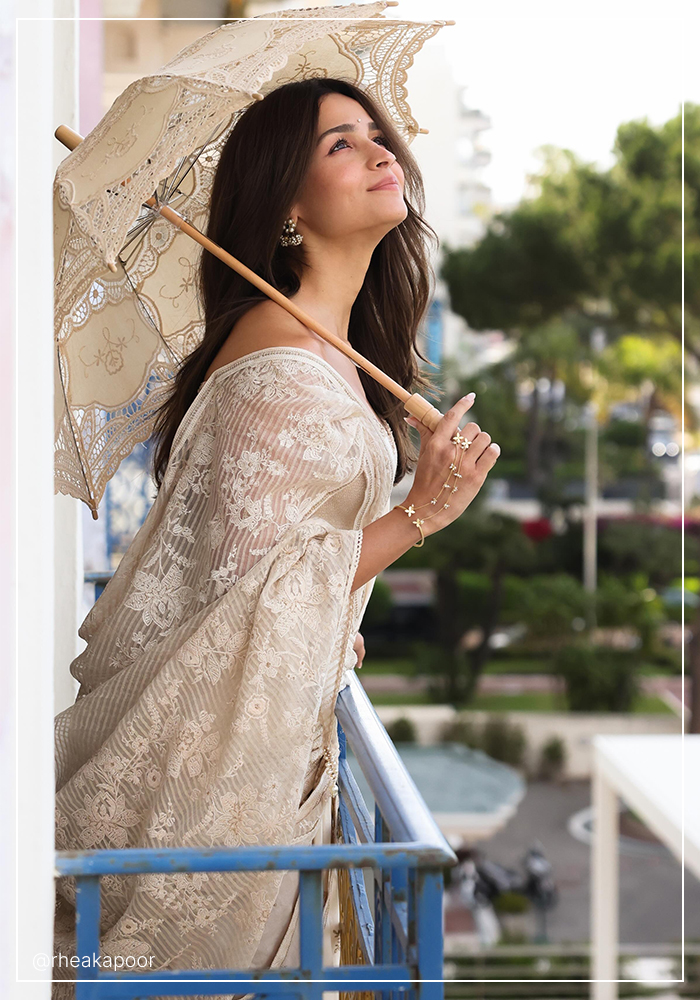
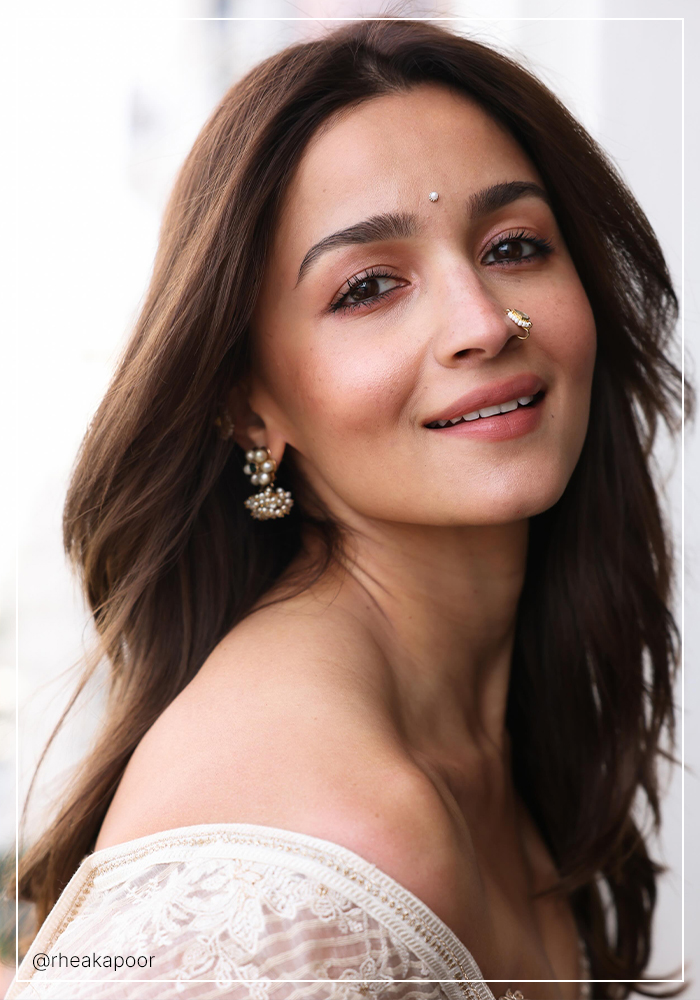
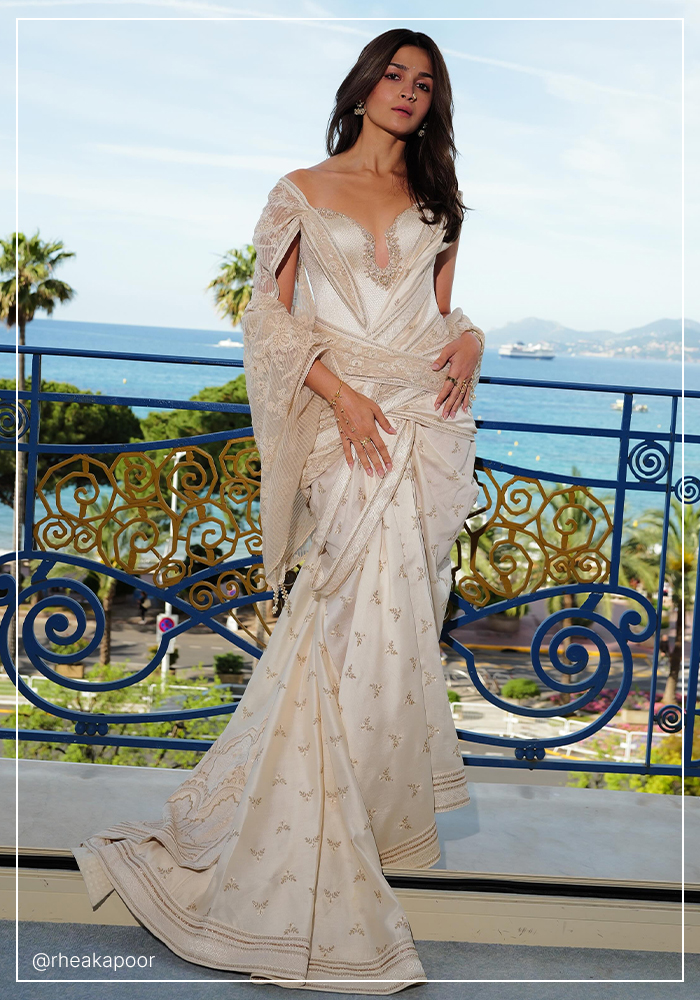
Fans on social media understood this immediately. The response wasn't about the saree's construction or the jewellery's provenance — it was about the choice. At an international festival where Indian celebrities are so often pulled toward European fashion, here was Alia in the most unambiguously Indian look of her entire Cannes run, at an event celebrating Indian cinema, looking completely and utterly at home. No exaggeration, no performance of Indianness — just a woman wearing her culture with easy pride.
In the context of five Cannes looks, this one was the anchor. Everything before and after it made more sense because of it.
Look Four — Steel Blue & Sculptural Lace: Custom Danielle Frankel Gown
The Mood: Romantic architecture, with a surrealist twist
For the screening of Vie D'une Femme (A Woman's Life) at the 79th Annual Cannes Film Festival, Alia turned to New York-based bridalwear couturier Danielle Frankel — and the result was one of the most quietly breathtaking red carpet appearances of the entire festival.
The custom steel blue spaghetti-strap gown was a study in layered craftsmanship: an elongated bodice with Chantilly lace peeking from the neckline, honeycomb lace, layered silk satin, and the label's signature lace collar adorned with delicate scalloped borders. The dreamy, voluminous skirt flowed from all of this with a kind of inevitability — as though it couldn't possibly have ended any other way.
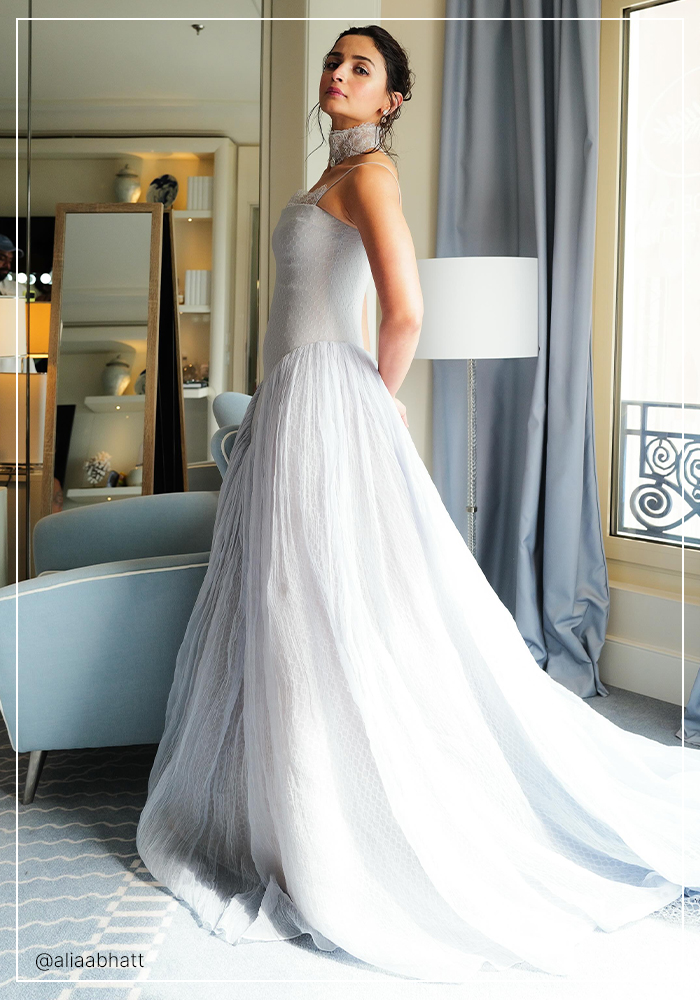
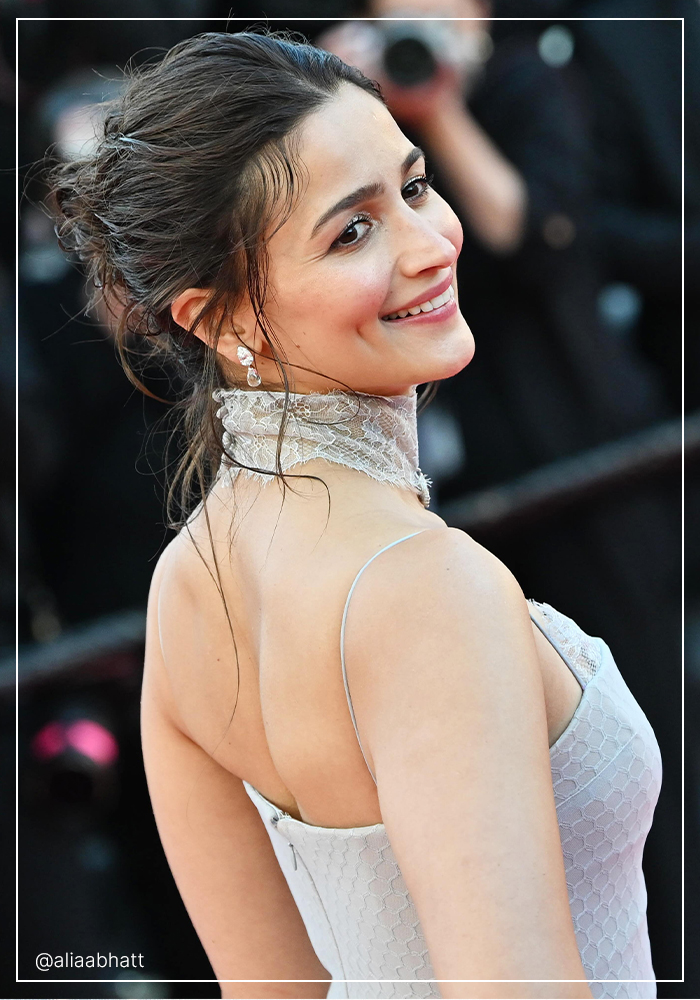
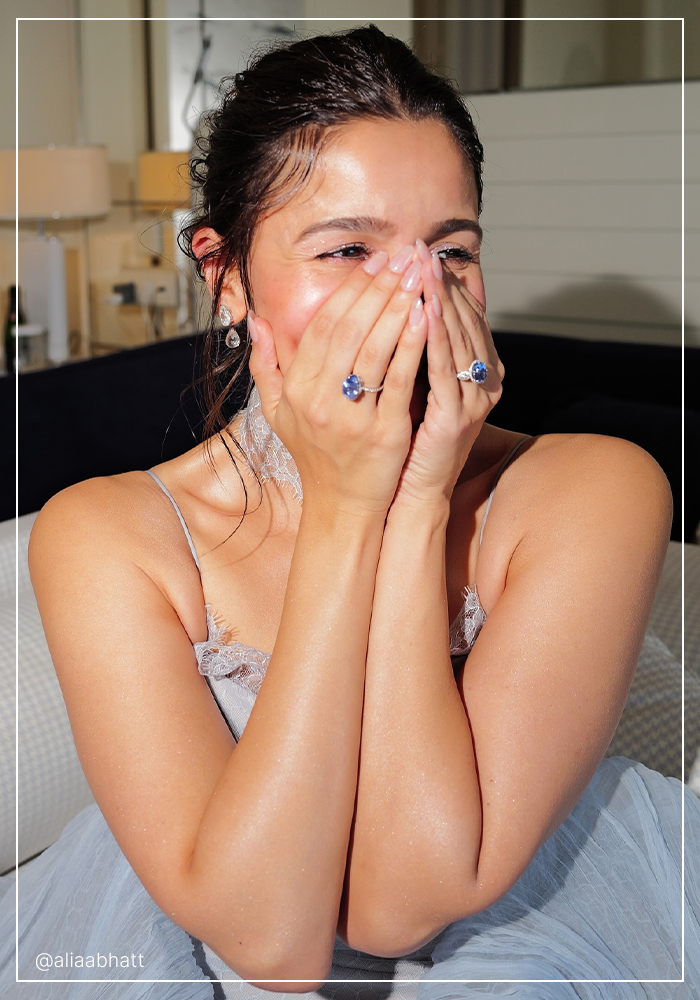
Then came the unexpected element that lifted the look from beautiful into genuinely memorable: a sculptural silver head-shaped pendant worn with the lace collar. It was surreal, artistic, and slightly strange in the best possible way — a single accessory that said Alia wasn't simply wearing a dress but engaging with it as a creative act.
Her beauty look underscored this confidence: no heavy makeup, no dramatic styling device. Sunkissed skin, a fresh-faced finish, natural glow allowed to take centre stage. When the craftsmanship is this considered, the face that wears it needs only to be itself. Alia understood this completely.
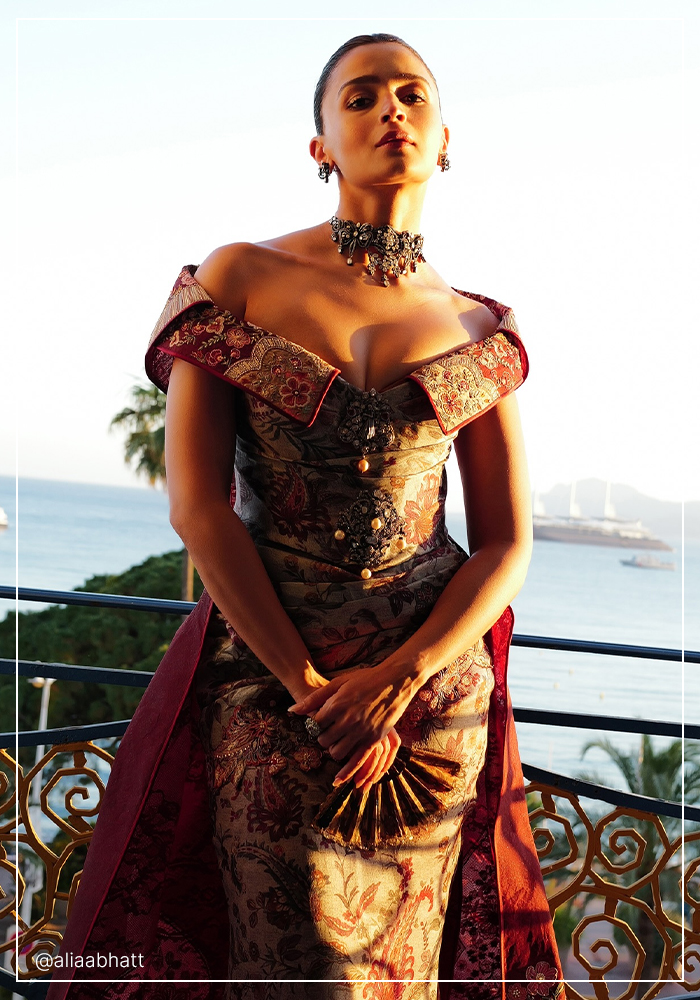
Look Six — Chintz, Corsetry & Diamonds: Custom Tarun Tahiliani for the L’Oréal Paris Dinner
The Mood: Vintage romance meets modern Indian couture
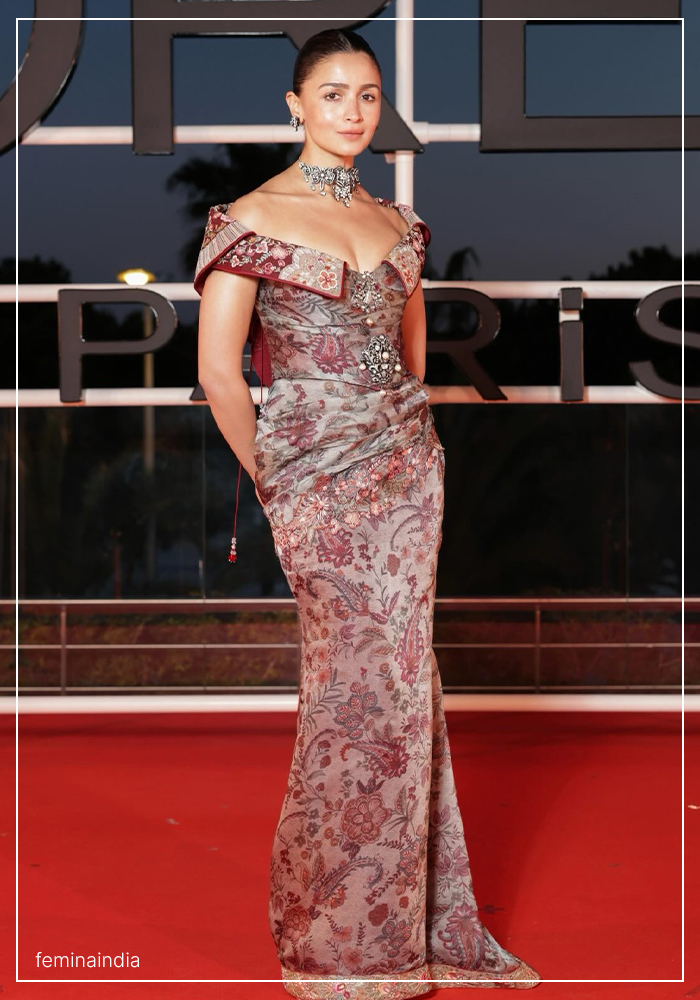
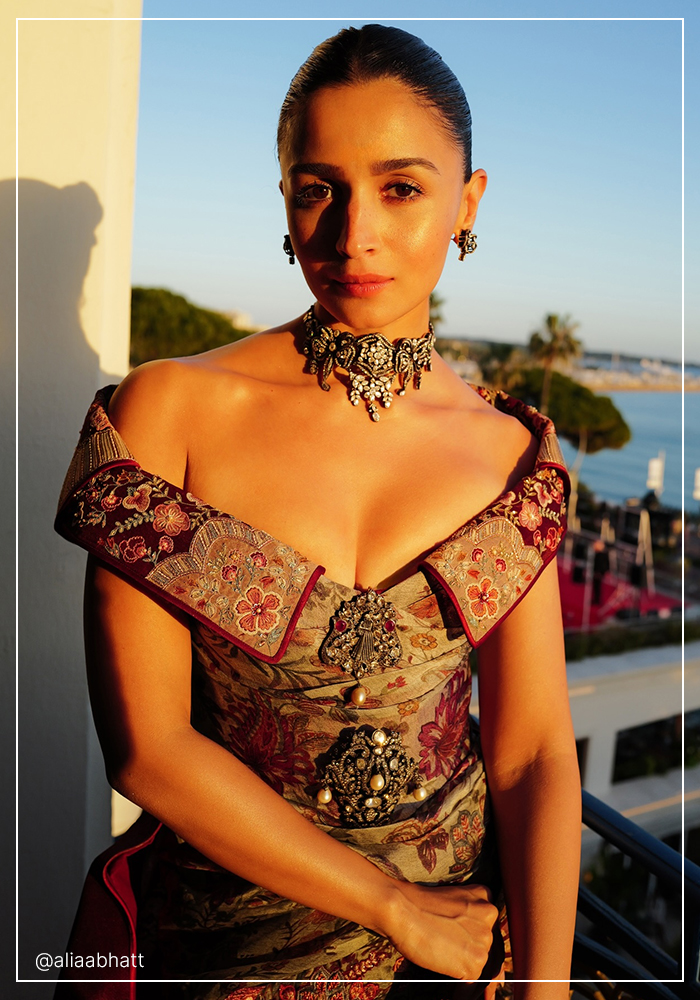
For the L’Oréal Paris dinner at Cannes, Alia Bhatt returned to Tarun Tahiliani in a custom ensemble that felt rich with history, artistry, and quiet drama. Built around chintz-inspired florals, the gown fused deep burgundy tones with soft ivory hues in a way that immediately stood apart from the softer palettes she had worn earlier in the week.
The off-the-shoulder corseted bodice brought a sculpted Victorian elegance to the look, while curved sleeve detailing softened the structure with a sense of old-world romance. Flowing into a long column skirt patterned with intricate botanical motifs, the ensemble drew directly from historical chintz textiles — the kind once traded globally and deeply tied to India’s textile legacy. Tahiliani translated those references into something unmistakably contemporary, balancing archival inspiration with modern red carpet precision.
What Alia Bhatt's Cannes 2026 Actually Meant
Taken individually, each of Alia Bhatt's five Cannes 2026 looks is admirable. Taken together, they form something more interesting: a coherent, thoughtful argument about what it means to represent India on the global stage.
She opened softly, in a gown that celebrated the place she had arrived in. She escalated into a red carpet moment that used fashion to bridge two cultural identities without forcing them to compete. She stepped back from the main stage entirely to appear at the India Pavilion in a saree, with a bindi, looking more at home than anywhere else all week. She committed to European bridalwear couture with the full confidence of someone who has nothing to prove. And she closed in Tarun Tahiliani — a designer whose entire practice exists at the meeting point of Indian craft and global fashion — with a lace umbrella and a quiet smile.
No single look said everything. But all five, together, told a complete story. And that is a far rarer and more impressive achievement than any single viral red carpet moment.
Alia Bhatt came to Cannes 2026 as an ambassador. She left as something more: a genuine, unhurried, deeply considered voice in the conversation about what Indian fashion can look and feel like when it's given the space — and the confidence — to simply be itself.