


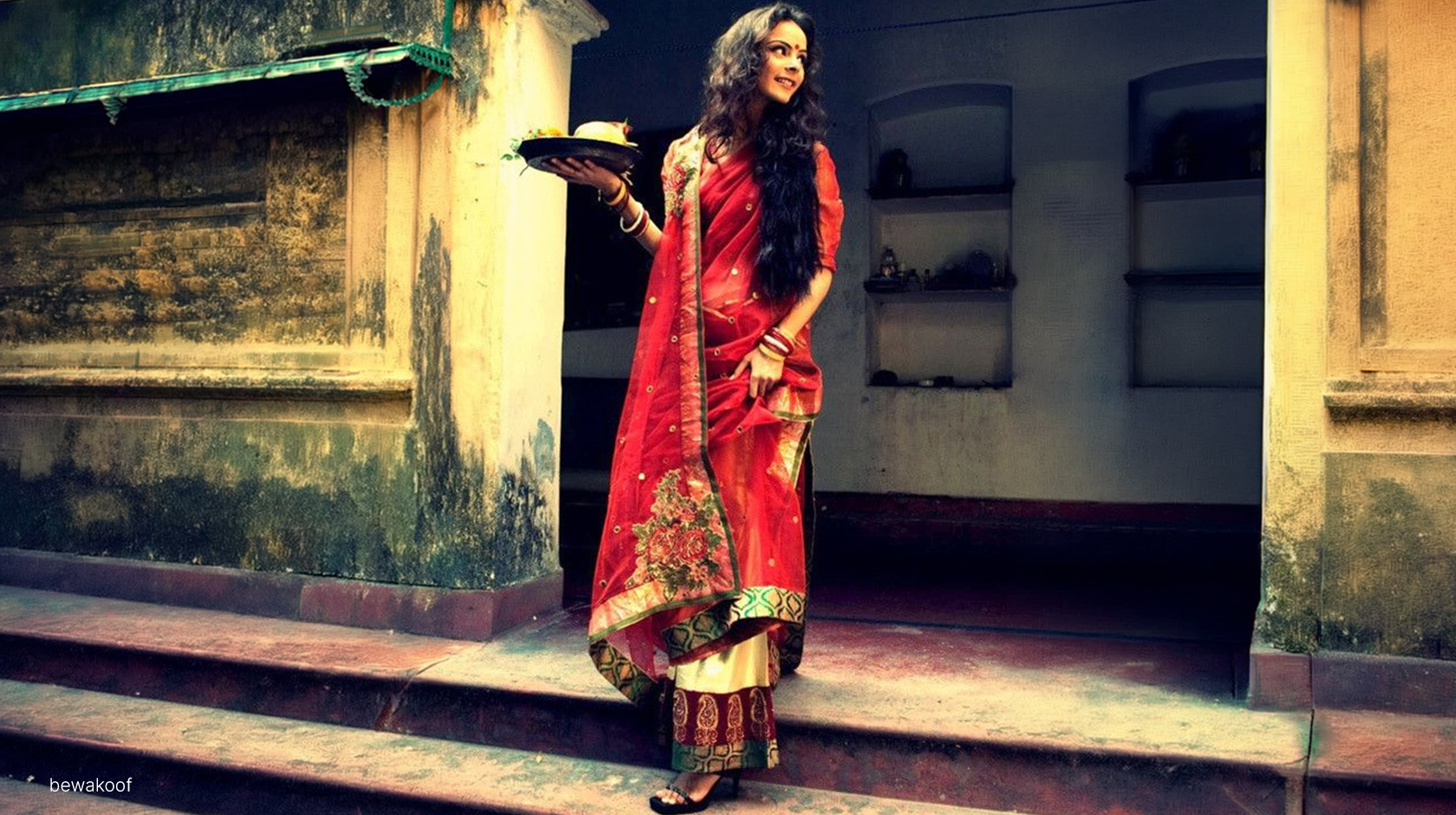
The Atpoure draping style is the traditional Bengali method of wearing a saree—distinguished by its absence of front pleats, a cleanly wrapped body, and a pallu that falls over the left shoulder. Mastering it takes about 10 minutes and transforms any Bengali saree into an authentic, elegant look.
The Atpoure drape is one of the most distinctive saree styles in India. Unlike the Nivi style—the pleated method most commonly worn across North and Central India—the Atpoure technique has a cleaner, more streamlined silhouette that is immediately recognizable as Bengali.

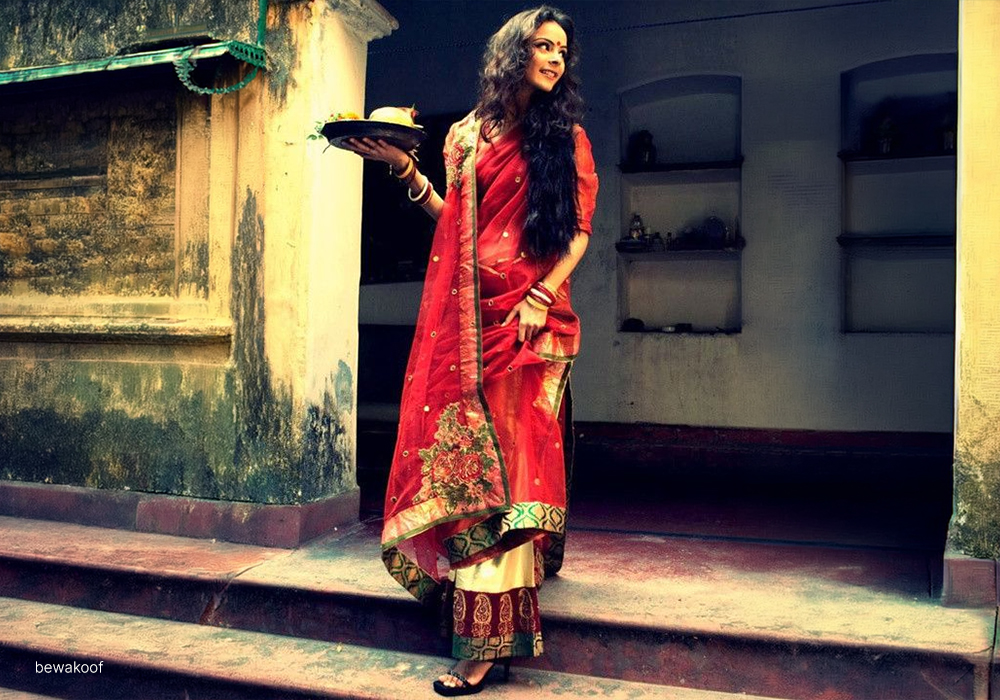
If you're preparing for Durga Puja, a Bengali wedding, or Saraswati Puja, knowing how to drape your saree correctly is just as important as the saree itself. This guide walks you through every step.
What Makes the Atpoure Draping Style Unique?
The Atpoure style sets itself apart in three key ways:
- No front pleats. The Nivi style—India's most widely worn draping method—involves folding pleats at the front waistband. The Atpoure style skips this entirely, creating a smoother, cleaner wrap around the body.
- The pallu drapes over the left shoulder. The decorative end of the saree, which typically carries the most elaborate border work, falls freely over the left shoulder and flows down the back.
- The red border frames the hem. When draped correctly, the paar (border) runs visibly along the bottom edge of the saree, creating a clean horizontal line of color.
This technique is particularly well-suited to the lal paar sada saree—the classic Bengali white saree with a red border—where the paar's visibility is central to the look.
What You'll Need Before You Start
- A saree (Tant cotton or Korial silk both work well)
- A fitted petticoat, tied securely at the waist
- A matching blouse
- Two or three saree pins
How to Drape a Saree in the Atpoure Style
Step 1: Anchor the Saree at the Right Hip
Hold the plain end of the saree (the end without the decorative border) and tuck it firmly into the petticoat at your right hip. Make sure the bottom edge of the saree just grazes the floor—this ensures the border will sit at the right height once you're done.
Step 2: Wrap the Saree Around the Body
Bring the fabric across the front of your body toward the left side, then wrap it fully around your back and back to the front. Keep the bottom edge consistent throughout—you want the hem to stay at the same level as you wrap.
Step 3: Position the Border Along the Hem
As you wrap, pay attention to the paar. The red (or decorative) border should run along the very bottom of the saree, parallel to the floor. Adjust the fabric as needed so this line stays clean and unbroken around the entire hem.
Step 4: Bring the Pallu Over the Left Shoulder
Once the fabric has wrapped around your body, bring the remaining length—the pallu—up and over your left shoulder. Let it fall freely down your back. Do not tuck or pleat it.
Step 5: Secure and Adjust
Pin the pallu to the shoulder seam of your blouse using a saree pin. Step back and check the hem—it should be even, with the border clearly visible at the bottom. Make any final adjustments to the wrap, then add a second pin at the back if needed for security.
That's it. No pleats, no fuss.
Common Mistakes to Avoid
Uneven hem height. The most common issue is a hem that dips lower on one side. Fix this before pinning the pallu—it's much harder to adjust afterward.
Pallu that's too short. If the pallu doesn't have enough length to drape comfortably over your shoulder and fall down your back, re-anchor the starting tuck slightly further to the left to give yourself more fabric.
Border that disappears into the wrap. If the paar isn't visible at the hem, the fabric has shifted during wrapping. Unwind and rewrap, keeping one hand on the border's position as you go.
Practice Makes the Drape
The Atpoure style looks effortless once you've done it a few times—but the first attempt will take longer than the steps suggest. Try it at home before the occasion, ideally with the exact saree you plan to wear, since fabric weight and stiffness affect how the drape sits.
A Tant cotton saree drapes differently than a Korial silk one. Cotton is lighter and more forgiving; silk holds its shape but requires a firmer tuck to stay in place.

