


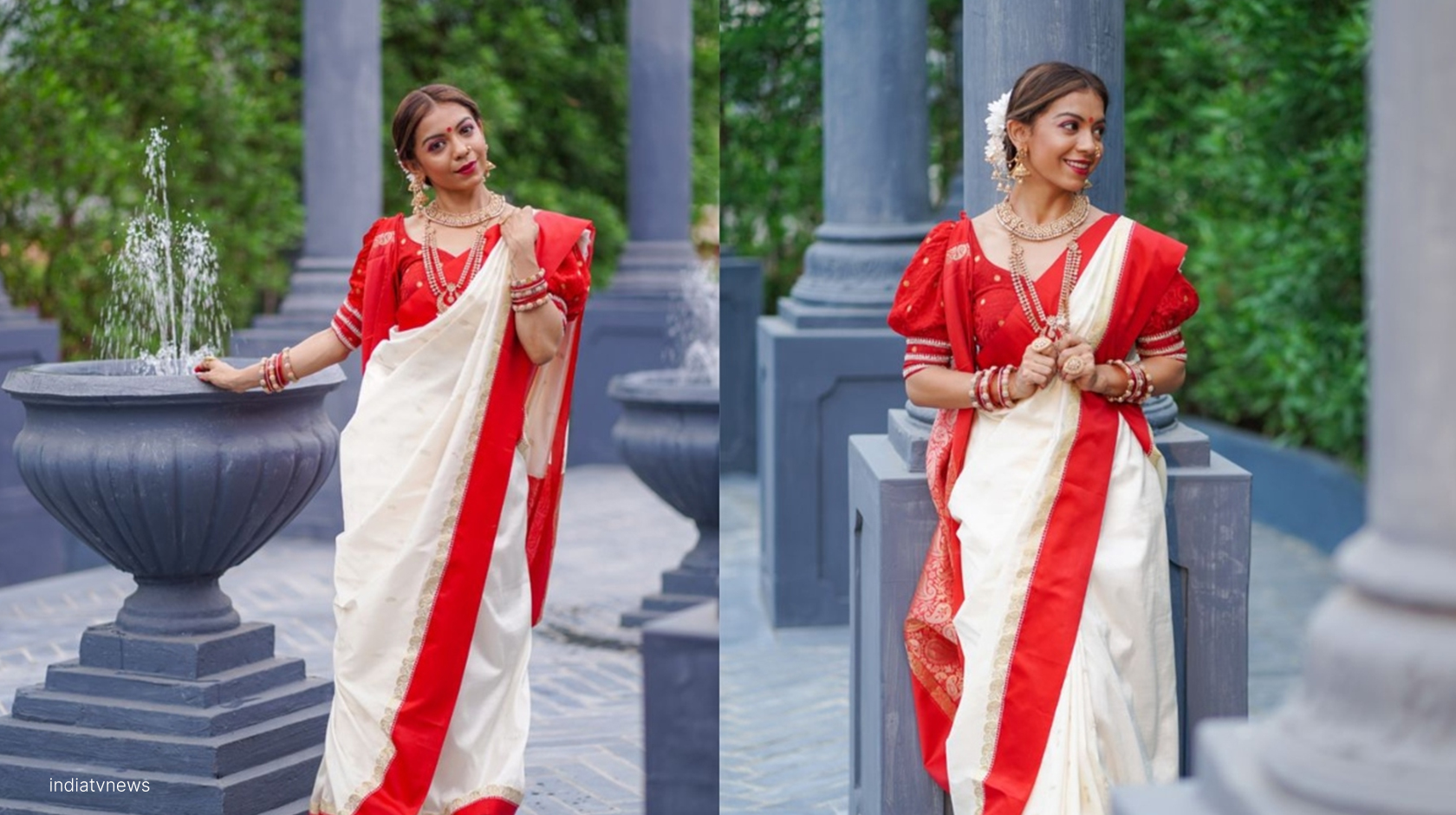
The lal paar sada saree—a white Bengali saree with a red border—is a timeless symbol of Bengali heritage worn at festivals like Durga Puja, weddings, and Saraswati Puja. Style it with traditional Atpoure draping, gold jewelry, a red bindi, and sindoor for an authentic, elegant look.
Few garments carry the cultural weight of the lal paar sada saree. White body, red border—two colors, infinite meaning. This classic Bengali saree has adorned women across generations, appearing at festivals, rituals, and family ceremonies for centuries. And yet, despite its simplicity, styling it with intention is an art form in itself.

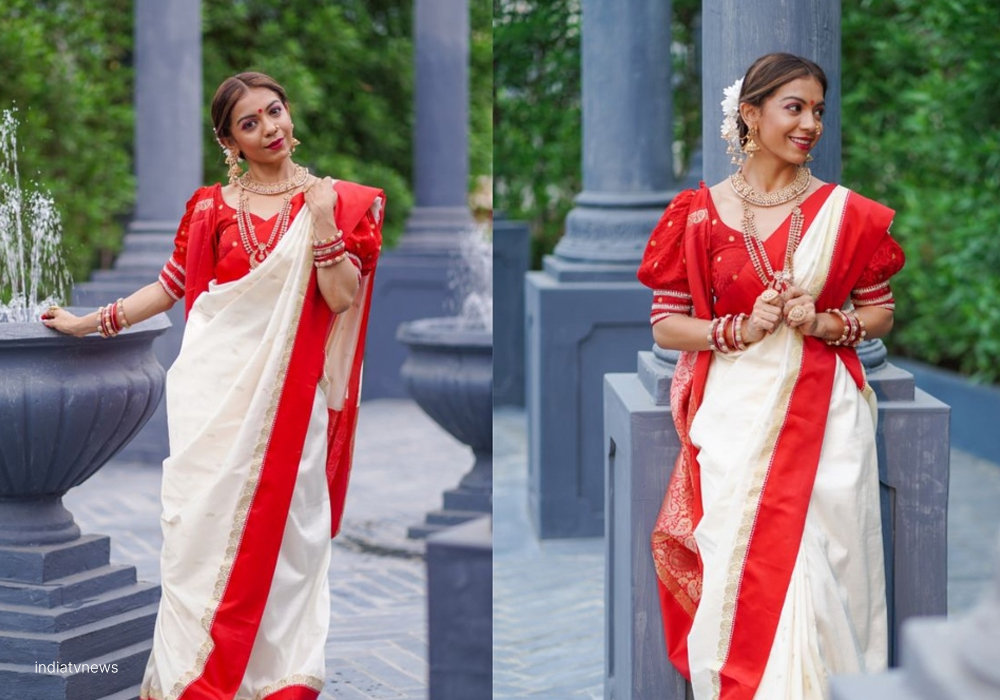
This post is a guide for anyone who wants to wear the lal paar sada saree with confidence, authenticity, and a genuine understanding of its heritage. Whether you're preparing for Durga Puja, a Bengali wedding, or Saraswati Puja, you'll find everything you need here—from draping techniques and blouse choices to jewelry pairings and hair styling.
What Is the Lal Paar Sada Saree, and Why Does It Matter?
The lal paar sada saree translates literally to "red-bordered white saree." In Bengali, lal means red, paar refers to the border, and sada means white. The combination isn't just aesthetic—it carries deep cultural symbolism.
White represents purity and auspiciousness in Bengali tradition. Red symbolizes Shakti—divine feminine power—and is closely associated with the goddess Durga. Together, these two colors make the saree a deeply spiritual garment, one that connects the wearer to something far older than fashion.
Traditionally woven in cotton or silk, the most revered versions of this saree come from Bengal's rich handloom heritage. Tant sarees—lightweight cotton weaves made in districts like Shantipur and Dhaniakhali—are the everyday ceremonial choice. Korial sarees, made of pure silk with distinctive red-and-white patterns, are reserved for weddings and high religious occasions. Baluchari sarees from Bishnupur feature intricate mythological motifs woven into the red border, making them among the most visually complex expressions of this tradition.
How Should You Drape a Lal Paar Sada Saree the Traditional Way?
The most authentic way to drape a lal paar sada saree is the Atpoure style—a Bengali draping method that sets this tradition apart from North Indian styles.
Here's what makes the Atpoure drape distinctive:
- No pleats at the front: Unlike the Nivi style common across much of India, the Atpoure drape does not create a pleated tuck at the waistband. The saree wraps cleanly around the body.
- The pallu falls over the left shoulder: The decorative end—which typically features the most elaborate red border work—drapes over the left shoulder and flows freely down the back.
- The red border frames the hem: Careful draping ensures the red paar runs visibly along the bottom edge of the saree, creating a clean horizontal line of color.
To achieve this look, start by tucking the plain end of the saree into the petticoat at the right hip. Wrap the fabric around the body once, then bring the pallu up and over the left shoulder. Secure it with a pin at the shoulder seam of the blouse.
The result is elegant, uncluttered, and immediately recognizable as Bengali.
What Kind of Blouse Works Best with a Lal Paar Sada Saree?
The blouse is where personal style has the most room to breathe within this otherwise structured tradition.
Keeping It Traditional with Red and White
The most classic choice is a solid red blouse—it anchors the saree's border and creates a unified, intentional color story. A solid white blouse works equally well, particularly with Tant cotton sarees for daytime festivals. For a more contemporary take, some women choose a red-and-white printed blouse that echoes the saree's color palette without being too matchy.
Choosing the Right Blouse Neckline and Sleeve Style
For traditional occasions like Durga Puja or weddings, a round or boat neck blouse with three-quarter sleeves is the most appropriate choice. Backless designs or deep necklines are generally reserved for younger wearers at less formal events.
Embroidery on the blouse—particularly kantha stitch or chikankari in red thread on white fabric—adds visual richness without compromising the saree's simplicity.
Which Jewelry Pairs Best with the Red-and-White Bengali Saree?
Gold is non-negotiable. In Bengali tradition, gold jewelry is both ornamental and auspicious, and the lal paar sada saree is the perfect canvas for it.
Essential Gold Jewelry Pieces
- Mukut or maang tikka: A forehead ornament worn just below the hairline, associated with married women and festive occasions.
- Jhumkas: Bell-shaped gold earrings that frame the face beautifully against the saree's simplicity.
- Nath: A gold nose ring, either a stud or a larger hoop connected to the hair with a chain. Traditionally worn by married Bengali women on auspicious occasions.
- Gold bangles (Shakha-Pola): The combination of white conch shell bangles (shakha) and red coral bangles (pola) is specifically worn by married Bengali Hindu women. This pairing directly mirrors the saree's red-and-white palette.
- Gold necklace: A choker-style gold necklace or a layered set works well. Avoid gemstone-heavy pieces—the saree's palette is disciplined, and the jewelry should complement, not compete.
Can You Wear Silver Jewelry with a Lal Paar Sada Saree?
Technically yes, but traditionally no. Silver jewelry shifts the color story and can feel at odds with the warm red-and-gold aesthetic of this saree. Save silver for Dhakai muslin or pastel sarees.
How Do You Style Hair and Makeup to Complement the Lal Paar Sada Saree?
Traditional Hair Styling
The bun adorned with a garland of white flowers—usually tuberose (rajanigandha) or jasmine (bela)—is the quintessential hairstyle for this saree. It's practical, fragrant, and deeply rooted in Bengali aesthetics.
A low chignon with a center part looks formal and graceful. A high bun suits Durga Puja pandal visits where you'll be moving through crowds. For younger wearers, a loose braid adorned with flowers is a softer, more modern option that still honors tradition.
Makeup That Honors the Heritage
Bengali festive makeup has a distinct character:
- Red bindi: A round red bindi placed at the center of the forehead is essential. Size it according to the formality of the occasion—larger for weddings, smaller for daytime pujas.
- Sindoor: For married women, sindoor in the hair parting is both a cultural requirement and a styling element that harmonizes with the saree's red border.
- Kajal: Heavy kajal lining the waterline is central to Bengali festive beauty. It intensifies the gaze without requiring elaborate eye shadow.
- Skin: A light, dewy base with a subtle flush at the cheeks. The saree does the heavy lifting—let the skin look luminous, not overly made-up.
When Should You Wear the Lal Paar Sada Saree?
Durga Puja
Durga Puja—Bengal's grandest festival—is the most important occasion for the lal paar sada saree. Many Bengali women wear it on Saptami, the seventh day of the puja, or Ashtami, when the most significant rituals take place. The white-and-red combination is a visual tribute to Goddess Durga herself.
Saraswati Puja
Saraswati Puja, the spring festival honoring the goddess of knowledge, is traditionally an occasion when young Bengali women—particularly students—wear the lal paar sada saree. A cotton Tant saree with simple gold studs is the appropriate choice here.
Bengali Weddings
At Bengali weddings, the lal paar sada saree appears most prominently on the bride and the senior women of the family. A silk Korial or Baluchari saree is the appropriate choice for this setting, paired with the full set of bridal gold jewelry.
Poila Boishakh (Bengali New Year)
The Bengali New Year, celebrated on April 14 or 15, is another key occasion. White-and-red sarees fill the streets as women gather for cultural programs and community celebrations.
How Can You Modernize the Lal Paar Sada Saree Without Losing Its Identity?
The saree's simplicity makes it surprisingly adaptable. Here are a few ways to wear it with a contemporary sensibility while preserving its cultural core:
- Pair it with a structured blazer: A white or red blazer draped over the shoulders works for cultural events that blend festive and semi-formal atmospheres.
- Opt for a halter-neck blouse: A halter neck in plain red keeps the look traditional from the front while adding a modern edge.
- Choose a Tant with a woven pattern: Some contemporary weavers incorporate subtle floral or geometric motifs into the body of the saree while keeping the classic red border—a good middle ground between heritage and novelty.
- Minimal jewelry: A single statement necklace with small gold studs creates a cleaner, more contemporary silhouette while still honoring the saree's aesthetic.
Making the Lal Paar Sada Saree Your Own
The lal paar sada saree has survived centuries not by staying rigid, but by remaining meaningful. Its two colors tell a story that predates fashion—one about devotion, femininity, and cultural pride. Wearing it well means understanding that story first.
Start with the basics: an authentic handloom saree, a well-fitted blouse, and a traditional drape. From that foundation, layer in your own choices—your jewelry, your flowers, your bindi. The saree will carry the heritage. The rest is yours to define.
If you're building your first collection of Bengali heritage sarees, the lal paar sada saree is the most essential place to start.
Frequently Asked Questions
What is the lal paar sada saree?
The lal paar sada saree is a traditional Bengali saree with a white body and red border. It carries deep cultural and religious symbolism—white representing purity and red representing divine feminine power (Shakti). It is traditionally worn at Bengali festivals, weddings, and religious ceremonies.
What is the difference between a Tant saree and a Korial saree?
Tant sarees are lightweight handwoven cotton sarees produced in districts like Shantipur and Dhaniakhali in West Bengal. They are ideal for daytime festivals and everyday ceremonial wear. Korial sarees are made of pure silk and feature distinctive red-and-white patterns, making them more appropriate for weddings and high religious occasions.
How do you drape a Bengali saree in the Atpoure style?
The Atpoure draping style does not include front pleats. The saree wraps around the body with the red border (paar) running along the hem, and the pallu—the decorative end—drapes over the left shoulder and falls freely down the back. It creates a clean, elegant silhouette distinct from the North Indian Nivi style.
What jewelry should you wear with a lal paar sada saree?
Gold jewelry is the traditional choice. Key pieces include gold jhumkas, a maang tikka or mukut, a gold necklace, and shakha-pola bangles (white conch shell and red coral) for married women. A gold nath (nose ring) is also traditional for festive occasions.
When is the lal paar sada saree worn in Bengali culture?
The lal paar sada saree is worn primarily at Durga Puja (especially on Saptami and Ashtami), Saraswati Puja, Bengali weddings, and Poila Boishakh (Bengali New Year). It is one of the most recognizable garments associated with Bengali Hindu cultural celebrations.
Can you modernize the lal paar sada saree styling?
Yes. Modern approaches include pairing the saree with a halter-neck or structured blouse, choosing contemporary Tant sarees with subtle woven patterns, or minimizing jewelry to a single statement piece. The key is to preserve the red-and-white palette and traditional draping style while adapting other elements to personal taste.

