In a small town near Jaipur, a rhythm echoes through the streets. It is the steady thap-thap sound of wooden blocks hitting fabric. This is the heartbeat of Bagru print, a traditional art form that has turned simple cotton into masterpieces for centuries. Unlike the flashy, machine-made fabrics of today, Bagru print celebrates the raw beauty of nature and the human hand.
If you have ever admired a fabric with deep blues, rich reds, and earthy patterns, chances are you were looking at this incredible craft. This blog post will take you on a journey to the dusty lanes of Rajasthan. We will explore how hand block printing works, why natural dyes are the secret ingredient, and how this ancient tradition continues to thrive in the modern world.
Roots in the Desert: The Origin of Bagru
The story of Bagru print begins in a town called Bagru, located about 30 kilometers from Jaipur in Rajasthan. For over 400 years, this town has been the home of the Chhipa community. The word Chhipa comes from a term meaning "to print." For these artisans, printing is not just a job; it is a way of life passed down from one generation to the next.
While many other printing styles have moved toward chemical dyes and screen printing, Bagru has stayed true to its roots. The isolation of the town helped preserve its unique methods. The distinct look of Bagru print comes from the local water and soil, which interact with the natural dyes to create colors you cannot find anywhere else. This deep connection to the land makes it a true gem among traditional Indian textiles.
The Art of Hand Block Printing
Creating a Bagru print fabric is not a quick process. It is a labor of love that involves many steps, each requiring patience and skill.
1. Preparing the Cloth
Before any color touches the fabric, the cloth must be prepared. It is soaked in a mixture of water, cow dung, and sesame oil. This might sound unusual, but it is essential for bleaching the fabric and helping it absorb the dyes. This process, called Hari Sarana, gives the fabric its characteristic cream or beige background.
2. Carving the Blocks
The magic starts with a block of wood. Master carvers chip away at teak wood to create intricate designs. A single pattern might require multiple blocks: one for the outline (called rekh) and others for filling in the colors (called datta). These blocks are the most important tools in Rajasthani block printing.
3. The Printing Process
The printer lays the fabric flat on a long table. They dip the wooden block into a tray of natural dye and stamp it onto the cloth. Thap. They lift it, align it perfectly with the previous impression, and stamp again. Thap. This continues until the entire fabric is covered. The precision required is incredible—if the hand shakes even a little, the pattern breaks.
Nature’s Palette: The Use of Natural Dyes
What truly sets Bagru print apart is its commitment to nature. While modern textile industries rely heavily on synthetic chemicals, Bagru artisans use ingredients you might find in a kitchen or a garden.
- Indigo: This famous plant provides the deep, stunning blue that Bagru is known for.
- Madder Root: This is used to create rich reds and maroons.
- Pomegranate Rind: Used to create vibrant yellows.
- Turmeric: Another source for yellow and green shades.
- Iron Horseshoe: Believe it or not, rusted iron horseshoes are soaked in water and fermented with jaggery to create black dye.
Because these dyes are natural, they are gentle on the skin and eco-friendly. The colors are earthy and muted, avoiding the harsh brightness of synthetic prints. This gives Bagru print fabrics a warm, organic feel that synthetic fabrics simply cannot mimic.
Motifs: A Language of Shapes
The designs in Bagru printing are not just random drawings; they are a reflection of the environment and culture of Rajasthan.
Floral Patterns
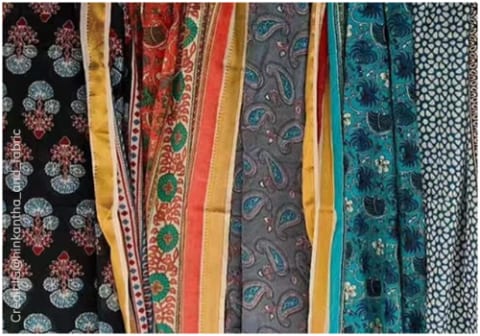
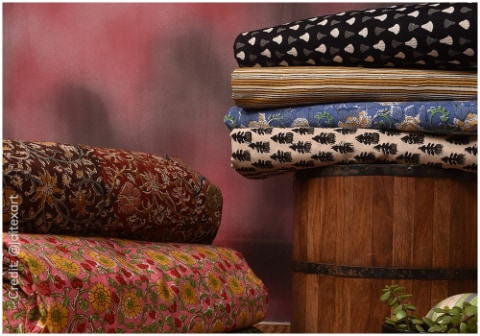
Nature is the biggest inspiration. You will often see motifs of flowers, leaves, and buds. These are known as Butis. A common design features a central flower surrounded by leaves, often printed in red or black against a cream background.
Geometric Designs
Apart from flowers, Bagru prints are famous for their bold geometric shapes. These include Jaals (trellis patterns), waves, and checks. These designs often create a mesmerizing, repetitive rhythm across the fabric.
The "Dabu" Technique
A special variation of Bagru printing involves a mud-resist technique called Dabu. Here, artisans print a design using a sticky mud paste. Sawdust is sprinkled over the mud to dry it. When the fabric is dipped in dye (usually indigo), the mud stops the color from reaching those parts of the cloth. Once washed, the mud comes off to reveal a beautiful pattern in the original fabric color, surrounded by deep blue.
Preserving Indian Craftsmanship
In a world dominated by fast fashion, Bagru print stands as a symbol of sustainability and heritage. Every meter of fabric supports a community of artisans who have dedicated their lives to this craft.
When you choose a hand block printing textile from Bagru, you are not just buying a piece of cloth. You are supporting:
- Eco-friendly fashion: The process uses minimal electricity and natural materials.
- Traditional skills: You help keep an ancient art form alive for future generations.
- Human connection: You embrace the slight imperfections—a drop of dye here, a slight overlap there—that prove a human hand made your garment.
Conclusion
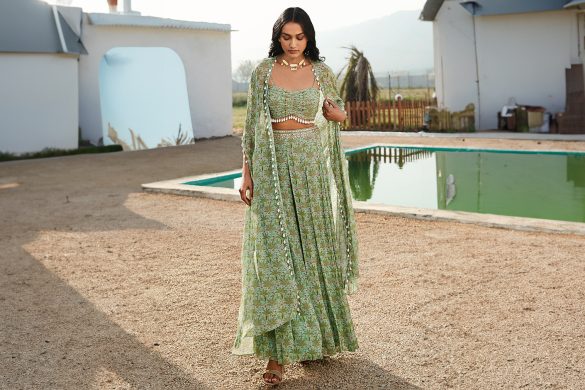
Bagru print is more than just a textile; it is a story written in color and wood. It tells of the desert sun, the indigenous plants, and the skilled hands of the Chhipa community. Its earthy tones and timeless designs make it perfect for everything from sarees and kurtas to modern dresses and home decor.
So, the next time you see a garment with that distinct indigo blue or earthy red, take a closer look. If you see the slight variations of a hand-stamped pattern, you know you are looking at the authentic beauty of Bagru. By embracing these traditional Indian textiles, we ensure that the rhythm of the wooden block continues to beat in the heart of Rajasthan.