Every bride knows that the magic is in the details. You spend months selecting the perfect shade of crimson or pastel pink, deciding between velvet and silk, and choosing the cut of your blouse. But there is a deeper layer to your wedding outfit that often goes unspoken, yet carries the most weight: the motifs woven into the fabric.
For the 2026 bride, fashion is moving beyond pure aesthetics. It is shifting towards intention. Your bridal lehenga or saree isn't just a garment; it is a canvas of storytelling. The figures and patterns embroidered onto your outfit are symbols rooted in centuries of heritage, each carrying a specific blessing, wish, or quality you want to bring into your new life.
Whether you are designing a custom piece or hunting for the perfect designer look, understanding these symbols transforms your outfit from beautiful to meaningful. Here is your guide to the essential bridal motifs for 2026, exploring their deep symbolism and how to wear them with intention.
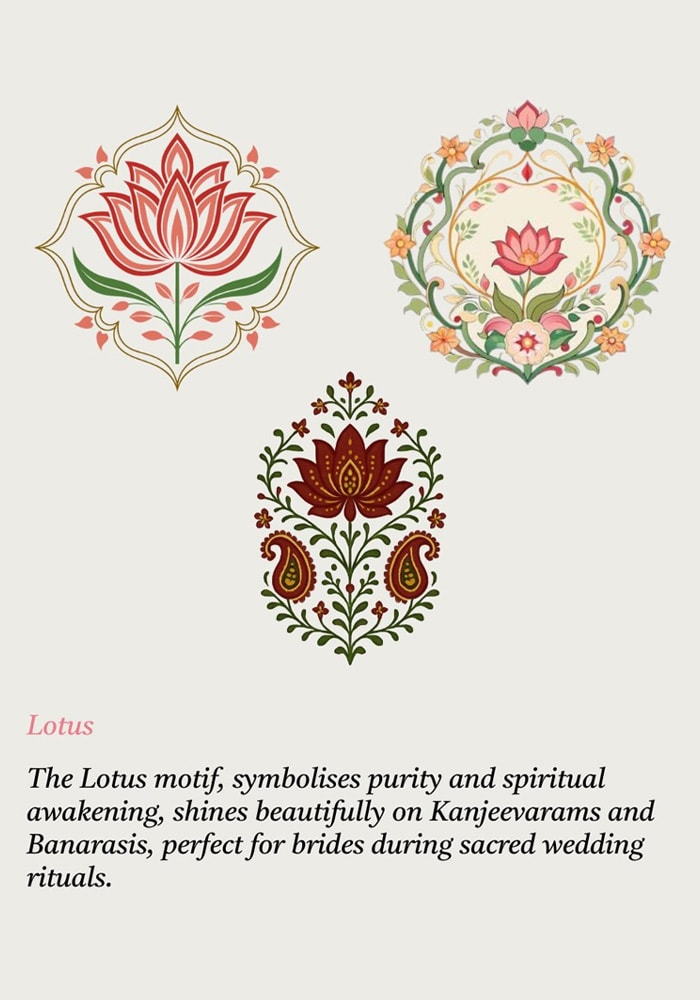
1. The Lotus: Purity and Spiritual Grace
The lotus is perhaps the most enduring symbol in Eastern philosophy. Rising pristine and beautiful from muddy waters, it represents purity, spiritual awakening, and the ability to thrive regardless of surroundings.
For a bride, the lotus is a powerful talisman. It signifies a pure heart and the sanctity of the vows you are about to take.
How to style it in 2026:
Move away from tiny, repetitive lotus borders. Instead, look for large, painterly lotus motifs embroidered in soft metallic threads (zardozi) on the skirt of your lehenga. A 3D applique lotus on the back of a blouse adds a modern, sculptural touch to this ancient symbol.
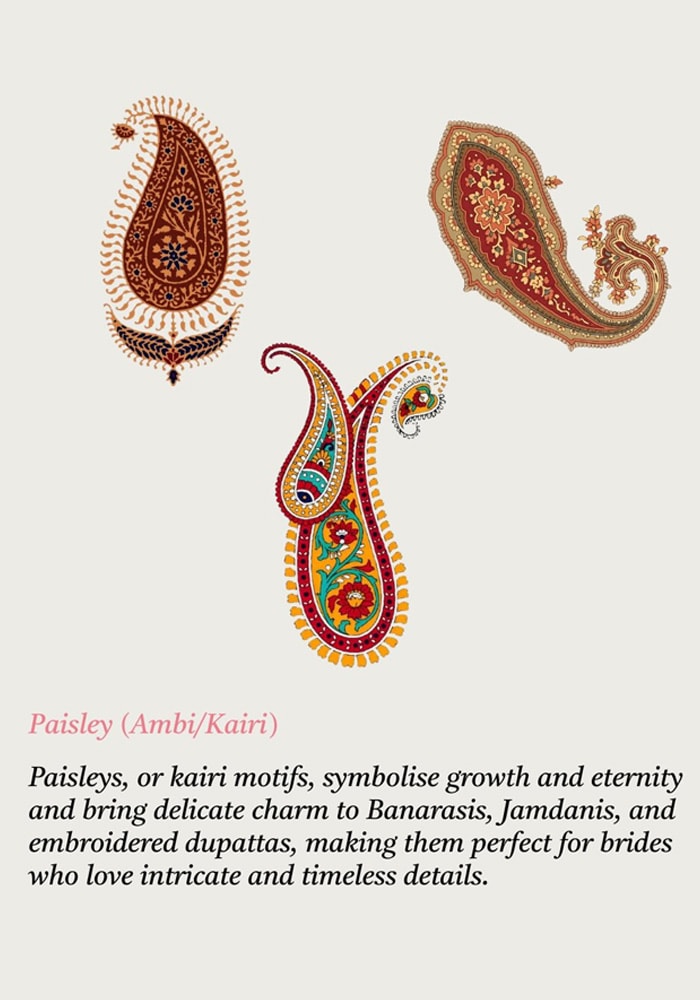
2. Paisley (Kairi): The Seed of Eternity
The paisley, or Kairi (meaning unripe mango), is a staple in South Asian textiles. Its curved teardrop shape represents a seed, symbolizing fertility, new beginnings, and eternal life. It is the visual representation of growth—perfect for a couple starting their journey together.
How to style it in 2026:
Paisley is often used as a filler pattern, but for 2026, let it take center stage. Oversized paisley motifs woven into Banarasi silk sarees create a regal, vintage look. For a contemporary twist, opt for "deconstructed" paisley patterns where the shape is outlined in pearls or crystals rather than solid thread work.
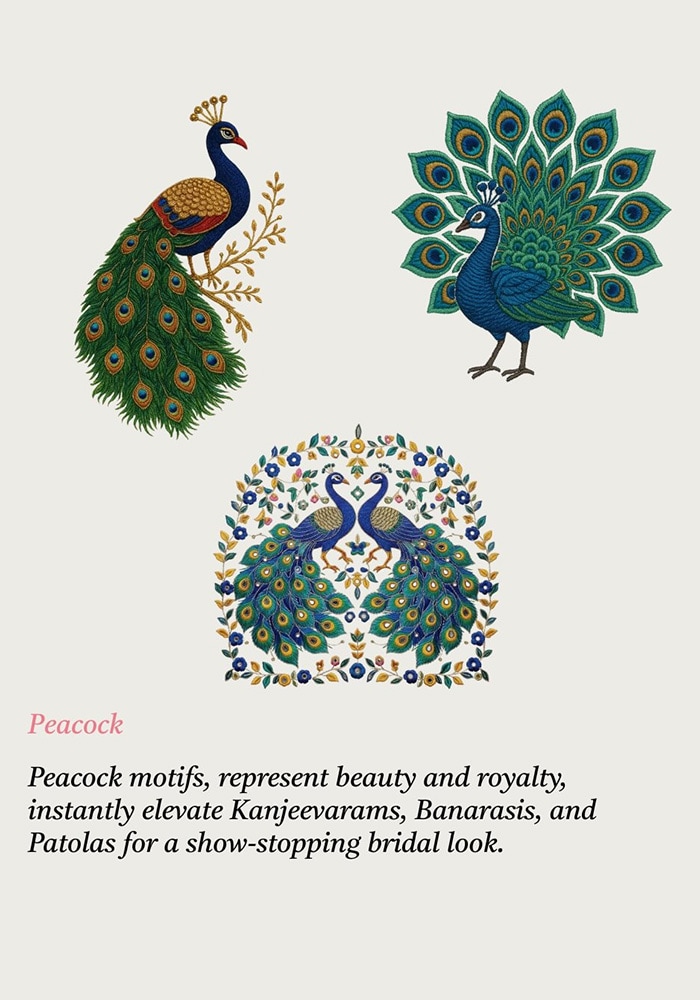
3. The Peacock: Regal Beauty and Protection
There is a reason the peacock is the national bird of India. It represents royalty, divine beauty, and protection. In mythology, the peacock is often associated with rain and romance, making it a deeply auspicious symbol for weddings.
How to style it in 2026:
While multicolored peacock embroidery is classic, the 2026 trend leans towards monochrome elegance. Imagine a gold peacock motif on a gold tissue saree, or silver thread work on a deep emerald velvet. The silhouette of the bird is enough to convey its grandeur without needing a rainbow of colors.
4. The Mandala: Balance and Wholeness
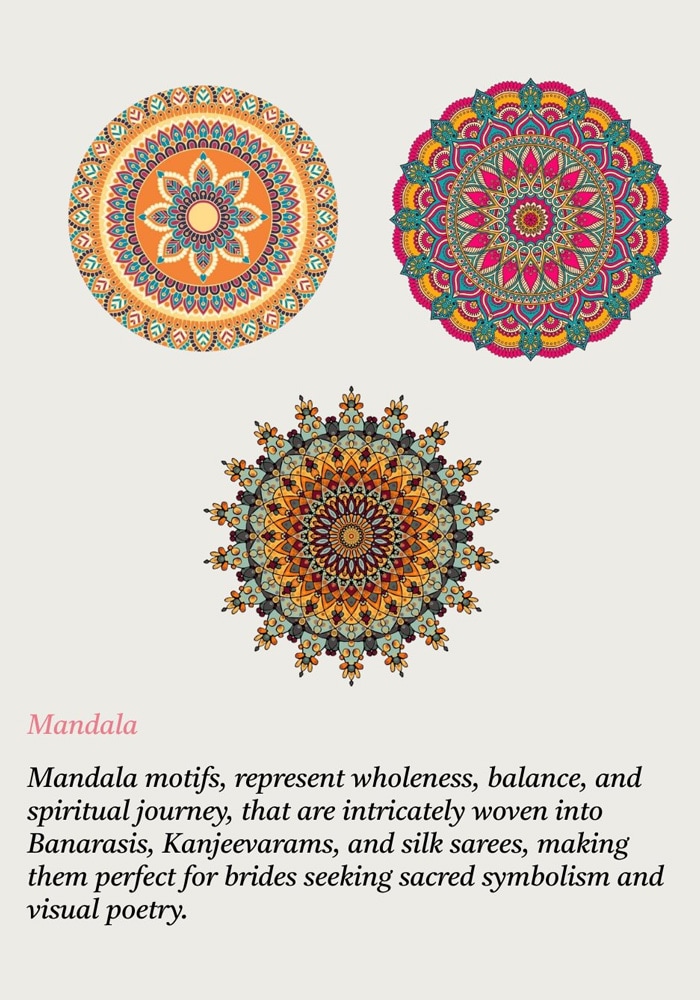
A mandala is a geometric configuration of symbols that represents the universe. In a spiritual context, it serves as a tool for focusing attention and establishing a sacred space. On bridal wear, the circular symmetry represents balance, wholeness, and the infinite cycle of life.
How to style it in 2026:
Mandalas are perfect for the dupatta (veil). A large, intricate mandala embroidered in the center of a sheer head veil creates a stunning halo effect when viewed from above or behind. It adds a layer of spiritual depth to the moment you walk down the aisle.
5. The Elephant: Strength, Wisdom, and Grandeur
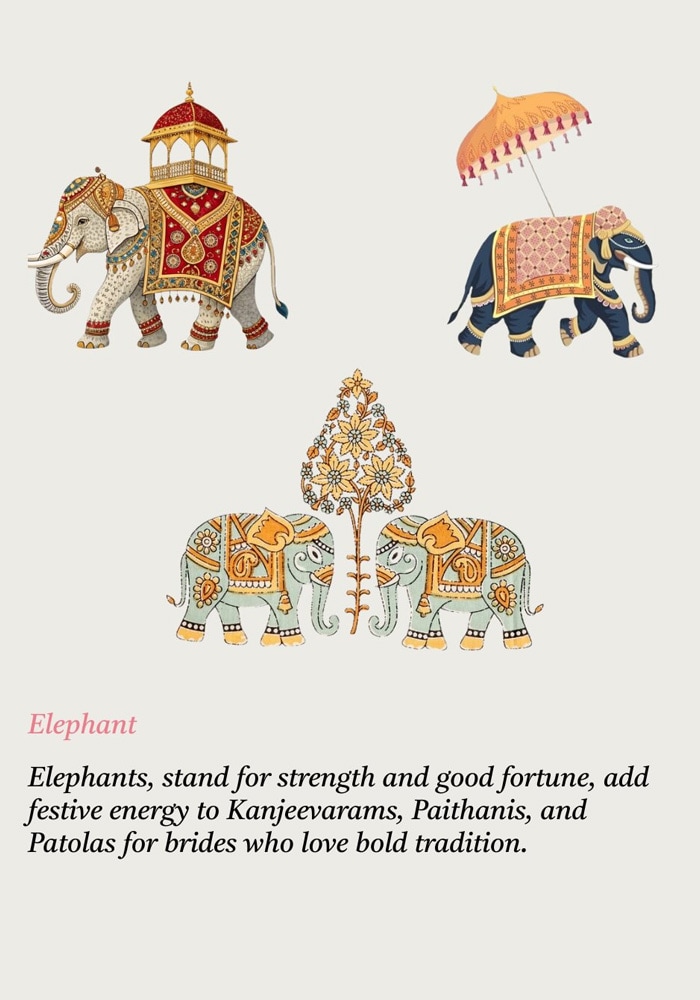
Elephants have always been associated with royal processions and festive grandeur. Spiritually, they represent Ganesha, the remover of obstacles. Wearing an elephant motif is a prayer for strength, wisdom, and a smooth path forward in your married life.
How to style it in 2026:
Small, marching elephant borders on the hemline of a lehenga are timeless. However, for a bolder look, consider "Shikargah" weaves (hunting scenes) on silk sarees, which often feature majestic elephants amidst flora and fauna. This connects your look to nature and royal history simultaneously.
6. Celestial Motifs: The Sun and Moon
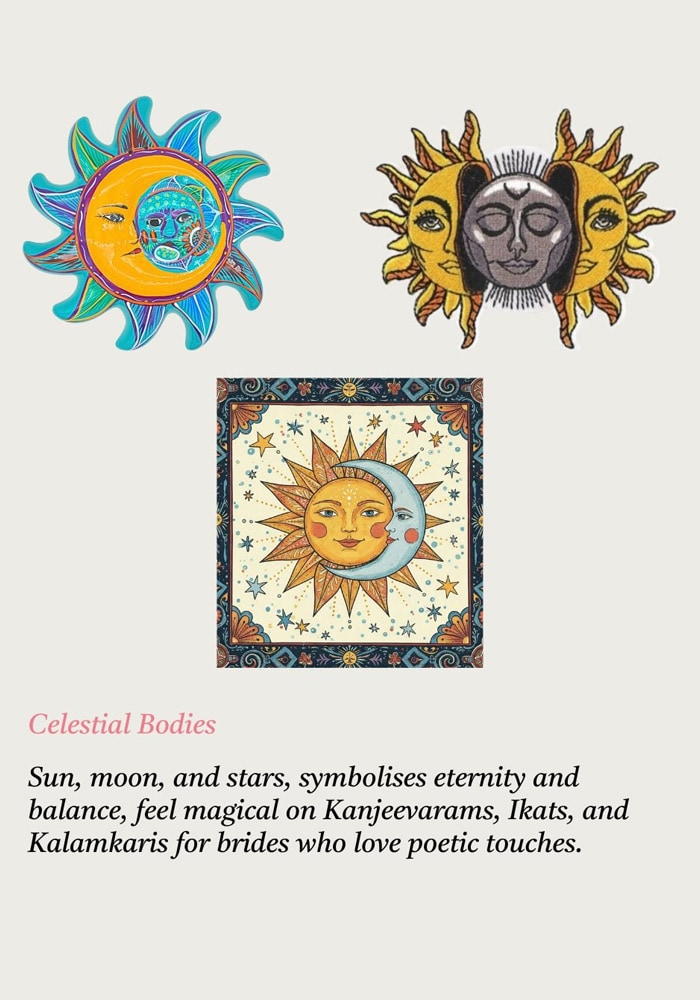
The sun (Surya) and moon (Chandra) represent the ultimate cosmic balance. The sun brings masculine energy, vitality, and power, while the moon represents feminine energy, coolness, and emotional depth. Together, they symbolize eternity—a love that lasts as long as the sun and moon shine.
How to style it in 2026:
Celestial motifs are having a major fashion moment. Look for asymmetric designs—perhaps a sun motif on the right shoulder of your blouse and a crescent moon on the left. Gold sequins arranged in starburst patterns across a midnight blue or charcoal lehenga create a dreamy, night-sky aesthetic perfect for an evening reception.
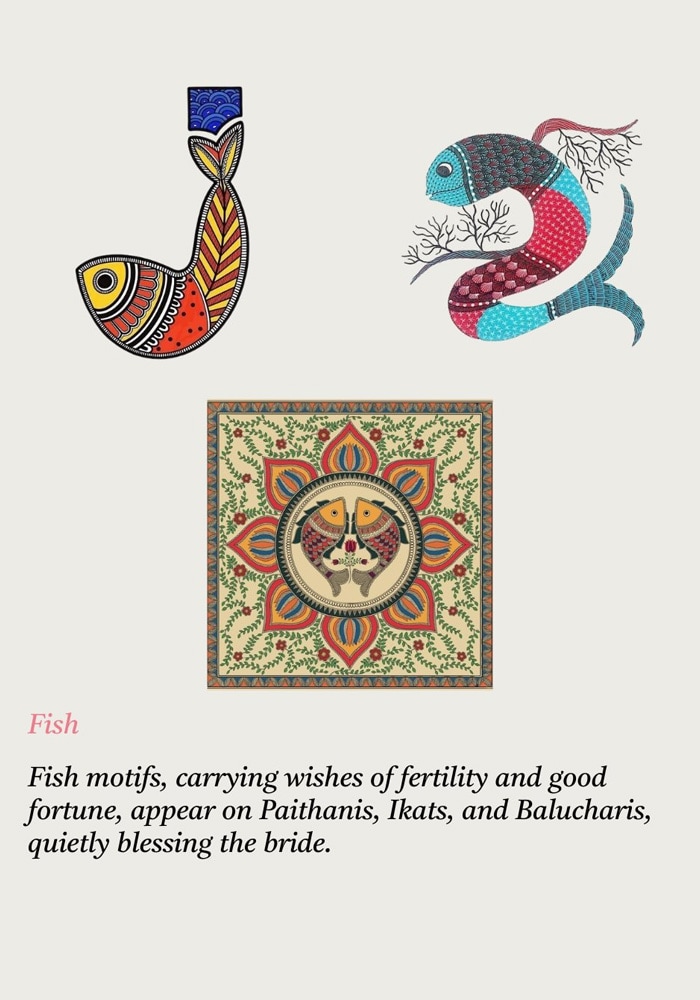
7. The Fish: Fertility and Flow
In many cultures, the fish is a potent symbol of fertility, abundance, and good fortune. Because fish move freely in water, they also represent a life that flows smoothly without stagnation. It is a wish for a marriage full of adaptability and plenty.
How to style it in 2026:
Fish motifs are deeply rooted in Madhubani art and Bengali weaves. For a 2026 bride, a hand-painted designer saree featuring stylized fish artwork adds an artistic, bohemian flair to a traditional outfit. It is a subtle nod to cultural roots that feels personal and unique.
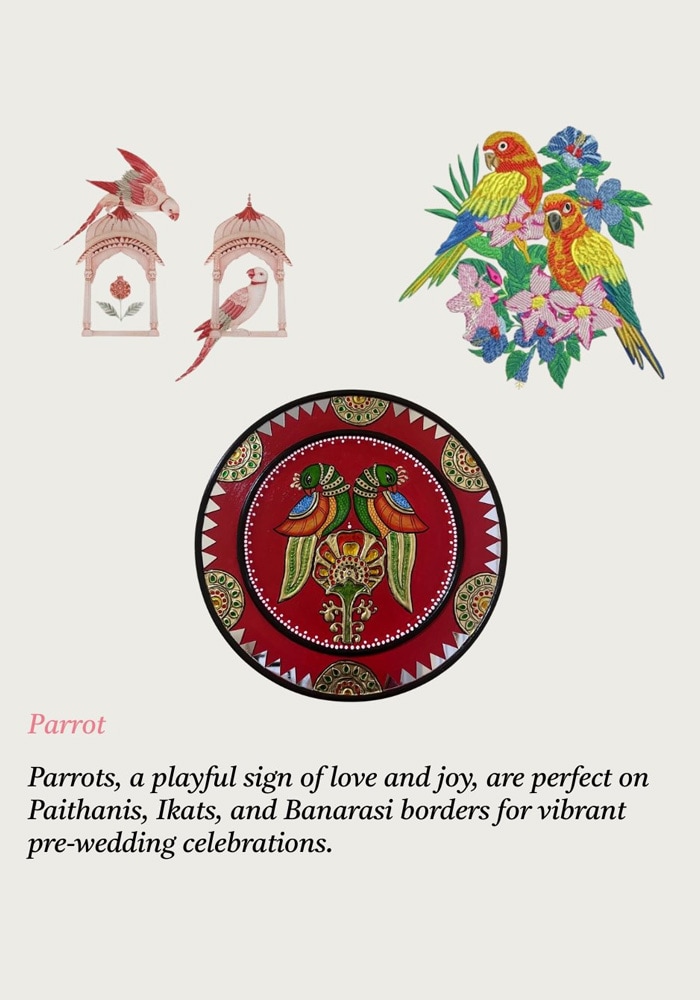
8. The Parrot: Love and Courtship
Parrots are the messengers of the god of love (Kamadeva). They symbolize romance, courtship, and truth-telling. Unlike the stoic eagle or the grand peacock, the parrot brings a sense of playfulness and joy to bridal design.
How to style it in 2026:
Parrot motifs look exquisite in Meenakari jewellery, but they translate beautifully to fabric too. Look for pair-motifs (two parrots facing each other) on the back of your choli (blouse). It is a sweet, romantic detail that symbolizes the couple’s union.
9. Temple Motifs: Devotion and Tradition
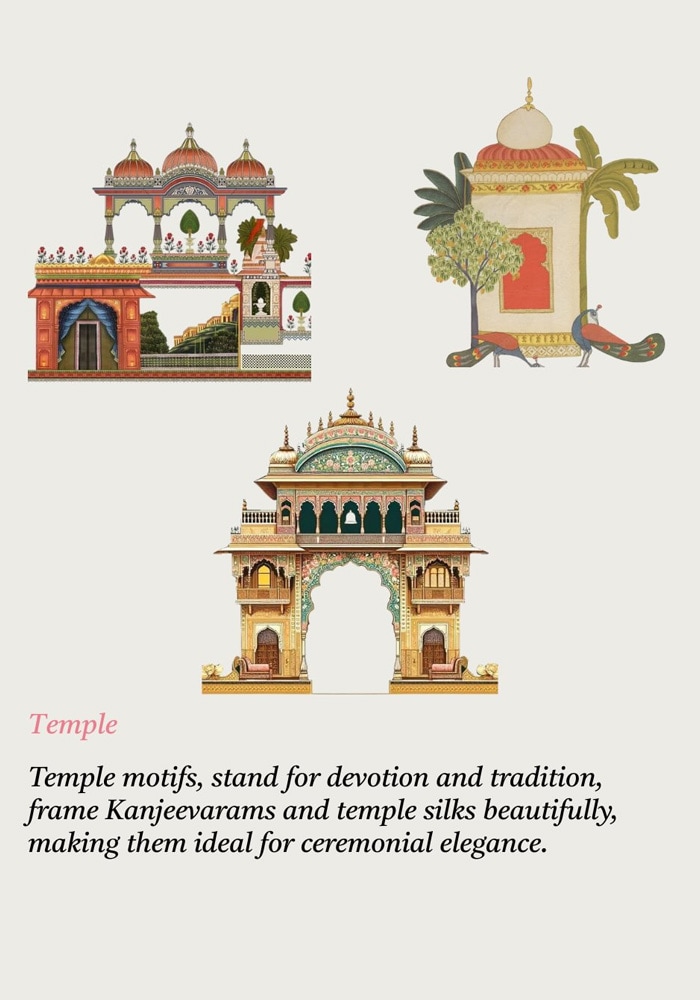
Temple borders and architectural motifs ground a bridal look in devotion. They often depict the gopurams (towers) of South Indian temples or the arches of Mughal palaces. These designs remind us that marriage is a sacred institution, rooted in divine blessing.
How to style it in 2026:
This is the defining look for Kanjeevaram sarees. A broad "Korvai" border featuring temple spires creates a silhouette that is both sharp and traditional. For North Indian brides, architectural arches embroidered along the hem of a lehenga frame the entire look in regal elegance.
10. The Tiger: Courage and Power
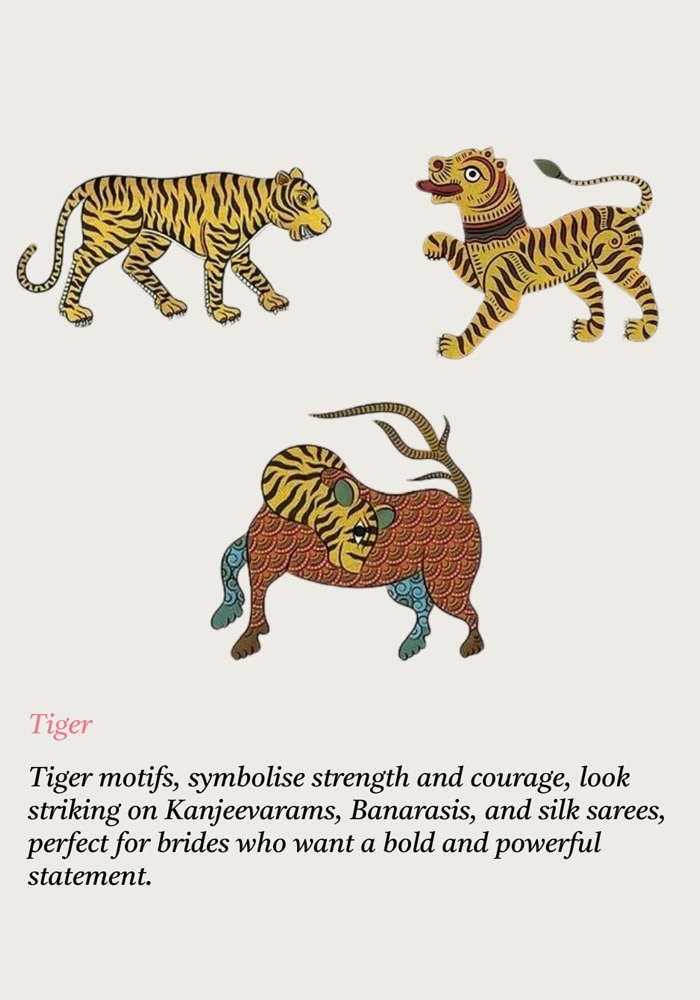
For the bold bride, the tiger is the ultimate symbol. Associated with the goddess Durga, the tiger represents Shakti—divine feminine power, courage, and fearlessness. It is a motif for the woman who enters her marriage as an equal partner, strong and self-assured.
How to style it in 2026:
This is not a motif for the faint of heart. A tiger motif works best as a statement piece, perhaps embroidered on a velvet potli bag or hidden within the complex narrative embroidery of a lehenga skirt. It is a fierce, empowering secret for the bride to carry.
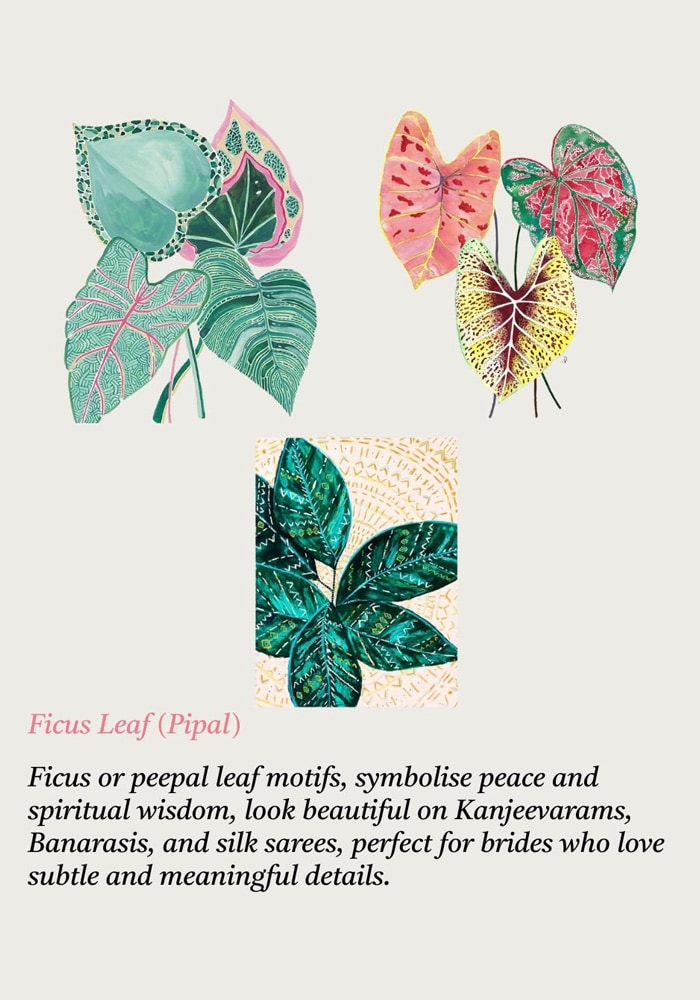
11. The Peepal Leaf: Spiritual Wisdom
The Peepal tree (Ficus religiosa) is sacred in Indian mythology. Its heart-shaped leaves represent peace, spiritual wisdom, and fertility. It is a softer, more botanical symbol that connects the bride to the earth and ancient wisdom.
How to style it in 2026:
The heart shape of the Peepal leaf lends itself beautifully to neckline designs. An overlapping leaf pattern creates a natural, organic edge to a blouse or dupatta border. It is an excellent choice for brides planning an outdoor or daytime wedding who want their outfit to reflect nature.
12. The Tree of Life: Continuity and Legacy
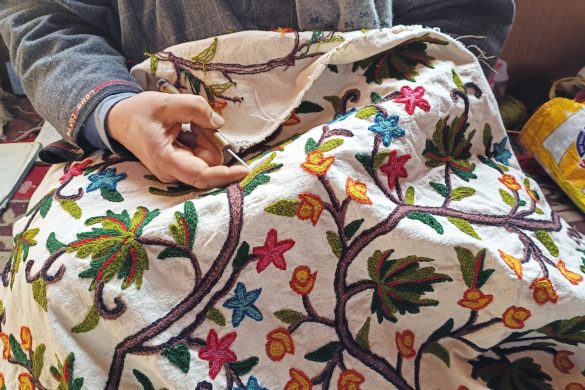
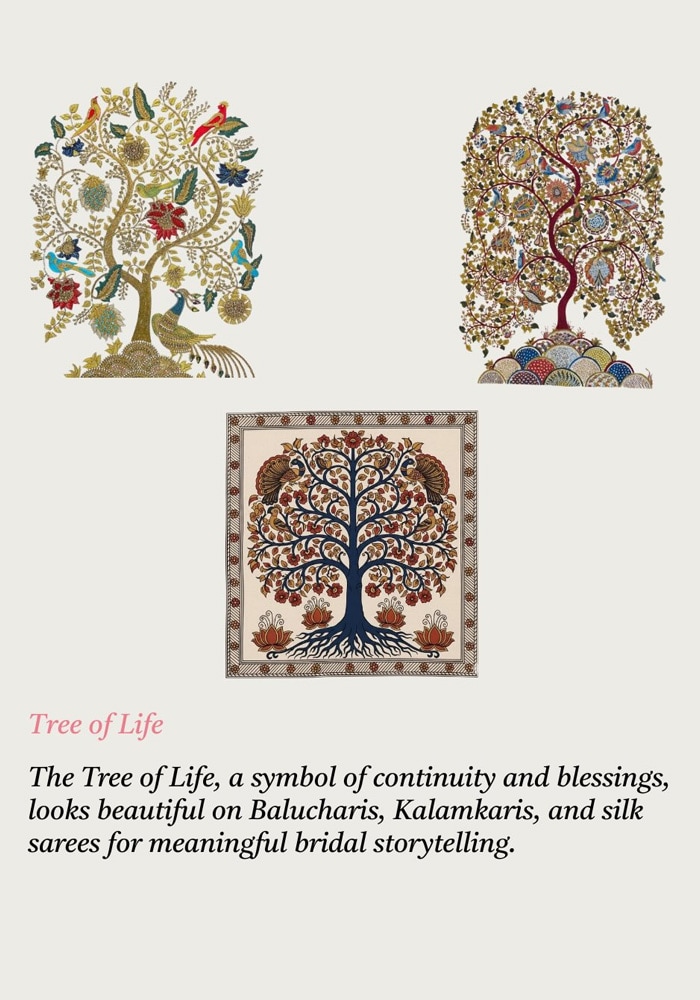
The Tree of Life connects the underworld, the earth, and the heavens. In a wedding context, it symbolizes the joining of two families and the growth of a new family tree. It represents deep roots (respect for ancestors) and high branches (ambition for the future).
How to style it in 2026:
This is a spectacular motif for the main panel of a lehenga. The trunk starts at the hem, with branches winding upwards towards the waist, filled with birds and flowers. It turns your outfit into a living story of growth and continuity.
Creating Your Wedding Story
When you choose your bridal outfit for 2026, look closely at the embroidery. Do not just see gold thread and sequins. See the wish for resilience in the lotus, the prayer for wisdom in the elephant, and the promise of eternity in the sun and moon.
By choosing motifs that resonate with your personal values and hopes for your marriage, you ensure that your wedding dress is not just a costume for a day. It becomes a talisman, a prayer, and a cherished part of your family’s history.