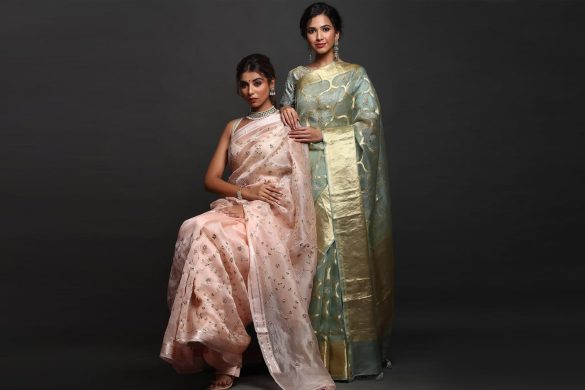
For Chhath Puja, stick to traditional colours like red, yellow, and orange, since these shades are tied to auspiciousness and devotion. Cotton or silk sarees work best for the ghat rituals because they handle water and standing for long periods without clinging or slipping. Pin your pallu securely, skip anything too heavy, and let comfort guide your choices for both sunrise and sunset arghya.
Chhath Puja is one of the few festivals where devotion shows up in every single detail, right down to what you wear while standing knee-deep in river water at dawn. If you're prepping for the 2026 celebrations, especially if this is your first Chhath or you're trying to get the outfit right for the whole family, here's what actually matters.

What colours should you wear for Chhath Puja?
Red, yellow, and orange dominate Chhath attire, and that's not an accident. Red represents marital devotion and energy, similar to its role in other Hindu festivals. Yellow and orange are considered auspicious shades tied to the sun god, Surya, who is the central deity of this festival. Sindoor-red in particular holds extra weight for married women performing the rituals.
You'll also see bright, saturated tones like deep pink and mustard, especially in Bihar, Jharkhand, and eastern Uttar Pradesh, where Chhath traditions run deepest. Avoid black or overly muted colours. They're seen as inappropriate for a festival built around gratitude and purity.
What type of saree is best for Chhath Puja rituals?
Cotton and silk sarees are the traditional choices, and for good reason. Cotton breathes well, dries quickly, and doesn't get uncomfortably heavy when wet, which matters a lot when you're standing in a river for the arghya offering. Silk, particularly in regions like Bihar and Nepal's Terai belt, is worn for its auspicious value and is often reserved for the main puja days.
If you're newer to draping or want something more secure for the water rituals, look into cotton and silk sarees for puja that offer breathable fabric without sacrificing the traditional look.
Avoid heavily embellished or sequinned sarees. They're not practical near water and can snag or feel uncomfortable during the long hours of standing and prayer.
How should you drape and pin your saree for standing in water?
This is where practicality meets tradition. Since you'll be standing in a river or pond for extended periods during the arghya offering, your drape needs to stay put.
A few tips that genuinely help:
Pin the pallu securely. Use at least two safety pins, one at the shoulder and one at the waist, so it doesn't slip when you're bending to offer water.
Tuck the pleats tighter than usual. Loose pleats tend to come undone in water, so a firmer tuck at the waist keeps everything in place.
Keep the hemline slightly higher. Many women fold the saree a touch above the ankle for the ghat rituals, simply because wet fabric dragging through mud or sand gets heavy and uncomfortable fast.
Choose a well-fitted blouse. You'll be bending, lifting the soop (prayer basket), and moving around a lot, so a blouse that doesn't restrict movement makes the whole process easier.
Do you need different outfits for sunrise and sunset arghya?
Not necessarily, but many women do switch things up. The evening arghya on Sandhya Arghya day tends to be the more elaborate affair, since it's often considered the main ritual, so you'll see brighter sarees, more jewellery, and fuller sindoor application.
The sunrise arghya the next morning (Usha Arghya) is simpler by comparison. Many women wear the same saree from the night before, or opt for something lighter since you're out at dawn, often in cooler temperatures depending on the region.
If you want to prepare both looks in advance, it helps to have one slightly more festive saree for sunset and a simpler, equally traditional option for sunrise.
How should men and family members dress for Chhath Puja?
Men traditionally wear dhoti-kurta sets, often in yellow or cream, which mirrors the same auspicious colour logic applied to women's sarees. A plain dhoti paired with a simple kurta is standard, since the focus stays on ritual purity rather than elaborate styling.
For families attending together, especially with kids, lighter cotton kurta sets in similar traditional colours keep everyone looking cohesive without overcomplicating things. Comfort matters most here too, since Chhath involves long hours at the ghat, often with kids and elders in tow.
Respecting regional traditions
Chhath Puja is celebrated most prominently in Bihar, Jharkhand, eastern Uttar Pradesh, and the Terai region of Nepal, and each area carries its own small variations in dress, from specific colour preferences to how elaborate the sindoor and jewellery get. If you're attending a Chhath celebration outside these regions or joining a diaspora community, it's worth asking local organizers or family elders about regional customs so you can dress respectfully and in keeping with the spirit of the festival.
Getting your Chhath look right
What matters most on Chhath isn't how elaborate your outfit is. It's whether it lets you move, bend, and stand in water comfortably while honoring the ritual. Stick to breathable fabrics, traditional colours, and a secure drape, and you'll be set for both the sunrise and sunset offerings.
FAQs
What colour saree is considered most auspicious for Chhath Puja?
Red is widely considered the most auspicious, especially for married women, followed closely by yellow and orange, which are tied to the sun god Surya.
Can I wear a silk saree for the ghat rituals, or is cotton mandatory?
Cotton is more practical for the water rituals since it dries faster and feels lighter when wet, but silk is also worn, particularly for the main puja days in Bihar and Nepal's Terai region. There's no strict rule, so comfort and regional tradition usually guide the choice.
How do I keep my saree from getting ruined while standing in river water?
Fold the hemline slightly higher than usual, pin the pallu securely at two points, and choose a fabric like cotton that handles water well without becoming too heavy or clingy.
What should men wear for Chhath Puja?
Men typically wear a dhoti-kurta set in yellow or cream, keeping the look simple and in line with the ritual purity emphasized throughout the festival.
Is there a difference between what to wear for sunrise versus sunset arghya?
Not strictly, though sunset (Sandhya Arghya) tends to be more elaborate with brighter sarees and fuller styling, while sunrise (Usha Arghya) is often simpler and more practical given the early hour.