The saree stands as one of the most recognizable types of clothing. For centuries, this elegant attire has defined Indian fashion, offering a canvas of rich silks, vibrant cottons, and intricate handlooms. You might assume the entire look—the drape, the petticoat, and the tailored blouse—boasts an ancient, unbroken lineage stretching back thousands of years. However, the stitched saree blouse as we know it today did not exist in ancient India. In fact, it was born out of necessity, cultural exchange, and shifting societal norms during the British Raj.
What began as a strict compliance with Victorian morality has blossomed into the ultimate expression of personal style. The modern saree blouse has transcended its original purpose, transforming into a standalone piece of haute couture. Let's explore the fascinating journey of the saree blouse, tracking its path from the drawing rooms of colonial Calcutta to the silver screens of Bollywood.
The Colonial History of India’s Saree Blouse
Before the arrival of the British, women across the Indian subcontinent draped their sarees in a multitude of ways. Most of these traditional draping styles did not require a stitched upper garment. Women in warmer regions wore the fabric wrapped comfortably around their waists and draped directly over their upper bodies. Some wore a simple stanapatta, while others simply let the fabric fall naturally. Comfort, climate, and ease of movement dictated these ancient dressing habits.
The arrival of the British changed everything. Victorian social codes placed a heavy emphasis on modesty. Elite Indian families, who frequently interacted with the British, faced pressure to adapt their wardrobes to meet this new dressing sense.
Jnanadanandini Devi's Role
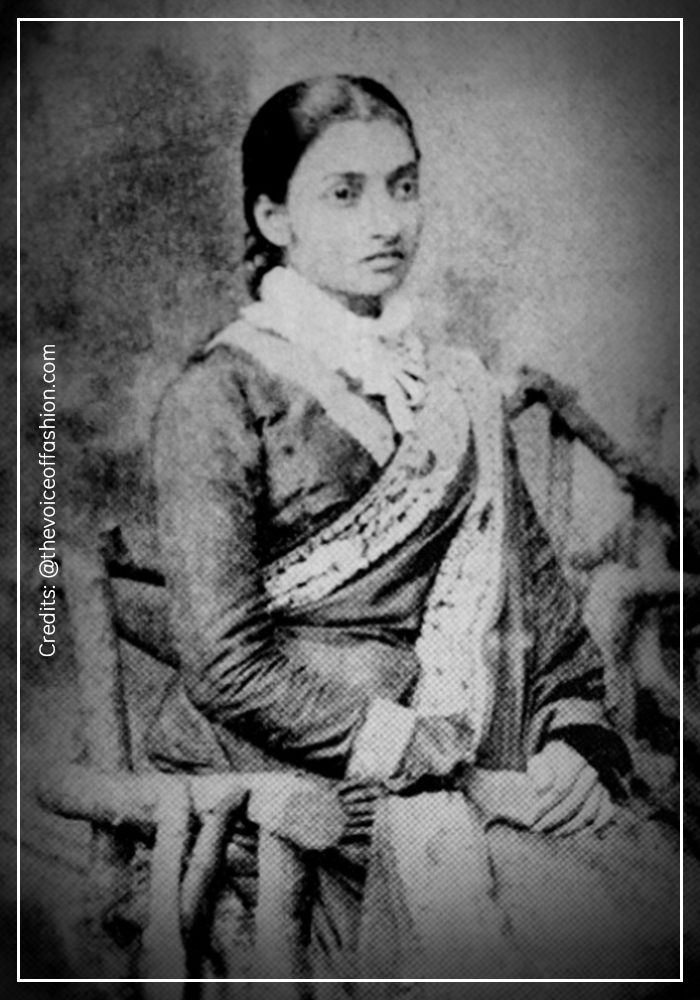
Enter Jnanadanandini Devi, a pioneering social reformer and the sister-in-law of the legendary poet Rabindranath Tagore. During a visit to Bombay in the late 19th century, she was famously denied entry to an English club because her traditional attire was deemed inappropriate by the colonial establishment.
Rather than accepting this exclusion, she took matters into her own hands. Jnanadanandini Devi studied the attire of Parsi and Gujarati women, who had already begun adapting their clothing. She combined these influences with English styling to invent what we now recognize as the modern saree blouse. She tailored blouses with high necks, long sleeves, and collars, directly mirroring the Victorian chemise.
She also revolutionized the drape itself, introducing the "Brahmika saree" style. This involved pleating the fabric at the waist and draping the pallu gracefully over the left shoulder. To ensure this new style gained traction, she even placed advertisements in local magazines offering to teach women how to drape their sarees in this new manner. What began as a tool for societal acceptance quickly became a staple of modern Indian fashion.
Impact of Cinema Over the Years
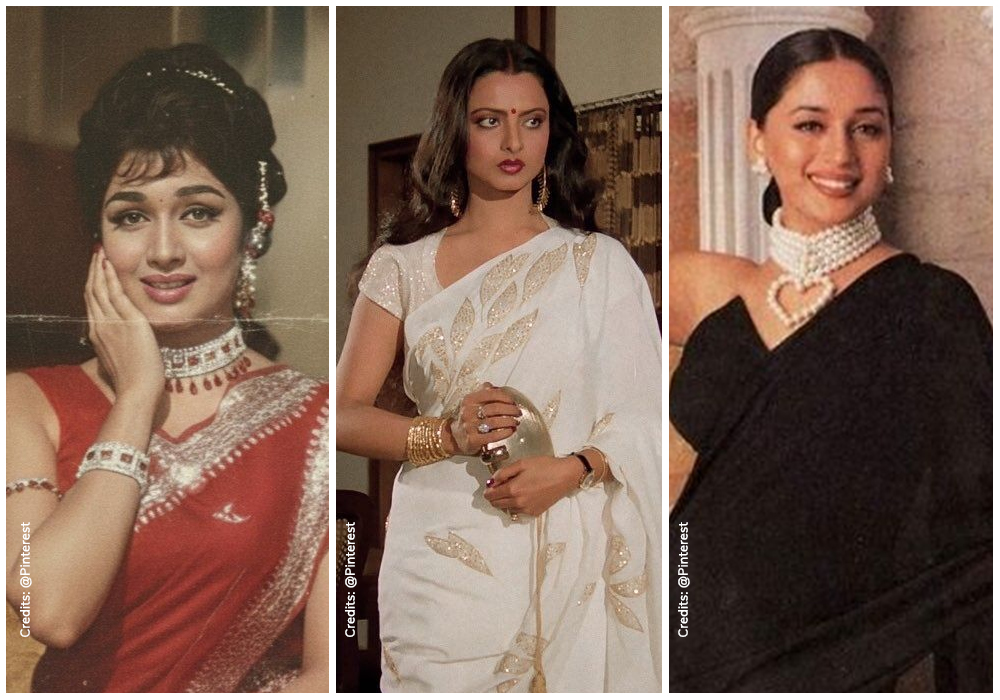
If colonial rule gave birth to the tailored blouse, Indian cinema gave it its wings. As the 20th century progressed, the rigid, high-necked Victorian blouses slowly began to loosen their grip. Bollywood stepped in, transforming the blouse from a garment of modesty into a symbol of glamour and style.
During the 1950s and 1960s, actresses graced the silver screen in elegant, refined silhouettes. The 1970s ushered in a wave of bold experimentation. Actresses like Asha Parekh began popularizing sleeveless blouses. By the 1980s and 1990s, the aesthetic shifted toward high drama. Icons like Rekha and Madhuri Dixit commanded the screen in exquisite styles.
Modern Saree Blouse Designs
Today, the saree blouse has shed all its historical constraints. It is no longer just a supporting act for the saree; it is often the main element. Designers continuously push the boundaries, creating blouses that pair just as beautifully with a traditional Kanjeevaram saree as they do with trendy designs. Take a look at a few remarkable pieces that capture this current creative spirit.
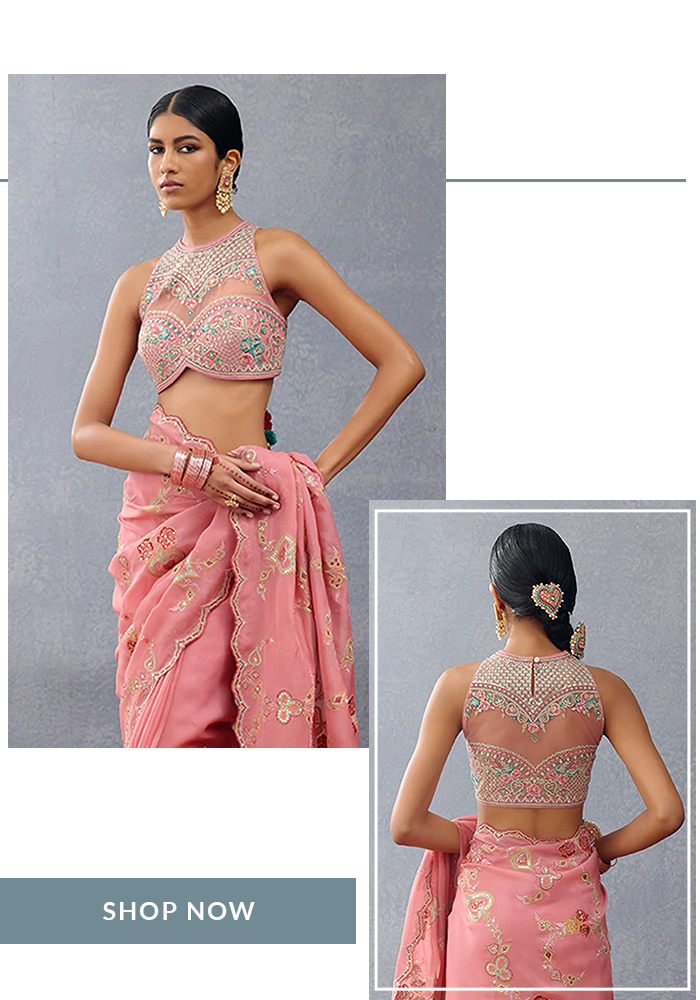
Embroidered Halter Neck Blouse
This piece perfectly demonstrates how designers play with structure. The halter neck cuts a sharp, contemporary silhouette that highlights the shoulders, offering a distinctly modern edge.
Yet, it grounds itself firmly in traditional artistry with intricate, vibrant embroidery.
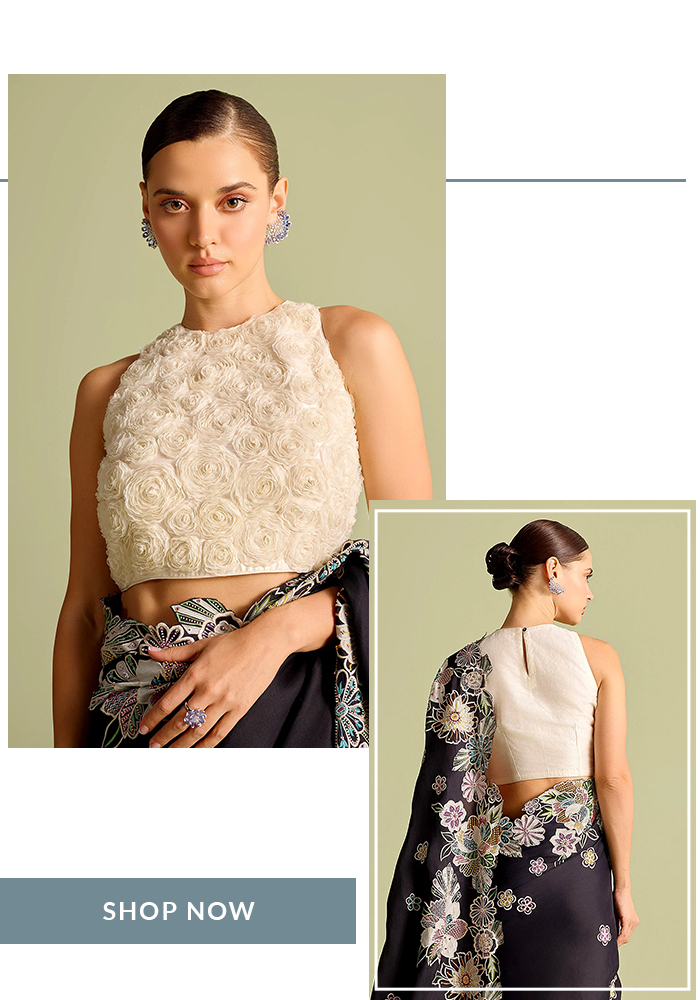
Floral Applique Blouse
For those looking at textural innovation, this blouse is a masterpiece. The use of 3D rose appliques creates a striking visual depth, turning the blouse into a piece of wearable art.
The pristine ivory palette keeps the elaborate work from feeling overwhelming, making it a sophisticated choice for evening wear.
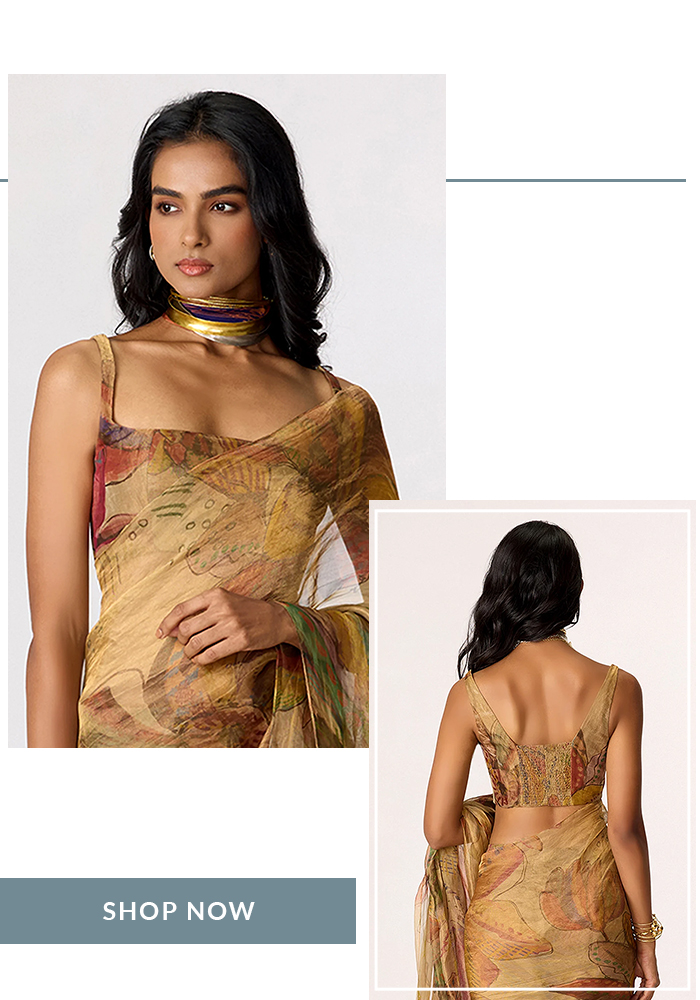
Printed Tissue Blouse
This saree blouse champions the minimalist trend. Made from silk tissue, it uses the natural metallic sheen of the fabric to command attention.
It features clean lines and a relaxed yet tailored fit, catering to the modern woman who values both striking aesthetics and uncompromising comfort. Pieces like this are incredibly versatile, easily transitioning from a formal wedding reception to a party.
The journey of the saree blouse is a remarkable tale of adaptation and artistic evolution. It started out of necessity—a colonial-era invention championed by Jnanadanandini Devi. Today, looking at the structural creations and intricate designs defining current fashion, the blouse stands as a testament to the dynamic nature of Indian style.
Also Read:
https://www.azafashions.com/blog/modern-saree-blouse-designs-bejewelled-pieces/