In the grand theatre of an Indian wedding, every element of the groom's attire tells a story. From the intricate embroidery on his sherwani to the pointed tip of his mojris, each piece is chosen with care and steeped in tradition. Among these, one accessory stands out for its sheer elegance and profound cultural weight: the turban. And when it comes to turbans, the Rajputi Safa holds a place of unparalleled honor and majesty.
Originating from the land of kings, Rajasthan, the Rajputi Safa is more than just headwear; it is a symbol of pride, honor, and heritage. The vibrant colors, the unique style of tying, and the regal aura it bestows upon the wearer make it an essential part of the groom's ensemble. It transforms a man into a king for his special day.
At Aza Fashions, we have a deep appreciation for the rich history woven into wedding attire. Let's delve into the cultural heritage of the Rajputi Safa and discover why this magnificent turban continues to be a cherished tradition in weddings today.
A Symbol of Honor and Pride
Historically, in Rajput culture, the turban or pagri was an integral part of a man’s daily attire. It was not merely a piece of cloth but a representation of his status, his clan, and the region he belonged to. The color, fabric, and style of the turban could tell you a great deal about the man wearing it. To have one's turban knocked off was considered a grave insult, signifying a loss of honor.
This deep-seated symbolism carries over into weddings. When a groom wears a Rajputi Safa, he is not just completing his outfit; he is upholding a legacy of honor and respect. It signifies his readiness to take on the responsibilities of a husband and head of the family. The act of his family members helping him tie the Safa is a gesture of their blessings and support for his new journey.
The Language of Colors in a Safa
The Rajputi Safa is famous for its brilliant hues, and each color has a specific meaning and is chosen according to the occasion. This 'language of colors' adds another layer of significance to the wedding festivities.
- Saffron (Kesariya): The most iconic color, saffron, represents bravery and chivalry. It is a color deeply associated with Rajput warriors and is often worn for momentous and auspicious occasions, making it a popular choice for grooms.
- Red or Maroon: Like in many other Indian traditions, red is the color of love, passion, and prosperity. A red Safa complements a bride’s red lehenga and symbolizes the auspiciousness of the marital union.
- Pink: Pink Safas are often worn during the spring season or for pre-wedding ceremonies. The color represents festivity, joy, and celebration.
- Yellow: Yellow is associated with happiness and new beginnings, making it a fitting choice for ceremonies like the Haldi.
- Leheriya (Wave Pattern): This tie-dye technique from Rajasthan creates a beautiful wave-like pattern. A Leheriya Safa is vibrant and festive, often worn during the monsoon season or for lively events like the Sangeet.
Variations in Tying Styles
The art of tying a Safa is a skill passed down through generations. There is no single way to tie a Rajputi Safa; the style can vary significantly from one region of Rajasthan to another. A seasoned turban-tyer can create distinct looks that reflect different local traditions.
The length of the cloth is also noteworthy. A traditional Rajputi Safa is typically a long piece of cloth, often around 9 meters long and one meter wide. The fabric is usually cotton, but for weddings, richer materials like silk or a silk-cotton blend with Zari borders are used to add a touch of grandeur. The sheer volume and elaborate tying process contribute to its royal appearance.
The Safa in Modern Weddings
While deeply rooted in tradition, the Rajputi Safa has adapted to contemporary tastes without losing its essence. Modern grooms are personalizing this classic accessory in several ways:
- Fabric Choices: Grooms are experimenting with different fabrics, including floral prints, Banarasi silk, and even velvet to match their outfits.
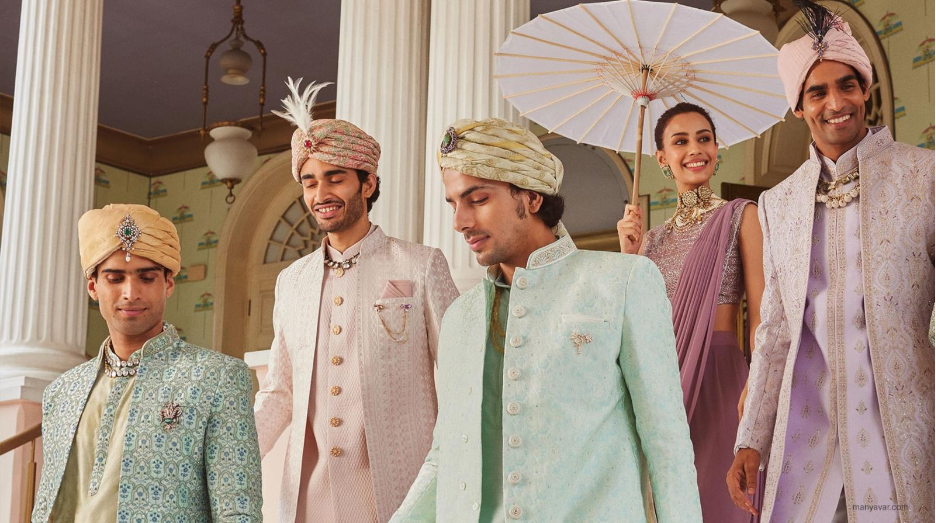
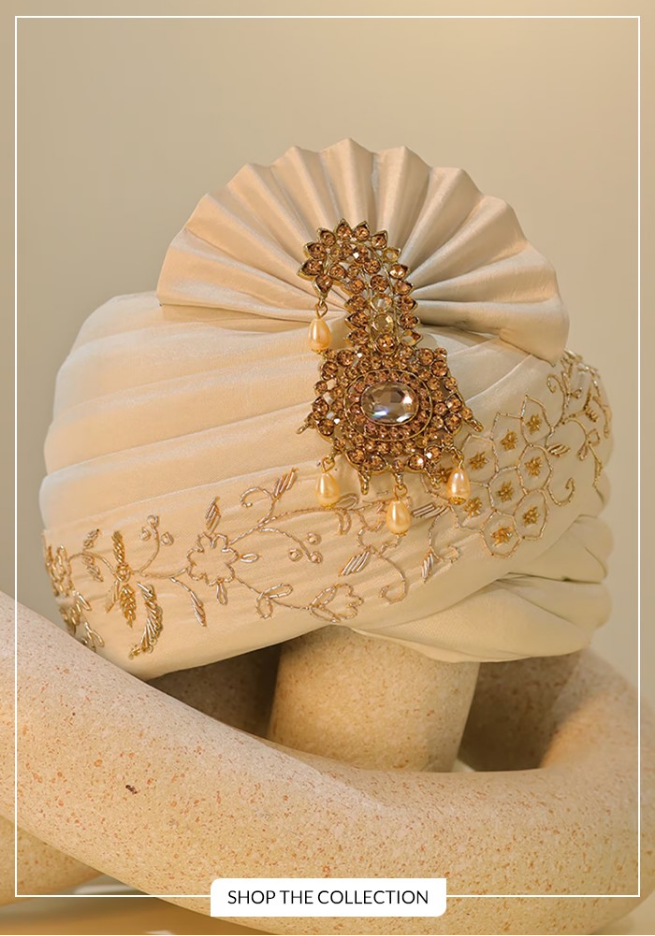
- Accessorizing the Safa: The groom's Safa is often adorned with a jeweled ornament called a Kalgi. This brooch, which can be made of gold, silver, or Kundan and often features a feather, adds a touch of royal sparkle. A string of pearls or a sarpech can also be added for extra opulence.
- Coordinating with the Bride: Many couples choose to coordinate their outfits. The groom might select a Safa color that matches a detail in the bride's lehenga, creating a harmonious and picture-perfect look.
- Pre-Tied Safas: For convenience, many grooms now opt for pre-tied Safas. These are expertly tied and stitched into place, ensuring they look perfect throughout the long hours of the wedding ceremony.
A Regal Touch for the Entire Wedding Party
The tradition of wearing a Safa is not just for the groom. In a gesture of respect and unity, male family members and close friends on both the bride's and groom's side often wear Safas as well. This is known as the Safa Bandhai ceremony. Typically, the groom’s Safa is the most elaborate, while the other men wear simpler versions, often in a single, coordinated color. This creates a stunning visual spectacle, uniting the two families in a sea of colorful, elegant turbans.
Conclusion
The Rajputi Safa is a timeless emblem of Rajasthani culture and a powerful symbol of a groom's honor, pride, and commitment. It connects the present to a rich past, bestowing upon the wearer an unmatched sense of royalty and grace. Choosing to wear a Safa is more than a fashion statement; it is an embrace of heritage, a nod to the stories of valor and romance from the land of kings. As you step into your new life, this regal turban serves as a crown, marking you as the king of your queen’s heart.
Ready to add a touch of royal elegance to your wedding day? Explore Aza Fashions to find a stunning collection of wedding accessories, including exquisitely crafted Safas and Kalgi brooches, to complete your perfect groom ensemble.