Gujarati weddings are a spectacular blend of vibrant colors, joyous music, delicious food, and deep-rooted traditions. Known for their warmth and celebratory spirit, these weddings are a multi-day affair where every ritual has a beautiful story and profound meaning. The ceremonies are less about extravagance and more about family, community, and the sacred union of two souls.
Whether you're planning your own nuptials or have been invited to a Gujarati wedding for the first time, understanding the customs can make the experience even more special. This guide will walk you through the key Gujarati wedding traditions, from the initial pre-wedding festivities to the heartfelt post-wedding goodbyes.
Pre-Wedding Rituals: The Joyful Buildup
The celebration begins long before the wedding day. These pre-wedding ceremonies are designed to bring the two families together and prepare the bride and groom for their new life.
1. Chandlo Maatli (Acceptance of the Union)
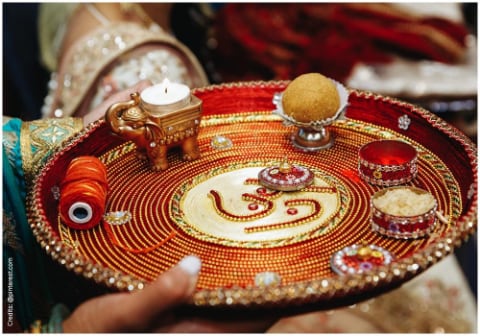
This is one of the first formal ceremonies and can be considered the official engagement. The bride's father, along with four other male relatives, visits the groom's home. He brings a maatli (a steel container) filled with sweets and gifts for the groom. He then applies a chandlo (a red circle of kumkum) on the groom's forehead, signifying his acceptance of the groom into his family and blessing him.
2. Gol Dhana (Coriander and Jaggery)
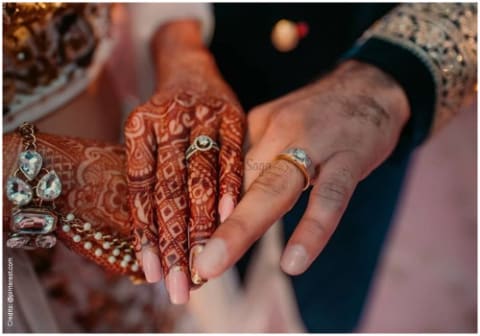
The Gol Dhana is the engagement ceremony. Gol means jaggery, and Dhana means coriander seeds. These two ingredients symbolize the sweet and savory journey of married life. During this event, the couple exchanges rings. The families also exchange gifts, and the bride-to-be is presented with a simple saree and household items by her future in-laws to welcome her.
3. Mehendi Ceremony
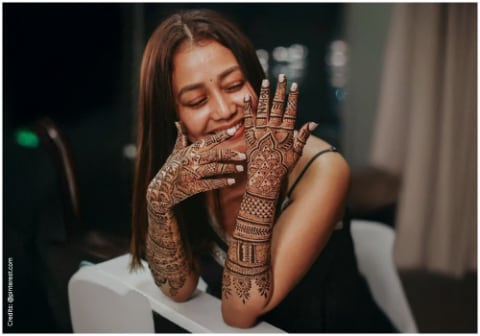
Like many other Indian wedding rituals, the Mehendi ceremony is a vibrant and fun-filled event. The bride's hands and feet are adorned with intricate henna designs. The ceremony is filled with music, dancing (especially Garba!), and merriment. It is believed that the darker the color of the bride's mehendi, the more love she will receive from her husband.
4. Mandap Mahurat & Grah Shanti
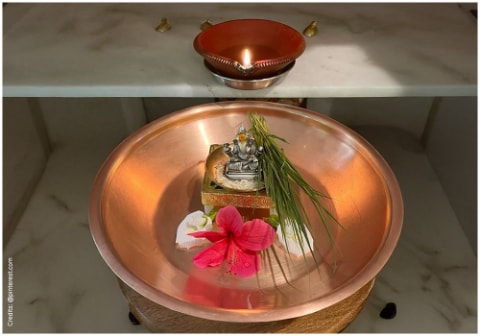
This puja is performed at both the bride's and groom's homes a few days before the wedding. The families seek blessings from Mother Earth and the gods to ensure the wedding happens without any obstacles. This ceremony also marks the official start of erecting the mandap (the wedding canopy). The Grah Shanti puja is performed to pray for peace and prosperity in the couple's future home.
5. Pithi (Turmeric Ceremony)
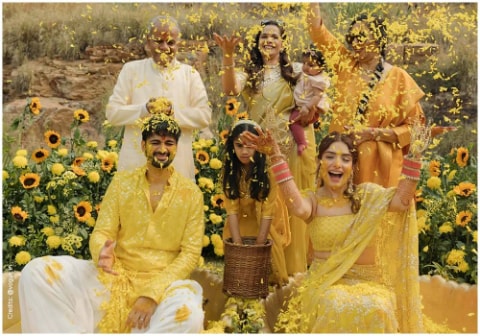
The Pithi ceremony is the Gujarati version of the Haldi ceremony. A paste made of turmeric, sandalwood, rosewater, and herbs is applied to the bride and groom at their respective homes. Turmeric is known for its beautifying properties, and the ritual is meant to give the couple a radiant glow for their wedding day.
The Wedding Day Attire: A Splash of Tradition
Gujarati wedding attire is a beautiful combination of tradition and elegance. The colors red and white play a significant role.
For the Bride: The Panetar Saree

The bride traditionally wears a Panetar, a beautiful white silk saree with a red or maroon border, which is a gift from her maternal uncle. The white symbolizes purity, while the red signifies love and fertility. During the wedding rituals, she also wears a Gharchola, a rich red or maroon saree with woven checks (often in gold thread), gifted by her in-laws. This signifies her transition into her new family.
For the Groom: Regal and Refined
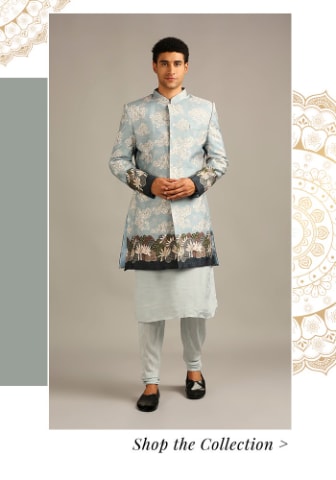
The groom typically wears a dhoti and kurta for the main ceremony. However, in modern times, many grooms opt for a sherwani or a Bandhgala paired with a churidar. The groom's outfit is often in shades of cream, white, or gold to complement the bride's Panetar.
The Wedding Day Rituals: Under the Mandap
The main wedding ceremony is a beautiful sequence of customs that unite the couple.
1. Baraat and Swagatam (The Groom's Arrival)
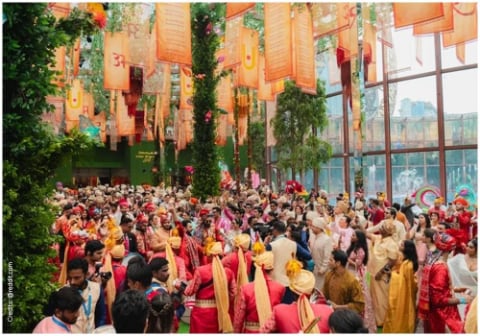
The groom, accompanied by his family and friends (the baraat), arrives at the wedding venue amidst much fanfare and dancing. At the entrance, he is welcomed by the bride's mother, who performs an aarti and playfully tries to pinch his nose. This lighthearted ritual, called ponkhana, reminds the groom to be humble.
2. Jaimala (Exchange of Garlands)
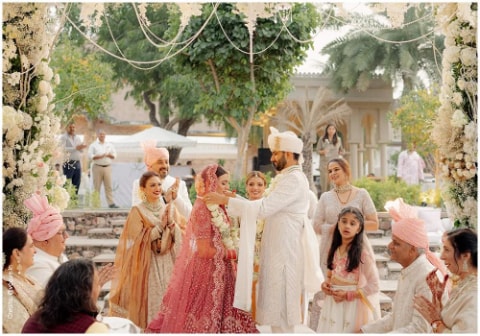
The bride then arrives at the mandap, and the first ritual is the Jaimala, where the couple exchanges floral garlands. This signifies their mutual acceptance of one another.
3. Kanyadaan (Giving Away the Daughter)
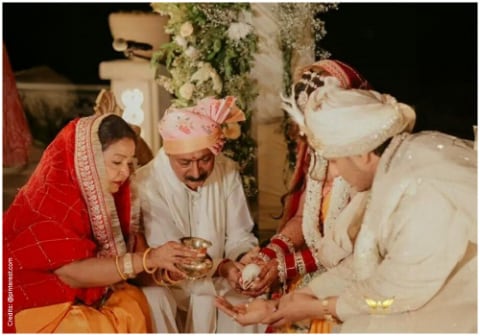
This is a poignant moment where the bride's father officially gives his daughter's hand to the groom. He washes the groom's feet and requests him to take care of his daughter for the rest of her life.
4. Hasta Milap (Joining of Hands)
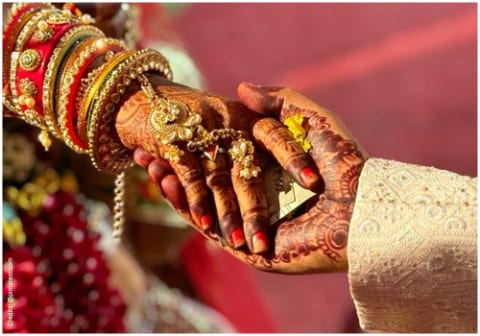
The bride's palm is placed on the groom's palm, and a sacred cloth is tied around their joined hands by the priest. This "joining of hands" symbolizes their union, which is blessed by the priest and the families.
5. Mangal Pheras (Circling the Holy Fire)
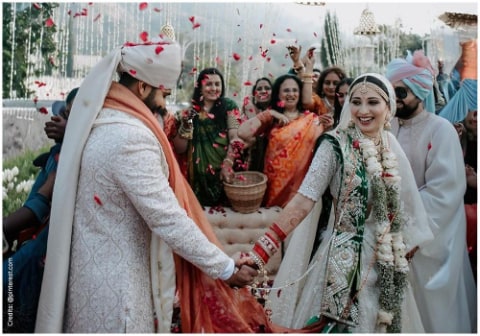
The couple circles the sacred fire four times, with each phera representing a vow of Dharma (duty), Artha (prosperity), Kama (desire), and Moksha (spiritual liberation). Unlike in many other Hindu traditions where there are seven pheras, Gujaratis have four. The bride leads the first three, and the groom leads the final one.
6. Saptapadi (The Seven Steps)
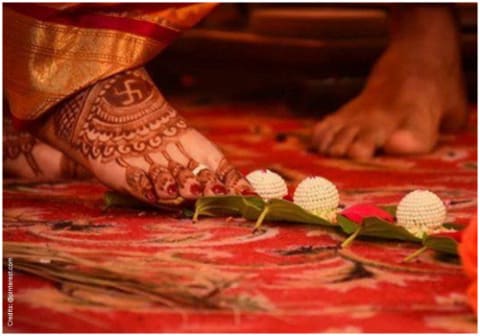
The couple takes seven steps together, with each step signifying a specific vow or promise to each other for a happy and fulfilling married life. These vows cover aspects like providing for each other, growing together in strength, and remaining lifelong companions.
Post-Wedding Rituals: A New Beginning
The celebrations continue even after the main ceremony is over.
1. Vidaai (The Bride's Farewell)
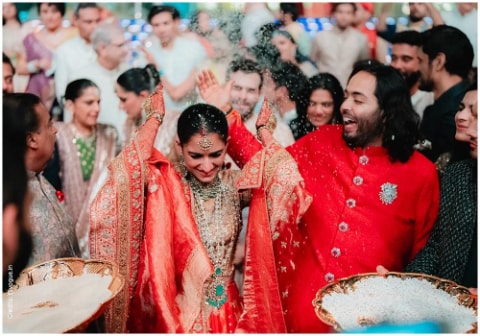
The Vidaai is the emotional farewell where the bride leaves her parental home to start her new life. She throws a handful of rice over her head as she walks away, symbolizing that she is repaying her parents for all they have done for her and wishing prosperity upon her childhood home.
2. Ghar Ni Laxmi (Welcoming the Bride)
The bride is welcomed into her new home as Ghar Ni Laxmi, the goddess of wealth and prosperity. The groom's mother places a pot filled with rice at the entrance, and the bride is asked to gently kick it over, signifying that her arrival will bring abundance and good fortune to the family.
3. Aeki Beki
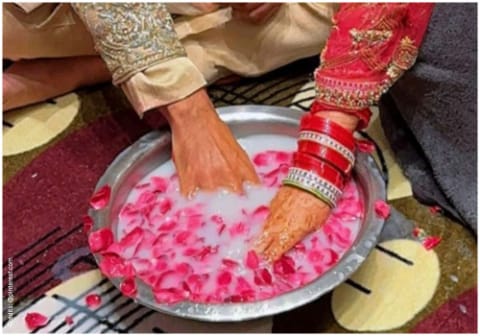
This is a fun ice-breaker game played by the newlyweds. A tray of water mixed with milk and vermilion is filled with several coins and a ring. The couple has to search for the ring, and it is said that whoever finds it first will rule the household. It's a playful way to ease the bride into her new environment.
Conclusion
A Gujarati wedding is a beautiful and meaningful affair that places immense importance on family, tradition, and togetherness. Each ritual, from the playful ponkhana to the solemn saptapadi, is a thread in the rich fabric of this cultural celebration. It’s an experience filled with laughter, tears of joy, and memories that last a lifetime, truly embodying the vibrant spirit of Gujarat.