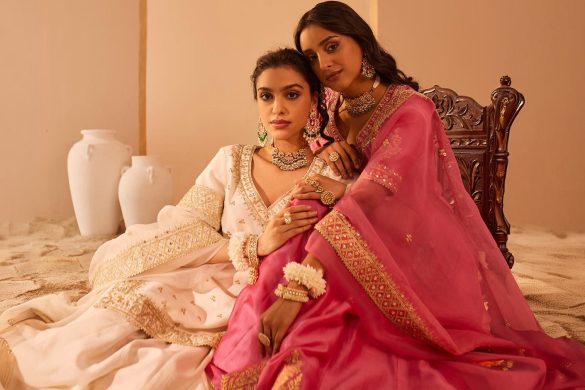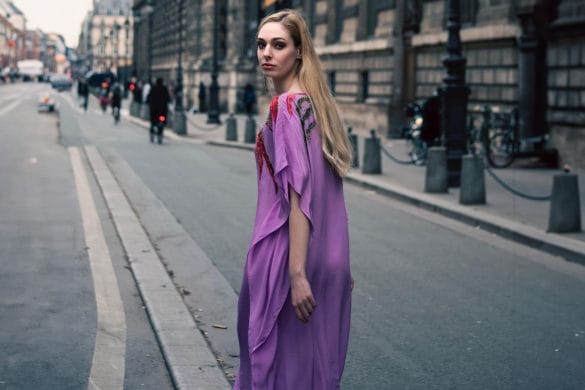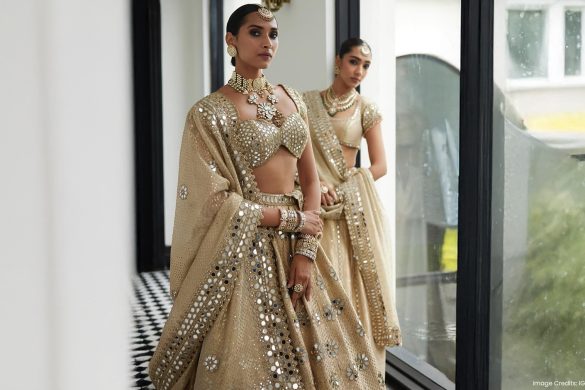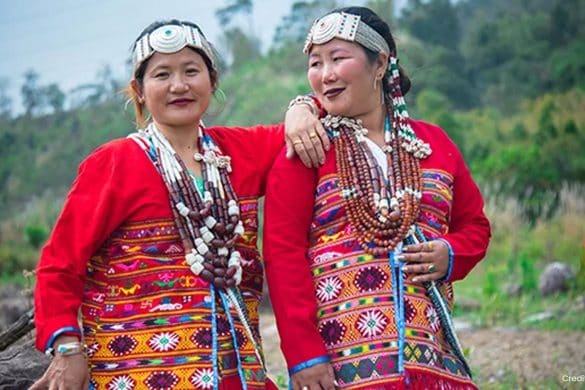
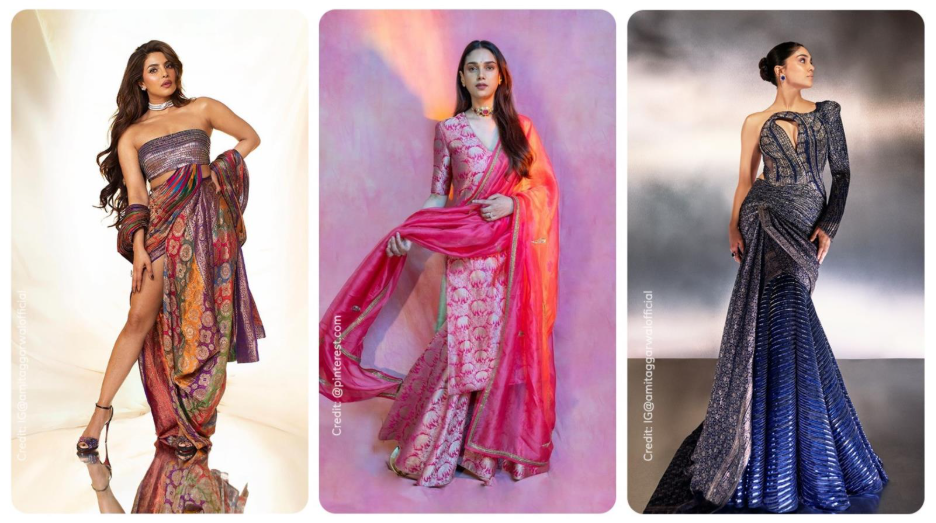
Every Indian woman has a collection of beautiful sarees tucked away in her closet. Some are heirlooms from mothers and grandmothers, rich with memories. Others are gorgeous pieces worn once or twice for a special occasion. What do you do with these beautiful garments once they are no longer in rotation? Instead of letting them gather dust, you can give them a new life. Repurposing an old saree into a stylish dress is a creative, rewarding, and sustainable choice.
Turning an old saree into a new outfit is a wonderful way to practice sustainable fashion. It reduces textile waste and allows you to create a one-of-a-kind piece that no one else will have. This DIY project breathes new life into fabrics you love, transforming them into modern silhouettes you can wear for years to come.
At Aza Fashions, we celebrate the timeless beauty of ethnic wear and the innovation of fusion styles. This guide will walk you through how to repurpose sarees into stunning old saree dress designs, combining sentimental value with contemporary fashion.
Why You Should Upcycle Your Old Sarees
Before we dive into the "how," let's talk about the "why." Transforming an old saree is more than just a craft project.
- Sustainable Fashion: The fashion industry is one of the largest contributors to waste. By upcycling, you are making a conscious choice to reduce your environmental footprint. It’s a key principle of Aza Fashions' sustainable fashion philosophy.
- Unique Style: You get a custom-made outfit. The final dress will have a story, a history, and a design that is entirely yours.
- Sentimental Value: Using your mother’s Kanjivaram or your wedding Benarasi to create a new dress allows you to keep those precious memories close in a wearable form.
- Cost-Effective: You are creating a brand-new outfit using material you already own, saving you money while expanding your wardrobe.
Step 1: Selecting the Right Saree for Your Dress
The success of your dress begins with choosing the right saree. Not every saree is suitable for every dress design, so consider the following factors carefully.
Fabric Type
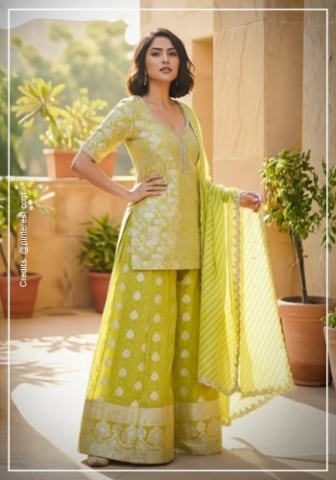
The fabric will determine the drape, feel, and look of your final dress.
- Lightweight Fabrics: Georgette, chiffon, and crepe sarees are perfect for creating flowy, breezy dresses like maxis, sundresses, or kaftans. They are easy to work with and drape beautifully.
- Structured Fabrics: Cotton, tussar silk, and raw silk sarees hold their shape well. These are ideal for more structured designs like A-line dresses, shift dresses, or even tailored kurtas.
- Rich Fabrics: Heavy silks like Benarasi, Kanjivaram, or Paithani are luxurious and best suited for special occasion wear. You can turn them into stunning gowns, elegant Anarkalis, or formal dresses. Be mindful that these can be harder to sew due to their thickness.
Color and Pattern
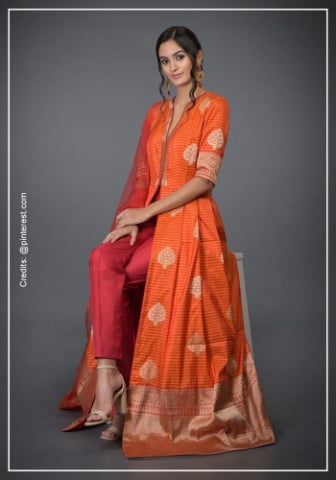
Think about the design of the dress you want to make.
- Large Prints: Sarees with bold, large prints or motifs are great for simple silhouettes like a maxi or a shift dress, where the pattern can be the main feature.
- Intricate Borders and Pallus: Don't discard the best parts of the saree! The decorative border or the elaborate pallu can be strategically placed on the neckline, hem, or sleeves of your new dress to create a designer look.
- Solid Colors: Plain sarees are a blank canvas. They are perfect for creating dresses with interesting cuts, pleats, or other structural details.
Condition of the Saree
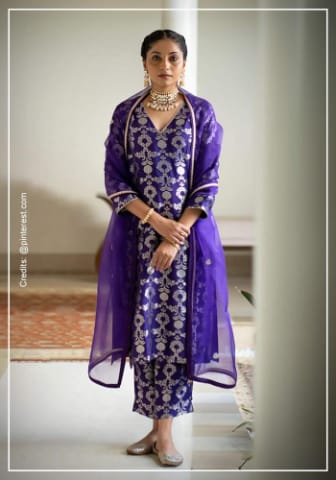
Inspect the saree carefully. Look for any stains, tears, or weakened fabric. If there are minor damages, see if you can work around them by cutting your pattern pieces from the intact sections. Avoid using sarees that are too fragile, as the fabric might not withstand the sewing process.
Step 2: Preparing the Saree for Sewing
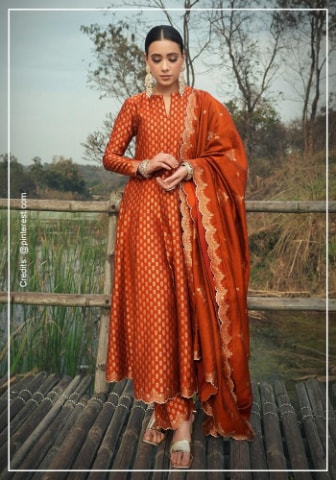
Once you have chosen your saree, you need to prepare it for its transformation. This step is crucial for achieving a clean, professional finish.
1. Clean the Saree
Wash the saree according to its fabric care instructions. For delicate silks, this might mean a gentle hand wash or dry cleaning. This removes any dust, dirt, or lingering odors and ensures the fabric is fresh before you begin.
2. Iron Thoroughly
Press the saree carefully to remove all wrinkles and creases. A smooth, flat surface is essential for accurate cutting. If the saree has embroidery or embellishments, iron on the reverse side or place a thin cotton cloth over the delicate areas to protect them.
3. Deconstruct the Saree
If your saree has a fall stitched at the hem, carefully remove it. If you plan to use the border separately, you may need to unstitch it from the main body of the saree. Be patient during this process to avoid damaging the fabric.
Step 3: Designing and Cutting Your Dress
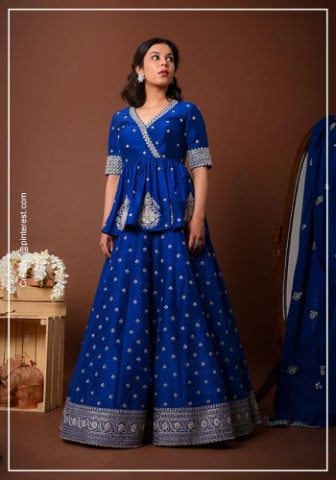
This is where your creativity comes to life. Decide on the style of dress you want to create. You can find countless patterns online or even use an existing dress that you love as a template.
Popular Old Saree Dress Designs
- Maxi Dress: A simple, long maxi dress is one of the easiest and most popular options. It requires minimal complex sewing and lets the saree's print shine.
- A-Line Kurta or Dress: This classic shape is flattering on most body types. You can use the saree’s border at the hem and sleeves for a polished look.
- Anarkali Gown: An old silk or georgette saree can be transformed into a magnificent Anarkali. You'll need more fabric for this, but the result is breathtaking.
- Lehenga Skirt and Crop Top: You can use the body of the saree for a flowing lehenga skirt and the pallu to create a matching or contrasting crop top.
- Kaftan Dress: For a relaxed, bohemian vibe, a kaftan is a perfect choice. It’s comfortable, stylish, and works well with lightweight sarees.
Cutting the Fabric
Lay your ironed saree flat on a large surface. Place your pattern pieces on the fabric, paying close attention to the placement of prints and borders. If you want the border on the hem of your dress, align the bottom of your pattern piece with it. Pin the pattern securely and cut the fabric carefully using sharp fabric scissors.
Step 4: Sewing and Finishing for a Professional Look
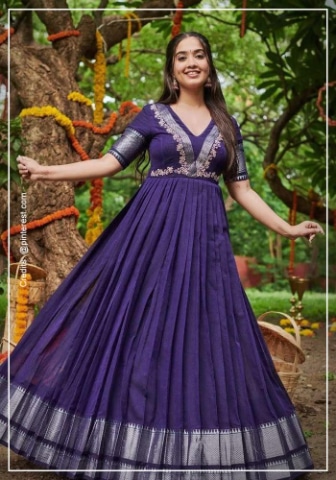
With your pieces cut, it's time to sew. If you're new to sewing, start with a simple design.
- Take Accurate Measurements: A well-fitting dress looks a hundred times better. Ensure your measurements are correct before you start sewing.
- Use the Right Undergarments: The right innerwear ensures your dress drapes correctly and looks smooth.
- Finish Your Seams: To prevent fraying and give your dress a professional look on the inside, finish your seams using a serger or a zigzag stitch on a regular sewing machine.
- Press as You Go: Iron each seam after you sew it. This small step makes a huge difference in the final quality of your garment.
Find Your Inspiration with Aza Fashions
Repurposing an old saree is a beautiful journey of turning something old into something new and exciting. It connects you to your roots while allowing you to express your modern style. It’s a testament to the idea that great fashion is timeless.
For more ideas on cuts, silhouettes, and styles, explore the extensive collections at Aza Fashions. Looking at our curated range of designer dresses, gowns, and kurtas can provide the inspiration you need for your next DIY project. Embrace the joy of creating something uniquely yours and wear your story with pride.