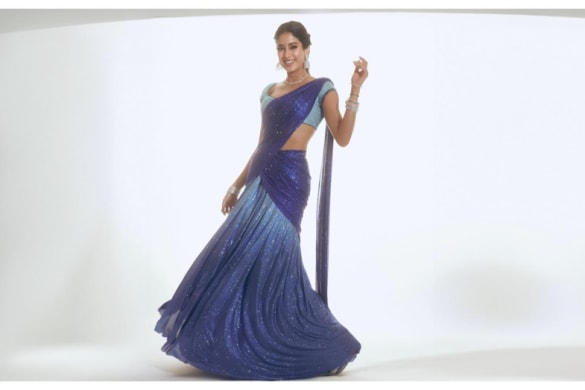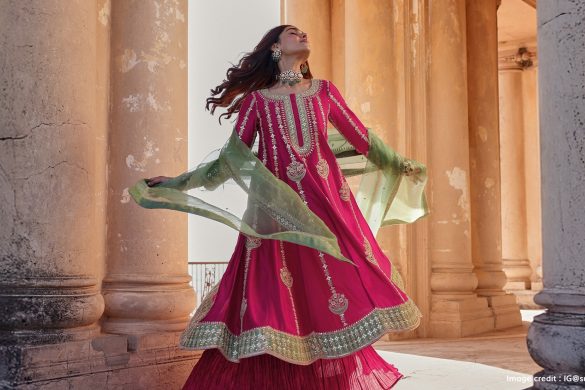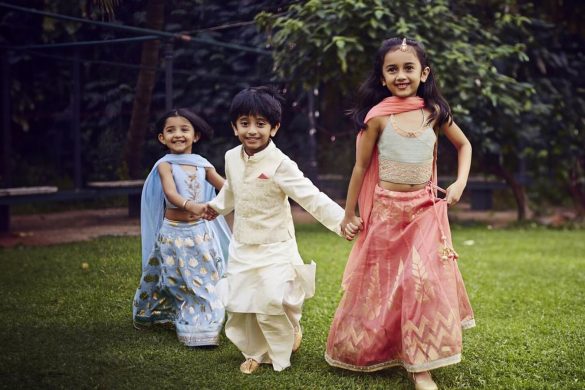
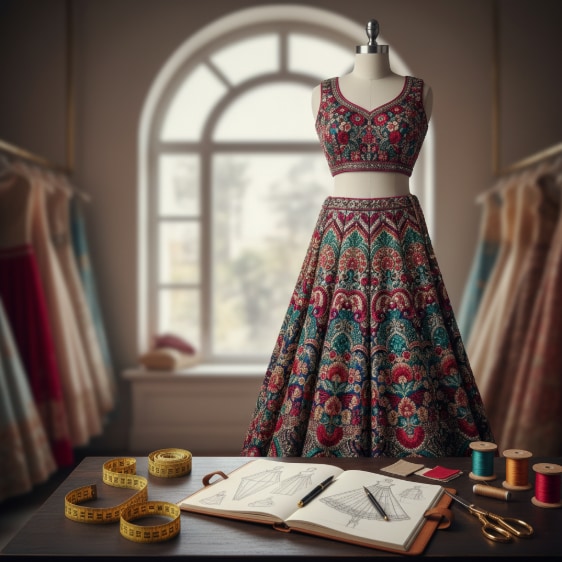
Finding the perfect lehenga is a special moment. You’ve scrolled through endless designs, picturing yourself in a stunning creation by designers like Tarun Tahiliani or Sabyasachi. You finally find "the one," but then a question pops up: How do you make sure it fits perfectly? An ill-fitting lehenga can ruin the entire look, no matter how beautiful it is. But don’t worry, getting your measurements right is easier than you think.
This guide will walk you through everything you need to know about how to measure a lehenga for that flawless, made-for-you fit. We will cover the essential measurements for the blouse, skirt, and dupatta. Plus, we'll share some expert tips to ensure you look and feel your best. With this lehenga measurement guide, you can confidently order your dream outfit online from Aza Fashions and have it arrive ready to wear.
Why a Perfect Fit Matters
A lehenga is more than just an outfit; it’s a statement. Whether it's for a wedding, a festival, or a grand celebration, the right fit makes all the difference. A well-fitted lehenga accentuates your best features, allows you to move comfortably, and boosts your confidence.
When your blouse (choli) sits perfectly on your shoulders and your skirt (ghagra) has the right length and waist, the entire silhouette looks elegant and polished. This is especially true for designer pieces, where the couturier's vision comes to life through precise tailoring. A perfect fit ensures the intricate embroidery, the flow of the fabric, and the overall design are showcased exactly as intended.
Getting Started: Your Measurement Toolkit
Before you begin, gather a few simple tools to make the process smooth and accurate.
Here’s what you’ll need:
- A flexible measuring tape: Use a soft, flexible tailor’s tape, not a metal one.
- A well-fitting bra: Wear the type of bra you plan to wear with your lehenga blouse. This ensures the bust measurements are accurate.
- A friend to help: While you can take most measurements yourself, having someone assist you can lead to more precise results, especially for your back and shoulders.
- Pen and paper (or your phone): Keep your measurements organized by writing them down as you go.
Ready? Let’s get started.
Step-by-Step: How to Measure for a Lehenga
We'll break this down into three parts: the blouse (choli), the skirt (lehenga), and the dupatta.
Part 1: Measuring for the Lehenga Blouse (Choli)
The blouse is the most structured part of the ensemble, so getting its measurements right is crucial.
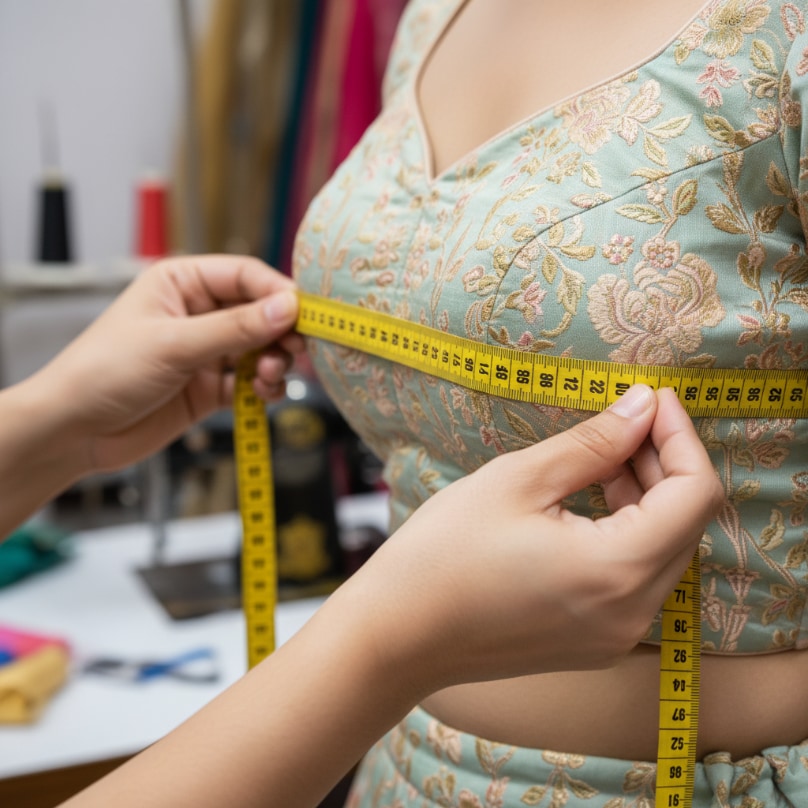
1. Bust:
Wrap the measuring tape around the fullest part of your bust. Keep the tape parallel to the floor and ensure it’s snug but not too tight. It should not dig into your skin.
2. Under Bust:
Measure right below your bust, where your bra band typically sits. This measurement helps ensure the blouse is secure and provides proper support.
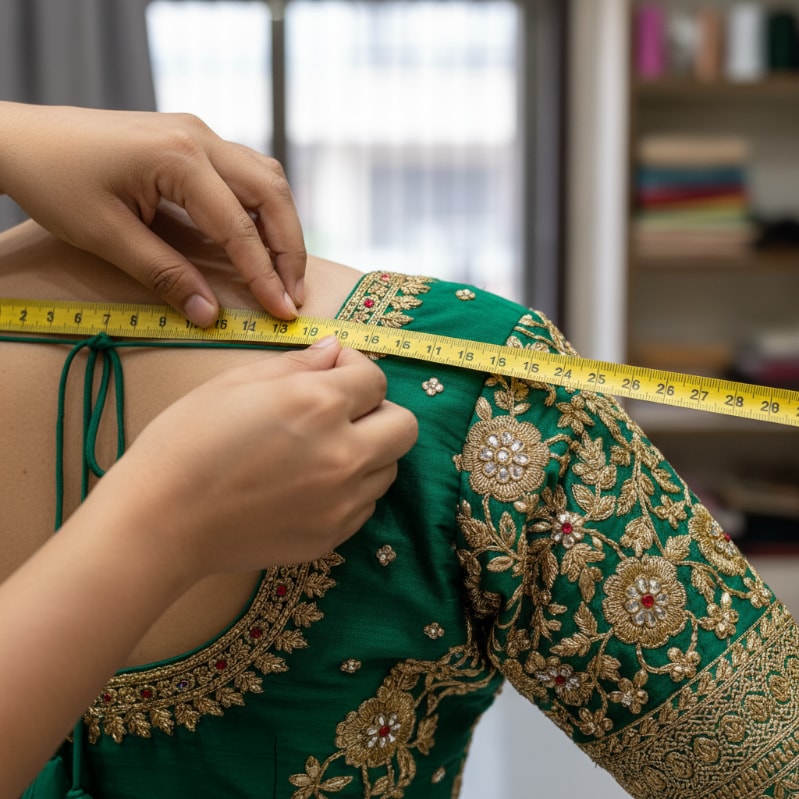
3. Shoulder:
Measure from the edge of one shoulder to the edge of the other. Follow the natural curve of your shoulders across your back. This helps create a clean, sharp shoulder line.
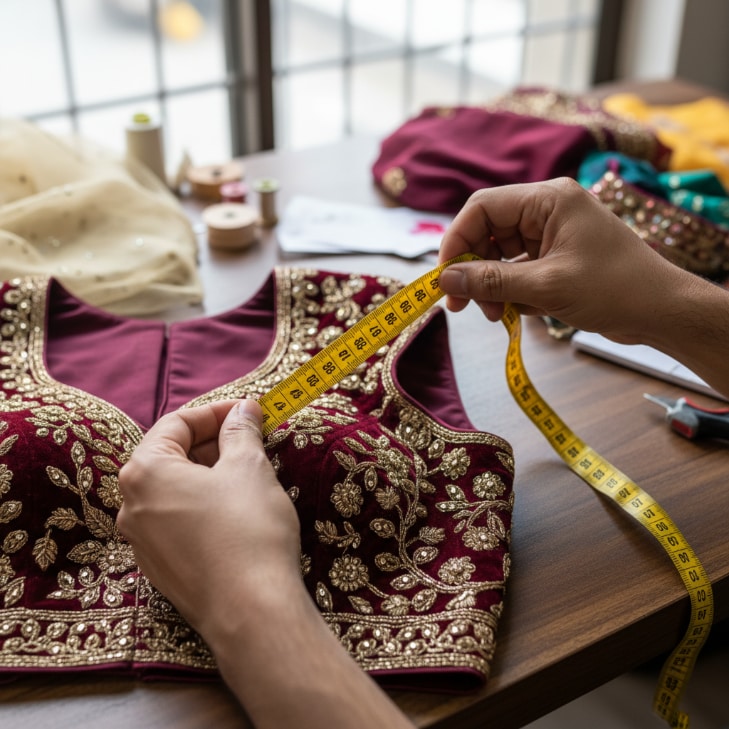
4. Armhole:
Wrap the tape around your armpit, from the top of your shoulder down and back up again. This measurement should be comfortable, allowing enough room for your arm to move freely.
5. Sleeve Length:
Decide where you want your sleeves to end. For short sleeves, measure from the shoulder tip to your desired length. For full sleeves, measure from the shoulder tip down to your wrist. Bend your arm slightly when measuring for full sleeves to account for movement.
6. Bicep/Arm Circumference:
Measure around the fullest part of your upper arm. This ensures your sleeves aren't too tight.
7. Blouse Length:
Stand straight and measure from the top of your shoulder (where your bra strap sits) down to the point where you want your blouse to end. This could be just under the bust or lower, depending on the style you prefer.
8. Front and Back Neck Depth:
For the front neck depth, place the tape at the top of your shoulder and measure diagonally to the center of your chest, stopping where you want the neckline to be. Repeat for the back, measuring from the top of your shoulder to your desired back neckline depth.
Part 2: Measuring for the Lehenga Skirt (Ghagra)
The skirt’s fit is all about the waist and the length.
1. Waist:
Measure around the narrowest part of your waist. If you prefer a low-waist lehenga, measure at the point where you typically wear your skirts or pants. For a high-waist lehenga, measure slightly above your navel. Make sure the tape is firm but comfortable.
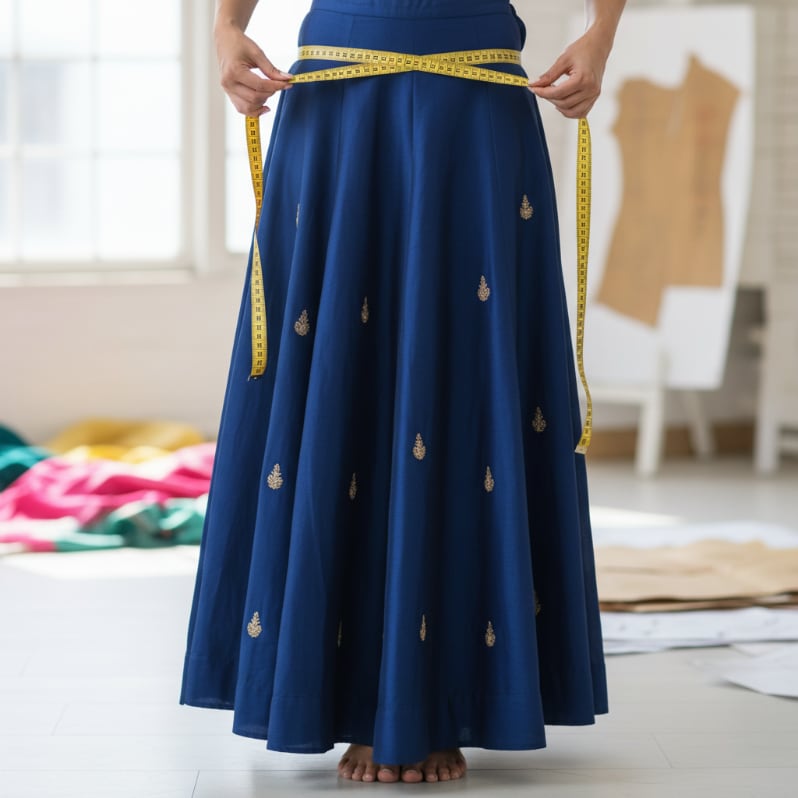
2. Hips:
Stand with your feet together and measure around the fullest part of your hips and bottom. This is essential for A-line or mermaid-style lehengas to ensure they fit smoothly over your curves.
3. Skirt Length:
This is a key measurement. Stand straight and have a friend measure from your waist (where you took your waist measurement) down to the floor. It's important to wear the heels you plan to wear with your lehenga when taking this measurement. This ensures the skirt grazes the floor perfectly without you tripping over it.
Part 3: Measuring for the Dupatta
While most dupattas come in a standard size (around 2.5 meters), some designer outfits offer customization. If you have the option, you can specify the length and width you prefer for the perfect drape.
Lehenga Fitting Tips for a Flawless Look
Now that you have your measurements, here are some extra tips to keep in mind:
- Be Honest with Your Numbers: It might be tempting to pull the tape a little tighter, but accurate numbers are your best friend. A well-fitting lehenga will always look more flattering than one that's too small.
- Consider the Fabric: Heavier fabrics like velvet or brocade have less give than lighter ones like georgette or chiffon. While your measurements remain the same, the fit might feel different.
- Think About Undergarments: As mentioned, wear the right bra. Also, consider if you'll be wearing shapewear. If so, take your measurements while wearing it to ensure a seamless fit.
- Communicate with the Designer: When ordering a custom piece from a platform like Aza Fashions, you have access to a world of designers. Don’t hesitate to provide extra details. Mention if you have a longer torso, broader shoulders, or if you prefer a looser fit. Many designers appreciate these notes.
- Leave a Little Wiggle Room: It's always better to have a lehenga that is slightly loose than one that is too tight. A tailor can easily take in a garment, but letting it out is often difficult, especially with intricate embroidery.
Finding Your Dream Lehenga at Aza Fashions
Shopping for designer ethnic wear online has never been easier. At Aza Fashions, you can explore collections from India’s top designers, like Amit Aggarwal, Ridhi Mehra, and Seema Gujral. The best part? Most pieces offer customization options.
When you find a lehenga you love, you can provide your measurements for a made-to-measure fit. This service combines the convenience of online shopping with the luxury of bespoke tailoring. Whether you’re in the USA, UK, or India, your perfectly fitted designer lehenga is just a few clicks away. Aza’s occasion-based curation also makes it simple to find the right outfit, whether you're a bride, a bridesmaid, or a wedding guest.
Frequently Asked Questions (FAQs)
Q: What if I am between sizes?
A: If you fall between standard sizes, it's generally best to choose the larger size. It is much easier for a tailor to alter a garment to be smaller. For custom orders, providing your exact measurements eliminates this issue entirely.
Q: How do I measure my height for a lehenga?
A: Stand straight with your back against a wall and your feet slightly apart. Measure from the top of your head to the floor. Your overall height, combined with your skirt length measurement, gives the designer a complete picture.
Q: Should I add extra inches to my measurements for comfort?
A: No, provide your exact body measurements. Experienced tailors and designers add the necessary ease (extra room for movement) based on the garment's style and fabric. Adding your own extra inches can result in an ill-fitting, baggy outfit.
Q: Can I get a lehenga altered if it doesn't fit?
A: Yes, most lehengas come with a few inches of extra fabric (margin) inside the seams, allowing for minor alterations. However, major changes can be difficult. That's why getting your initial measurements right is so important.
Taking the time to measure yourself correctly is the most important step in your lehenga shopping journey. It’s the secret to unlocking a flawless fit that makes you feel as amazing as you look. With this guide, you’re ready to explore the stunning collections at Aza Fashions and find a designer lehenga that is truly made for you. Happy shopping