When it comes to men's wedding fashion in India, the sherwani reigns supreme. It is the ultimate symbol of regal elegance and tradition. However, the modern groom faces a common dilemma: should he go for the timeless Traditional Sherwani or the contemporary Indo-Western Sherwani? Both styles have their own charm and unique appeal, making the choice a tricky one.
Understanding the key differences between these two styles is the first step to finding your perfect wedding look. This guide breaks down the features, occasions, and styling tips for both Indo-Western and traditional sherwanis to help you decide which one suits your personality and your big day.
The Traditional Sherwani: Timeless Royalty
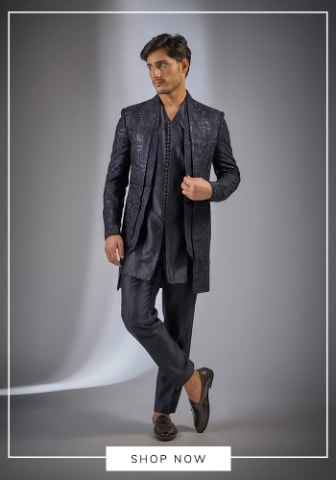
The traditional sherwani is a classic that has stood the test of time. Inspired by the royal courts of India, this garment exudes grandeur and heritage. It is designed to make the groom look like royalty, with heavy fabrics, intricate embroidery, and a structured silhouette.
Key Features
- Fabric & Workmanship: Traditional sherwanis are typically made from rich, heavy fabrics like velvet, brocade, or raw silk. They feature elaborate embroidery techniques such as zardozi, zari, and thread work, often covering the entire garment.
- Silhouette: The cut is usually straight and long, falling below the knees. It has a stiff, structured look that demands good posture.
- Bottom Wear: It is strictly paired with traditional bottoms like churidars or dhotis.
- Colors: The palette is often rich and deep—think maroon, gold, cream, emerald green, and royal blue.
Best Occasions
The traditional sherwani is the go-to choice for the main wedding ceremony (the pheras). Its grandeur matches the solemnity and scale of the occasion. It is also perfect for formal receptions where a classic, dignified look is required.
Styling Tips
- Accessorize Heavily: This look is incomplete without the right accessories. A multi-layered pearl necklace (mala), a turban (safa) with a kalgi (brooch), and a stole (dupatta) are essential.
- Footwear: Pair it with traditional mojaris or juttis, preferably embroidered to match the sherwani.
- Grooming: A clean, well-groomed look or a neatly trimmed beard complements the formal nature of this outfit.
The Indo-Western Sherwani: Modern Flair
For the groom who wants to honor tradition but with a contemporary twist, the Indo-Western sherwani is the perfect answer. As the name suggests, it blends Indian aesthetics with Western cuts and tailoring. It is edgy, stylish, and often more comfortable than its traditional counterpart.
Key Features
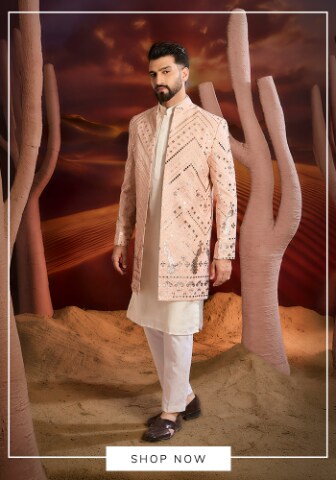
- Design & Cuts: This style experiments with hemlines. You might find asymmetric cuts, high-low hems, or cowled drapes. The collars might be different, and the length is often shorter, sometimes ending at the knee or just above.
- Fabric & Patterns: while silk is still used, designers also play with lighter fabrics and modern textures. You might see subtle self-prints, geometric patterns, or minimal embroidery concentrated on the collar or buttons rather than all-over heavy work.
- Bottom Wear: Flexibility is a huge plus here. You can pair an Indo-Western sherwani with dhoti pants, trousers, breeches, or even slim-fit pants.
- Colors: The color palette is much broader, including pastels like mint green, powder blue, and peach, as well as darker, unconventional shades like midnight blue, black, and charcoal grey.
Best Occasions
The Indo-Western sherwani is incredibly versatile. It is ideal for pre-wedding functions like the Sangeet, Engagement, or Cocktail party where you want to look dressy but movable. It also works well for a Reception if the vibe is modern and chic.
Styling Tips
- Keep Accessories Minimal: Unlike the traditional look, you don't need heavy jewelry. A stylish watch, a pocket square, or a sleek brooch is usually enough.
- Footwear: You have more freedom here. While juttis work, you can also opt for loafers, monks, or formal leather shoes for a sharper look.
- Experiment with Layers: Many Indo-Western sets come with jackets or waistcoats that can be layered, adding depth to the outfit.
Which One Is Right for You?
The choice ultimately boils down to your personal style and the theme of your wedding.
- Choose Traditional if: You have always dreamed of that "Maharaja" moment. If your wedding is a grand, traditional affair in a palace or a banquet hall, the traditional sherwani will ensure you look the part. It commands respect and attention.
- Choose Indo-Western if: You prioritize comfort and individual expression. If you find heavy embroidery stifling or if your wedding events are more relaxed and party-centric, the Indo-Western style lets you move freely on the dance floor while looking incredibly sharp.
Final Thoughts
There is no wrong choice between an Indo-Western and a traditional sherwani. Many grooms today opt for both—wearing an Indo-Western outfit for the Sangeet or Engagement and switching to a traditional sherwani for the main Wedding day. This allows you to experience the best of both worlds.
Whatever your preference, the fit and fabric quality are paramount. A well-fitted sherwani elevates your confidence instantly. If you are ready to explore options that cater to every groom's taste, Aza Fashions offers a curated collection of both traditional and Indo-Western sherwanis from top Indian designers, ensuring you find the perfect match for your big day.