When you are dressing up for an Indian wedding or a festive celebration, your outfit isn't complete without the right pair of shoes. You’ve got your kurta or lehenga sorted, but you look down at your feet and wonder: what should I wear? This is usually where traditional Indian footwear comes into play. The most popular options are the elegant Jutti and the regal Mojari.
But here is where things get a little confusing. They look similar. They are both colorful, often embroidered, and made of leather. Are they actually different? Or are they just two names for the same thing?
If you have ever found yourself Googling jutti vs mojari while shopping online, you are not alone. While they share a common ancestor, these two styles of footwear have distinct histories, designs, and vibes. Understanding the difference between jutti and mojari can help you pick the perfect pair that not only matches your outfit but also respects the tradition behind it.
In this guide, we will walk you through the fascinating world of traditional Indian footwear. We’ll break down the unique features of jutti shoes and mojari shoes, help you decide which is better for your next big event, and show you where to find the best designer pairs.
A Tale of Two Regions: Origins and History
To understand the difference, we first need to look at a map. While both styles originated in North India under the influence of Mughal emperors who loved opulent fashion, they evolved in different regions.
The Punjabi Jutti
The Jutti footwear style is most closely associated with the Punjab region. Historically, these were worn by wealthy landlords and royalty. The word "Jutti" literally translates to a shoe with a closed upper attached to a sole. Over centuries, they became a staple of Punjabi culture, worn by both men and women during festivals and weddings.
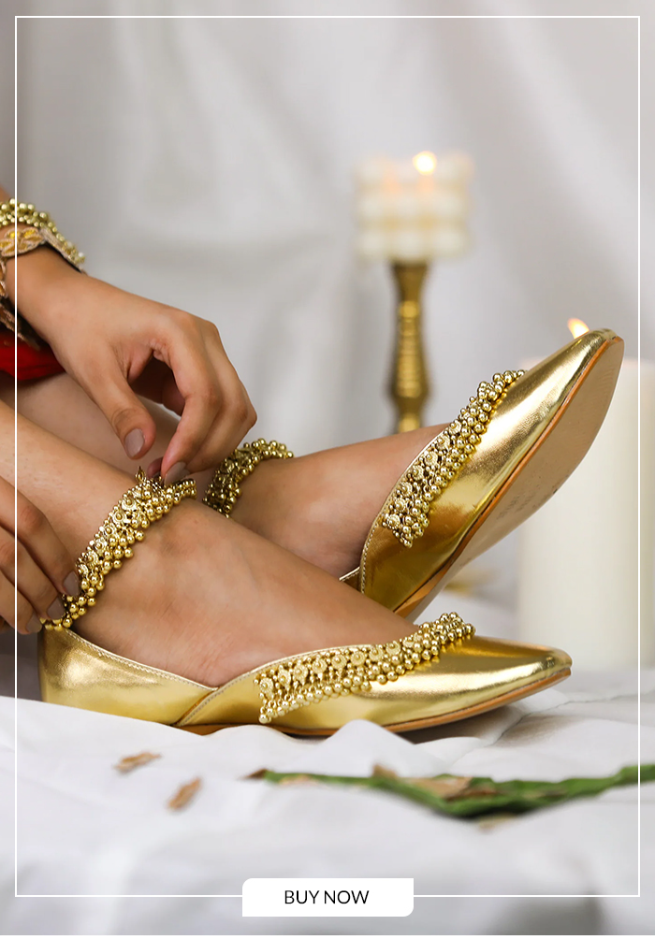
The Rajasthani Mojari
On the other hand, Mojari footwear has its roots deep in the desert sands of Rajasthan. Also known as Khussa or Saleem Shahi in some contexts, Mojaris were traditionally worn by the Maharajas and Rajput warriors. Their design evolved to suit the desert terrain and the royal courts of Rajasthan, focusing on durability and intricate craftsmanship that reflected the wearer's status.
Spot the Difference: Design and Construction
At a quick glance, they look alike. But look closer, and you will see distinct features that set them apart.
1. The Toe Shape (Nok)
This is the easiest way to tell them apart.
- Mojari: Traditional Rajasthani Mojaris are famous for their curled toe, known as the Nok. This upturned, curled toe can sometimes be quite pronounced, giving the shoe a very distinct, royal silhouette. It screams grandeur and drama.
- Jutti: The Punjabi Jutti typically has a flat, rounded, or M-shaped front. While some men's juttis might have a slight upturn, it is rarely as dramatic or curled as a traditional Mojari. The Jutti has a sleeker, more streamlined look.
2. The Back and Heel
- Mojari: Historically, Mojaris were often open-backed or had a heel that was meant to be crushed down. You basically slide your foot in.
- Jutti: A Jutti usually has a closed back that covers the heel completely, offering a snug fit. This makes them slightly more secure for walking long distances or dancing at a Sangeet.
3. Embellishment and Craftsmanship
Both are masterpieces of handicraft, but the style of decoration differs.
- Mojari: Rajasthani Mojari designs often feature bold colors, heavy embroidery, mirrors, ceramic beads, and even shells. The leather used is often processed traditionally (vegetable tanned) and can be harder and stiffer initially.
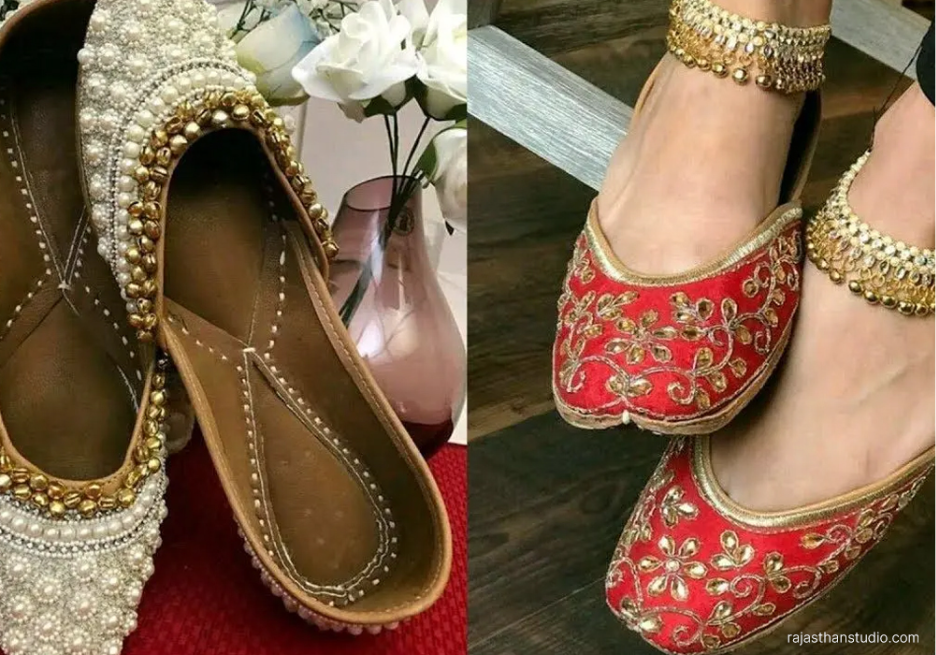
- Jutti: Juttis are known for intricate thread work (Tilla or Zari), embroidery, and sometimes Ghungroos (small bells). They tend to use softer leather, making them a bit more pliable and comfortable right out of the box.
Jutti vs Mojari for Men
When it comes to ethnic footwear for men, both styles are incredibly popular, but they serve different aesthetic needs.
The Groom’s Choice
For grooms, the choice often depends on the outfit.
- Wear a Mojari if: You are wearing a heavy Sherwani, especially a Jodhpuri or Angrakha style. The curled toe of the Mojari adds that majestic, warrior-king vibe that complements royal attire perfectly.
- Wear a Jutti if: You are wearing a Kurta Pajama or a lighter Pathani suit. The Punjabi Jutti offers a clean, sophisticated finish that doesn't overpower a simpler outfit.
Comfort Factor
Men often find Juttis easier to wear for long periods because of the closed back and softer leather. Mojaris might require a "breaking in" period because the traditional leather can be stiff. However, modern designer Mojaris found on platforms like Aza Fashions are made with comfort in mind, using cushioned soles and softer materials.
Jutti vs Mojari for Women
For women, the lines have blurred significantly. Modern designers have reinvented these traditional shoes to suit contemporary fashion.
- The Jutti: This is the current reigning queen of women’s ethnic footwear. You will find jutti footwear covered in pearls, sequins, floral prints, and phulkari embroidery. They are versatile enough to be worn with jeans, dresses, and, of course, salwar kameez.
- The Mojari: For women, the Mojari style is often reserved for very traditional Rajasthani lehengas or festive wear where you want a rustic, folk aesthetic. They are often brighter, with multi-colored threads and mirror work that dazzles in the sunlight.
Wedding Wars: Jutti vs Mojari for Weddings
So, you have a wedding to attend. Which is better, jutti or mojari?
For the Haldi or Mehendi
Go for a Punjabi Jutti. These events are fun, colorful, and active. A pair of bright yellow or pink juttis with floral embroidery matches the playful vibe perfectly. Plus, they are easy to slip off if you are getting henna applied to your feet.
For the Wedding Ceremony
If you want a regal look, choose a Rajasthani Mojari. The gold embroidery and unique shape look stunning in wedding photos. However, heavily embellished Juttis in gold or silver are equally appropriate and very popular for bridesmaids who need to run around.
For the Reception
This is where fusion fashion shines. Designer Juttis with modern embellishments like crystals or metallic finishes look fantastic with fusion gowns or cocktail sarees. They offer a comfortable alternative to high heels, allowing you to dance all night without pain.
Frequently Asked Questions (FAQs)
Let's clear up some common confusion about traditional Indian footwear.
What is the difference between jutti and mojari?
The main difference lies in the origin and the toe shape. Mojaris originate from Rajasthan and typically feature a curled, upturned toe (Nok) and are often open-backed. Juttis originate from Punjab, usually have a flat, rounded front, and a closed back.
Are jutti and mojari the same?
Technically, no. They are distinct styles from different regions. However, in modern fashion language, the terms are often used interchangeably to describe traditional handcrafted leather slip-on shoes.
Which is more comfortable: Jutti or Mojari?
Generally, Juttis are considered more comfortable for beginners because they are often made of softer leather and have a flat sole. Traditional Mojaris can be stiff initially. However, high-end designer versions of both are now made with padded insoles for maximum comfort.
Can I wear them with Western clothes?
Absolutely! A pair of tan leather Mojaris looks great with chinos or linen trousers for men. For women, embroidered Juttis are a chic way to dress up a pair of skinny jeans and a white shirt. It adds a touch of boho-chic to your everyday look.
How do I figure out my size?
Traditional Juttis and Mojaris often don't have a "left" or "right" foot when they are brand new. They take the shape of your foot over time. However, when buying designer pairs online, follow standard sizing charts. If you are between sizes, it is usually safer to size up, as they can be narrow.
Caring for Your Ethnic Footwear
Since both jutti and mojari shoes are typically made of leather and fabric, they need a little love to last a long time.
- Keep them dry: Water is the enemy of leather. If they get wet, dry them in the sun immediately.
- Wrap them up: Store your embellished shoes in muslin bags or wrap them in soft cloth. This prevents the embroidery or beads from snagging on other shoes in your closet.
- Break them in: If your new shoes bite, rub a little mustard oil or coconut oil on the inside lining (if it's leather) overnight to soften it before wearing them for a big event.
Why Choose Designer Footwear from Aza Fashions?
You might find Juttis in street markets, but the quality, comfort, and design of a designer pair are in a different league. Aza Fashions brings the finest ethnic footwear for men and women right to your doorstep.
Here is why shopping for your traditional shoes at Aza is a game-changer:
- Curated Excellence: You get access to top footwear designers like Coral Haze, Needledust, and 5 Elements. These brands blend traditional craftsmanship with modern comfort technology (like double cushioning!).
- Occasion-Ready Styles: Whether you need a simple pair for office wear or a heavy, crystal-encrusted pair for your wedding day, Aza’s collection is categorized to help you find exactly what you need.
- Matching Outfits: The best part about Aza is that you can shop for your entire look in one place. Found a stunning emerald green lehenga? You can instantly find a pair of gold or green Juttis to match perfectly.
- Global Access: No need to travel to the markets of Jaipur or Amritsar. You can browse authentic, handcrafted footwear online and have it delivered anywhere in the world.
Final Verdict: Which Style Suits You?
At the end of the day, the battle of jutti vs mojari doesn't have a single winner. It comes down to your personal style and the occasion.
- Choose a Mojari if you want to make a bold, royal statement and love the traditional, rustic aesthetic of Rajasthan.
- Choose a Jutti if you prioritize versatility, softer comfort, and a sleek look that works with everything from heavy bridal wear to casual denim.
Both of these beautiful footwear styles are testaments to India’s rich heritage of artisanship. They carry stories in their stitches and soul in their soles. So, whichever you choose, wear it with pride. Step into tradition, embrace the comfort, and let your feet do the talking at your next celebration.
Ready to find your perfect fit? Explore the stunning collection of designer Juttis and Mojaris at Aza Fashions and step up your ethnic style game today.