In the diverse and vibrant landscape of Indian folk embroidery, some art forms whisper stories of ancient traditions and meticulous artistry. Kasuti embroidery is one such voice. Originating from the heart of Karnataka, this intricate craft is a beautiful expression of devotion, precision, and cultural heritage. Dating back centuries, Kasuti is more than just thread on fabric; it is a mathematical art form where every stitch is counted and every pattern holds deep meaning.
This post will guide you through the delicate world of Kasuti embroidery. We will explore its historical roots, decode the four special stitches that define it, and admire the temple-inspired motifs that make it so unique. From its traditional home on Ilkal sarees to its place in modern design, you will discover the timeless elegance of this cherished traditional Karnataka craft.
A Thread Through Time: The Origins of Kasuti
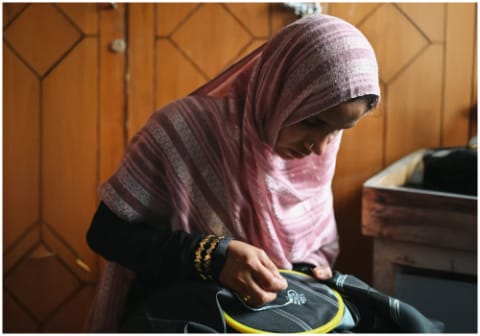
The legacy of Kasuti embroidery is believed to stretch back to the 7th century, flourishing during the Chalukya dynasty. The name "Kasuti" is derived from the Kannada words "Kai" (meaning hand) and "Suti" (meaning cotton), literally translating to "handwork with cotton thread." This art form was traditionally practiced by women in the districts of Dharwad, Hubli, Belgaum, and Haveri.
Initially, Kasuti was a domestic art, used to adorn the garments of the family, particularly the traditional Ilkal sarees and blouse pieces (khuns). It was a way for women to express their creativity and devotion. The patterns were not drawn or traced onto the fabric. Instead, artisans counted the threads of the weave to create perfectly symmetrical and intricate designs. This level of precision required immense patience and skill, making each piece a labor of love. The embroidery was so refined that it was expected to look identical on both sides of the fabric, with no visible knots.
The Four Stitches of Kasuti
The entire art of Kasuti is built upon four fundamental stitches. The mastery of these stitches is what distinguishes a Kasuti artisan. Each stitch has a unique purpose and contributes to the overall texture and design of the embroidery.
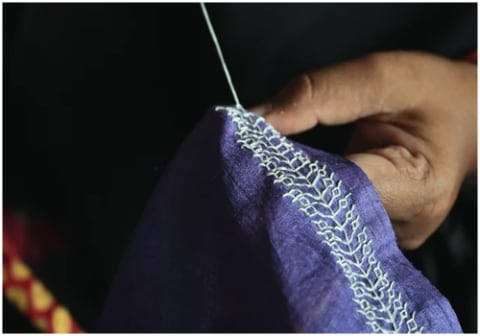
- Gavanthi (Double Running Stitch): This is the most common stitch used in Kasuti. It is a double running stitch worked in a straight line, moving forward and then backward to fill in the gaps. The name "Gavanthi" comes from the Kannada word gantu, meaning knot. This stitch creates the primary outlines of the patterns, and the finished line appears identical on both sides of the fabric.
- Murgi (Zig-Zag Stitch): Murgi is a zig-zag stitch that looks like the rungs of a ladder. It is similar to Gavanthi but is worked in a diagonal or staircase-like pattern. This stitch is used to create texture and fill in larger areas, adding a sense of density and movement to the design.
- Negi (Darning Stitch): The word "Negi" comes from the Kannada word neyge, meaning "to weave." This darning stitch creates a woven effect on the fabric, as if the pattern is part of the cloth itself. It is used to fill in the main body of larger motifs, creating a rich, textured surface.
- Menthi (Cross Stitch): "Menthi" is the Kannada word for fenugreek seed, and this stitch resembles a tiny cross, much like the shape of the seed. While similar to the standard cross stitch, in Kasuti, it is used more as a detached filler stitch to add detail and texture.
Motifs: Reflections of Life and Devotion
The designs in Kasuti embroidery are a mirror of the artisan's world, drawing inspiration from religion, nature, and daily life. The motifs are stylized and geometric, reflecting the thread-counting technique used to create them.
Temple-Inspired Architecture
A significant number of Kasuti motifs are inspired by the magnificent temple architecture of Karnataka. You will often see designs depicting:
- Gopuras: The ornate, towering gateways of South Indian temples.
- Chariots and Palanquins: Intricate representations of temple chariots used in processions.
- Sacred Symbols: Motifs like the conch shell, tulsi plant, and lamps used in worship.
The Natural World
Nature is another profound source of inspiration. Artisans embroider stylized versions of:
- Flora: Lotus flowers, mangoes, and climbing creepers.
- Fauna: Peacocks, swans, parrots, squirrels, and elephants.
These motifs are not just decorative; they often carry symbolic meaning. The peacock represents beauty, the lotus symbolizes purity, and the elephant signifies strength and good fortune.
Domestic and Social Life
Kasuti also captures scenes from everyday life. You might find patterns of cradles, anklets, and other domestic objects woven into the fabric, providing a glimpse into the cultural life of the region.
The Knotless Wonder: Precision and Technique
The most challenging and remarkable aspect of Indian folk embroidery like Kasuti is the goal of creating a design that is reversible. Artisans strive to make the embroidery look identical on both the front and back of the fabric. This is achieved by skillfully managing the thread and ensuring that no knots are used to start or end a line of stitching.
This knotless technique requires incredible precision. The artisan must count every thread of the base fabric to ensure the pattern is perfectly symmetrical and evenly spaced. A single miscounted thread can throw off the entire design. This dedication to perfection is what elevates Kasuti from a simple craft to a sophisticated art form.
From Ilkal Sarees to Modern Accessories
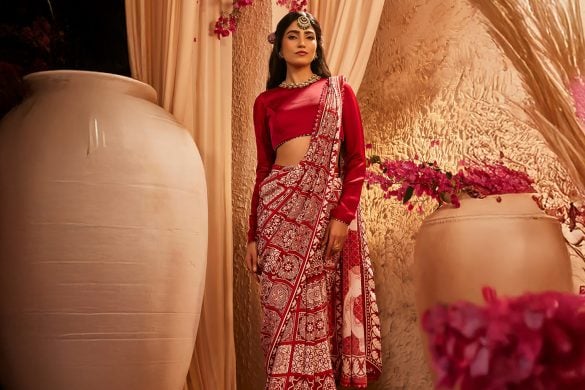
Traditionally, Kasuti was exclusively used to decorate Ilkal sarees. The dark, rich body of the Ilkal saree, often in shades of black, navy, or maroon, provided the perfect canvas for the vibrant colors of the Kasuti thread work. The combination of the unique Ilkal weave and the intricate Kasuti embroidery created a garment of unparalleled elegance, reserved for special occasions.
While the Ilkal saree remains the most iconic canvas for Kasuti, the art form has found its way onto a variety of other products. In an effort to keep the craft relevant and provide sustainable livelihoods for artisans, Kasuti is now used to adorn:
- Kurtas and Salwar Kameez: Adding a touch of traditional elegance to modern ethnic wear.
- Home Decor: Items like cushion covers, wall hangings, and table runners feature Kasuti motifs.
- Accessories: You can find purses, clutches, and even eyeglass cases decorated with this beautiful embroidery.
This adaptation has introduced the traditional Karnataka craft to a wider audience, ensuring that its legacy continues to thrive in the modern world.
A Legacy in Every Stitch
Kasuti embroidery is a powerful reminder of the beauty of slow, mindful craftsmanship. It is a tradition that values patience, precision, and a deep connection to cultural heritage. Each Kasuti piece tells a story—of the woman who made it, of the temple she visited, and of the world she saw around her.
By appreciating and supporting Kasuti, we help preserve a unique chapter in the story of Indian folk embroidery. We ensure that the delicate, counted threads of this art form continue to weave a tapestry of beauty and tradition for generations to come.