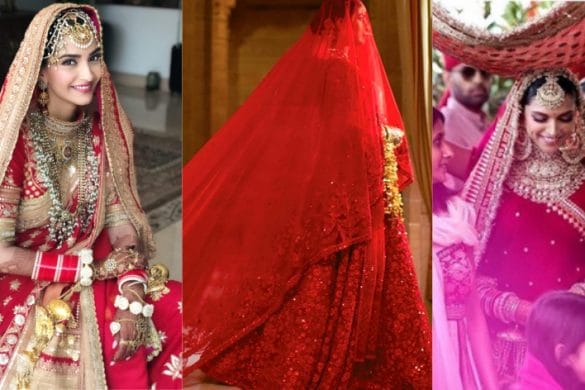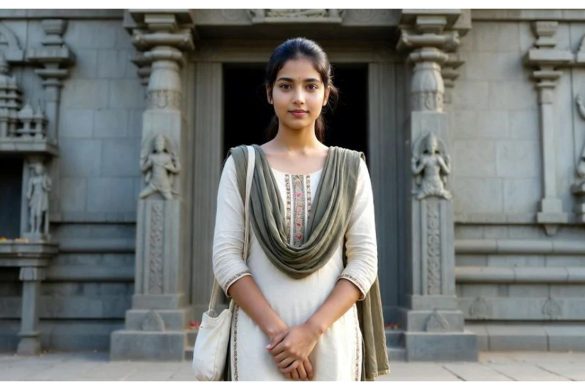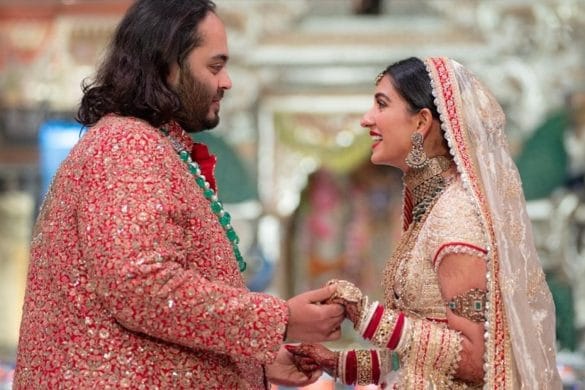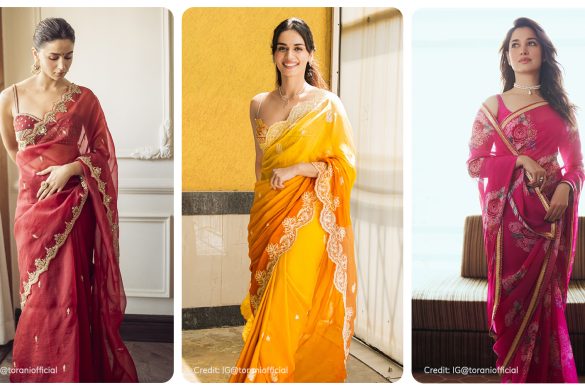
There is a quietness to a Kerala wedding that is unlike anything else in India. Where most Indian weddings announce themselves with dhol beats and baraat processions, a traditional Kerala wedding speaks in a different register one of white silk and gold, of jasmine garlands and lamp light, of mantras delivered in hushed reverence beside a sacred fire. And yet within that quietness lives an extraordinary richness a multi-layered wedding culture shaped by Hindu Nambudiri Brahmin traditions, Nair customs, Syrian Christian heritage, Muslim Mappila ceremonies, and tribal indigenous practices, all unfolding in one of the world's most lushly beautiful landscapes.
In 2026, as Kerala weddings attract growing admiration from across India and the world, this complete guide covers every tradition, ritual, and cultural insight you need to truly understand a Kerala Kalyanam.Attending North Indian functions this season too? Lashkaraa's festive range at Aza covers mehendi through to reception.
What Makes Kerala Weddings Unique?
Kerala weddings are distinguished by four qualities that set them apart from every other Indian wedding tradition:
Simplicity as Sacred Unlike the elaborate, multi-day spectacles common in North and West India, traditional Kerala Hindu weddings are deliberately simple. The ceremony is often completed within an hour. This simplicity is not poverty of culture it is a philosophical statement that the sacred does not require embellishment.
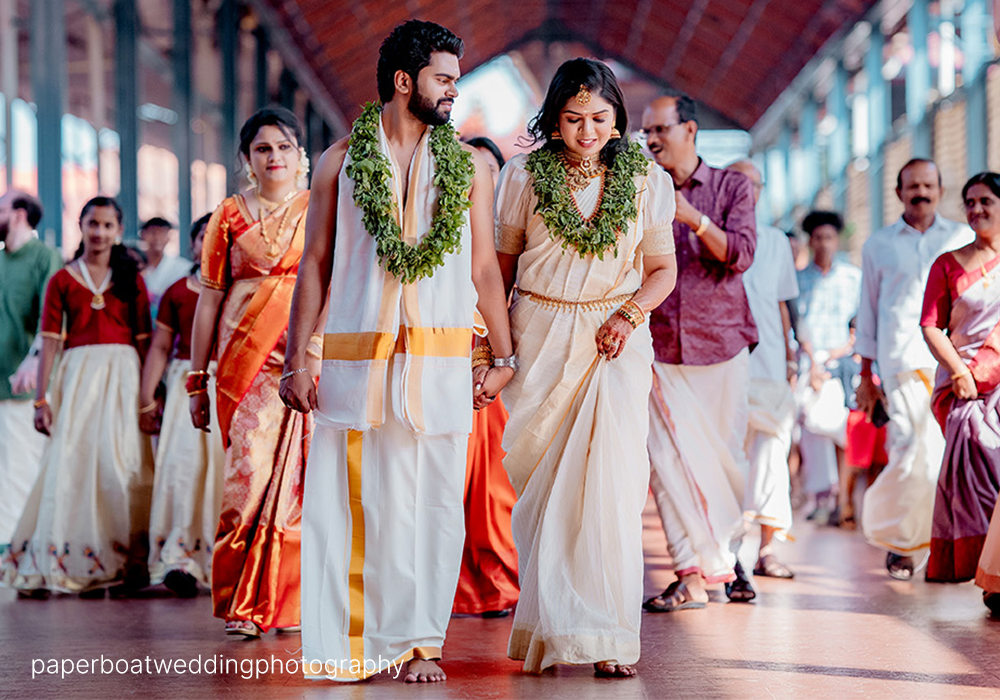
The Centrality of Gold Kerala has one of the highest per-capita gold consumptions in the world, and nowhere is this more visible than at weddings. The Kasavu saree (off-white Kerala silk with a gold border) and the extraordinary weight of gold jewelry worn by the bride are the most iconic visual elements of any Kerala wedding.
Religious & Community Diversity Kerala is home to Hindu, Christian, Muslim, and Jewish communities, each with its own distinct and ancient wedding tradition. A Hindu Nair wedding looks and feels completely different from a Syrian Christian wedding, a Mappila Muslim Nikah, or a scheduled tribe ceremony. This diversity within a single state is unmatched anywhere in India.
Matrilineal Legacy Many Kerala communities particularly the Nairs historically followed the Marumakkathayam system of matrilineal inheritance, where property and lineage passed through the mother's side. While this system has largely faded legally, its cultural echoes remain visible in the prominent role of the bride's family and the maternal uncle in Kerala wedding ceremonies.
Hindu Kerala Wedding Ceremonies
Pre-Wedding Rituals
Nischayam (Formal Engagement)
The wedding process begins with Nischayam the formal engagement ceremony conducted in the presence of a priest, family elders, and close relatives. The two families meet, the priest recites the details of the match (horoscopes, gotras, family lineage), and the alliance is formally declared auspicious. The groom's family presents the bride with a gold ring or necklace, and sweets and fruits are exchanged between families.
Unlike North Indian engagement ceremonies, the Nischayam in Kerala is typically a quiet, dignified affair focused on the formal declaration rather than celebration. The celebration is reserved for the wedding day itself.
Eluthu Kettu (Writing the Horoscope)
Before the wedding date is finalized, the family priests of both the bride and groom perform Eluthu Kettu a detailed reading and matching of the couple's horoscopes. The compatible alignment of stars (nakshatra), the absence of doshas (astrological defects), and the identification of the most auspicious muhurat are all determined at this stage. In Kerala Hindu tradition, no wedding date is set without this astrological consultation.
Nichaveppu (Pre-Wedding Feast)
The evening before the wedding, the bride's family hosts a Nichaveppu a pre-wedding feast for close relatives and neighbors. This meal is the family's informal celebration before the solemnity of the wedding day. Traditional Kerala dishes are served, and it serves as the gathering point for family members arriving from different parts of Kerala and beyond.
Haldi (Nalunniyattu)
In Kerala Hindu weddings, the Haldi-equivalent ritual is called Nalunniyattu an oil and turmeric application ceremony performed for both the bride and groom. The paste used includes turmeric, coconut oil, and neem leaves reflecting Kerala's Ayurvedic tradition of using medicinal herbs in ceremonial contexts. Female relatives apply the paste while singing traditional Thirumangalyam songs devotional folk compositions unique to Kerala wedding ceremonies.
Main Wedding Day Rituals (Hindu)
Muhurtham (Auspicious Timing)
The Kerala Hindu wedding is extraordinarily time-sensitive. The Muhurtham the exact auspicious moment is calculated to the minute by the family priest. All relatives are seated and ready well in advance, and the main ritual begins precisely at the declared time. Missing the Muhurtham is considered deeply inauspicious, and Kerala families take punctuality at this moment with absolute seriousness.
Ponnum Thalisum (Preparation of the Thali)
Before the ceremony begins, the Thali (Mangalsutra) the sacred wedding necklace is prepared by the priest. In Kerala, the Thali is not a generic piece of jewelry; it is a specific gold pendant whose design varies by community and caste. The Nair Thali, the Nambudiri Thali, and the Ezhava Thali are all distinctively different in design, each carrying its own community identity. The preparation and consecration of the Thali is one of the most sacred pre-ceremony acts of a Kerala Hindu wedding.
Maalayittal (Exchange of Garlands)
The bride and groom exchange flower garlands traditionally made of white jasmine or yellow marigold in a ceremony called Maalayittal. This exchange is the couple's public declaration of mutual acceptance and is performed in front of the assembled family and guests. Unlike the boisterous Jai Mala ceremonies in North Indian weddings, the Maalayittal in Kerala is conducted with quiet grace and reverence.
Thali Kettu (Tying of the Sacred Necklace)
Thali Kettu is the most sacred and defining moment of the Kerala Hindu wedding. The groom ties the Thali around the bride's neck a gold pendant on a yellow thread (later replaced with a gold chain) while the priest chants Vedic mantras and the assembled family witnesses in silence broken only by the sound of nadaswaram (temple music) and the blowing of shankha (conch shells).
The Thali, once tied, makes the marriage spiritually and socially complete. In Kerala tradition, the Thali carries even more significance than the sindoor or mangalsutra in other Indian communities it is the bride's primary symbol of marriage for life.
In some Kerala communities, the Thali is first tied by a female elder (often the groom's mother or aunt) before the groom completes the knot a beautiful detail that makes the binding a communal rather than solely bilateral act.
Pudava Kodukkal (Gifting of Saree)
Immediately after the Thali is tied, the groom presents the bride with a Kasavu saree Kerala's iconic off-white silk saree with a gold border. The bride changes into this saree, and her transformation in the Kasavu marks her visual transition into a married woman in Kerala culture. The gifting of the Kasavu is one of the most culturally significant moments of the Kerala wedding the saree itself is considered sacred and is worn on all major ceremonial occasions throughout the bride's married life.
Kanyadaan (Giving Away the Bride)
In Kerala Hindu weddings, Kanyadaan is performed with great solemnity. The bride's father places his daughter's right hand in the groom's, pours sacred water over their joined hands, and formally gives her away with Vedic mantras. The assembled family witnesses this transfer in reverent silence.
A distinctive Kerala element: in many Nair families, the Ammaman (maternal uncle) of the bride plays the role traditionally assigned to the father in other Indian states standing as the primary guardian who gives the bride away, reflecting the matrilineal legacy of Kerala's Nair community.
Pradakshinam (Circumambulation of the Lamp)
Instead of or alongside the sacred fire (as in North Indian weddings), many Kerala Hindu weddings feature Pradakshinam the couple circumambulating a Nilavilakku (traditional brass oil lamp) placed at the center of the ceremony. The lamp, representing the divine light of God, serves as the sacred witness to the marriage vows. The couple circles the lamp a specific number of times while the priest chants mantras a distinctly South Indian variation of the sacred fire circumambulation that speaks to Kerala's own devotional aesthetic.
Syrian Christian Wedding Ceremonies in Kerala
Kerala's Syrian Christian community one of the oldest Christian communities in the world, tracing their origin to the apostle St. Thomas who arrived in Kerala in 52 AD has a wedding tradition of breathtaking antiquity and beauty.
Betrothal (Nichayam)
The Syrian Christian wedding begins with a formal Betrothal ceremony at the church a public declaration of the couple's intention to marry, witnessed by the congregation and blessed by the priest. A ring is exchanged, and specific passages from the Bible are read. The Betrothal transforms the engagement from a family event to a church-sanctioned spiritual commitment.
Minnu (The Sacred Pendant)
The most iconic element of the Syrian Christian Kerala wedding is the Minnu a small gold pendant in the shape of a stylized cross, edged with tiny gold balls, tied on a yellow thread (Mangalya Nool). The Minnu is Kerala's Christian answer to the Hindu Thali it is tied around the bride's neck by the groom during the main wedding ceremony and is worn throughout her married life.
The Minnu's design combining the Christian cross with the form reminiscent of the Hindu Thali is a beautiful, living symbol of Kerala's centuries of syncretic religious coexistence.
Wedding Mass (Holy Qurbana)
The main Syrian Christian wedding ceremony is the Holy Qurbana (Mass) celebrated at the church. The priest leads the congregation through prayers, scripture readings, and the specific wedding rites of the denomination (Catholic, Orthodox, Jacobite, or Marthomite each with its own variations). The groom ties the Minnu around the bride's neck at the designated moment during the Mass, and the congregation witnesses the sacramental union.
Bridal Attire (Christian)
The Syrian Christian Kerala bride traditionally wears a white or cream saree often a Kasavu saree rather than a Western wedding gown, though the latter has become increasingly common. Her jewelry includes the Minnu, gold earrings, bangles, and a distinctive Pathakkam (chest ornament) that is an heirloom piece in many families.
Muslim (Mappila) Wedding Ceremonies in Kerala
The Mappila Muslim community of Kerala among the oldest Muslim communities in India, with a history stretching back to Arab traders who arrived on Kerala's coast in the 7th century has a wedding tradition that blends Islamic practice with deep Kerala cultural identity.
Nikah (Marriage Contract)
The Nikah is the Islamic marriage contract a verbal agreement between the groom and the bride's guardian (Wali), witnessed by at least two adult Muslim witnesses, in the presence of a Qazi (Islamic official). The Mehr (mandatory gift from groom to bride) is declared, and the Nikah is completed with prayers from the Quran.
In Kerala's Mappila tradition, the Nikah is often conducted at the bride's home or at a mosque, and is accompanied by the recitation of Mappilappattu traditional Kerala Muslim songs in the Malayalam-Arabic poetic tradition creating a unique cultural soundscape found nowhere else in the Muslim world.
Oppana (Bridal Celebration Dance)
Oppana is one of the most distinctive and beloved traditions of Mappila wedding celebrations a group dance performed by young women around the bride on the eve of the wedding or on the wedding day itself. The women clap rhythmically and sing Oppana songs while the bride dressed in her finest attire and adorned with gold jewelry sits at the center. Oppana is both a celebration of the bride's beauty and a community send-off, and its inclusion in Kerala's cultural identity has been recognized at the national level.
Kerala Tribal Wedding Traditions
Kerala's indigenous tribal communities including the Adivasi groups of Wayanad, Idukki, and Palakkad districts maintain their own ancient wedding traditions rooted in nature worship, community governance, and oral tradition. Marriages are typically conducted by community elders in the presence of the entire village, with vows exchanged in native tribal languages. Nature elements rivers, trees, and earth are worshipped as witnesses to the union.
Traditional Kerala Wedding Attire
Hindu Bride
The Kerala Hindu bride is the embodiment of golden simplicity. She wears the Kasavu saree Kerala's most iconic textile, an off-white or cream silk saree with a distinctive pure gold (Zari) border woven into the fabric. The Kasavu saree for weddings is typically a Mundum Neriyathum (the traditional two-piece Kerala saree) or a full single saree depending on the community.
Her jewelry worn in extraordinary quantity includes:
- Kasumala a long gold necklace strung with gold coin pendants
- Pathakkam a gold chest ornament
- Nagapadam serpent-motif gold earrings
- Vanki upper arm gold ornament (armlet)
- Mulla Motu jasmine-shaped gold earrings
- Kaappu gold bangles
- Metti toe rings
- Thali the sacred wedding pendant
Jasmine flowers woven into the bride's hair complete the look the fragrance of jasmine being as iconic to a Kerala bride as the gold itself.
Hindu Groom
The Kerala Hindu groom wears a white mundu (dhoti) paired with a white shirt or kurta, often with a gold-bordered upper cloth draped over the shoulder. The simplicity of white against gold is the defining aesthetic of Kerala's wedding culture understated, elegant, and deeply rooted in the state's devotional traditions.
Kerala Wedding Food: A Feast of Two Traditions
Hindu Kerala Feast (Sadya)
The traditional Kerala Hindu wedding feast is the legendary Sadya a multi-course vegetarian meal served on a banana leaf, eaten by hand, in a specific sequence that is a science unto itself. The Sadya can include 24 to 28 dishes arranged on the banana leaf in a traditional layout:
- Avial mixed vegetables in coconut and yogurt; a Sadya cornerstone
- Olan ash gourd in coconut milk; delicate and subtly flavored
- Thoran dry-cooked stir-fried vegetables with coconut
- Sambar and Rasam lentil and tamarind soups
- Pachadi and Kichadi yogurt-based condiments
- Pulisseri yogurt curry
- Papad, Pickle (Uppilitta), and Banana Chips accompaniments
- Payasam Kerala's sacred rice pudding; served in multiple varieties (Ada Pradhaman, Palada, Semiya)
- Pappadam crispy lentil wafers
- Rice the ceremonial center of the meal, served with ghee
The Sadya is served and eaten in a specific order, and its completion is considered an act of cultural devotion as much as nourishment.
Christian and Muslim Kerala Feasts
Syrian Christian wedding feasts prominently feature Fish Molee (fish in coconut milk), Chicken Stew with Appam, and Beef or Mutton Roast rich, coconut-milk-based curries unique to Kerala Christian cooking.
Mappila Muslim wedding feasts are celebrated with Malabar Biriyani the aromatic, ghee-drenched rice preparation considered one of the finest biryanis in India alongside Pathiri (rice bread), Mutton Ishtu, and an array of kebabs and sweets.
Regional & Community Wedding Variations in Kerala
Community | Key Wedding Distinction |
Nambudiri Brahmin | Most elaborate Vedic rituals; priest-led fire ceremony central |
Nair | Matrilineal traditions; Ammaman (maternal uncle) gives bride away |
Ezhava | Community-specific Thali design; distinct folk song traditions |
Syrian Christian (Catholic) | Church Mass; Minnu tying; white bridal saree |
Syrian Christian (Orthodox) | Holy Qurbana; Crown ceremony; rich liturgical tradition |
Mappila Muslim | Nikah; Oppana dance; Malabar Biriyani feast |
Tribal (Adivasi) | Nature worship; oral vows; community elder officiant |
Frequently Asked Questions (FAQ)
Q1. What is a traditional Kerala Hindu wedding called? A traditional Kerala Hindu wedding is called Kalyanam or Thirumana. It is a Vedic ceremony guided by a priest, centered around the sacred act of Thali Kettu (tying of the sacred necklace) the most defining ritual of the Kerala Hindu wedding.
Q2. What is the Thali Kettu ceremony in Kerala? Thali Kettu is the central ritual of the Kerala Hindu wedding in which the groom ties the Thali a sacred gold pendant on a yellow thread around the bride's neck. This act, performed to the accompaniment of nadaswaram music and Vedic mantras, spiritually and socially completes the marriage.
Q3. What saree does a Kerala bride wear? The traditional Kerala bride wears a Kasavu saree an off-white or cream Kerala silk saree with a gold zari border. This saree, considered sacred in Kerala culture, is worn at the wedding and at all major ceremonial occasions throughout the bride's married life.
Q4. What is the Minnu in a Kerala Christian wedding? The Minnu is a small gold pendant shaped like a stylized cross edged with tiny gold balls tied around the bride's neck by the groom during the Syrian Christian wedding ceremony. It is Kerala's Christian equivalent of the Hindu Thali and is the primary symbol of marriage for a Syrian Christian Kerala bride.
Q5. What is Oppana in Kerala weddings? Oppana is a traditional group dance performed by young women around the bride at Mappila Muslim weddings. The women clap rhythmically and sing Oppana songs while the bride sits at the center, celebrating her beauty and bidding her farewell from her community before marriage.
Q6. What is a Kerala wedding Sadya? A Sadya is the traditional Kerala Hindu wedding feast a multi-course vegetarian meal served on a banana leaf, comprising 24 to 28 dishes eaten in a specific traditional sequence. It is considered one of the greatest culinary traditions in India and is an essential part of every Kerala Hindu wedding celebration.
Q7. How is a Nair wedding different from a Nambudiri wedding in Kerala? Nair weddings reflect the matrilineal (Marumakkathayam) legacy of the community the maternal uncle (Ammaman) plays the role of primary guardian in giving away the bride. Nambudiri weddings follow stricter Vedic Brahminical rituals with elaborate fire ceremonies and gotra recitations. Both use the Thali as the central wedding symbol but with distinct designs and ritual contexts.