 When you think of Goa, you probably picture golden beaches, swaying palm trees, and Portuguese-style villas. But look a little deeper into the red soil of this coastal state, and you will find a rich tribal heritage that predates colonial rule. At the heart of this heritage is a simple, sturdy, and vibrant fabric known as the Kunbi saree. For a long time, this indigenous weave was fading into obscurity. However, thanks to dedicated revival efforts, the Kunbi saree has made a stunning comeback, moving from the paddy fields of rural Goa to the fashion ramps of the world. In this guide, we will explore the story of the Kunbi saree, its deep connection to Goa’s original inhabitants, and why it is now considered a must-have for sustainable fashion lovers.
What is a Kunbi Saree?
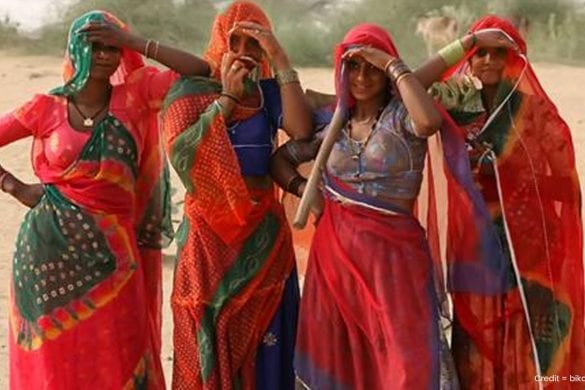
The Kunbi saree is a traditional handwoven cotton saree worn by the Kunbi tribal women of Goa. Unlike the opulent silk sarees of other Indian states, the Kunbi is rooted in simplicity and utility. It is a sturdy, 100% cotton weave, originally designed for the hardworking agrarian women of the tribe. The saree is instantly recognizable by its large, bold checkered patterns and its distinct red and white color palette. Traditionally, it is worn short, stopping just below the knee, which allows the women freedom of movement while working in the rice fields. This saree is not just a piece of clothing; it is a symbol of identity for Goa’s oldest settlers.Tracing the Roots: The Original Goans
The Kunbi tribe is believed to be one of the original inhabitants of Goa, settling in the Konkan region long before the Portuguese arrived in 1510. They are primarily an agricultural community, living close to the land. For centuries, the Kunbi saree was the standard attire for the women of this community. It was a lifeline—breathable enough for the humid coastal weather and durable enough for farm labor. However, during the 450 years of Portuguese rule, Goan culture went through a massive shift. Western clothing became more popular, and traditional indigenous textiles like the Kunbi saree began to disappear. By the mid-20th century, the weave had almost vanished, with many weavers moving away from the craft due to a lack of demand. It became a rare sight, worn only by the older generation of tribal women.How is a Kunbi Saree Made?
The beauty of a Kunbi saree lies in its rustic, handmade nature. It is woven on a simple pit loom, a traditional technique that has remained unchanged for generations.1. The Yarn
The saree is woven using pure cotton yarn. The count of the yarn usually varies between 20s and 60s, which makes the fabric thick and coarse compared to fine muslins. This thickness is intentional—it ensures the saree is durable and can withstand daily wear and tear in the fields.2. The Colors
Traditionally, the dyeing process used natural dyes. The signature color of the Kunbi saree is a deep, earthy red, often combined with white or black checks.- Red: Symbolizes energy and vitality.
- Natural Dyes: Historically, dyes were made from iron ore, rice starch (kanji), and vinegar. This ancient recipe helped the fabric retain its color despite the harsh Goan sun and monsoon rains.
3. The Weave
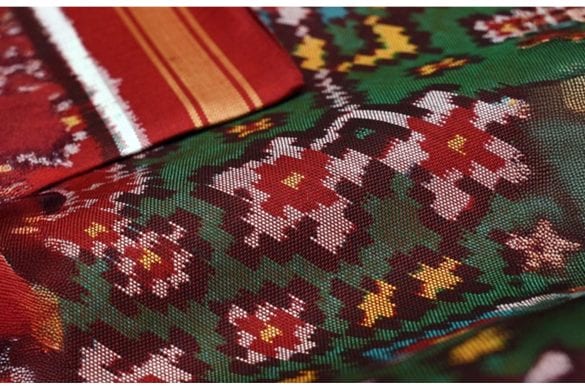
The weaving process is straightforward but skilled. The checks are created by the intersection of colored warp and weft threads. A distinctive feature of the original Kunbi saree is the dobby border—a slightly raised, patterned border, often about an inch to an inch-and-a-half wide. Unlike other Indian sarees that use gold or silver zari (metallic thread) for special occasions, the Kunbi saree stays true to its humble roots. It is completely devoid of zari, relying instead on the play of geometric checks for its beauty.Design Elements: Simplicity is Key
If you look at a Kunbi saree, you won't find intricate floral embroidery or paisleys. Its design language is purely geometric.- The Checkered Pattern: The body of the saree is dominated by checks of varying sizes. This "checked" look is the hallmark of the Kunbi style.
- The Border: The traditional saree features a red border that frames the checked body.
- The Length: An authentic traditional Kunbi saree is shorter than the standard six yards. Because it was draped uniquely—tied with a knot on the shoulder and worn knee-length—it didn't require the extra fabric needed for pleats.
The Revival: A New Lease on Life
The story of the Kunbi saree cannot be told without mentioning the late, legendary designer Wendell Rodricks. Rodricks, a son of Goa, realized that while Goan music and food were celebrated, its textile heritage was lost. He embarked on a mission to revive the Kunbi saree. He visited the few remaining weavers, convinced them to restart their looms, and adapted the saree for a modern audience.Modern Adaptations
To make the saree appealing to contemporary women, some changes were made:- Pastel Shades: While keeping the original checks, Rodricks introduced softer, pastel hues that appealed to urban buyers.
- Standard Length: The sarees were woven in the standard six-yard length to be draped in the modern Nivi style (the common way sarees are worn today).
- Softer Fabric: The yarn count was tweaked to make the fabric softer and more drape-friendly, without losing its characteristic texture.
Kunbi Saree Today
Today, the Kunbi saree is experiencing a renaissance. It is celebrated as a prime example of sustainable, slow fashion.Why Choose a Kunbi Saree?
- Eco-Friendly: Made from pure cotton and often using natural dyes, it is biodegradable and gentle on the skin.
- Perfect for Indian Weather: The breathable cotton weave makes it ideal for hot and humid climates.
- Cultural Statement: Wearing a Kunbi saree is a way of honoring the indigenous history of Goa.