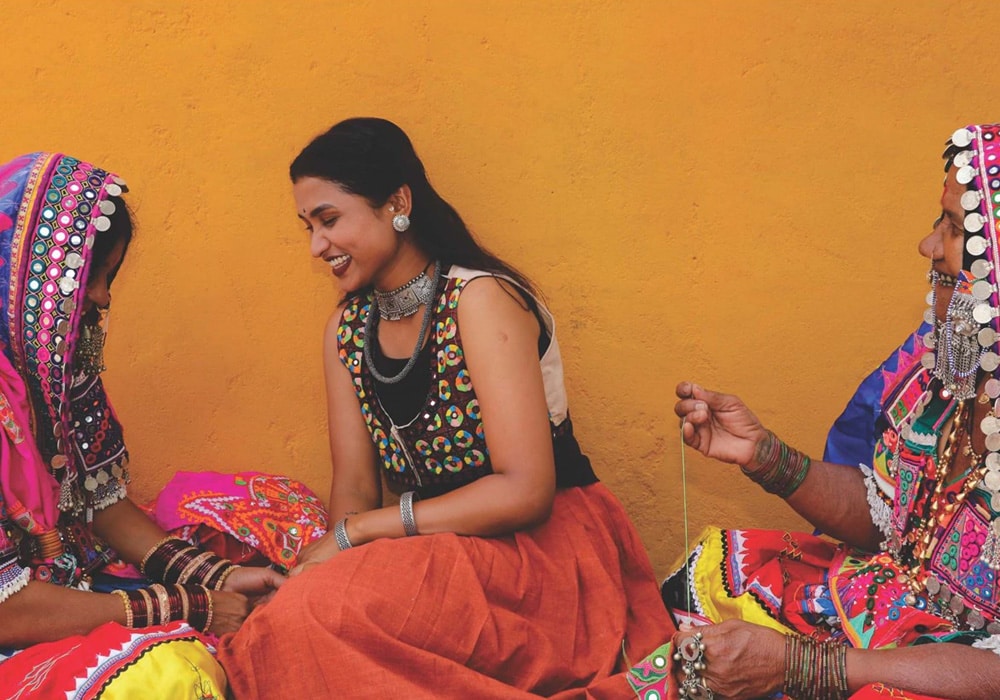
 Imagine a fabric that captures the spirit of a nomadic journey—a riot of colors, the glint of mirrors, and the rhythm of geometric patterns. This is Lambani embroidery, a craft as vibrant and resilient as the community that creates it. Practiced by the Lambani or Banjara community, primarily in Karnataka, this unique needlecraft is a stunning blend of mirror work, beadwork, and intricate stitching. It is not just decoration; it is a language of identity for a semi-nomadic tribe that has traveled across India for centuries. From the dusty roads of Rajasthan to the green landscapes of the Deccan Plateau, the Lambani people have carried their heritage in every stitch. In this guide, we will unravel the story of Lambani embroidery, exploring its fascinating origins, the complex techniques used to create it, and how this traditional art form is making waves in the modern fashion world.
Who Are the Lambanis?
The Lambanis, also known as Banjaras, are a semi-nomadic tribe with roots in the Marwar region of Rajasthan. The name 'Lambani' is believed to be derived from 'lavanah', meaning salt, which aligns with their historical role as salt traders. They were the movers and shakers of medieval India, transporting goods like grains, salt, and wood across vast distances. During the 17th century, they moved southward with the Mughal armies, aiding in the transport of supplies. Eventually, many settled in the southern states, particularly in Karnataka's Bellary district, around the historic town of Hampi. Despite settling down, they held onto their distinct culture. While the men often worked as laborers, the women preserved their heritage through their attire—colorful, heavy skirts and blouses adorned with mirrors, coins, and embroidery. This embroidery became their signature, a way to keep their rich history alive through art.The Art of the Stitch: How Lambani Embroidery is Made
Lambani embroidery is a celebration of texture and color. Unlike some embroideries that are delicate and understated, Lambani work is bold, tactile, and full of life. It combines various elements like appliqué, mirror work, and quilting to create a dense, textured surface.1. The Materials
The process starts with choosing the base fabric. Traditionally, hand-dyed cotton khadi or power loom cloth is used. The base colors are usually earthy and bold—deep reds, indigo blues, and warm ochres. These colors provide a striking background for the vibrant threads used in the stitching.2. The Threads and Embellishments
Contrast is key in Lambani art. If the cloth is red, the threads might be yellow, green, or white. But thread is just the beginning. The embroidery is heavily embellished with:- Mirrors (Shisha): To reflect light and ward off the "evil eye."
- Cowrie Shells: A signature element that sets it apart from other styles like Kutchi embroidery.
- Coins and Beads: Adding weight and a rhythmic sound to the movement of the wearer.
- Jewelry: Sometimes, silver pieces are stitched directly onto the fabric.
3. The Stitches
What truly defines Lambani embroidery is its diversity of stitches. There are 14 distinct types of stitches used, each with a specific name and purpose. Some of the most common include:- Gadri
- Bhuriya
- Kaudi
- Pote
- Suryakanti Maki
Design Elements: A Bohemian Symphony
Lambani embroidery is often described as having a "bohemian" aesthetic because of its free-spirited use of color and pattern.- Geometric Patterns: The designs are rarely floral or realistic. Instead, they rely on geometry—parallel lines, diamonds, and zig-zags. This geometric precision balances the riot of colors and embellishments.
- Mirror Work: While Kutchi embroidery also uses mirrors, Lambani work integrates them differently, often surrounding them with unique stitches like the Bakkya or Relo.
- Patchwork: The use of appliqué (sewing smaller pieces of fabric onto the main fabric) gives Lambani textiles a distinct, quilted look. This was traditionally a way to repurpose old fabric, turning sustainability into an art form long before it was a trend.
Lambani Embroidery Today: From Tradition to Trend
For a long time, this intricate craft was limited to the traditional attire of the Lambani women. However, the world has slowly woken up to the beauty of this "gypsy" art.Global Recognition and the GI Tag
A major turning point for the craft came in 2010 when Lambani embroidery from the Sandur region in Karnataka received the Geographical Indication (GI) tag. This status recognized the uniqueness of the craft and helped protect it from imitation. It was a victory for organizations like the Sandur Kushal Kala Kendra, which have worked tirelessly to uplift the women artisans of the tribe.Modern Applications
Today, Lambani embroidery has transcended its traditional boundaries. You no longer have to visit a Tanda (Lambani settlement) to see it. It graces the runways of fashion weeks and the shelves of boutique stores.- Fashion: Designers are incorporating Lambani patches onto denim jackets, tote bags, kurtas, and even sarees. The bohemian look is highly coveted in global fashion, making Lambani work extremely popular.
- Home Decor: The vibrant aesthetic works beautifully in interiors. Cushion covers, wall hangings, table runners, and bedspreads featuring Lambani work add a splash of Indian heritage to modern homes.
- Accessories: From colorful pouches to heavy, embellished jewelry, the craft is versatile enough to adorn almost anything.