Every stroke tells a story, and every color sings a song in the ancient tradition of Madhubani art. Originating from the heart of the Mithila region in Bihar, India, and parts of Nepal, this folk art form is a breathtaking celebration of nature, mythology, and daily life. Known for its intricate patterns and striking geometric designs, Madhubani art also called Mithila painting—has transcended its humble origins on mud walls to become a global symbol of Indian heritage.
In this post, we will journey through the history of this traditional art of Bihar, explore its unique styles and techniques, and discover how it continues to thrive in the modern world, empowering artisans and captivating art lovers everywhere.
Origins and Historical Context
The roots of Mithila painting run deep into antiquity. Legend has it that the art form dates back to the time of the Ramayana, when King Janaka of Mithila commissioned artists to capture the wedding of his daughter, Sita, to Lord Rama. While the exact timeline remains part of folklore, the tradition has been passed down through generations, primarily by women.
Historically, Madhubani paintings were not created for commercial purposes. They were a domestic ritual, painted on the freshly plastered mud walls and floors of huts during festivals, religious ceremonies, and special occasions like weddings. The most sacred space, the kohbar ghar or nuptial chamber, was adorned with symbols of fertility and prosperity to bless the newlyweds.
Key Characteristics of Madhubani Art
What makes Indian folk art so distinct? In the case of Madhubani, it is the sheer vibrancy and density of the work. There are several defining features that make this art form instantly recognizable:
- No Empty Spaces: One of the most unique aspects is that artists leave no gaps. Empty spaces are filled with flowers, animals, birds, and geometric patterns, creating a rich tapestry of visuals.
- Double Lines: Figures are often outlined with double lines, and the space between them is filled with crosshatching or straight lines.
- Vibrant Colors: The paintings are famous for their bold use of color. Originally, these were derived entirely from natural sources plants, charcoal, soot, and even cow dung.
- Distinctive Eyes: Human figures often feature large, bulging fish-shaped eyes and pointed noses, giving them a distinct profile.
Themes and Symbolism
The canvas of a Madhubani art piece is a reflection of the artist's world. The themes are deeply rooted in the cultural ethos of the region.
Mythology and Deities
Religion plays a central role. You will frequently see depictions of Hindu deities like Krishna, Rama, Shiva, Durga, Lakshmi, and Saraswati. Scenes from epics like the Ramayana and Mahabharata are common, narrating timeless stories through visual art.
Nature and Fertility
Nature is revered in Mithila culture. The sun and moon are often personified and painted as central figures. Sacred plants like the Tulsi (holy basil) and Banyan tree are depicted alongside animals like elephants, turtles, fish, and peacocks. These aren't just decorative; they symbolize fertility, longevity, and good luck.
Social Life
Beyond the divine, the art captures scenes from royal courts and social events, such as weddings and harvest festivals, offering a glimpse into the communal life of the region.
The Five Unique Styles
Mithila painting is not a monolith; it comprises five distinct styles, each with its own history and social context:
- Bharni: This style is characterized by bold colors and filled-in subjects. It was historically practiced by upper-caste Brahmin women who depicted mythological stories.
- Kachni: Known for its fine line work and monochrome palette (often just red and black), this style focuses on intricate detailing rather than filling colors. It was traditionally practiced by the Kayastha community.
- Tantric: This style is deeply spiritual, depicting religious texts and Tantric symbols. It is less common but highly significant culturally.
- Godna: Originally a tattoo art form practiced by the Dusadh community, Godna paintings feature concentric circles and rows of repeated patterns, often using black and earth tones.
- Kohbar: This style is specifically related to wedding ceremonies, depicting symbols of fertility like the lotus, fish, and bamboo.
Techniques and Materials: Tradition Meets Modernity
The traditional technique of Madhubani art is fascinatingly simple yet effective. Artists use their fingers, twigs, matchsticks, and nib-pens to apply the paint. There are no sketches made beforehand; the artist draws directly, requiring immense confidence and skill.
The colors are a chemistry of nature:
- Black: Made from soot mixed with cow dung.
- Yellow: Derived from turmeric or pollen.
- Blue: Extracted from indigo.
- Red: Made from the Kusum flower or red sandalwood.
- Green: Taken from the leaves of the wood apple tree.
While these natural pigments are still prized, modern artisans have adapted to changing times. Today, you will find Madhubani art on handmade paper, canvas, and cloth, often using acrylic paints. This transition has allowed the art to travel from the walls of mud huts to the walls of art galleries and living rooms worldwide.
Modern-Day Relevance and Livelihood
In the mid-20th century, a massive drought hit the Mithila region. To generate income, women began painting on paper to sell their work. This pivotal moment transformed a domestic ritual into a source of livelihood.
Today, Madhubani art is a thriving industry. It empowers thousands of women in Bihar, providing them with financial independence and a voice in their communities. The Indian government has recognized several master artists with prestigious awards like the Padma Shri, cementing the art form's status on the national stage.
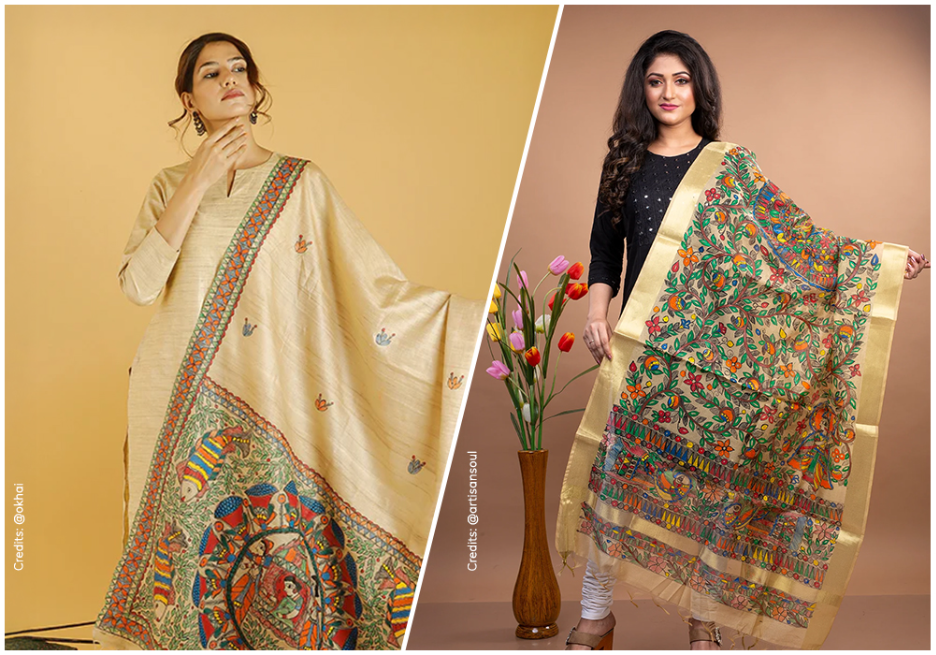
The art has also found its way onto products beyond canvas—sarees, dupattas, home decor, and even face masks now feature these iconic designs. This commercialization, while debated by purists, has undeniably kept the tradition alive and relevant for a new generation.
Preserving a Colorful Legacy
Madhubani art is more than just beautiful imagery; it is a living history of the Mithila region. It bridges the gap between the sacred and the mundane, the ancient and the modern. By supporting this traditional art of Bihar, we help preserve a unique cultural narrative that has survived centuries. Whether you are an art collector or simply an admirer of beauty, owning a piece of Madhubani art is like holding a piece of India's soul.