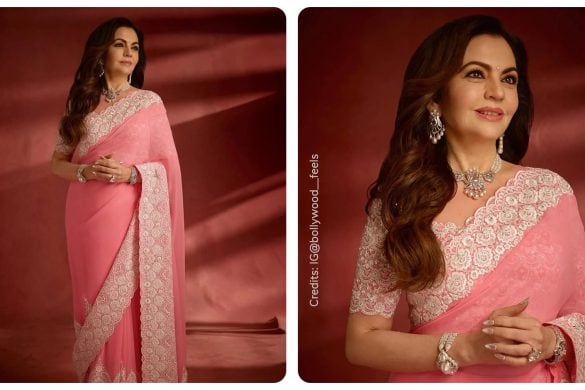


The Bollywood icon’s latest House of Masaba half-and-half sari is a colour theory lesson disguised as six yards of pure elegance.
There are two schools of sari dressing: those who honour the weave, and those who let the colour do the talking. Madhuri Dixit Nene, one of Bollywood’s most enduring sari devotees has long known how to move effortlessly between both. In her most recent look, she does something rarer still: she lets them speak together. The result is a House of Masaba half-and-half sari that positions the softest mint green against a vivid, declarative hot pink and makes the conversation look entirely effortless.
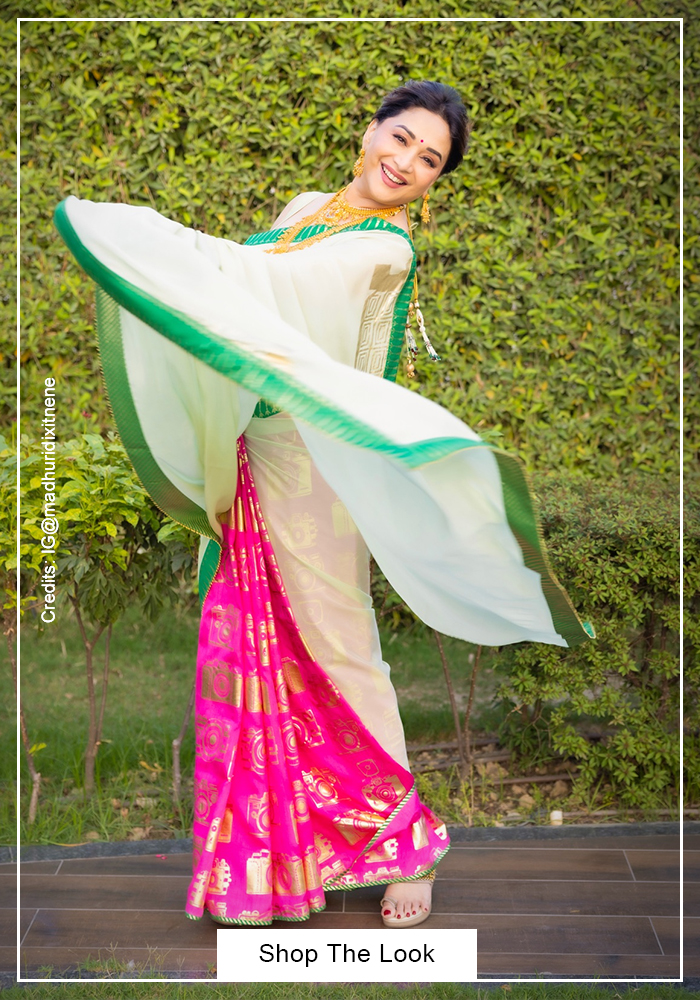

The half-and-half sari silhouette also called a colour-blocked drape — has become one of Masaba Gupta’s signature moves. Where other designers pivot to embellishment or print for visual drama, Masaba often turns to colour itself as the statement. Here, the division of the six-yard is both structural and emotional: one half whispers in the palest, almost-white mint; the other announces itself in saturated, unapologetic fuchsia-pink. The transition between the two is where the magic lives. The transition between the two is where the magic lives. Shop the look on Aza Fashions at ₹30,000.
The Case for Colour-Blocking in Indian Wear
Colour-blocked Indian wear is having a serious moment. From bridal lehengas divided between two contrasting hues to half-and-half kurtas that play with tone and texture simultaneously, the trend speaks to a generation of dressers who want their Indian wear to feel considered rather than ceremonial. House of Masaba has been one of the most consistent voices in this space, with Masaba Gupta repeatedly demonstrating that the sari far from being a conservative canvas is one of the most radical forms for colour experimentation in Indian fashion.
Dixit Nene’s mint-and-hot-pink iteration makes the case plainly: the coolness of the mint does not fight the warmth of the pink; instead, it frames it. The eye is drawn first to the quieter half and then, with real pleasure, to the louder one. It is, in the most precise sense, a colour story.
How Madhuri Styled the Look
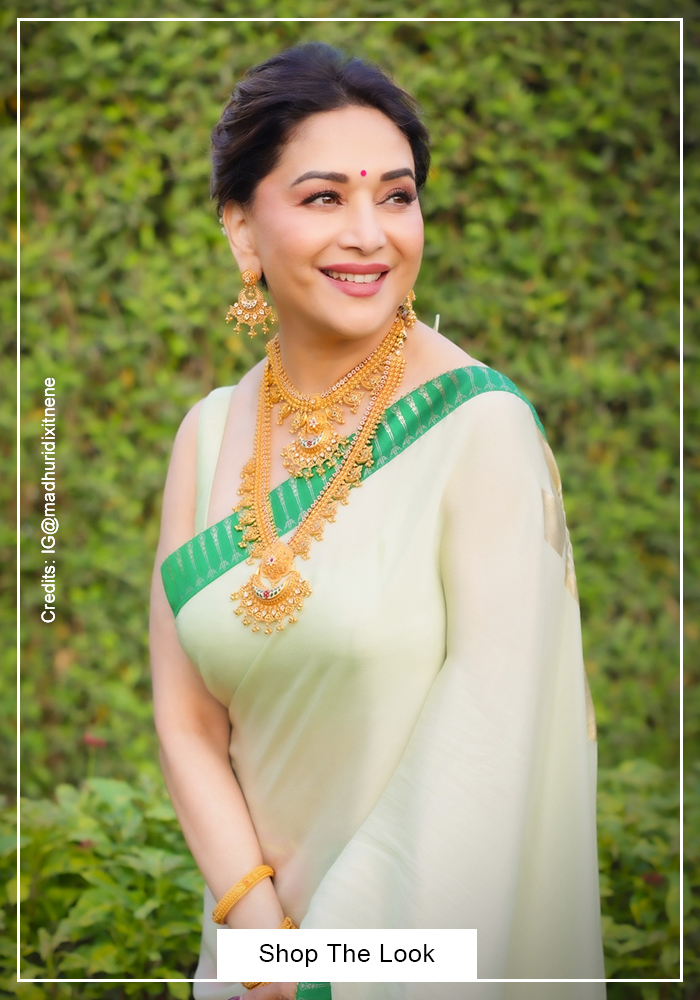
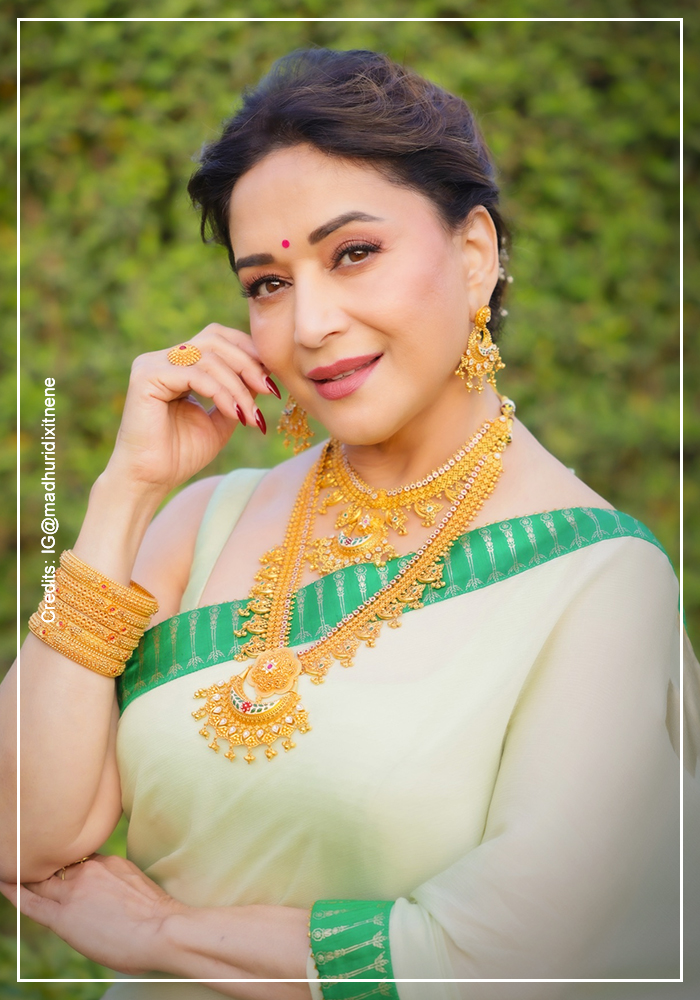
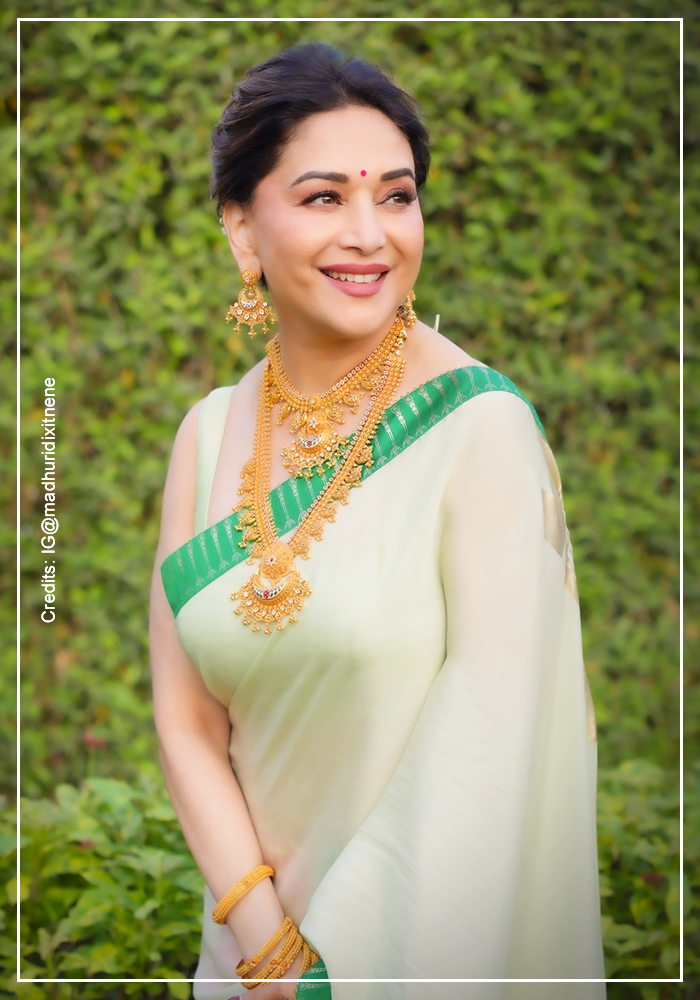
As is her custom, Dixit Nene styled the look with an emphasis on proportion and restraint. The blouse in the hotter of the two tones grounds the ensemble without competing with the sari’s own colour dialogue. Jewellery, true to form, was kept refined: pieces that punctuate rather than overpower.
THE LOOK, DECODED
|
ELEMENT |
DETAIL |
|
Sari |
House of Masaba half-and-half drape — palest mint and hot pink |
|
Silhouette |
Colour-blocked half-and-half construction with contrast pallu |
|
Blouse |
Hot pink, matching the sari’s dominant accent tone |
|
Jewellery |
Refined gold; minimal stacking to let the colour breathe |
|
Hair & Beauty |
Softly set waves; warm nude lip; luminous base |
|
Register |
Contemporary Indian elegance — festive-ready, never overdressed |
Why This Sari Is Worth Taking Notes On
The mint-and-hot-pink combination is not the obvious colour pairing for a celebrity sari moment and that is precisely its strength. Mint has long existed on the periphery of Indian occasion wear: too pale for grand ceremonies, too unusual for default festive wardrobes. Masaba’s decision to force it into contrast with hot pink recontextualises both colours. The mint becomes deliberate, sophisticated, architectural. The pink becomes a punchline delivered at exactly the right moment.
For anyone building a considered Indian wear wardrobe, this look offers a useful principle: the statement does not always have to come from embellishment. Sometimes, it comes from the audacity of a colour placed next to another colour and held there, steady and sure.
Madhuri Dixit Nene, as ever, wears both with the ease of someone who has never questioned the sari’s ability to say everything only ever which thing she wants it to say today.