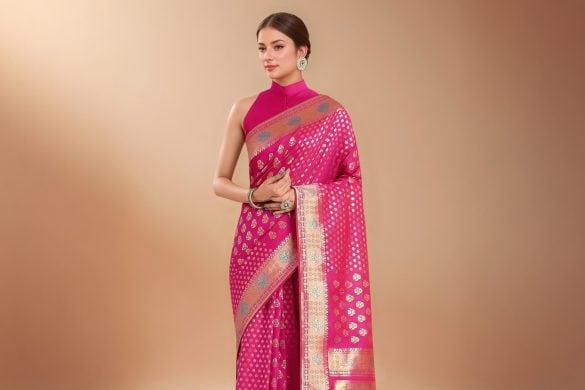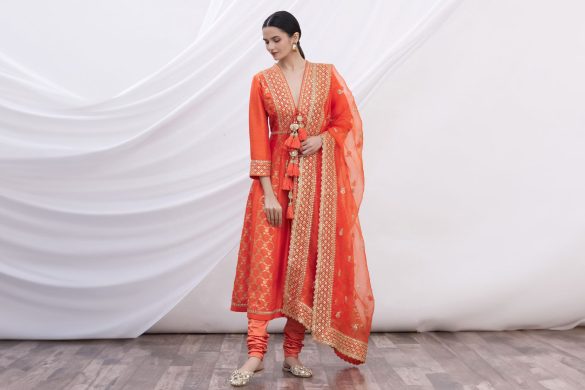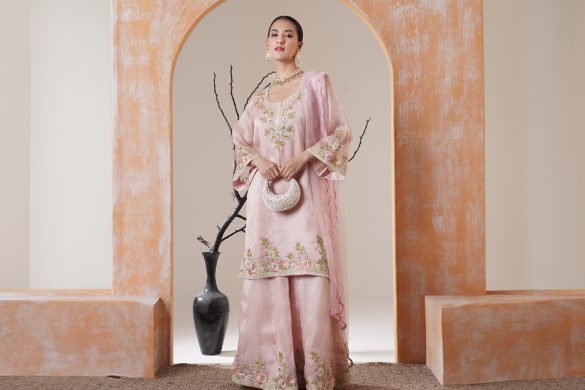
When you think of a saree, the image that likely pops into your head is the Nivi drape. Originating from Andhra Pradesh, this style has transcended its regional roots to become the most universally recognized way to wear a saree. It is the gold standard of traditional Indian fashion—elegant, practical, and incredibly flattering on all body types.
Whether you are attending a best friend's wedding, a formal office party, or a festive family gathering, the Nivi drape is your trusty companion. But for beginners, managing six yards of fabric can feel like solving a complex puzzle. How many pleats? How long should the pallu be? How do you keep it from unraveling?
Fear not. This guide is dedicated to demystifying the art of the Nivi style saree. We will walk you through the draping process step-by-step and share expert saree draping tips to ensure you look poised and perfect every time.
Why the Nivi Style Reigns Supreme
Before we dive into the "how-to," let's appreciate why this style is so beloved. The Nivi drape is characterized by pleats tucked into the waist at the front and the pallu (the loose end of the saree) draped over the left shoulder.
- Versatility: It works for every occasion, from casual brunches to red-carpet events.
- Mobility: Unlike some regional drapes that restrict movement, the Nivi style allows you to walk comfortably.
- Silhouette: It accentuates curves while providing modest coverage, striking a perfect balance between sensuality and grace.
Preparing for the Drape: What You Need
A flawless drape starts with the right foundation. Before you even touch the saree, ensure you have these essentials ready:
- The Saree: Choose a fabric that suits your comfort level (more on this later).
- The Blouse: A well-fitted blouse is non-negotiable. It provides the structure for the entire look.
- The Petticoat (Inskirt): This should match the base color of your saree perfectly. For sheer sarees like chiffon or net, opt for a satin petticoat. For cotton or silk, a cotton petticoat works best. Ensure it fits snugly at the waist—if it's too loose, your heavy saree might drag it down.
- Footwear: Crucial Tip: Put on your heels before you start draping. This ensures you get the length of the saree exactly right so you don't trip over the hem later.
- Safety Pins: Keep a handful of medium and large safety pins within reach.
Step-by-Step Guide to Nivi Style Draping
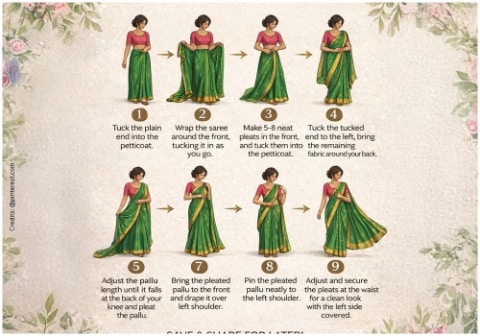
Follow these steps to achieve that picture-perfect look.
Step 1: The Basic Tuck
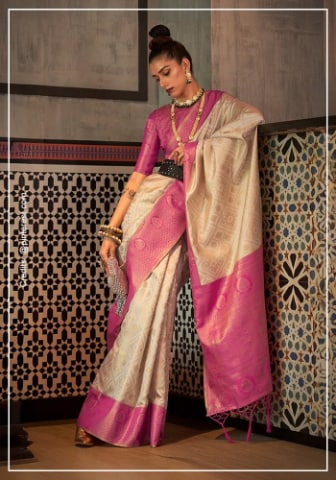
Stand in front of a mirror. Take the non-pallu end of the saree (the plain end) and tuck the upper corner into the petticoat at the right side of your waist. Ensure the bottom edge of the saree is just touching the floor (covering your shoes). Wrap the saree once around your waist, bringing it back to the right side. Make sure the fabric is tucked in neatly all around.
Step 2: Measure the Pallu

Take the remaining fabric and bring it around your waist to the front. Now, casually throw the loose end (pallu) over your left shoulder to measure the length. Ideally, the pallu should fall at the back of your knee. If it's too short, it looks awkward; if it's too long, it becomes unmanageable. Once you have the length, pin it temporarily to your blouse shoulder so it doesn't slip.
Step 3: Creating the Lower Pleats
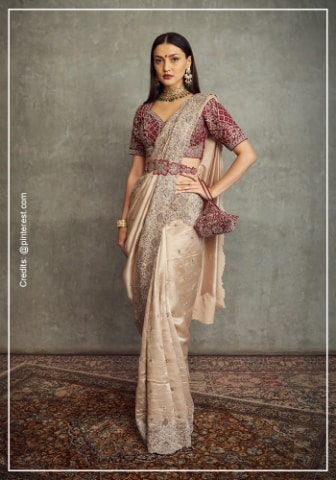
This is the trickiest part for many. Hold the excess fabric hanging in front of you. Using your thumb and pinky finger as anchors, start making pleats of about 4 to 5 inches wide. You will typically get anywhere from 6 to 8 pleats depending on the length of the saree and your waist size.
- Pro Tip: Ensure the pleats are even. Once gathered, tap them down or shake them slightly so they fall straight.
Step 4: Tucking the Pleats
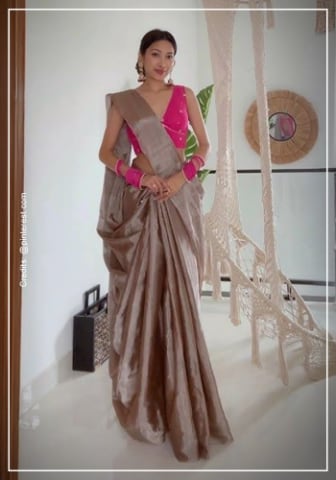
Hold the gathered pleats firmly and tuck them into the petticoat, slightly to the right of your belly button. The pleats should open to your left. Secure the pleats from the inside of the petticoat with a large safety pin to prevent them from slipping out when you walk or sit.