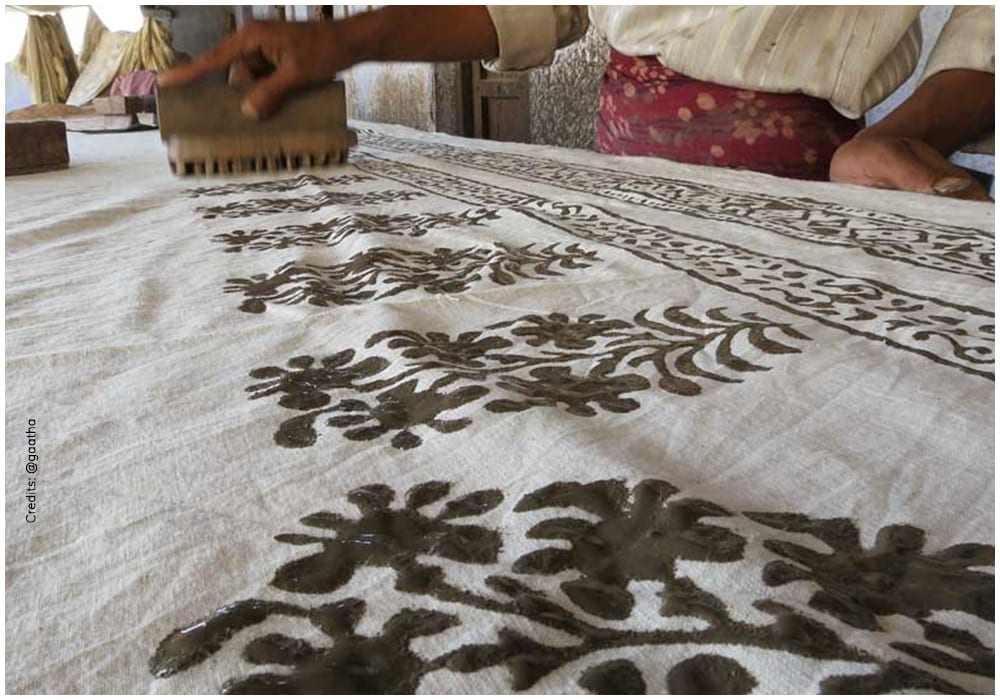
 In the heart of India, tucked away in the villages of Madhya Pradesh, lies a textile tradition that is as rugged as the landscape and as vibrant as the people who wear it. This is Nandna Print, a craft that has survived centuries largely unchanged, preserving its original, earthy essence. Unlike the delicate florals of Jaipur or the precise geometry of Ajrakh, Nandna print is bold and rustic. It is the chosen fabric of the Bhil tribe women, worn while they farm the land under the hot sun. With its deep indigo and green hues and intricate white motifs, Nandna is a celebration of nature and tribal identity. This guide will take you on a journey to the villages of Tarapur and Umedpura to explore the fascinating world of Nandna printing—from its ancient roots and labor-intensive process to its fight for survival in the modern age.
What is Nandna Print?
Nandna print is a traditional form of hand-block printing practiced primarily in the Neemuch district of Madhya Pradesh. It is known for its specific color palette—usually dark indigo blue and green backgrounds with white or red motifs. The fabric is traditionally used to make ghagras (skirts), odhnis (veils), and angochhis (towels) for the Adivasi tribes, particularly the Bhil community. The dark colors are practical for the farming lifestyle of the tribe, hiding dirt and dust, while the thick, coarse cotton offers comfort and durability. What makes Nandna unique is its technique. It involves a complex interplay of direct block printing and resist dyeing, resulting in a fabric that feels deeply connected to the earth.Tracing the Roots: From Indus Valley to Tarapur
The history of block printing in India is ancient, with roots tracing back to the Indus Valley Civilization (3000 BC). Archaeological finds at Mohenjo Daro suggest that Indians mastered the technology of mordant dyeing millennia ago. However, the story of Nandna print specifically begins with the Chippa (or Bhavsar) community. Originally practicing in villages like Dharampuri and Thikri, these artisans catered to the local tribal populations. Later, searching for better opportunities and perhaps better water sources for dyeing, they migrated to Tarapur and Umedpura. For over 300 years, these villages have been the epicenter of Nandna printing. The craft was developed specifically for the Bhil tribe, creating a symbiotic relationship between the printer and the wearer that has lasted for generations.How Nandna Print is Made: The Wax-Resist Magic
Creating authentic Nandna fabric is not for the impatient. A single set of fabric (around 800 meters) can take over a month to finish. It is a slow, rhythmic process that requires years of experience.1. The Base
The process starts with raw, coarse cotton. This fabric is washed and prepared to receive the dye.2. Wax-Resist Printing
The core technique involves wax-resist printing.- The Resist: Artisans use wooden blocks to stamp a resist paste (often made of wax, lime, and gum) onto the fabric.
- The Function: This paste acts as a barrier. When the fabric is dipped in dye, the areas covered by the paste do not absorb the color. This creates the white patterns against the dark background.
3. Dyeing
The fabric is dipped in natural indigo dye to achieve its signature blue-black or deep green base. The spacing of the blocks is carefully managed, often becoming smaller and denser towards the end of the fabric length.4. The Signature Mark
A unique feature of Nandna printing is the final touch. At the end of the production process, the artisan stamps a specific flower motif. This acts as a trademark, allowing buyers to recognize the printer and verifying the fabric's authenticity.Design Elements: Nature as Muse
Nandna motifs are not influenced by royal courts or foreign trends; they are inspired directly by the nature that surrounds the tribal communities. The wooden blocks, often sourced from Pethapur in Gujarat, feature distinct designs that carry deep cultural meaning.Key Motifs
- Champakali: Inspired by the Champa (frangipani) flower. It features a stem bent to one side with leaves flanking it. In the Bhil tribe, this motif is traditionally worn by unmarried women and symbolizes fertility.
- Mirchi (Chilli): A spicy motif representing the chilli pepper. The stem is usually printed in ochre, while the central portion is red and white, standing out against the dark background.
- Amba (Mango): One of the most popular designs. It depicts a mango tree with a bent stem and branches. Women often wear skirts with this motif during weddings or after childbirth. It is a traditional gift from a brother to his sister during festivals like Rakshabandhan and Diwali.
- Jalam Buta: A fruit-bearing tree with an upright stem, symbolizing growth and abundance.
- Dola Maru: A romantic motif combining two designs, named after the legendary Rajasthani love story of Prince Dola and Princess Maru.
Nandna Print Today: A Craft at a Crossroads
Despite its rich history and stunning aesthetic, Nandna print faces significant challenges in the modern world.The Challenge of Time
The traditional process is incredibly labor-intensive. The repeated washing, dyeing, and printing require physical strength and immense dedication. As younger generations seek easier, higher-paying jobs, the number of skilled artisans willing to do this rigorous work is declining.Revival Efforts
However, the story is not over. There is a growing appreciation for "slow fashion" and authentic, handmade textiles.- New Training: To cope with the demand and the shortage of labor, amateur artisans are being trained in slightly more time-efficient techniques that still respect the traditional aesthetic.
- Market Expansion: While traditionally sold only to local tribes, Nandna print is now finding its way into urban boutiques. Designers are using the fabric to create modern dresses, shirts, and home decor, introducing the rustic charm of Madhya Pradesh to the world.