
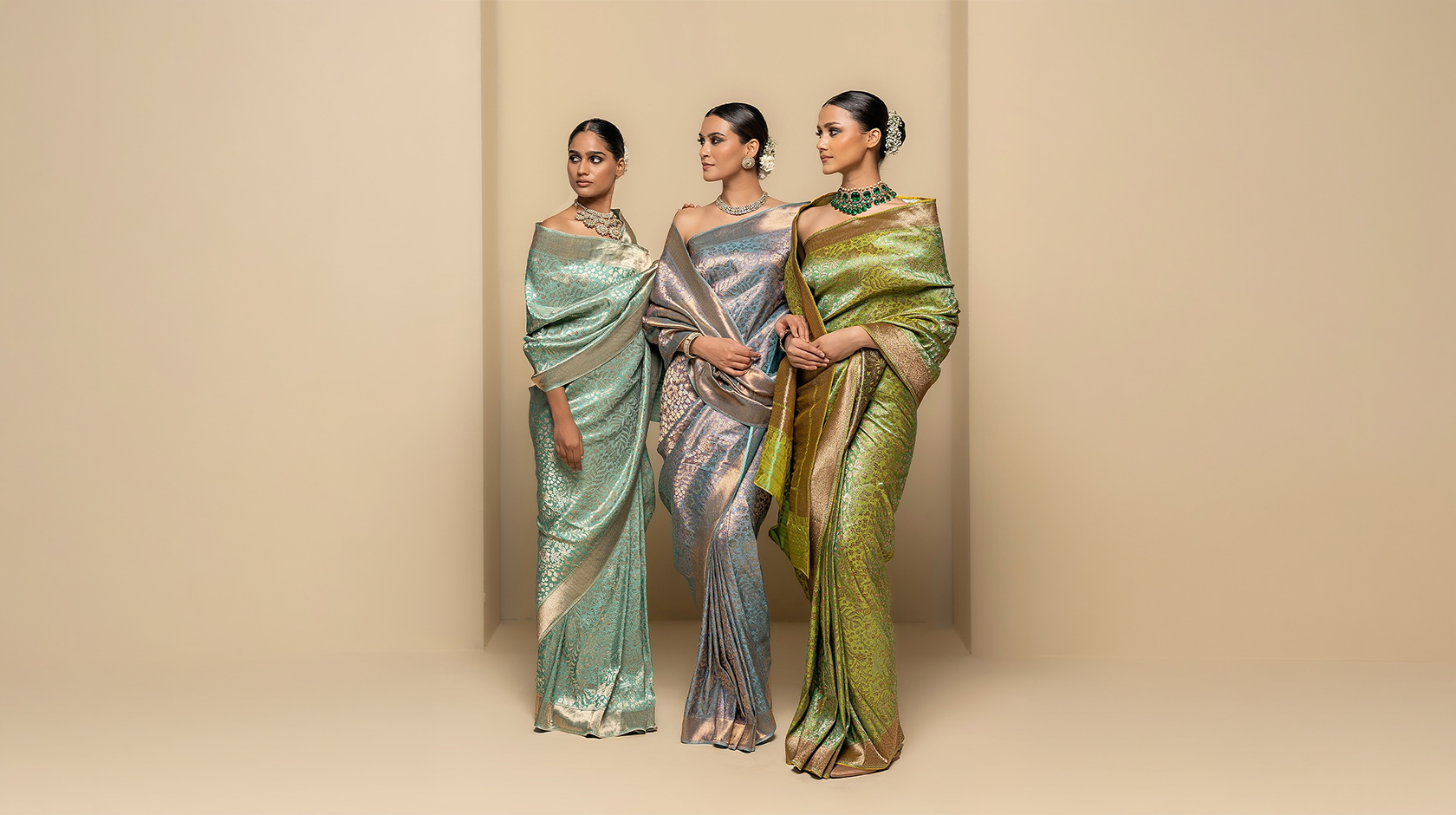
There is a particular sound a handloom makes, the wooden clack of the shuttle, the rhythmic thud of the reed pressing thread into place, that no machine has ever managed to fake. It is the sound of a designer saree, a lehenga, or a kurta set taking three days to be born instead of three minutes. Every thread carries generations of craftsmanship, turning everyday Indian wear into something far more meaningful than fabric. On the 7th of August, India pauses to listen to that sound on purpose.
Why We Celebrate, and Why It Still Matters
National Handloom Day was instituted in 2015, the date deliberately chosen to echo the Swadeshi Movement launched on 7th August 1905, when handloom cloth first became an act of quiet rebellion against imported mill fabric. Over a century later, the rebellion has changed shape but not spirit. This industry remains one of the largest unorganised economic sectors in the country, sustaining millions of weaving families across Varanasi, Chanderi, Kanchipuram, Pochampally and beyond. Every handloom saree bought is, in some small way, a vote for a craft that survives on hands rather than horsepower.

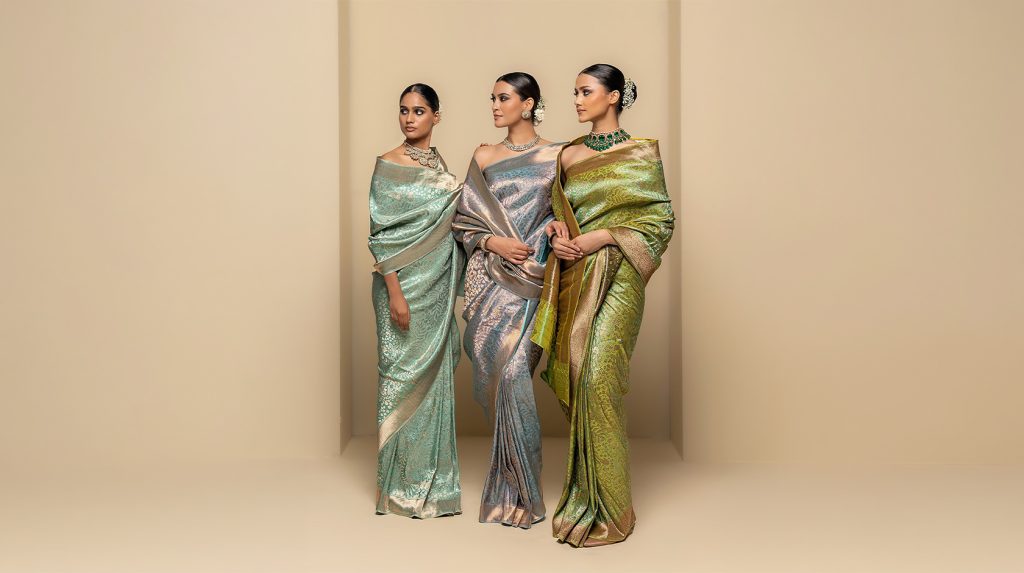
For a diaspora audience scattered across London, Toronto, Sydney and Dubai, handloom carries an additional charge, it is portable heritage. A Banarasi saree folded into a suitcase travels further than fabric; it carries a grandmother's wedding, a festival back home, an identity that machine-made polyester never quite manages to replicate.
Banarasi: Where Silk Learned to Hold Light
Few weaves announce themselves like Banarasi does. Born on the ghats of Varanasi, its signature is the zari — gold and silver thread worked into silk with a density that turns fabric into something closer to armor, if armor could catch candlelight. The Ekaya Banaras Mustard Yellow Satin Silk Booti Border Saree takes the classic booti, small woven motifs scattered like confetti across the drape, and sets them against a mustard so warm it looks lit from within, finished with a border that does the quiet, heavy-lifting embroidery Banarasi is famous for.

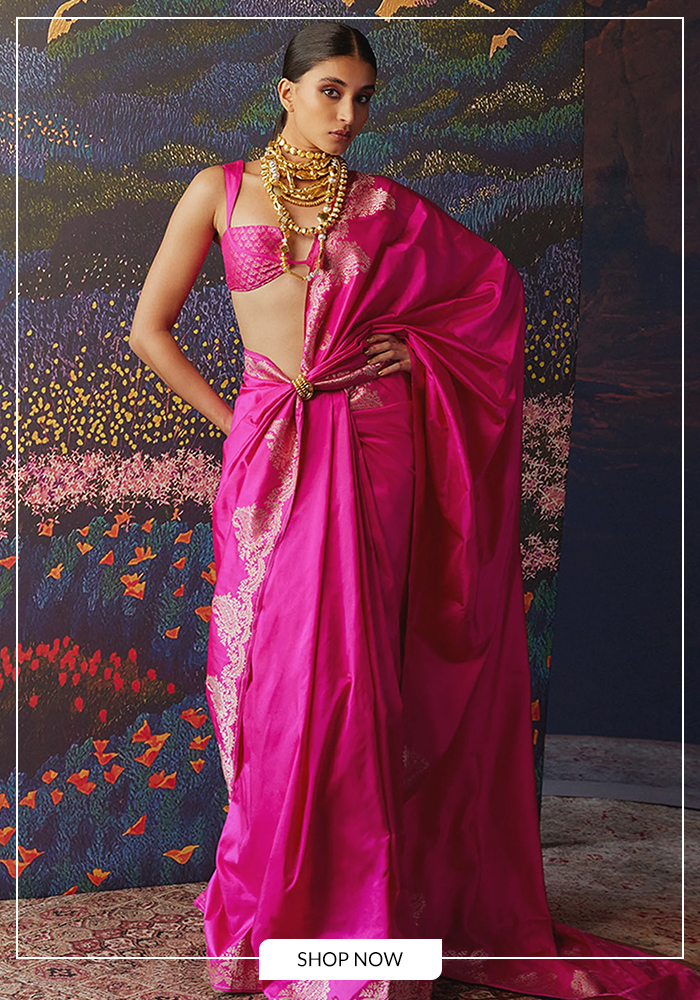
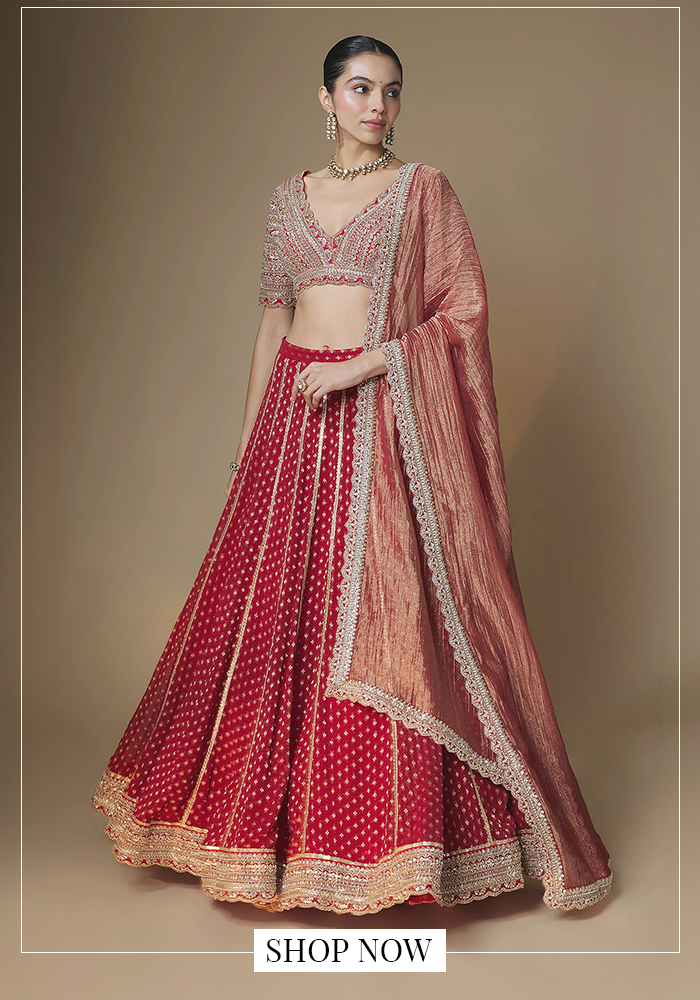
Banarasi doesn't stay confined to six yards, either. The Renee label Banarasi Woven Lehenga Set takes the technique into full bridal territory, a red lehenga in viscose georgette, silk and tissue, its hem embroidered in dori, sequin, cutdana and pearl, paired with a shimmer tissue dupatta that catches every mandap light. It's Banarasi engineered for the dance floor as much as the pheras.
Chanderi: The Weave That Weighs Almost Nothing
If Banarasi is about density, Chanderi is its opposite argument. Woven in Madhya Pradesh with a blend of silk and cotton, Chanderi has a translucency that makes gold booti look like it's floating rather than sitting on cloth. The Sheetal Batra Mahika Kiran Dori Embroidered A-line kurta set uses that lightness to full effect, a hot pink kurta in silk and Chanderi with kiran dori and sequin florals, paired with a silk organza dupatta trimmed in kiran lace, built for a sangeet that needs movement, not stiffness.
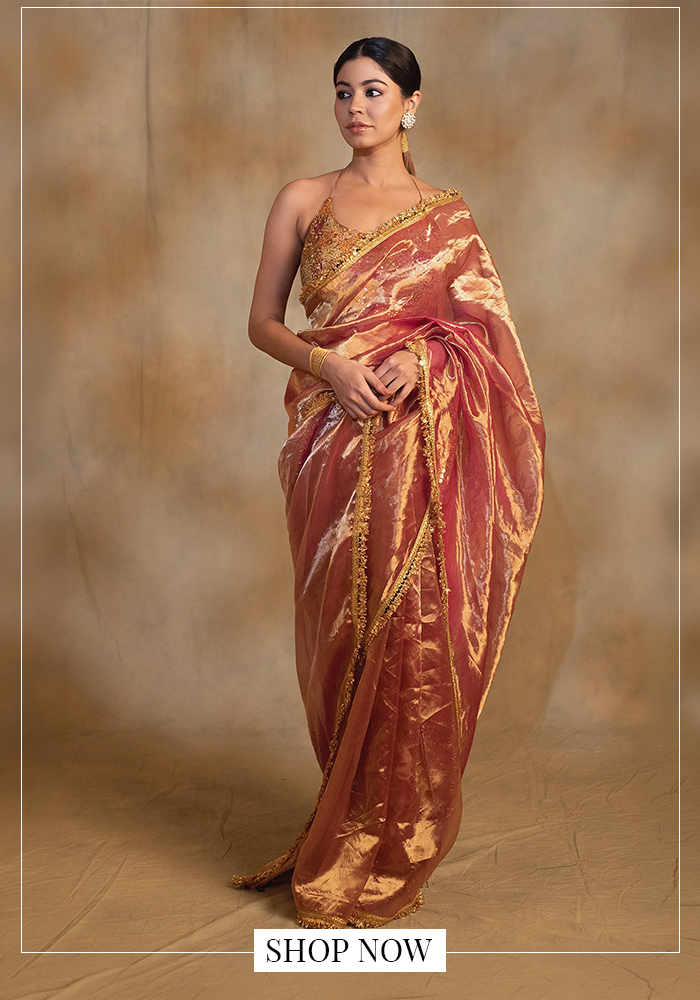
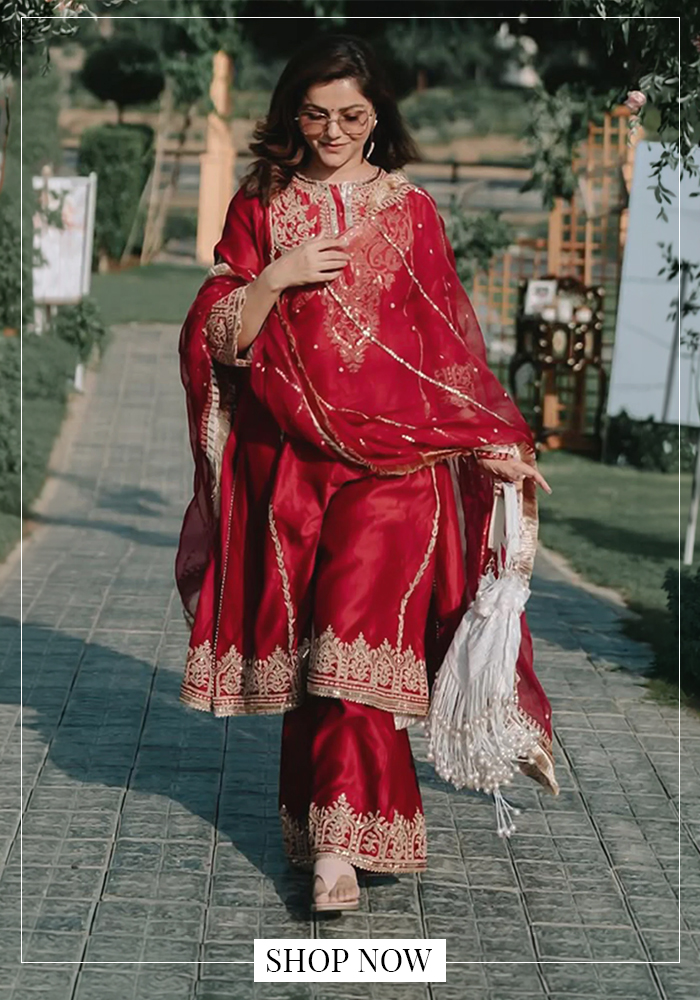
For something closer to classic, the Priyanka Raajiv Teej Kiran Lace Border Saree leans into pink silk Chanderi with a kiran lace border, understated enough for a Teej puja, luminous enough for a festive lunch that runs long into evening.
Jamdani: Motifs Woven In, Never Printed On
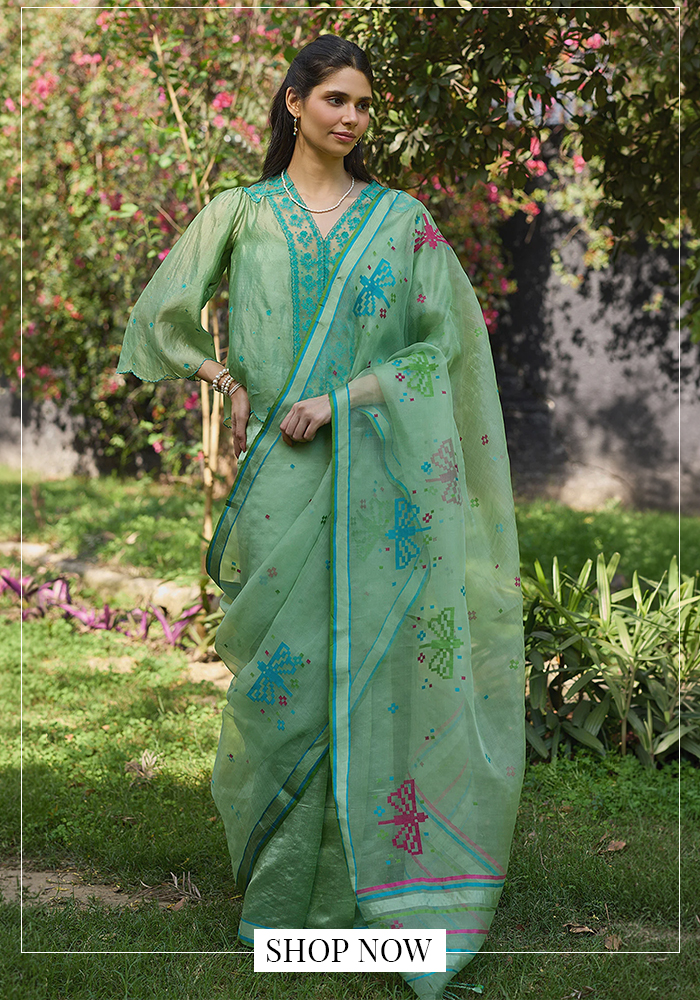
Jamdani is arguably the most patient weave on this list, a technique where motifs are woven directly into the fabric by hand, thread by thread, rather than printed or embroidered afterward. The Surmaye Garden Butterfly Green Jamdani Saree, handwoven in organza mulberry silk, scatters butterflies and tiny geometric motifs across a sheer green body, with a pallu striped in pink, blue and jade, a saree that reads like a garden caught mid-flutter.
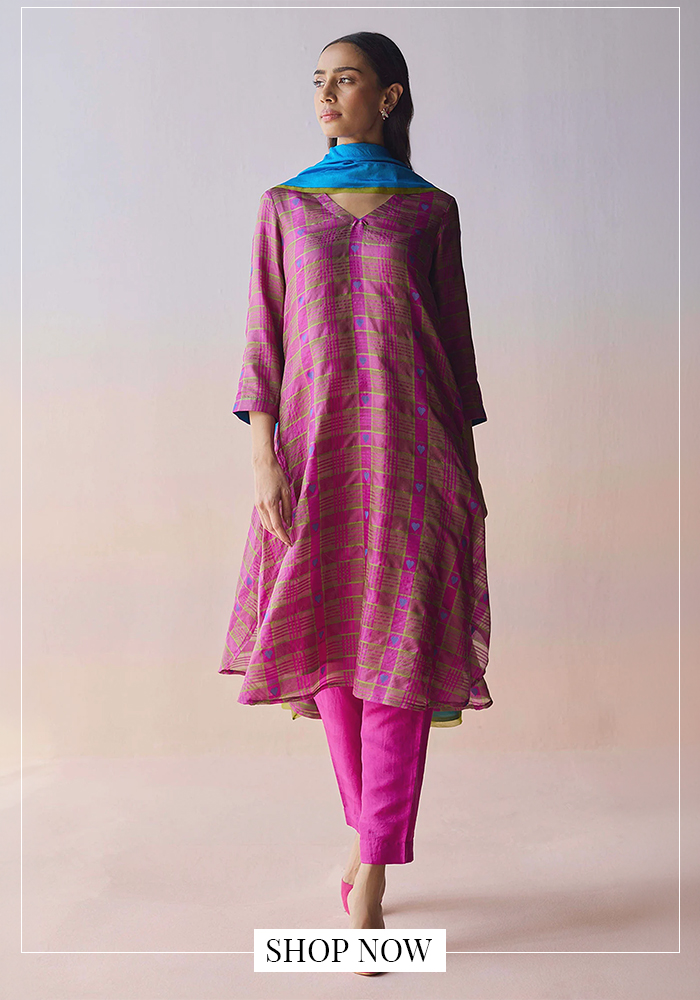
The same discipline shows up closer to the body in the Surmaye Heartglow Jamdani Kurta Set, bright pink organza silk with heart-shaped jamdani motifs woven throughout, paired with straight pants and a silk modal slip. It's proof that jamdani doesn't need six yards to make its point; three-quarter sleeves and a V-neckline do the job just fine for a festive evening.
Bandhani: Rajasthan's Original Colour Theory
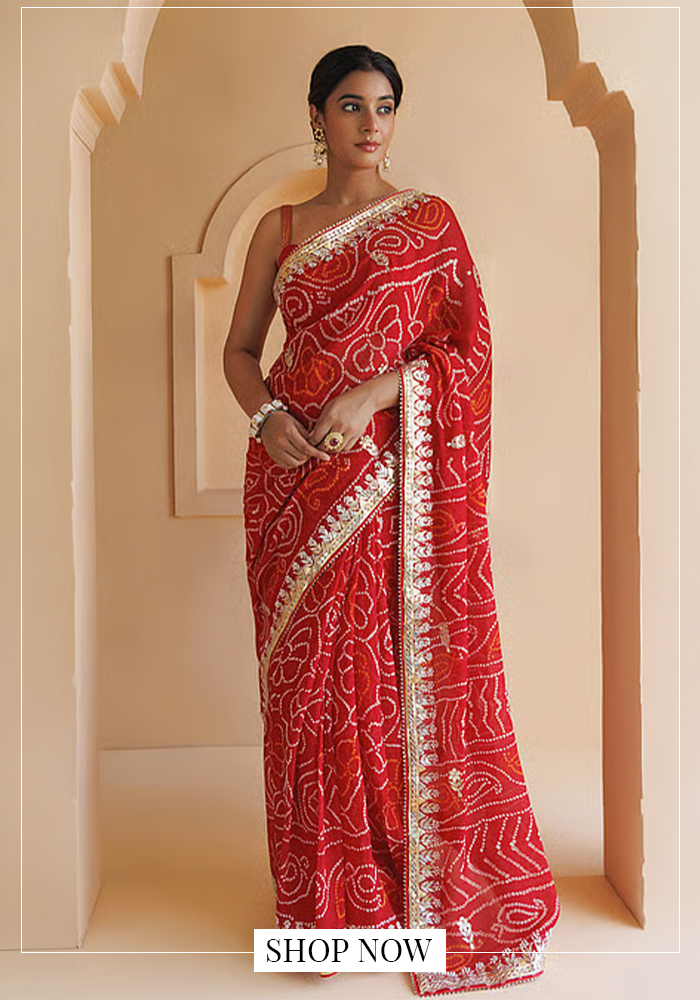
Bandhani is tie-dye elevated to an art form, thousands of tiny knots pinched into fabric before dyeing, released to reveal a constellation of dots that Rajasthan and Gujarat have been perfecting for centuries. The Geroo Jaipur Bandhani Gota Patti Saree Set pairs traditional bandhani tie-dye with gota patti embroidery on flowing red georgette, finished with a one-shoulder blouse and matching petticoat, festive, wedding-ready, and unmistakably Rajasthani.
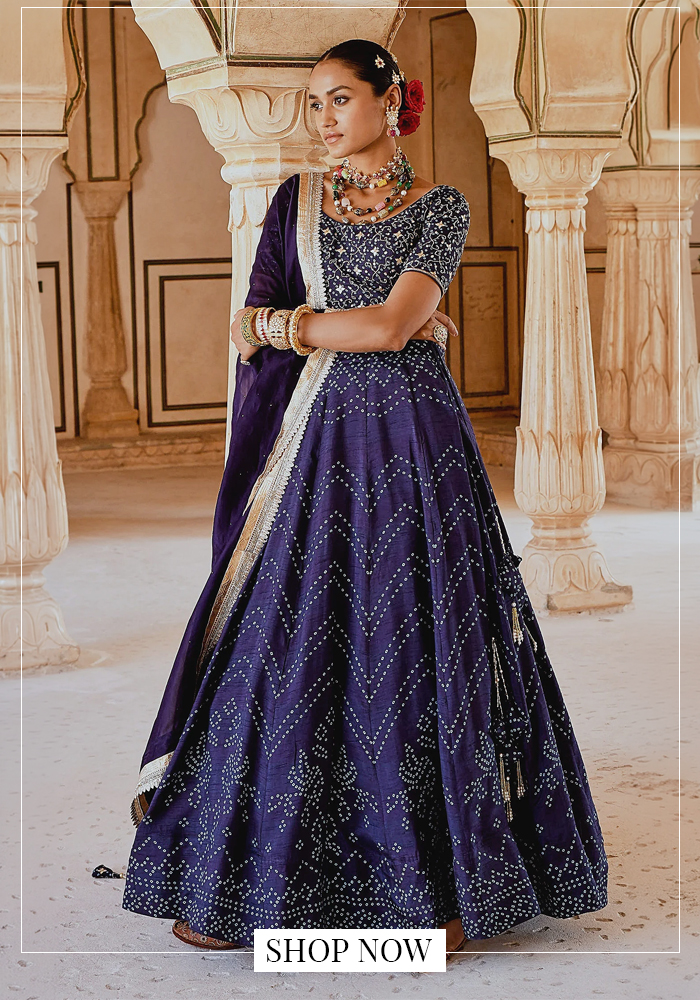
Scale that dot-work up to lehenga proportions and you get the Karaj Jaipur Fiza Navy Blue Bandhani Lehanga Set, navy muslin and organza worked in bandhani motifs and hand embroidery, tasseled and full-flared, the kind of silhouette built for a sangeet twirl.
Ikkat: The Blur That's Actually Precision
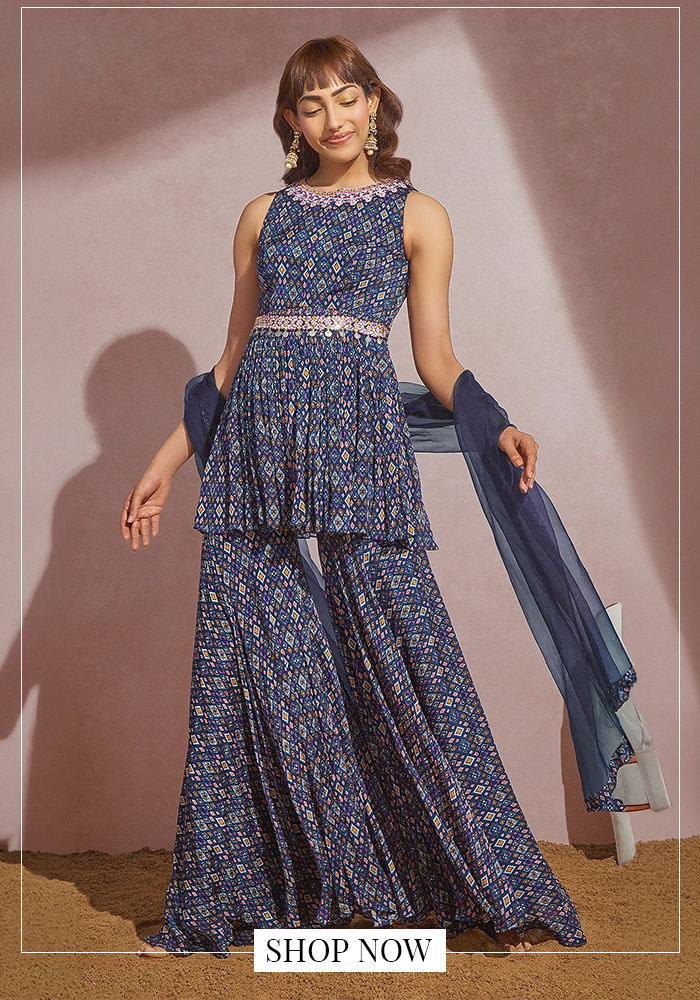
Ikkat's signature soft-focus edge, where color seems to bleed just slightly beyond its motif, isn't an accident. It comes from dyeing the yarn before weaving, so the pattern is baked into the thread itself rather than sitting on the surface. That deliberate blur gives Ikkat a painterly, almost watercolor quality no digital print can replicate. The Aneesh Agarwaal Printed Peplum Kurta Sharara Set plays that blur against navy organza and chiffon, its peplum kurta finished with a coin-tasseled belt and sharara, sangeet-ready fusion that still carries the weave's handmade texture.
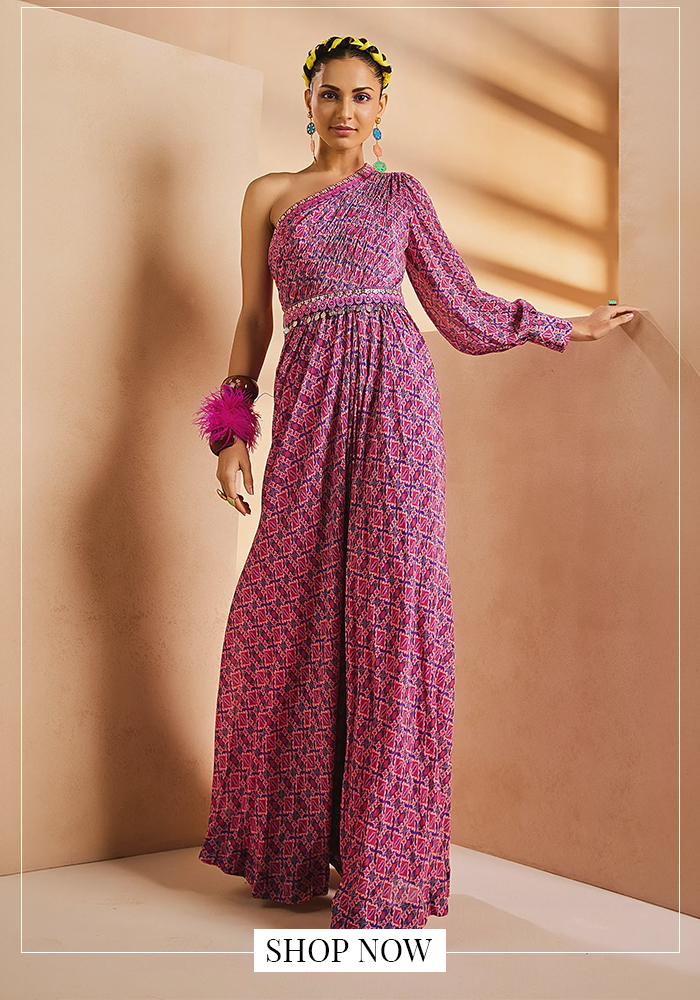
The same print goes fully western in the Aneesh Agarwaal Ikkat Print Jumpsuit With Belt, a one-shoulder purple chiffon jumpsuit with an embroidered, coin-accented belt, built for the kind of destination wedding welcome dinner where you want heritage without the drape.
Kanjeevaram: The Weave That Doesn't Do Subtle
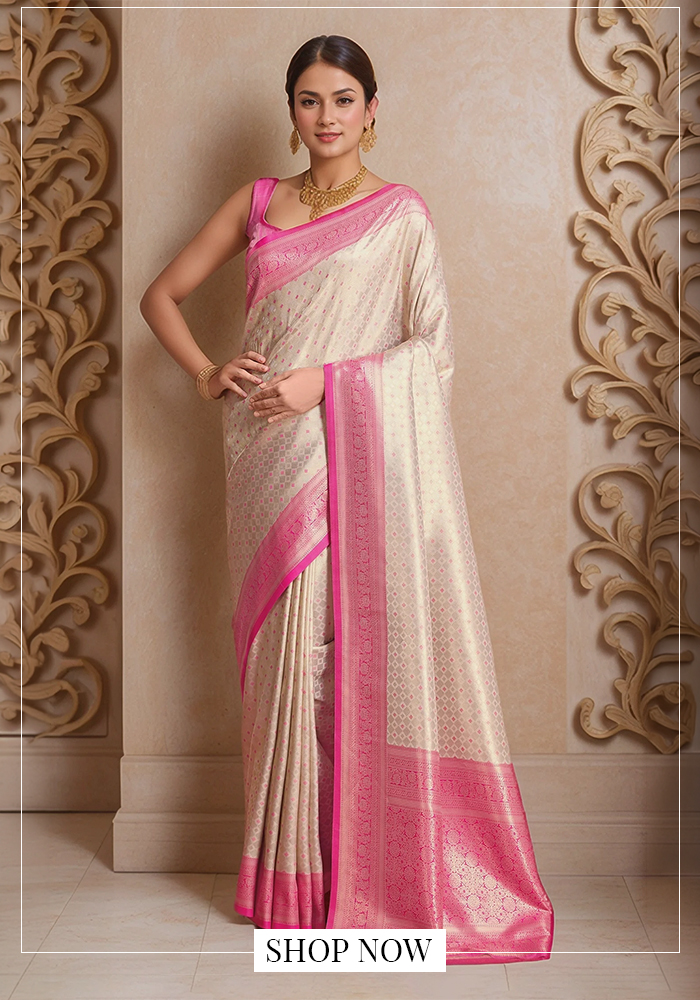
South India's answer to bridal armor, Kanjeevaram silk is woven so thick it can practically stand on its own, with borders often woven separately and joined to the body in a technique called korvai, a construction so precise the join is nearly invisible. The Khwaab By Sanjana Lakhani Geometric Floral Vine Kanjivaram Saree Set takes an off-white Kota Doria and silk base and sets geometric motifs against a contrast pink floral vine border and palla, traditional weight, updated palette.
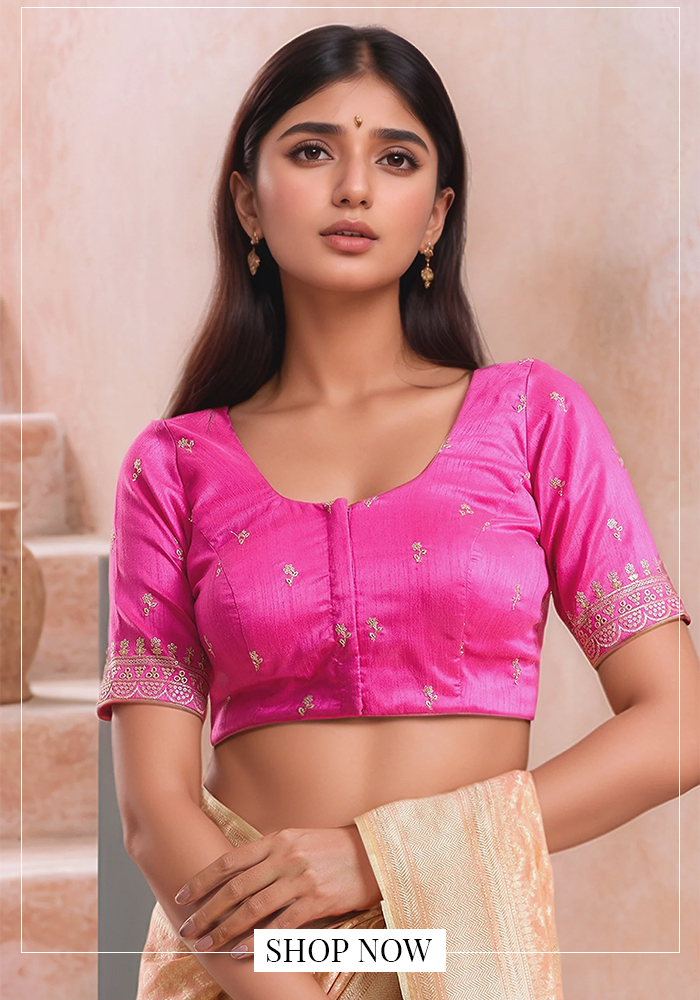
Pair it with the Khwaab By Sanjana Lakhani Floral Motif Blouse, a pink silk crop-style blouse embroidered all over in florals with a plunge back and tassel tie-up, for a saree-and-blouse pairing that treats the blouse as the statement piece it deserves to be.
Contemporary: Handloom Refuses to Stay in Its Lane
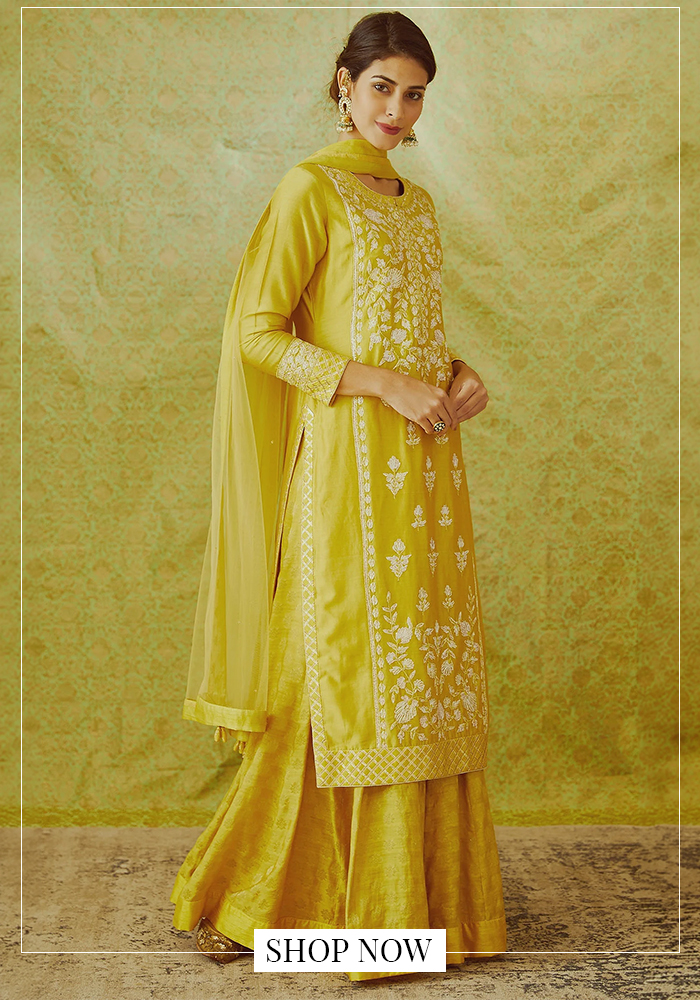
The final, quietly radical thing happening in Indian handloom right now is silhouette rebellion, designers taking centuries-old weaves and putting them into shapes their original weavers never imagined. The Shyam Narayan Prasad Chanderi Kurta Lehenga Set does this gently, keeping Chanderi's sheer mustard drape but restructuring it into a kurta-lehenga hybrid with gota patti detailing, perfect for haldi mornings that need ease of movement.
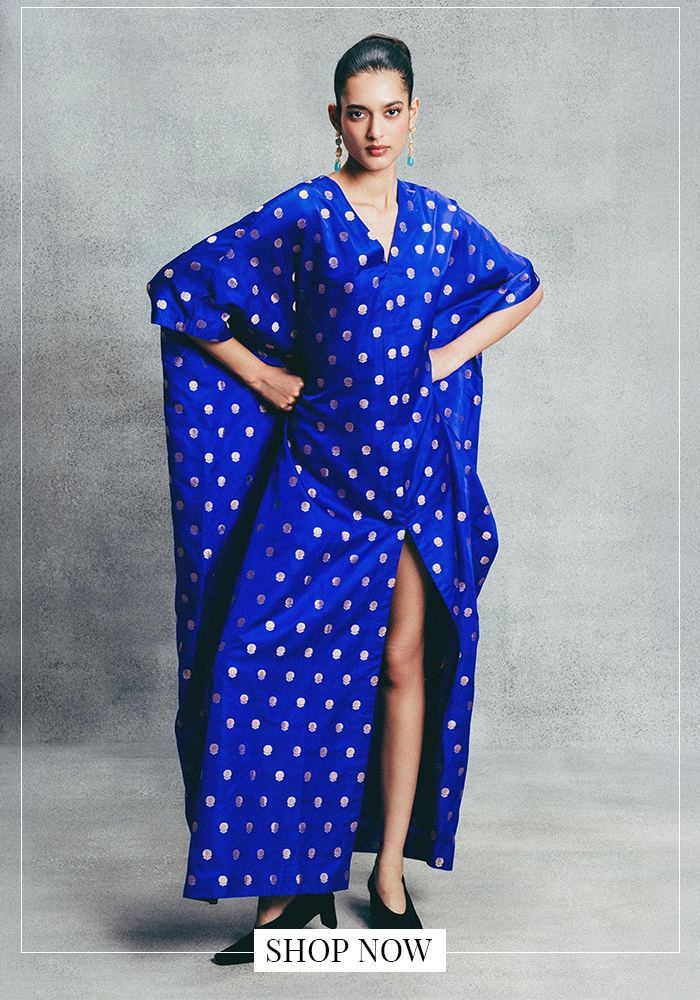
The Ekaya Banaras Banarasi Polka Dot Kaftan goes further, Banarasi's cutwork weaving technique, usually reserved for sarees, poured into a floor-length electric blue kaftan with kimono sleeves and a deep front slit. It's Varanasi's oldest craft dressed for a resort dinner.
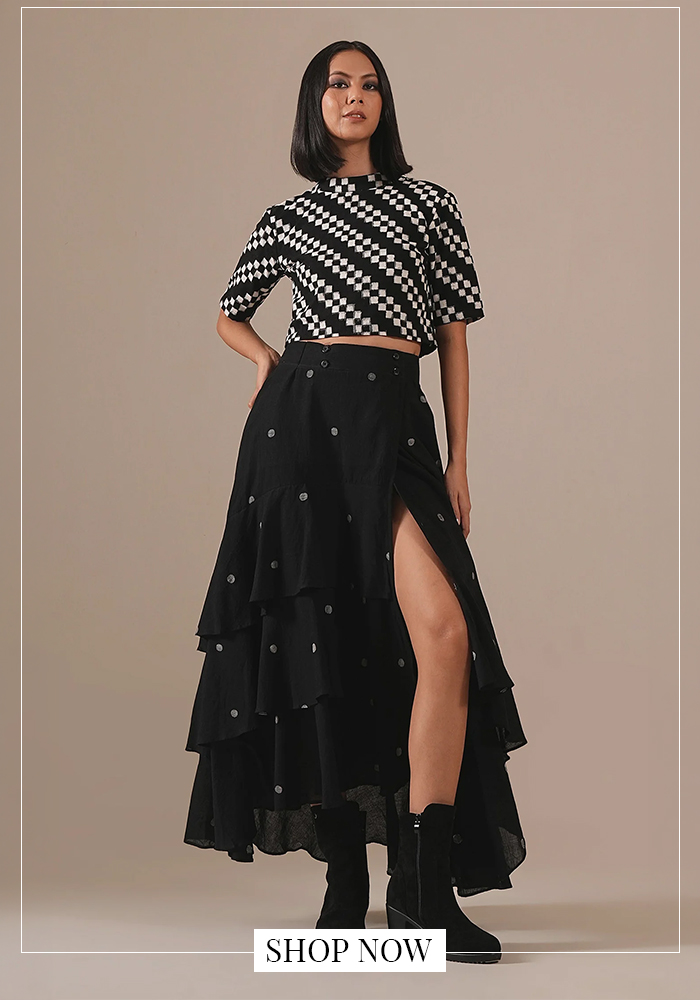
And the Indigo Dreams Handwoven Jamdani Top and Skirt Set completes the argument entirely, a mandarin-collar ikat top paired with a layered, ruffle-hemmed jamdani wrap skirt in black cotton. Two handloom techniques, one thoroughly modern two-piece, built for a party that doesn't care what century your fabric came from.
The Thread That Ties It Together
What connects a Banarasi booti border to a bandhani lehenga to a jamdani wrap skirt isn't just geography, it's the insistence that clothing can still be made by hand in a world that has largely stopped asking it to be. This National Handloom Day, wearing one of these pieces isn't just a styling choice. It's a small, deliberate act of keeping a loom running somewhere in India.