


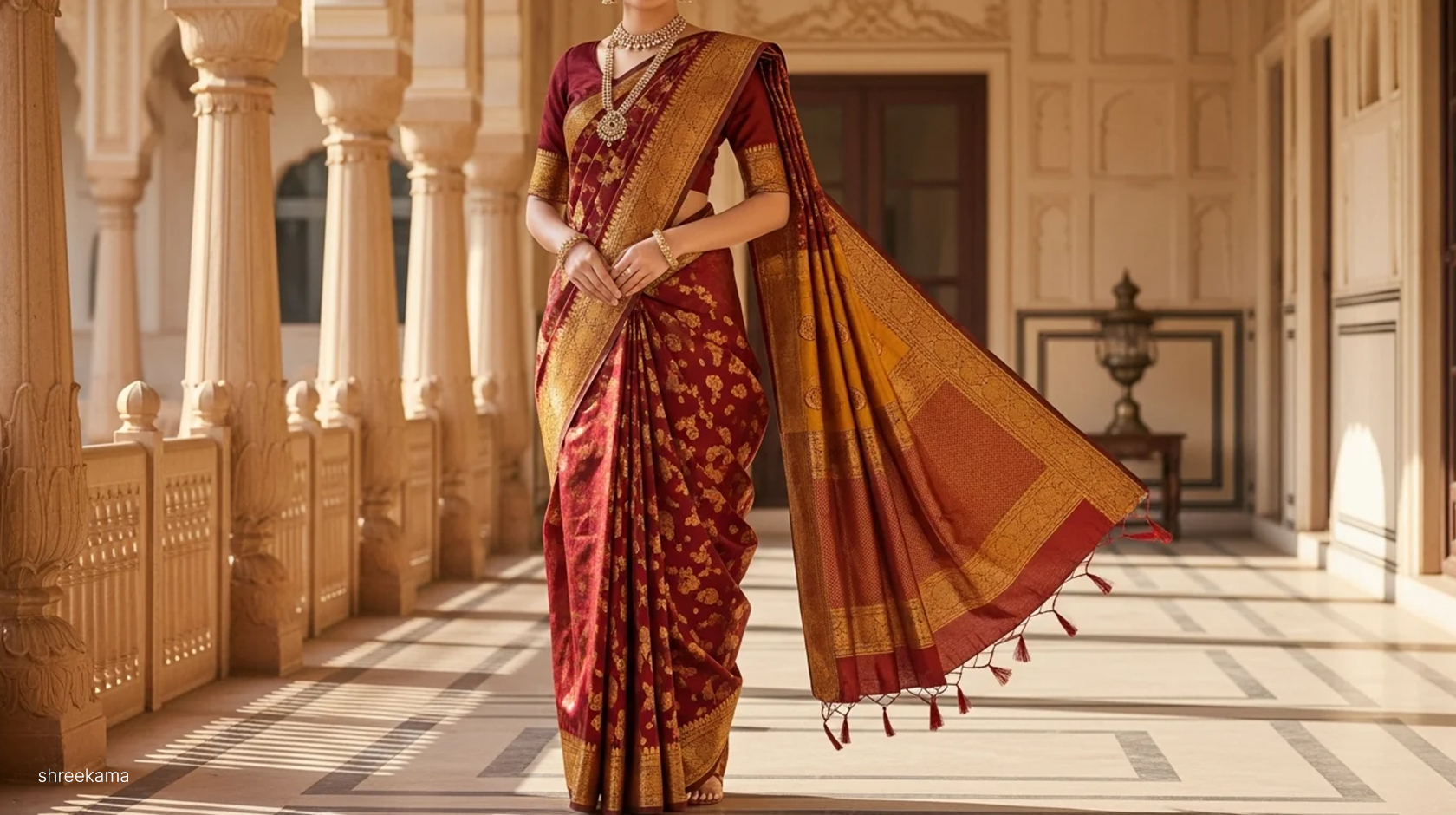
A Nauvari saree is a traditional nine-yard Maharashtrian saree draped in a dhoti-style without a petticoat. To drape one, tuck the center pleat at the waist, pass fabric between the legs, secure the back pleats, and drape the pallu over the left shoulder. The full process takes 15–20 minutes.
Few garments carry as much cultural weight as the Nauvari saree. Worn by Maharashtrian women for centuries—at festivals, weddings, and religious ceremonies—this nine-yard drape is bold, graceful, and surprisingly practical once you know the steps.

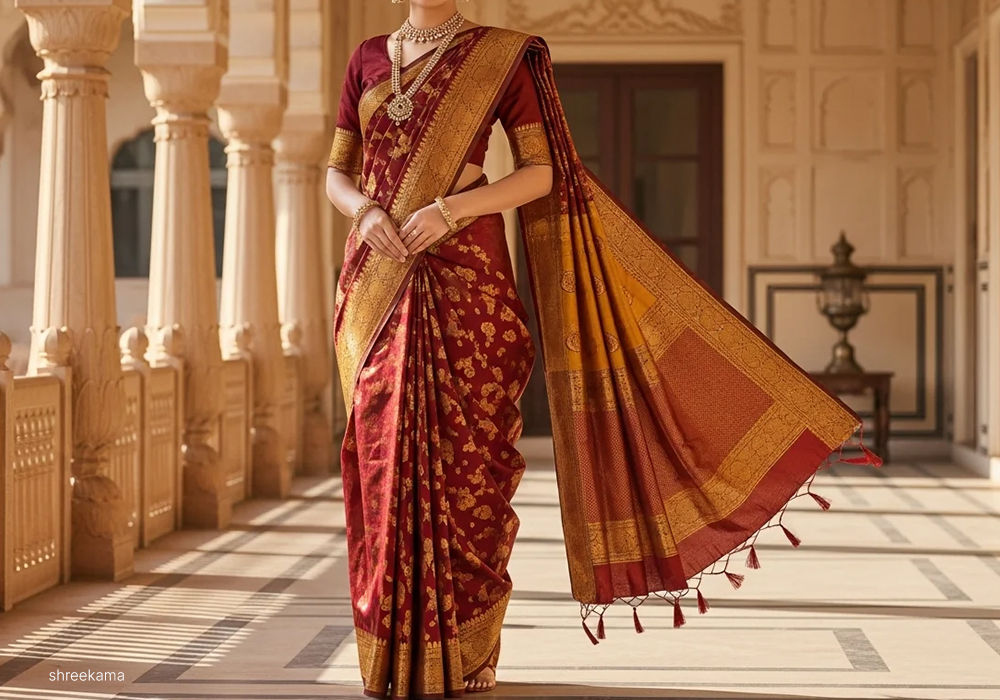
This guide walks you through everything: what you need, how to drape it, and how to style it for any occasion.
What Is a Nauvari (Nine-Yard) Saree?
The word Nauvari comes from nau (nine) and vari (yards). Unlike a standard six-yard saree, the Nauvari is draped in a dhoti-style, with the fabric passing between the legs for ease of movement. Traditionally worn without a petticoat, it is the signature drape of Maharashtra and remains a staple at events like Ganesh Chaturthi and Gudi Padwa.
What You Need Before You Start
Fabric: Silk Nauvari sarees (particularly Paithani or Kashta) are traditional choices for weddings. Cotton works well for festivals and everyday wear.
Petticoat: Most traditional Nauvari drapes skip the petticoat entirely. If you prefer one for comfort, choose a fitted, ankle-length style in a matching color.
Accessories: Gather safety pins (at least 4–6), a blouse in a complementary color, and a waist belt (kamarpatta) if you want added support.
Step-by-Step Nauvari Saree Draping Guide (Maharashtrian Style)
Step 1: Start at the center
Hold the saree at its center point. Tuck this midpoint firmly into the front waistband, right at the navel.
Step 2: Create the front pleats
Take the fabric on your right side and make 5–7 neat pleats. Tuck them into the waistband, pointing slightly left.
Step 3: Pass the fabric between the legs
Take the remaining fabric from the right side, pull it between your legs from front to back, and tuck it securely into the back waistband. This creates the signature dhoti silhouette.
Step 4: Form the back pleats
With the fabric on your left side, create another set of pleats. Tuck these into the back waistband, fanning them outward for a fuller look.
Step 5: Drape the pallu
Bring the remaining fabric (the pallu) from the back, across the right hip, over the front, and drape it over the left shoulder. Pin it securely at the shoulder and, if needed, at the waist.
Tips for Keeping the Nauvari Drape in Place
- Use safety pins generously—one at each major tuck point.
- A kamarpatta (waist belt) adds structure and prevents the fabric from loosening during movement.
- Starch the saree lightly before draping to help pleats hold their shape.
- Practice the drape once or twice before the event day.
What to Pair with a Nauvari Saree
Jewelry: Traditional Maharashtrian gold jewelry works best—think nath (nose ring), thushi (short necklace), bangles, and jhumkas.
Footwear: Kolhapuri chappals are the classic pairing. Their flat, handcrafted leather design complements the drape's earthy elegance perfectly.
Blouse: A deep-neck or boat-neck blouse in a contrasting color adds a festive touch.
When Is the Right Time to Wear a Nauvari Saree?
The Nauvari saree fits naturally into several occasions:
- Ganesh Chaturthi – A popular choice for aarti and processions
- Gudi Padwa – Maharashtra's new year celebration
- Weddings – Worn by brides, mothers, and guests alike
- Haldi and mehendi ceremonies – Bright cotton Nauvaris shine here
- Classical dance performances – The dhoti style allows full freedom of movement
Frequently Asked Questions
Can a Nauvari saree be draped without prior experience?
Yes. With a nine-yard saree, there is enough fabric to adjust as you go. Watching a video tutorial alongside this guide helps on the first attempt.
Is a petticoat required for Nauvari draping?
Traditionally, no. However, many women today choose a fitted petticoat for comfort, especially during long events.
How long does it take to drape a Nauvari saree?
Most people complete the drape in 15–20 minutes. With practice, it can take as little as 10.
What is the difference between Nauvari and Kashta draping?
Kashta is another term for the same style. Both refer to the dhoti-inspired Maharashtrian drape using a nine-yard saree.

