There is a particular kind of October evening that only British Navratri knows. You leave the house in a puffer coat over your outfit, park three streets away from the community hall, and by 11pm the room is warm enough that the windows are fogged and someone's dupatta is on the floor by the dhol.
That evening asks something specific of an outfit. Not a bridal-adjacent lehenga that needs two people to zip and a cloakroom to survive. Something that moves at the speed of a three-taali sequence, layers over thermals without shame, and still photographs well under the strip lighting of a Harrow hall.
Here are seven silhouettes doing exactly that.
1) The Pre-Draped Saree: Bandhani Without the 20-Minute Wrestle
The saree is the emotional centre of Navratri dressing, bandhani especially, with its tie-dye thumbprints that read as Gujarat from across a room. The problem has never been the saree. It's the pleating, the safety pins, and the sinking realisation at 8pm that you're doing this in your mum's bathroom mirror.
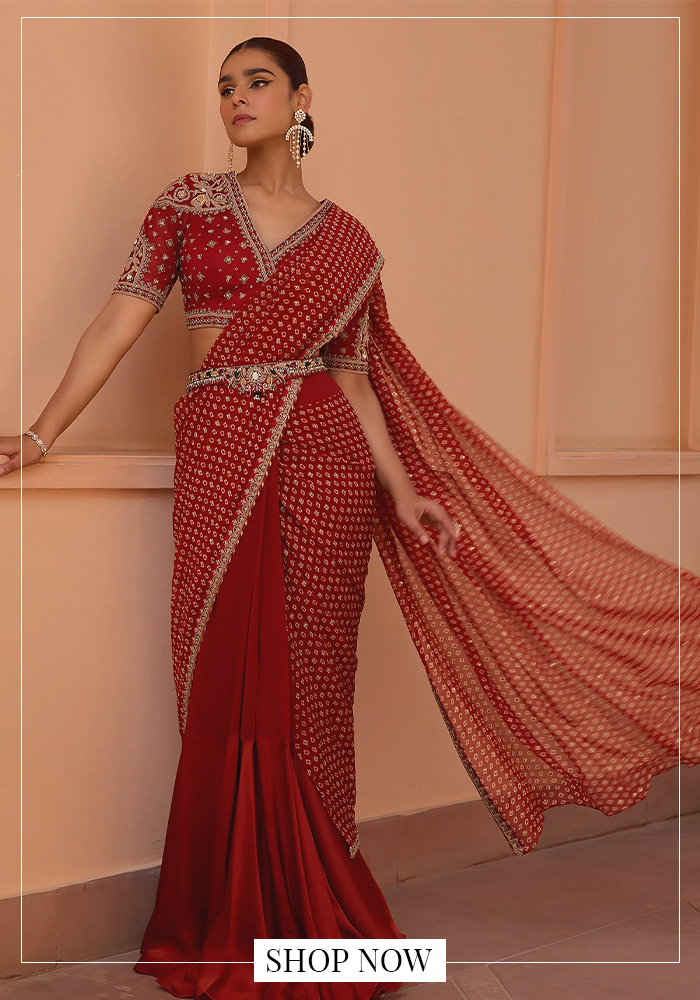
A pre-draped version removes the entire negotiation. The bandhani print pre-draped saree set arrives already resolved: you step in, you're done, and you spend the saved half-hour eating instead. For anyone travelling to garba straight from work — which, in the UK, is most people, this is the most practical luxury on the list
2) The Cape Sharara: Built-In Answer to British Weather
Every UK Navratri outfit has a secret second job: surviving the car park. Capes do that job beautifully, and they do it without the sad compromise of a cardigan over embroidery.
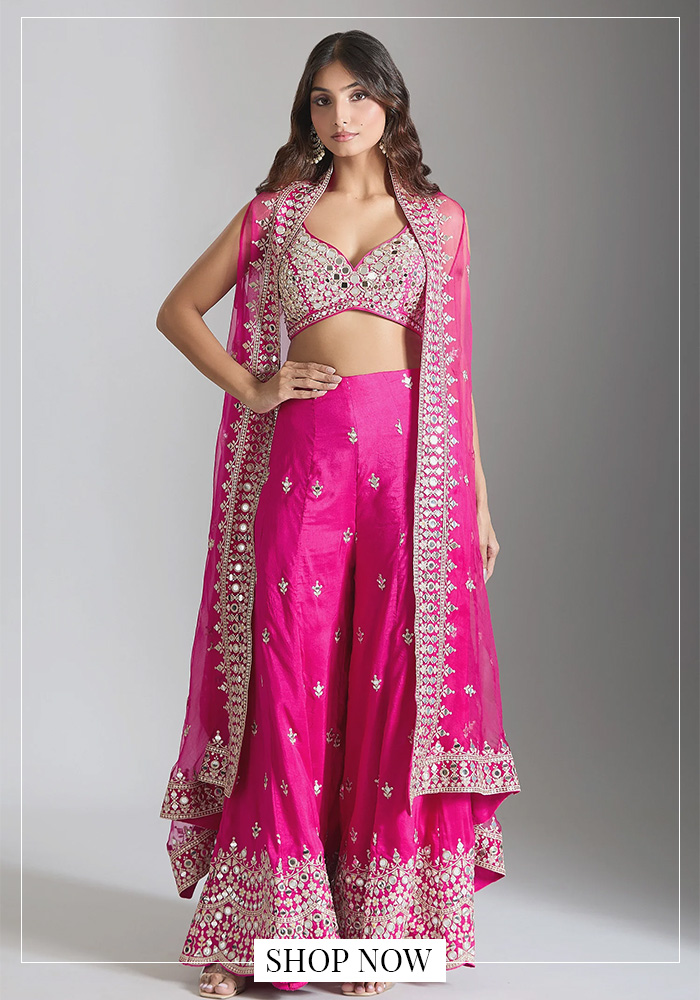
The Mughal Bloom embroidered cape and sharara set treats the cover-up as the main event rather than an afterthought. The cape moves when you do, which matters enormously in a form where your arms are always above your head, and the sharara's volume does the dramatic work your feet are too busy to do. Warmth, drama, and zero styling decisions required.
3) The Sharara Saree: The Hybrid That Ends the Debate
Some nights you want the saree's drape and the sharara's swing, and choosing feels like a small betrayal. The sharara saree is the diplomatic solution, the fall and the fabric of a saree, the freedom of trousers underneath.
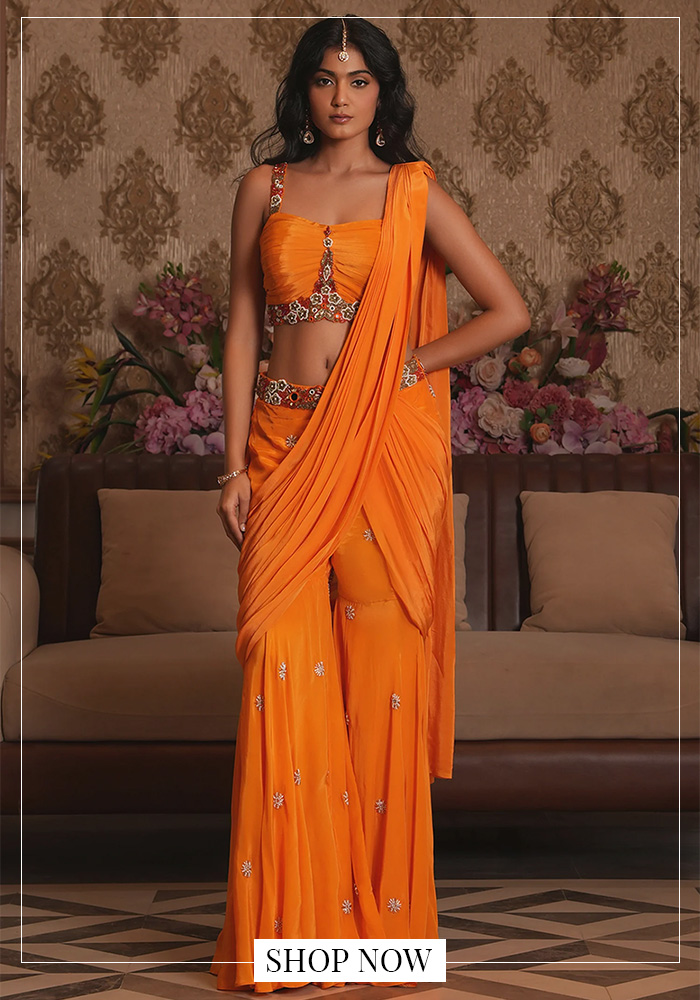
The Amara draped sharara with blouse is the one to reach for when the dance floor is properly full and you need to move without checking your hem every four beats. It reads traditional in photographs and behaves like separates in reality.
4) The Dhoti Set: Colour That Carries Across the Room
Navratri colour discipline is real, someone in your group chat has already shared the nine-day chart. But mustard on day two is one thing; mustard that catches the light every time you turn is another.
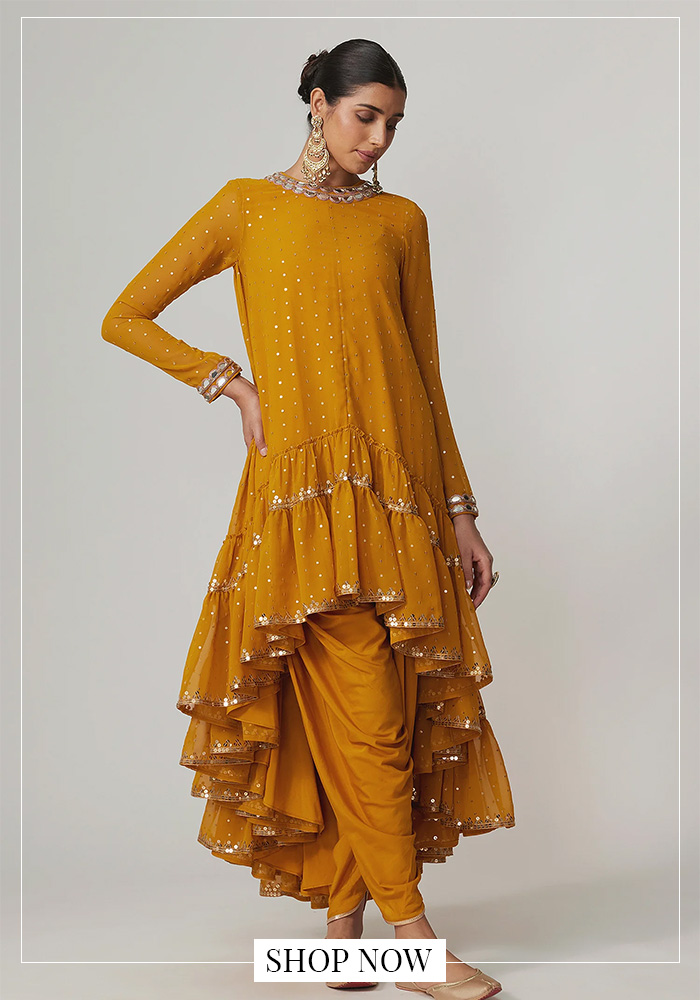
The mustard sequin embroidered kurta set works because sequins and dandiya were built for each other. Under bad hall lighting, texture does what colour alone can't: it moves. The dhoti cut keeps the whole thing from tipping into formality, which is exactly right for a night that ends with everyone sitting on the floor eating khichdi.
5) The Short Anarkali: Zardozi, Edited Down
The full-length anarkali is magnificent and, on a crowded dance floor, a liability — someone will step on it, and that someone will be you.
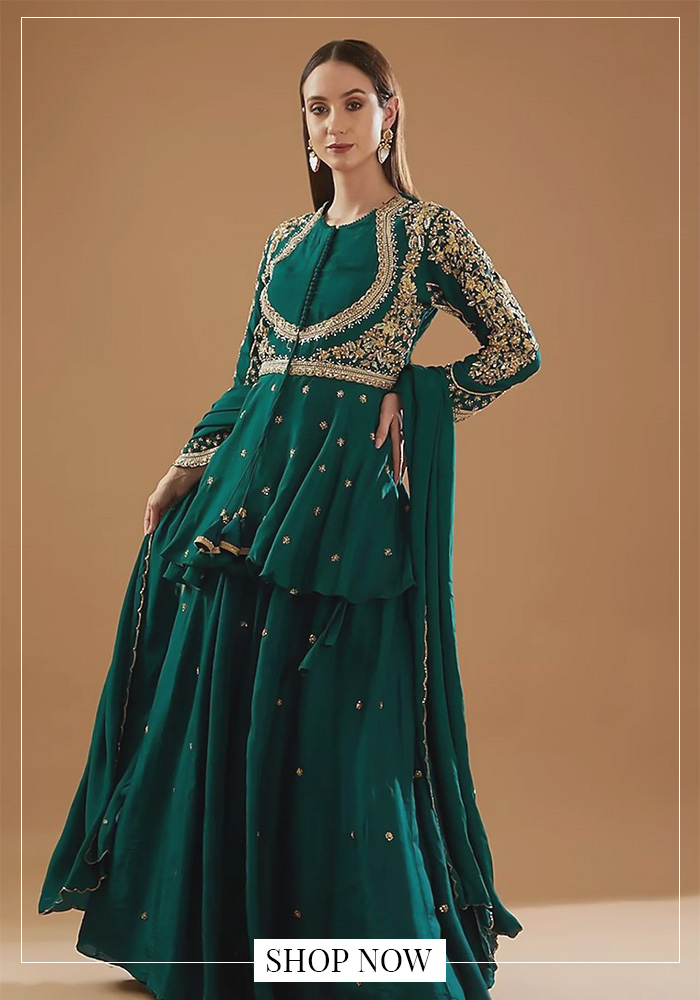
Baidehi's zardozi work short anarkali skirt set keeps the craft and loses the hazard. Zardozi is old, ceremonial, heirloom-adjacent embroidery; putting it on a shortened silhouette is a small act of editing that makes the whole thing feel current rather than inherited. Pairs well with boots, which is a sentence only a UK Navratri guide gets to write.
6) The Peplum Kurta: Structure for the Non-Dancers
Not every night is a nine-hour garba. Some are temple visits, family dinners, the aarti-then-home evenings that make up the quieter half of Navratri.
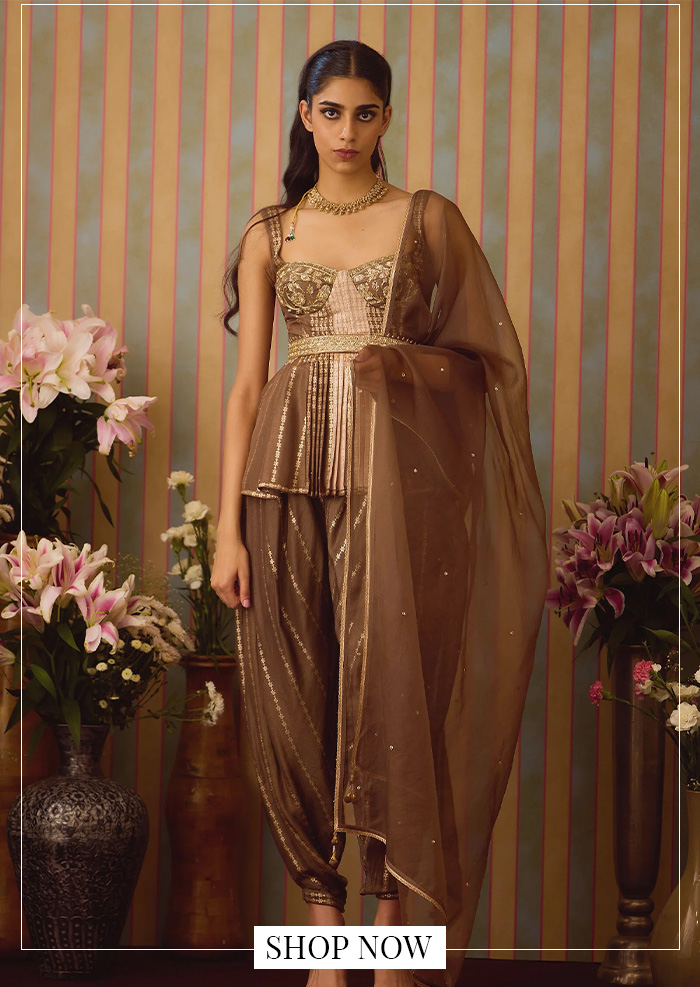
The Bloom Vine embroidered peplum kurti and dhoti pant set is the outfit for those. The peplum gives shape without a fitted lehenga's demands, and the dhoti pants make it comfortable enough to sit through a long evening. It's the piece in this edit most likely to reappear at a Diwali party in six weeks.
7) The Draped Dhoti: For the Last Night, When It Counts
By day nine you've seen everyone's outfits twice. This is where the draped dhoti earns its place, a silhouette that looks engineered rather than assembled.
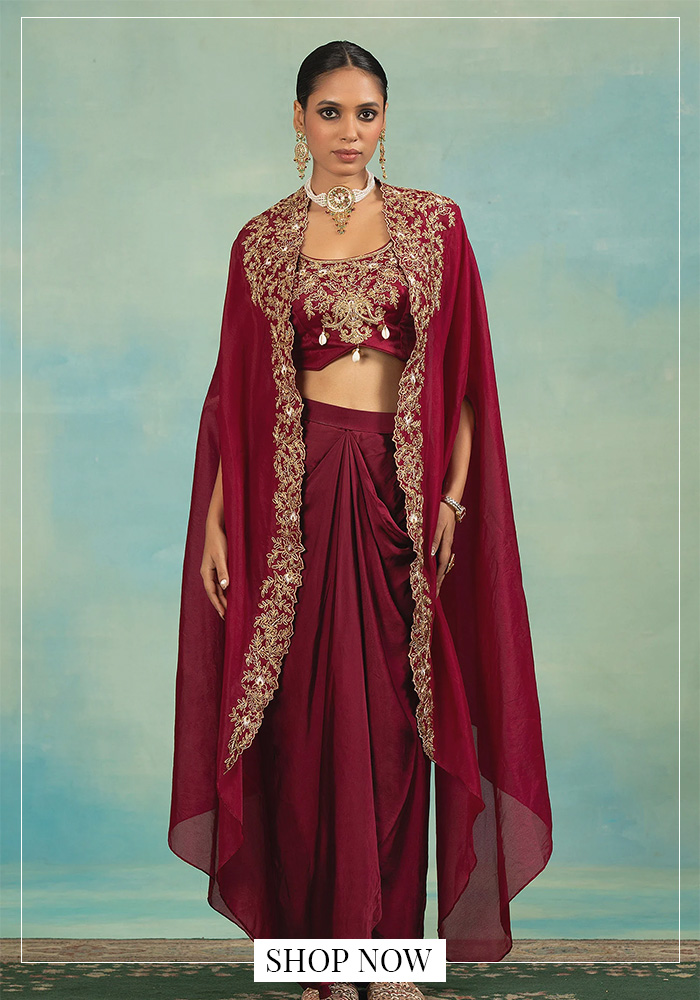
The dori and cutdana embroidered cape blouse and dhoti set stacks all three ideas at once: the cape's warmth, the dhoti's movement, the cutdana's light-catch. It's the most architectural look here, which makes it the right closing argument for a festival that builds towards its final night.
Nine Nights, Properly Planned
The through-line across all seven: movement first, drama second, and nothing that needs rescuing at midnight. Build the week around two or three of these, rotate the jewellery, keep a coat in the car, and let the lehengas sit this one out.