


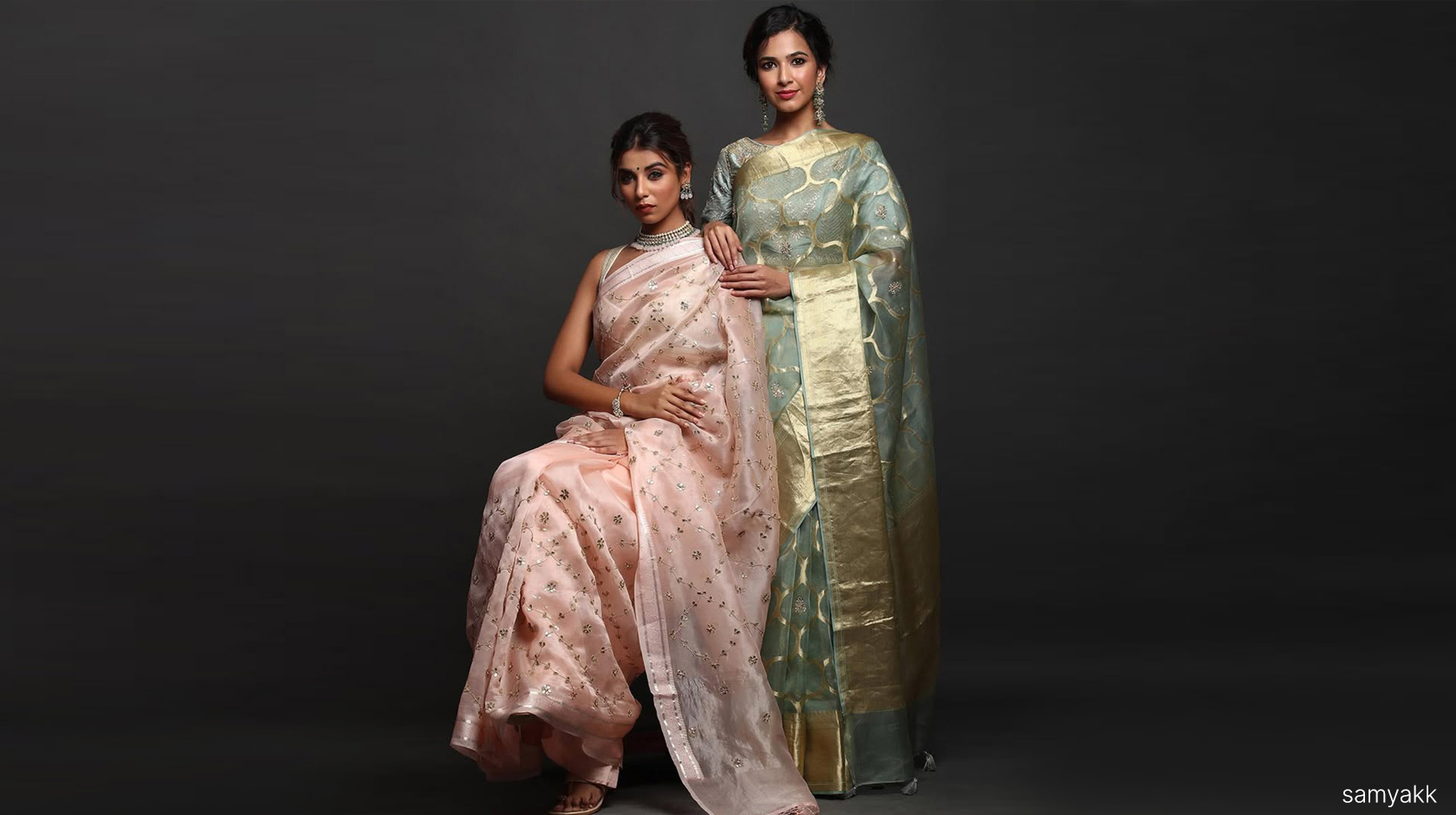
Organza sarees are crisp, sheer, and structured—ideal for festive and formal events. Tissue sarees are lightweight, slightly metallic, and more fluid in drape, making them a popular pick for weddings and celebrations. Both are elegant, but the right choice depends on the occasion and how you want the fabric to fall.
Choosing between an organza and a tissue saree can feel surprisingly tricky. Both fabrics are sheer, delicate, and undeniably glamorous—yet they wear very differently on the body. One holds its shape; the other moves with you. One catches light softly; the other shimmers boldly.
This guide breaks down the key differences so you can shop with confidence.

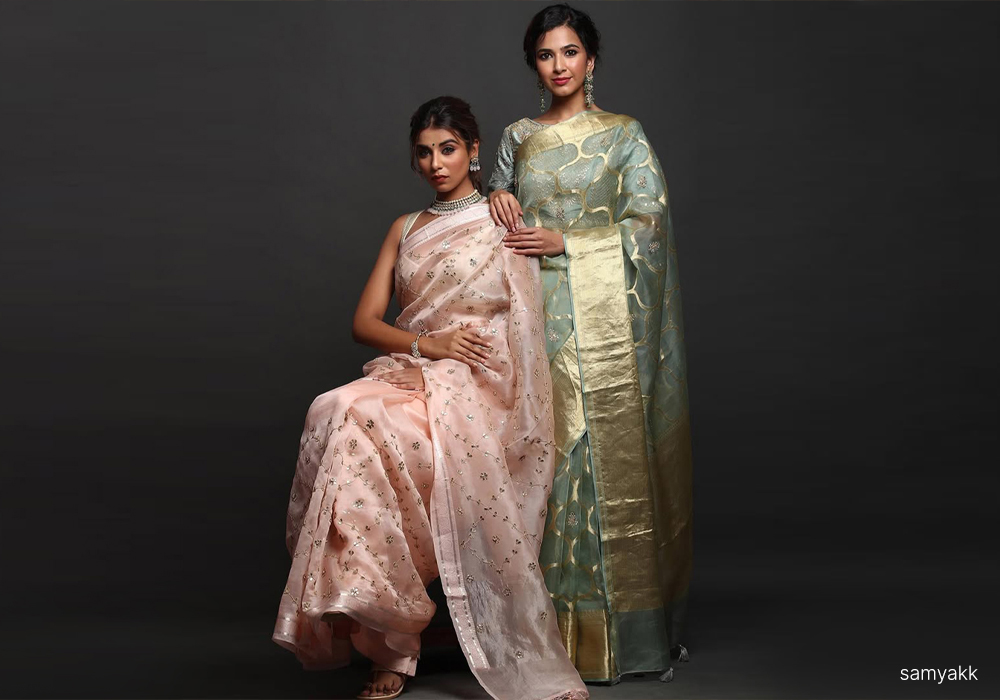
How Do Organza and Tissue Sarees Differ in Fabric and Feel?
Organza is a plain-weave fabric traditionally made from silk, though synthetic versions are now widely available. Its defining characteristic is stiffness—organza holds structure, resists draping too loosely, and creates clean, defined pleats. The texture is smooth but firm to the touch.
Tissue fabric, by contrast, is woven with fine metallic threads (typically gold or silver zari) interlaced with silk or synthetic yarn. This gives tissue sarees their signature luminous quality—a soft, all-over sheen that catches light from every angle. The fabric is thinner and more pliable than organza, which affects how it drapes and moves.
Key fabric differences at a glance:
- Weight: Organza is slightly heavier and more structured; tissue is feather-light
- Texture: Organza feels crisp; tissue feels smooth and almost liquid
- Sheen: Organza has a subtle sheen; tissue has a metallic, luminous glow
- Durability: Organza is generally more resilient; tissue requires careful handling
How Does Each Saree Drape Differently?
Draping style matters as much as fabric choice—and these two sarees behave quite differently on the body.
Organza sarees drape with volume and structure. The pleats stay sharp and fanned-out rather than clinging to the body. This makes organza particularly flattering for those who prefer a more defined silhouette, and it lends itself well to elaborate pallu styling. Browse Aza Fashions' organza saree collection to explore embroidered and printed styles that showcase the fabric's natural crispness.
Tissue sarees drape more fluidly. The lightweight weave means pleats fall softly, and the pallu tends to flow rather than fan. This creates an effortlessly graceful look that suits a more understated, elegant aesthetic.
Draping tip: For tissue sarees, neatly pinned pleats and a structured blouse help maintain shape throughout the event. For organza, the fabric largely does the work for you.
Which Occasions Call for Organza vs Tissue Sarees?
Organza sarees suit occasions where you want to make a defined, polished impression:
- Festival celebrations (Diwali, Navratri)
- Formal receptions and cocktail events
- Office parties and corporate gatherings
Tissue sarees shine brightest at:
- Weddings and bridal functions (as a guest or close family member)
- Sangeet and Mehendi ceremonies
- Festive evenings where you want to glow without going heavy
For wedding-season shopping, explore Aza Fashions' tissue saree edit for zari-rich styles suited to celebratory occasions.
Frequently Asked Questions
Is organza or tissue saree better for summer wear?
Tissue sarees are the better warm-weather choice. The lightweight weave allows more airflow, making tissue more comfortable during outdoor or daytime events.
Can tissue sarees be worn daily?
Tissue sarees are delicate and best reserved for special occasions. The metallic threads can snag with regular wear, so they're not ideal for everyday use.
Which fabric is easier to drape for beginners?
Organza is generally easier to manage because the structure holds pleats in place. Tissue requires a more careful hand due to its slippery, flowing nature.
How should I care for a tissue saree?
Dry cleaning is recommended for tissue sarees to protect the zari threads. Store flat or loosely rolled in a muslin cloth to prevent the metallic weave from creasing or tarnishing.
Are organza sarees suitable for weddings?
Absolutely. Heavily embroidered or hand-painted organza sarees work beautifully for wedding guests and even brides seeking a lighter bridal alternative.

