


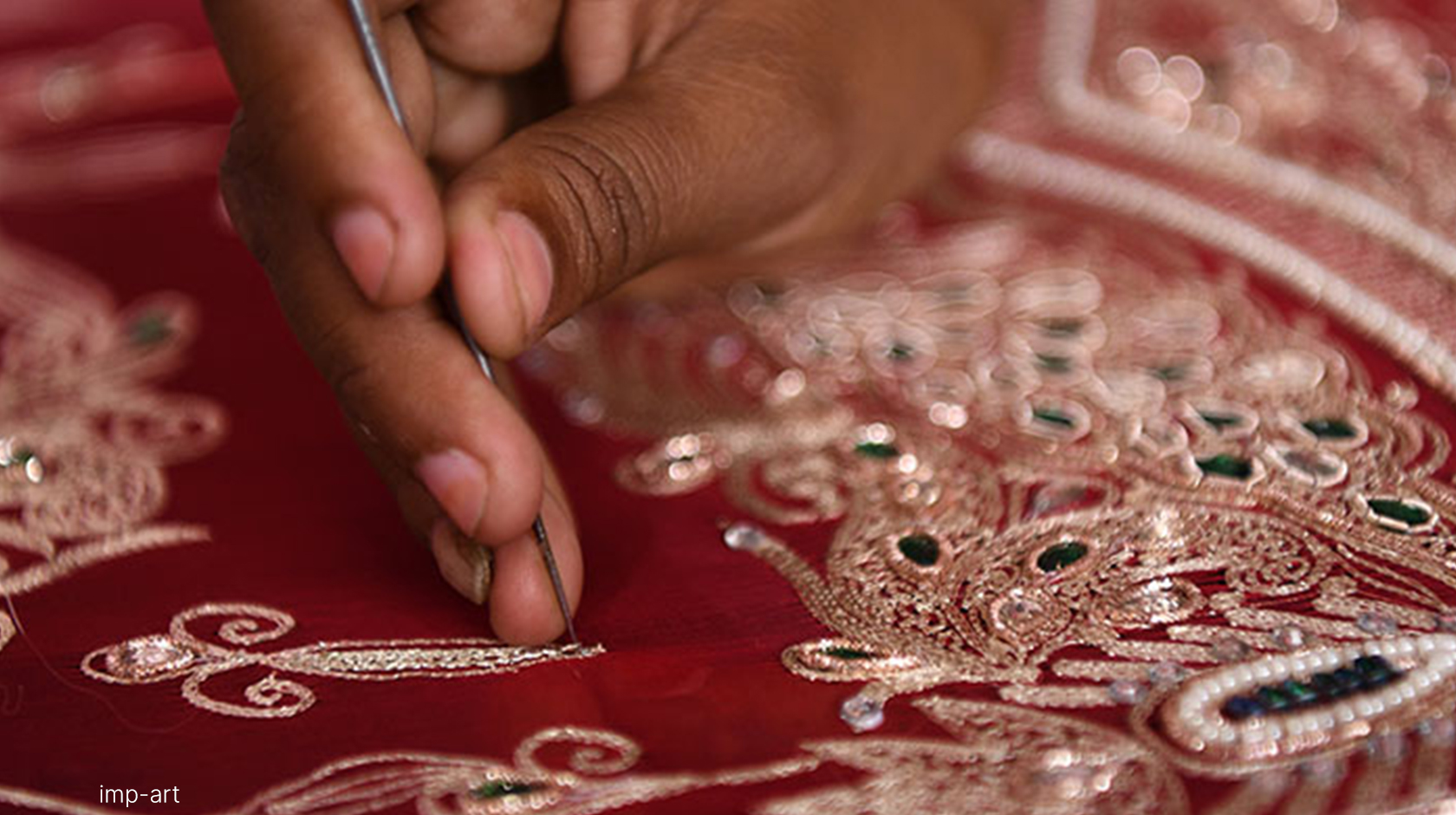
Zari is a metallic thread—typically gold or silver—woven directly into fabric to create shimmering patterns. Zardozi is a form of embroidery that uses Zari thread, along with beads, sequins, and other embellishments, stitched onto fabric by hand. Every Zardozi piece uses Zari, but not all Zari work is Zardozi.
These two terms appear constantly in Indian fashion—on garment labels, in designer descriptions, across bridal lookbooks. Yet they're regularly confused, even by seasoned shoppers. That's partly because Zardozi is made with Zari, making the overlap feel natural. But understanding what sets them apart changes how you read a garment, assess its craftsmanship, and decide what's worth the investment.
This guide covers exactly that.

How Do Zari and Zardozi Differ in Technique?
The clearest way to distinguish the two is to look at how each is made.
Zari is the raw material—a fine metallic thread traditionally made from real gold or silver wire wound around a silk core. Today, most commercial Zari uses copper wire coated in gold or silver to keep costs accessible. Zari thread is woven into fabric on a loom, becoming part of the textile's base structure. This is why you'll find it in woven fabrics like Banarasi silk, Kanjivaram sarees, and brocade lehengas—the shimmer is built into the cloth itself, not added afterward.
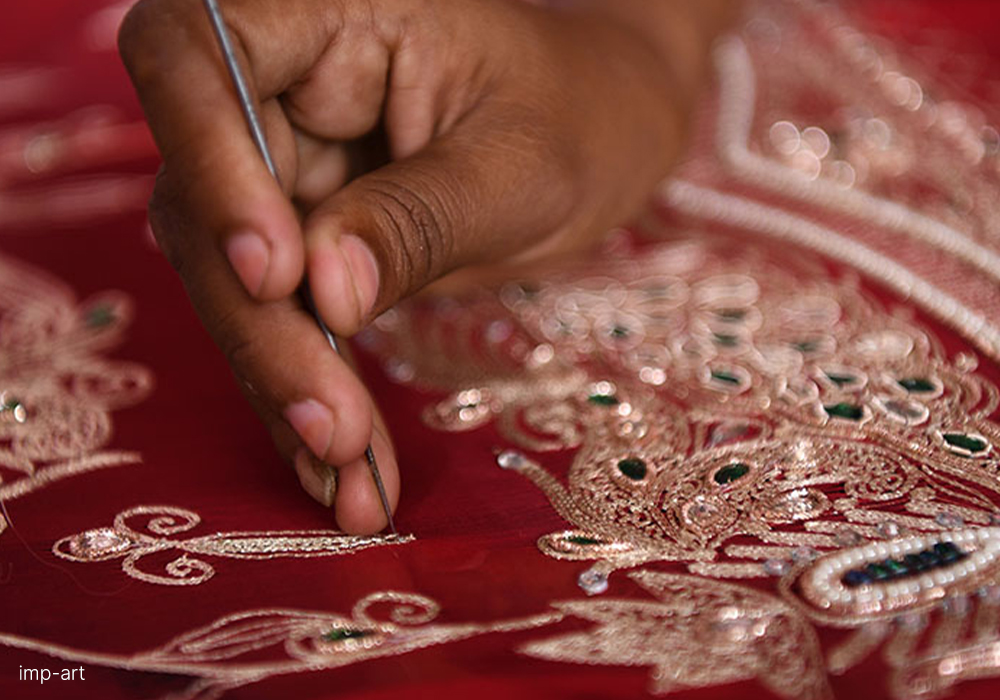
Zardozi is an embroidery technique that uses Zari thread as its primary medium. Skilled artisans stitch the thread onto the surface of a fabric by hand, typically using a hooked needle called an aari. What makes Zardozi distinct is its dimensionality—embroiderers layer threads to create relief, and often incorporate beads, sequins, pearls, and semi-precious stones alongside the Zari. The result is raised, textured, and sculptural in a way that woven Zari simply cannot be.
Zardozi traces its origins to Persia and arrived in India during the Mughal era, flourishing in cities like Lucknow, Delhi, and Agra. It became the embroidery of royal courts—elaborate enough for kings and opulent enough for bridal trousseaus.
Key differences at a glance:
- What it is: Zari is a metallic thread; Zardozi is an embroidery technique
- Application: Zari is woven into fabric; Zardozi is hand-stitched onto fabric
- Texture: Zari creates a flat, integrated shimmer; Zardozi is raised and three-dimensional
- Complexity: Zardozi is more labor-intensive and typically more expensive
- Embellishments: Zari uses thread alone; Zardozi incorporates beads, sequins, and stones
How Does Each Look on a Garment?
The visual difference between Zari and Zardozi is significant—and directly affects how each works as part of an outfit.
Garments with Zari weaving have a structured, cohesive brilliance. The metallic shimmer is even across the fabric, making the textile itself feel precious. A classic Banarasi lehenga or a Kanjivaram silk saree with Zari borders reads as traditional and timeless—the kind of piece that photographs beautifully in natural light and doesn't compete with heavy jewellery. Browse Aza Fashions' saree collection for pieces where Zari weaving is the central design element.
Zardozi embroidery adds drama and depth. Because the stitching sits on the surface of the fabric, it catches light differently depending on the angle—creating the subtle movement that makes a heavily embroidered lehenga or anarkali come alive. Zardozi pieces tend to be statement garments. Explore Aza Fashions' lehenga edit to see how Zardozi translates across bridal and festive styles.
Styling tip: If your outfit already features intricate Zardozi embroidery, keep your jewellery minimal—the surface work carries the look. For Zari-woven fabrics, there's more room to layer with statement jewellery since the shimmer is built into the textile rather than sitting on top.
Which Occasions Suit Each Style?
Zari-woven garments work well for:
- Wedding ceremonies where classic, heirloom-quality textiles are preferred
- Festive occasions like Diwali or Eid where a polished but not overly ornate look is appropriate
- Receptions and post-wedding events where guests want to look dressed without outshining the bride
Zardozi embroidery is ideal for:
- Bridal wear and heavily styled festive occasions where maximum impact is the goal
- Sangeet, Mehendi, or wedding ceremonies for the bride herself
- Anyone drawn to couture-level craftsmanship and one-of-a-kind artisanal pieces
For festive occasion inspiration across both styles, explore Aza Fashions' celebration closet.
Frequently Asked Questions
Is Zardozi always made with real gold thread?
Not necessarily. Traditional Zardozi used real gold or silver Zari, but most contemporary pieces use copper-based metallic thread coated in gold or silver. Genuine gold-thread Zardozi exists but is rare, significantly more expensive, and typically found in heirloom or couture pieces.
Can Zari fabric be worn year-round?
Yes. Lighter Zari-woven fabrics like georgette or chiffon work well across seasons. Heavier brocades and silks with dense Zari weaving are better suited to cooler months or air-conditioned indoor events.
How do I care for Zardozi embroidered garments?
Always dry clean Zardozi pieces—never hand wash or machine wash. Store them flat or loosely folded in a muslin cloth, and avoid hanging for long periods, as the weight of the embroidery can distort the fabric. Keep them away from direct sunlight to preserve the thread's metallic sheen.
Which is more expensive—Zari or Zardozi?
Zardozi is typically more expensive due to the labor involved in hand embroidery. A single Zardozi piece can take weeks to complete. Zari-woven fabrics vary widely in price depending on the quality of thread and complexity of the weave, but they are generally more accessible than heavily embroidered Zardozi work.
Does Zardozi work on all fabric types?
Zardozi is most commonly applied to silk, velvet, organza, and net. Velvet Zardozi pieces are especially popular for winter weddings due to the contrast between the soft base and the metallic thread. Lighter fabrics like organza create an airier, more contemporary effect.

