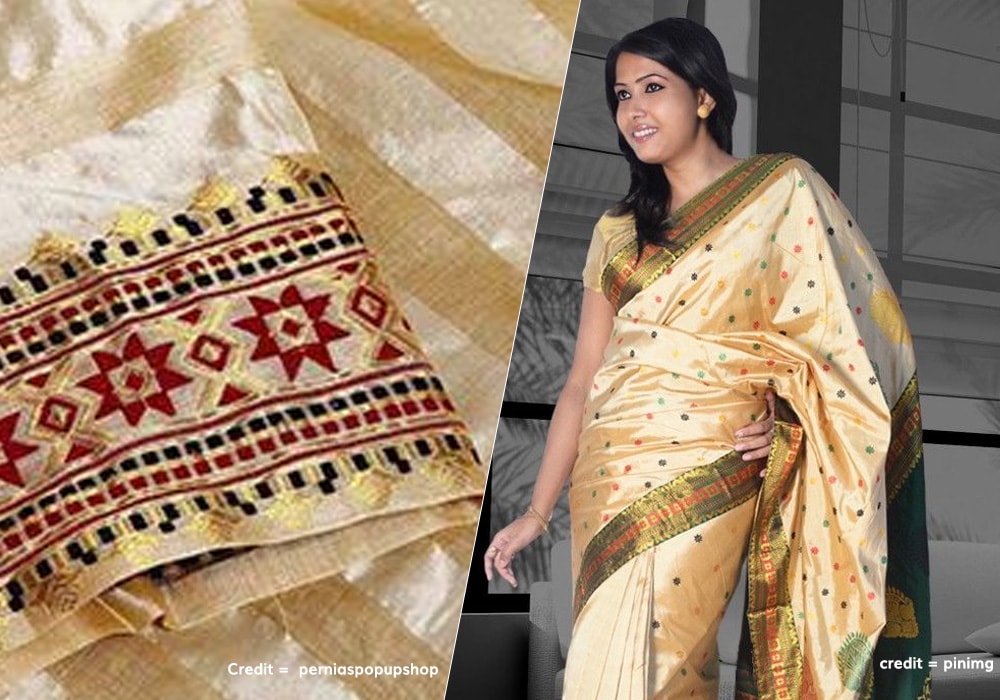
 The state of Assam is a land of breathtaking natural beauty, from its lush tea gardens to the mighty Brahmaputra river. It is also home to a rich tradition of silk production, known as sericulture, that has been perfected over centuries. Among its treasures, one silk stands out for its pristine elegance and brilliant shine: Pat Silk. Also known as Mulberry Silk, Pat Silk is celebrated for its natural white or off-white hue, which gives it a look of timeless purity and luxury. It is a fabric that is both incredibly durable and remarkably soft to the touch. For the people of Assam, Pat Silk is more than just a textile; it is an integral part of their cultural identity, woven into their most important life events. This guide will walk you through the world of Pat Silk, exploring its ancient origins, the intricate process of its creation, and its enduring relevance in today's fashion landscape.
What is Pat Silk?
Pat Silk is a variety of cultivated silk produced from the cocoons of the Bombyx mori silkworm. The name "Pat" means "silk" in Assamese. What makes this silk unique is the diet of the silkworms that produce it. They feed exclusively on the leaves of the 'Nuni' plant, which is the Assamese name for the white Mulberry tree. This specific diet is what gives the silk its characteristic brilliant white color and high quality. Unlike wild silks like Muga or Eri, Pat Silk comes from domesticated silkworms. This means the entire process, from breeding the worms to harvesting the silk, is carefully controlled by humans. This cultivation results in a very fine, smooth, and uniform thread, making Pat Silk one of the most luxurious silks available. Key characteristics of Pat Silk include:- Brilliant Luster: It has a natural sheen that gives it a rich, elegant appearance.
- Soft Texture: The fabric is incredibly smooth and soft against the skin.
- High Durability: Despite its delicate look, Pat silk is a strong and long-lasting fabric.
- Natural White Color: Its pristine white or off-white shade makes it a perfect canvas for dyeing and printing.
Tracing its Origins: A Thread Through History
The history of silk in Assam is ancient. Mentions of fine silks from the region can be found in texts dating back over two millennia. Kautilya's Arthashastra, written around the 3rd century BC, praises the high-quality fabrics from Assam, describing them as being as "smooth as butter." This suggests a long and sophisticated history of sericulture. During the Ahom dynasty, which ruled Assam for 600 years, silk production received royal patronage. The town of Sualkuchi, often called the "Manchester of Assam," became the epicenter of the state's silk industry. Weavers here perfected the art of creating exquisite Pat Silk textiles. A notable moment in its modern history occurred in 1946, during the Indian independence movement. When Mahatma Gandhi visited Sualkuchi, a local designer, Rajen Deka, wove a portrait of him onto a piece of Pat silk fabric. Gandhi was so impressed by the skill and the beauty of the Pat cloth that he praised it, further cementing its status as a dream weave of India.How Pat Silk is Made: From Worm to Weave
The production of Pat Silk is a fascinating and labor-intensive process that combines nature and human skill. It involves several distinct stages.1. Sericulture: Cultivating the Silkworms
The journey begins with the silkworms. The Bombyx mori silkworm is completely domesticated and relies on humans for its survival and reproduction.- Feeding: The worms are kept in special trays and are fed a constant diet of fresh mulberry leaves. They eat voraciously and grow rapidly over a period of several weeks.
- Spinning the Cocoon: Once they reach a certain size, the silkworms begin to spin their cocoons. They secrete a single, continuous filament of silk from their glands, wrapping it around themselves to form a protective shell. This process takes a few days.
2. Reeling: Extracting the Silk Thread
This is a crucial step that determines the quality of the final yarn.- Stifling: To prevent the moth from breaking the cocoon (and the continuous silk filament), the cocoons are boiled in hot water or steamed. This process, known as stifling, unfortunately kills the pupa inside.
- Unwinding: The hot water softens the sericin, a gummy substance that holds the silk filament together. The artisan then carefully finds the end of the filament and unwinds the cocoon. The filaments from several cocoons are reeled together to create a single, stronger silk thread.
3. Spinning and Weaving
The reeled silk thread is then prepared for the loom.- Twisting: The thread is twisted to give it strength and uniformity.
- Weaving: The yarn is set up on a traditional handloom, where skilled weavers, predominantly from Sualkuchi, bring the fabric to life. They interlace the warp and weft threads to create the Pat silk fabric, often incorporating intricate motifs directly into the weave.
Design Elements and Traditional Motifs
Pat silk's natural white color makes it an excellent base for a wide range of designs. The motifs are deeply inspired by the flora and fauna of Assam and are rich in cultural symbolism.- Traditional Motifs: Common designs include flowers (phool), creepers (lota), animals, birds (like peacocks and parrots), and human figures (japi, a traditional Assamese hat).
- Geometric Patterns: Intricate diamond shapes and other geometric patterns are also popular, adding to the textile's elegance.
- Tribe-Specific Designs: Different communities and tribes in Assam have their own unique design vocabularies, which are reflected in the motifs they weave.