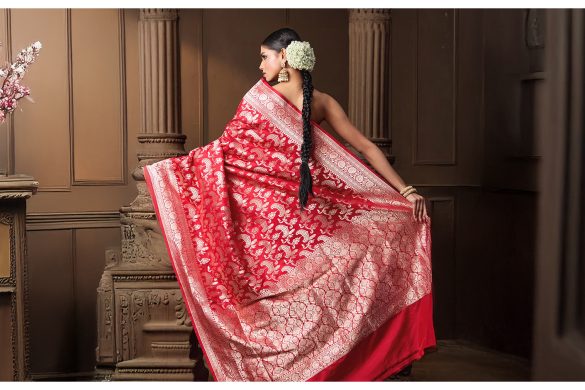
 In the ancient city of Patan, Gujarat, a rhythmic thak-thak sound echoes from a few select households. This is the sound of a tradition that has survived for over 900 years—the art of Patola weaving. Known as the "Queen of Silks," Patola is not just a fabric; it is a marvel of mathematical precision and artistic vision. It is said that a Patola saree may tear over time, but its color and design will never fade. This legendary durability and exquisite beauty have made it a prized possession for royalty and connoisseurs for centuries. In this guide, we will unravel the mystery of the Patola, exploring its rich history, the mind-boggling "double ikat" technique, and why it remains one of India's most expensive and cherished textiles.
What is Patola?
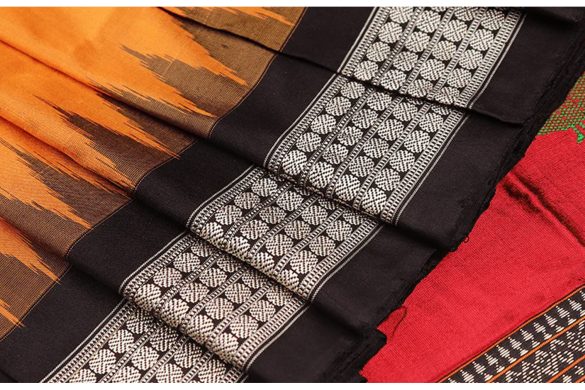
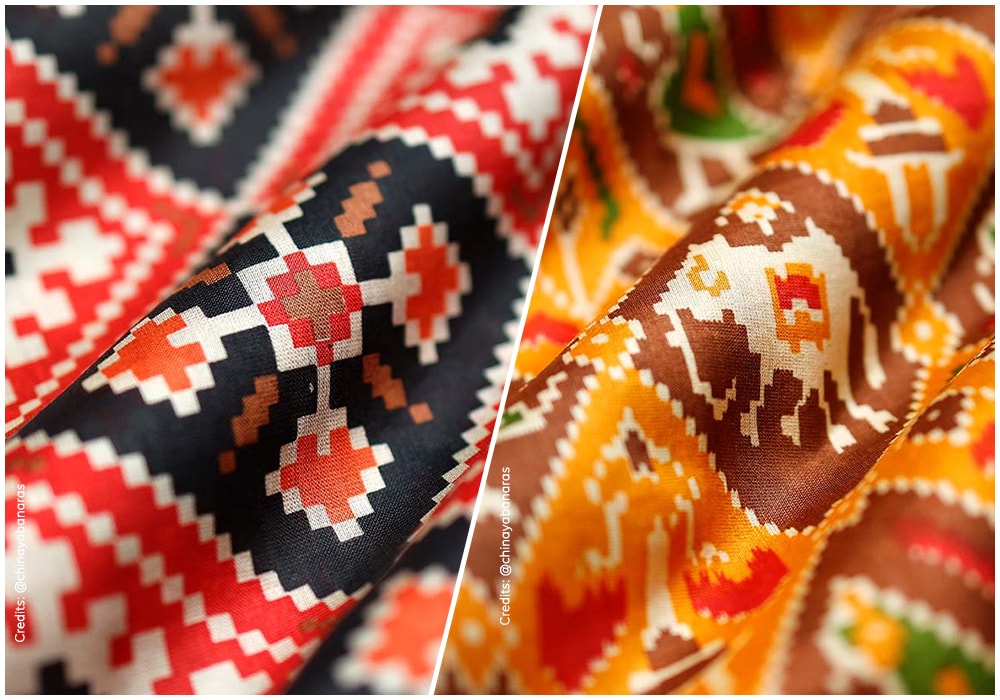
Patola is a double ikat woven saree, usually made from silk, produced in Patan, Gujarat. The word comes from the Sanskrit word pattakulla, meaning silk fabric. What makes Patola unique is the Double Ikat technique. In most woven fabrics, the design is created as the weaving progresses. However, in Patola, the design is tied and dyed onto the threads before weaving begins. Both the warp (vertical) and weft (horizontal) threads are dyed according to a pre-calculated pattern. When these threads are woven together, the colors align perfectly to form the pattern. This means the saree is completely reversible—it looks exactly the same on both sides, with no "wrong" side.Tracing the Roots: A Royal Migration
The history of Patola is a tale of kings and craftsmen. While the craft dates back to the 11th century, its true flourishing began with the Solanki dynasty. Legend has it that King Kumarpala of the Solanki dynasty was a great patron of Patola silk. He wore a new Patola robe every day for his daily worship. Initially, the fabric was sourced from Jalna in Maharashtra. However, upon discovering that the ruler of Jalna used the fabrics as bedsheets before selling them, King Kumarpala felt the cloth was impure. To ensure the sanctity of his attire, he invited 700 families of weavers from the Salvi community to migrate from Maharashtra to Patan in Gujarat. These master craftsmen settled in Patan and established the legacy of Patola weaving that continues to this day.The Process: A Mathematical Marvel
Making a Patola saree is an incredibly labor-intensive process that combines engineering with art. It can take anywhere from six months to a year to complete a single saree, involving around eight skilled workers.1. Planning the Design
Before a single thread is dyed, the entire pattern is drawn onto graph paper. Every intersection of the warp and weft is calculated. This is crucial because a single mistake in dyeing can ruin the entire pattern.2. Tying and Dyeing (Bandhani)
This is the heart of the ikat process.- The silk threads are grouped together.
- Based on the design, specific sections of the thread are tied with cotton thread to resist the dye.
- The threads are then dipped in natural colors. Traditional dyes include turmeric, marigold, madder root, pomegranate skin, and indigo.
- This tying, dyeing, and untying process is repeated for every color in the pattern. It requires immense patience and precision.
3. Weaving the Magic
Once the threads are dyed, they are put on the loom.- The Loom: A traditional hand-operated harness loom made of rosewood and bamboo is used. It is tilted at an angle to help the weaver manage the tension.
- The Alignment: This is the most difficult part. As the weaver throws the bamboo shuttle across, they must ensure that the colors on the weft thread align perfectly with the colors on the warp thread.
- The Needle: A specialized rosewood needle or stick, called a Vi, is used to nudge the threads into place pixel by pixel.
Design Elements and Symbolism
Patola designs are deeply rooted in Gujarati culture and architecture. They are manifestations of perfect calculation, often inspired by the intricate carvings of the Rani ki Vav, a famous stepwell in Patan that is now a UNESCO World Heritage site. Different communities have traditionally favored different motifs:- Nari Kunjar Bhat: This famous design features motifs of women (Nari) and elephants (Kunjar), often accompanied by parrots and peacocks. It is a symbol of auspiciousness and fertility.
- Pan Bhat: Based on the peepal leaf, a sacred symbol in India.
- Navaratna Bhat: A geometric design featuring nine jewels or squares.
- Chhabadi Bhat: A basket design featuring floral elements.
- Vohra Gaji Bhat: Favored by the Vohra community, this design usually features geometric floral patterns.
- Jain Motifs: The Jain community often prefers abstract and geometric patterns that adhere to their religious aesthetics.
Patola Today: A Legacy in Danger?
Today, the art of authentic double ikat Patola is practiced by only a handful of families in Patan, most notably the Salvi family. The sheer difficulty of the craft and the high cost of production (a genuine double ikat saree can cost lakhs of rupees) make it a rare luxury. However, the world is waking up to the value of this heritage.- Fashion Revival: Renowned designers like Gaurang Shah have brought Patola onto the runway, showcasing its timeless beauty to a modern audience.
- Single Ikat Patola: To make the style more accessible, "Single Ikat" Patola (where only the warp is tie-dyed) is produced in places like Rajkot. While beautiful, it is distinct from the double ikat tradition of Patan.
- Museum Pieces: Due to their longevity and cost, many antique Patola sarees are now treated as heirlooms and museum exhibits, preserving the history of Indian textiles.