


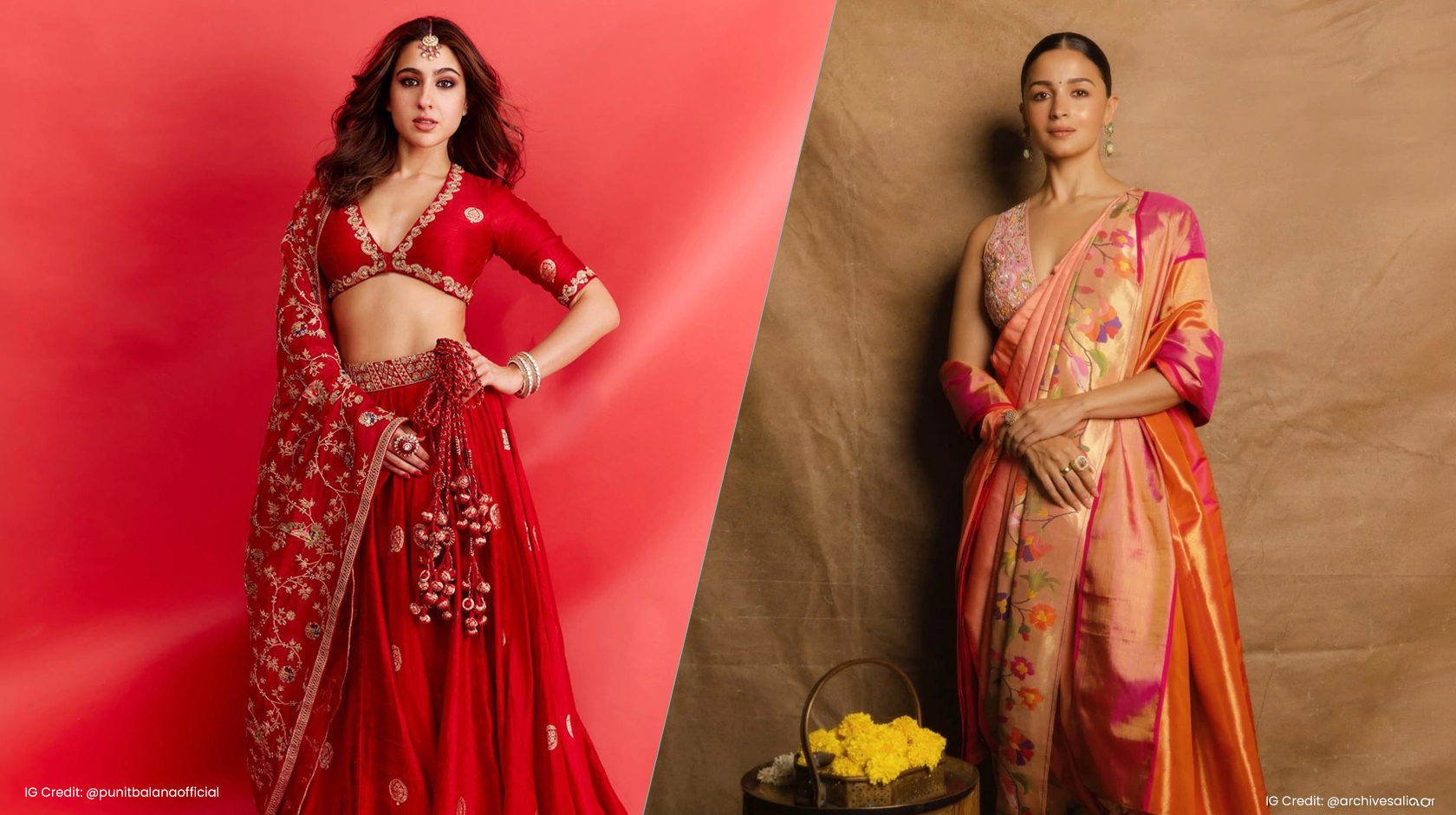
For wedding guests, a lehenga offers more ease of movement and is ideal for multi-hour celebrations, while a saree is a timeless, elegant choice that suits a wide range of ceremonies. The right pick depends on the formality of the event, your comfort with draping, and the specific wedding function you're attending.
Choosing between a saree and a lehenga is one of the most common style dilemmas before an Indian wedding. Both are stunning. Both are appropriate. But they suit different occasions, body types, and comfort levels—and making the wrong call can leave you adjusting your outfit all evening instead of enjoying the celebration.
Here's a straightforward breakdown to help you decide.

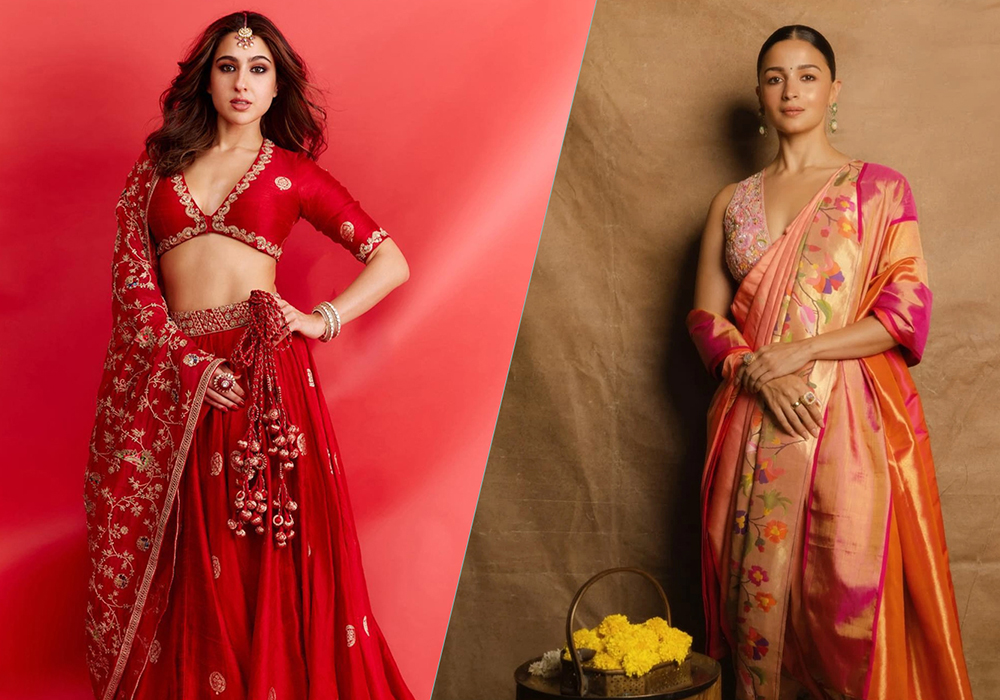
What's the difference between a saree and a lehenga for wedding guests?
A saree is a single length of fabric—typically five to nine yards—that is draped and pleated around the body. It has a timeless quality that works across almost every wedding format, from intimate morning pujas to grand reception dinners.
A lehenga is a three-piece ensemble: a flared skirt, a fitted blouse (choli), and a dupatta. It's structured, easier to wear than a saree, and tends to read as more festive and youthful. For heavily embellished events like sangeets and receptions, lehengas often make more of a visual impact.
When should a wedding guest wear a saree?
A saree is the stronger choice in a few specific scenarios.
Formal or religious ceremonies — Weddings that include traditional rituals, temple ceremonies, or multi-generational gatherings tend to call for the saree's understated elegance. Silk sarees in jewel tones carry a sense of gravitas that lehengas don't always match.
Daytime functions — A lighter cotton, chiffon, or georgette saree is practical for daytime events, especially in warmer climates. It's breathable, less heavy than an embellished lehenga skirt, and easy to style with minimal jewelry.
When you want versatility — A well-chosen saree can be re-draped, re-styled, and reworn across multiple occasions. If you're attending back-to-back wedding functions, a few sarees in your wardrobe go further than multiple lehengas.
Browse Aza Fashions' saree collection for options that span classic silks to contemporary printed styles.
When should a wedding guest wear a lehenga?
A lehenga earns its place at the more celebratory end of the wedding calendar.
Sangeet and cocktail functions — These events are built around dancing, late evenings, and high-energy celebrations. A lehenga's structured skirt stays in place through hours of movement in a way that a draped saree simply cannot guarantee.
Destination or outdoor weddings — At outdoor venues—garden settings, beachside ceremonies, or resort weddings—a lehenga is easier to manage on uneven terrain. There's no fabric to re-pin or re-tuck throughout the night.
If you're new to Indian ethnic wear — For guests who don't wear sarees regularly, a lehenga removes the draping anxiety entirely. It goes on quickly, stays put, and still reads as fully festive and occasion-appropriate.
Explore Aza Fashions' lehenga collection for embellished, contemporary, and fusion styles suited to wedding guests.
How do you choose based on the specific wedding function?
Not all wedding events carry the same dress code. Here's a quick guide:
- Mehendi: A lighter lehenga or casual saree in bright, earthy tones works well. Save the heavy embellishments for later.
- Sangeet: A lehenga is the natural pick. Go bold with color and embroidery.
- Wedding ceremony: Either works. If it's a religious ceremony, a silk saree is especially appropriate.
- Reception: Both are suitable. A saree in rich fabric or a statement lehenga are equally fitting.
For curated, occasion-specific picks, Aza Fashions' Celebration Closet takes the guesswork out of dressing for each function.
The final call
There's no universally correct answer—but there is a right answer for you. If the event is formal or religious, reach for a saree. If it's celebratory and high-energy, a lehenga gives you more freedom to move and make a statement. When in doubt, check the function, consider the venue, and dress for the parts of the evening you want to enjoy most.
For the latest styles across both categories, browse new arrivals at Aza Fashions.
Frequently Asked Questions
Is a saree or lehenga more appropriate for a Hindu wedding ceremony?
Both are appropriate, but a saree—particularly a silk saree in a traditional color—is more aligned with the ceremonial context of a Hindu wedding. A lehenga is equally acceptable and widely worn by guests at modern weddings.
Can a wedding guest wear the same lehenga to multiple functions?
Yes, with styling adjustments. Swapping the dupatta, changing your jewelry, or altering your hair and makeup can make a single lehenga feel distinct across more than one function.
What colors should wedding guests avoid in a saree or lehenga?
White is traditionally reserved for mourning in many Indian communities and is best avoided. Red and bridal shades are generally saved for the bride. Beyond that, most colors are fair game for guests.
Is it better to wear a saree or lehenga if you'll be dancing at a wedding?
A lehenga is more practical for dancing. The structured skirt stays in place, and there's no draping to worry about. If you prefer a saree, consider a pre-stitched or pre-draped style for added security.
Where can I find wedding guest sarees and lehengas in the USA?
Aza Fashions ships internationally and carries an extensive range of wedding-appropriate sarees, lehengas, and occasion wear through its Celebration Closet.

