


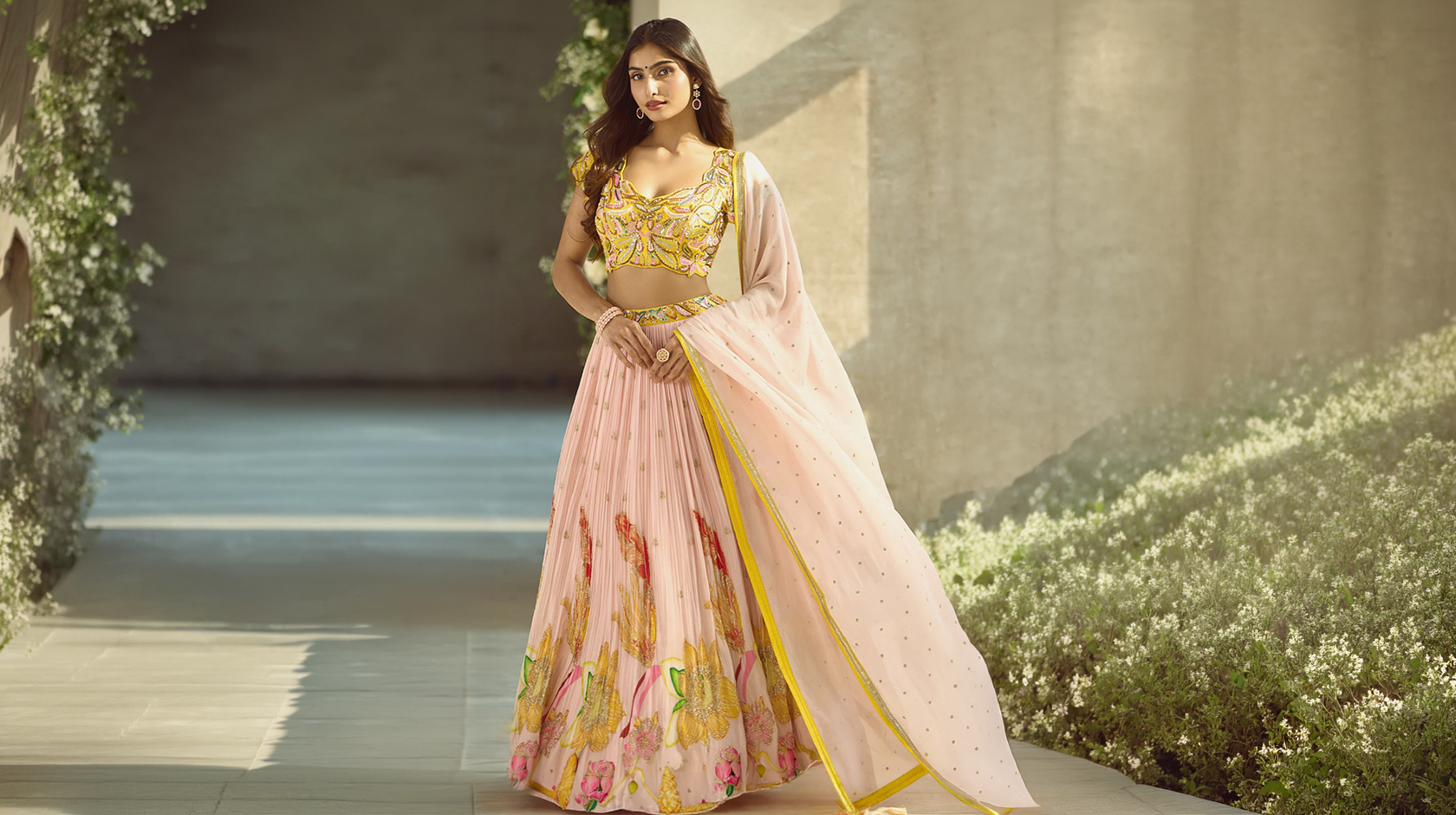
The sister of the bride or groom should dress one step below the bride—festive and coordinated, but never competing. For Haldi, choose lightweight cotton or georgette in yellow or green. Mehendi calls for printed kurta sets or sharara sets. Sangeet suits embellished lehengas or sequin anarkalis. The ceremony warrants a silk lehenga or saree, and the reception is the moment for a gown or a statement lehenga in jewel tones.
You're not the bride—but you're as close to her as it gets. The sister of the bride or groom occupies a unique position at a wedding: present in almost every frame, part of every ritual, and expected to look the part at each one.
Five functions. Five distinct dress codes. Here's exactly what to wear.

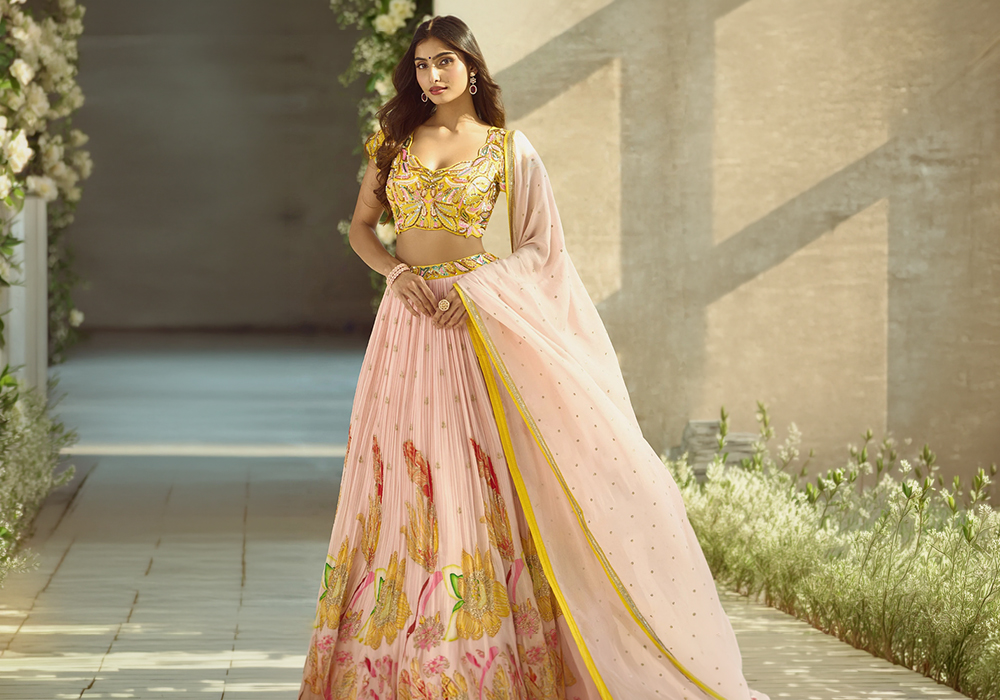
What should the sister of the bride wear to the Haldi ceremony?
Keep it light—literally. Haldi is an outdoor, daytime function where turmeric will inevitably find its way onto your outfit. Reach for breathable fabrics like cotton, chanderi, or georgette. Silhouettes that work well include printed kurta sets, simple sharara sets, or relaxed co-ord sets in sunshine yellow, lime green, or soft orange.
Styling tip: Skip heavy embroidery. Go for block prints or subtle hand embroidery instead. Minimal gold jewellery keeps the look intentional without overdressing for a morning ritual.
What is the best outfit for the Mehendi function as the bride's sister?
Mehendi is where the function wardrobe starts to pick up. This is a great opportunity for color—deep greens, fuchsia, cobalt blue, and marigold all read beautifully in photographs. A printed or embroidered kurta set with palazzo pants, or a sharara set in georgette, strikes the right balance between festive and comfortable.
Styling tip: If the bride is wearing green, pull a complementary color from her palette rather than matching it exactly. Terracotta, rust, and mustard pair well without clashing.
What should the sister of the groom wear to the Sangeet?
Sangeet calls for something with movement and sparkle. A sequin-embellished anarkali set is a strong choice—easy to dance in, and visually striking under event lighting. An embroidered lehenga in a jewel tone like teal, plum, or burnt orange also works well here.
Styling tip: Avoid heavily structured silhouettes if you're performing at the Sangeet. Flared anarkalis and lehengas with lighter skirts will photograph and move better on stage.
What to wear to the wedding ceremony as the sister of the bride or groom?
The ceremony is the most formal function on the wedding calendar. A silk or raw silk lehenga in a rich, saturated color is the most reliable choice. A saree in tissue silk or organza with zari work also reads as appropriately ceremonial. If you prefer a more structured look, consider a pant set in a brocade or jacquard fabric.
Styling tip: Keep the focus on craft—zardozi, zari, or hand embroidery signals occasion dressing without needing excessive embellishment across the entire outfit.
What is the right outfit for the Reception as the sister of the bride?
The reception is where you have the most creative freedom. A floor-length gown in a deep jewel tone—sapphire, emerald, deep violet—works particularly well if the venue is a hotel ballroom or formal banquet. Alternatively, a heavily embellished lehenga or a draped pre-draped saree offers a contemporary take on traditional dressing.
Styling tip: This is the function to wear your statement jewellery. The outfit can be relatively clean in silhouette if the accessories are doing the work.
Shop the full wedding edit at Aza Fashions
Find outfits for every function—from Haldi to Reception—across the Aza Fashions wedding collection:
Browse the full curated wedding edit at Celebration Closet or explore Just In for the latest arrivals.
Frequently Asked Questions
Can the sister of the bride wear the same color as the bride?
It's best to avoid wearing the exact same color as the bride, especially at the ceremony and reception. Instead, pull a complementary tone from the bride's palette—this creates a cohesive look without competing for attention.
Should the sister of the bride coordinate outfits with other family members?
Loose coordination works well—aligning on a color family or palette rather than matching outfits exactly. This reads as intentional in photographs without looking overly uniform.
What colors should the sister of the bride or groom avoid wearing?
As a general rule, avoid white and red at Indian weddings, as these carry specific cultural significance for the bride. Steer clear of overly muted or casual tones at formal functions like the ceremony and reception.
Is a lehenga the only option for the wedding ceremony?
No. A silk saree, a structured anarkali, or even a tailored pant set in a ceremonial fabric are all appropriate for the wedding ceremony. The key is the fabric and level of embellishment, not the silhouette.

