
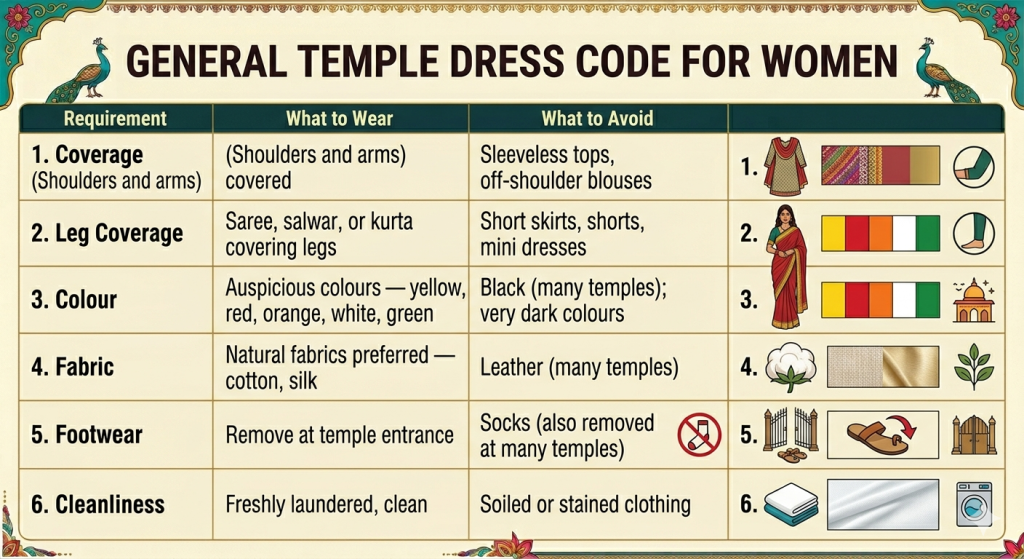
For visiting Indian temples, the most appropriate outfit for women is: a cotton or silk saree in an auspicious colour (yellow, red, orange, white, or green), a salwar kameez, or a kurta set that covers the arms, chest, and legs. The key principles for temple dressing are: modesty (covered shoulders, arms, and legs), cleanliness (freshly washed clothes), and appropriateness (avoid Western clothes, short outfits, and very dark colours at traditional Hindu temples).
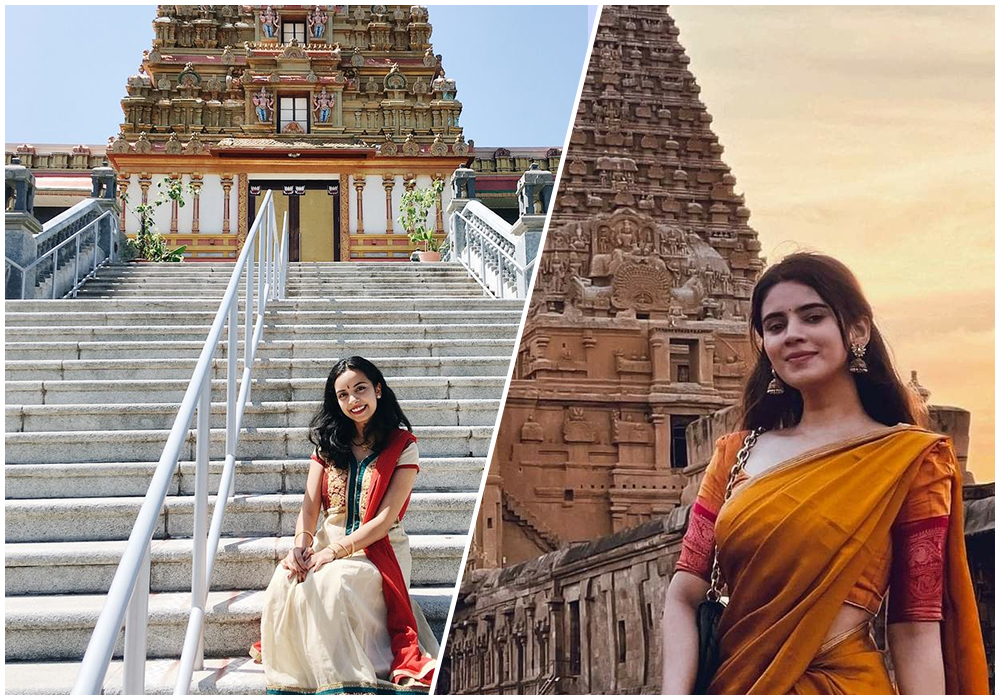
Dress Codes for Specific Famous Indian Temples
Tirupati Balaji Temple (Andhra Pradesh)
One of India's strictest temple dress codes:
- Women Saree or half-saree (most appropriate); salwar kameez also acceptable
- Avoid Western clothes (jeans, tops, skirts), sleeveless outfits, shorts, leather
- Saree is the most respectful and accepted choice
Vaishno Devi Temple (Jammu)
The trek to Vaishno Devi requires practical clothing:
- Best Comfortable salwar kameez or kurta-pant set; light dupatta
- Practical considerations Choose clothing appropriate for hiking (breathable cotton or linen)
Konark Sun Temple (Odisha)
The Konark Sun Temple has specific dress code requirements for entry:
- Women Saree, salwar kameez, or any modest, leg-covering outfit
- Avoid Short skirts, shorts, sleeveless, revealing clothing
- The dress code is enforced at the entry gate
Padmanabhaswamy Temple (Kerala)
One of India's strictest traditional dress codes:
- Women Saree only (often with specific colour requirements white or muted colours are preferred)
- Western clothes are not permitted Entry may be refused for those not in traditional attire
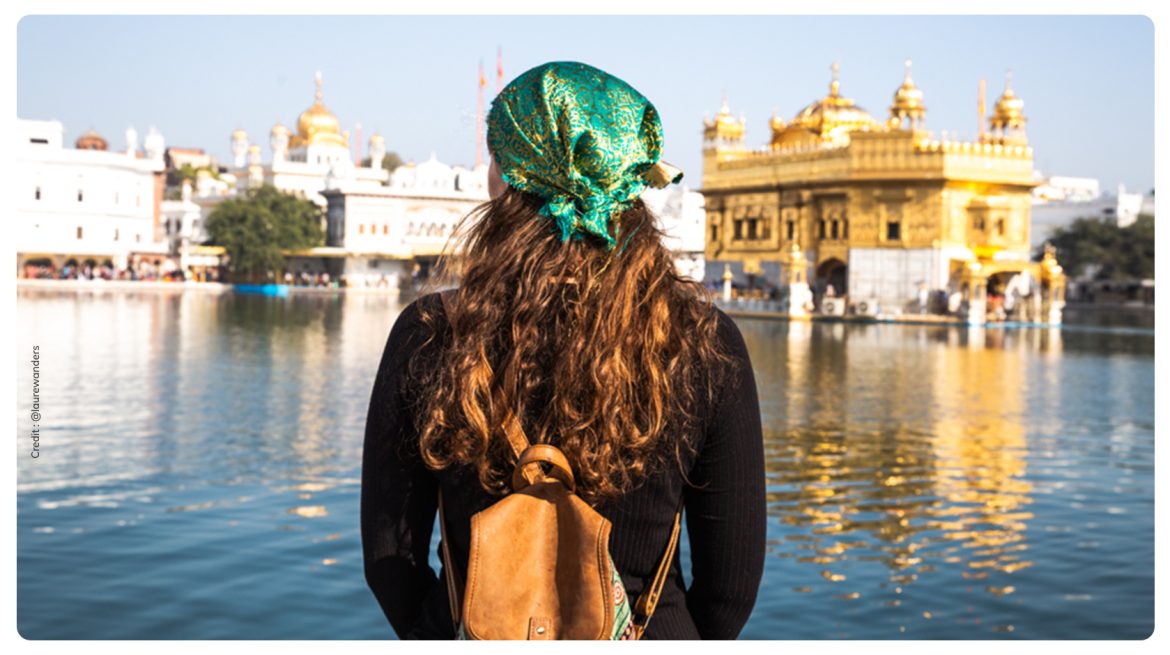
Golden Temple (Amritsar, Punjab)
- Head covering is mandatory All visitors must cover their head; scarves and head coverings are available at the entrance
- Any modest, full-coverage clothing is accepted Salwar kameez, saree, or any modest ethnic or western wear
Best Temple Outfits for Women
Cotton or Silk Saree
A cotton saree in an auspicious colour yellow, red, orange, white, or green is the most universally appropriate temple outfit across India.
Salwar Kameez (Suit Set)
A salwar kameez that covers the shoulders, arms, and legs is appropriate for most Indian temples. Choose a long kameez that extends below the thighs. A dupatta is recommended it can also be used to cover the head if entering a Sikh gurudwara or certain Hindu temples.
Auspicious Temple Colours
- Yellow colour of prosperity, wisdom, and the divine; widely auspicious
- Red and orange auspicious and festive; associated with Goddess Lakshmi and Durga
- White purity and peace; appropriate for all temples
- Green auspicious, associated with prosperity
- Avoid black considered inauspicious at many Hindu temples; check specific temple guidelines
Frequently Asked Questions
Q: What should women wear to visit an Indian temple?
A: Women visiting an Indian temple should wear modest, body-covering ethnic clothing a cotton or silk saree, a salwar kameez, or a long kurta set with full leg coverage. Shoulders and arms should be covered. Auspicious colours (yellow, red, orange, white, green) are most appropriate. Remove shoes at the temple entrance as required.
Q: Is it mandatory to wear a saree to visit temples in India?
A: A saree is not mandatory for most Indian temples a salwar kameez or kurta set with full coverage is also appropriate. However, some temples (particularly Padmanabhaswamy Temple in Kerala) require a saree for women to enter the inner sanctum. Always check the specific temple's dress code before visiting.
Q: Can I wear jeans to an Indian temple?
A: Jeans are not appropriate for visiting most traditional Indian Hindu temples. Many temples including Tirupati Balaji and Padmanabhaswamy explicitly prohibit western clothing. Even at temples without strict enforcement, wearing traditional Indian ethnic clothing shows cultural respect.
Q: What is the dress code for the Konark Sun Temple?
A: The Konark Sun Temple (Odisha) requires modest, full-coverage clothing for entry. Women should wear a saree, salwar kameez, or any outfit that covers the shoulders, arms, and legs. Shorts, short skirts, and sleeveless or revealing clothing are not permitted and entry may be refused.
Q: Should I wear shoes to a temple in India?
A: No shoes and footwear are removed before entering most Indian temples. This applies regardless of the type of footwear. Socks are typically also removed. At many temples, feet must be washed before entering the main shrine.
