Introduction
When it comes to men's traditional wear for Indian weddings and grand celebrations, two names always stand out: the sherwani and the Jodhpuri suit. Both outfits offer a look of elegance and grandeur, but they are quite different in style, history, and the occasions they suit best. Are you trying to decide which one is right for your big event? This guide will walk you through the unique characteristics of each, helping you make the perfect choice that matches your personal style.
Understanding Sherwani: Style and Significance
The sherwani is the picture of royal elegance in Indian menswear. Its roots trace back to the Mughal era, where it was the preferred attire for Mughal nobles. This garment is synonymous with celebrations, especially Indian festivals and weddings, because of its grand and formal appearance.
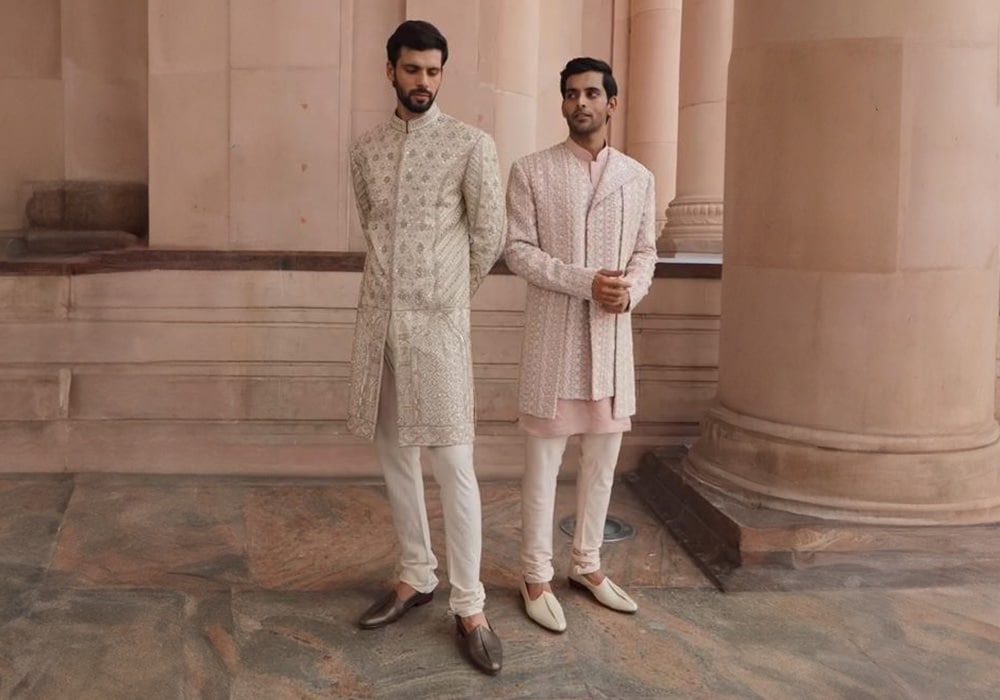
A sherwani ensemble is instantly recognizable by its long coat, often adorned with intricate embroidery, and paired with fitted bottoms. It's a statement piece that commands attention, making it a top choice for a groom on his wedding day. Let's look closer at what a sherwani is and why it holds such an important place in Indian culture.
What Is a Sherwani?
So, what exactly is a sherwani? It is a long, structured coat that is buttoned down the front and features a stand-up collar, often called a mandarin collar. The most defining feature of a sherwani is its longer length, which typically extends to just below the knees. This design gives it a majestic and dignified silhouette.
This regal garment has strong historical references to the Mughal era. It evolved from the clothing worn by Mughal nobles and was designed to convey a sense of nobility and etiquette. The look was a fusion of the Indian Achkan and the outer coats worn by Europeans, creating a unique style.
Sherwanis are crafted from luxurious fabrics like raw silk, brocade, and velvet to enhance their opulent feel. They are usually paired with a churidar (tightly fitting trousers) or a dhoti, completing a classic and timeless outfit that remains popular for significant events.
Importance of Sherwani in Indian Festivals and Weddings
The sherwani is much more than just an outfit; it is a symbol of cultural heritage and pride. During Indian festivals like Diwali and Eid, wearing a sherwani connects you to tradition and adds a touch of grandeur to the celebration. For a wedding ceremony, it has become the go-to attire for grooms across India.
Choosing a sherwani ensemble for the big day is a decision rooted in tradition. It signifies dignity and grace, making the groom look and feel like royalty. The rich fabrics and detailed craftsmanship make it a truly special garment for a once-in-a-lifetime event.
Here’s why it remains a top choice:
- Symbol of Tradition: It represents deep-rooted cultural values and is considered the ultimate traditional wedding outfit for a groom.
- Regal Appearance: The long silhouette and ornate details ensure the groom stands out.
- Photogenic Quality: The structure and richness of a sherwani look stunning in wedding photos, capturing the splendor of the day.
Discovering the Jodhpuri Suit: Tradition and Appeal
Now, let's turn our attention to the Jodhpuri suit, a masterpiece of Indo-Western fashion. Also known as the bandhgala suit, this attire originated in the princely state of Jodhpur in Rajasthan. It perfectly blends the sharp tailoring of a Western suit with classic Indian aesthetics.
The Jodhpuri suit is celebrated for its sophisticated and sharp look, making it a popular choice for formal occasions beyond just weddings. It offers a modern yet traditional alternative for the man who appreciates clean cuts and understated elegance. Read on to learn what makes this suit so unique and where it fits in today's ceremonial wear.
What Makes the Jodhpuri Suit Unique?
The Jodhpuri suit's uniqueness comes from its distinct structure and styling. Unlike the long sherwani, it features a shorter jacket that usually ends at the hips, much like a blazer from Western styles. This jacket is paired with matching tailored trousers, creating a cohesive and sharp silhouette.
The most iconic element is its collar—the "bandhgala," which means "closed neck." This high, snug-fitting collar gives the bandhgala suit its formal and commanding presence. The suit is celebrated for its clean lines and structured fit, which flatters the body and provides a very polished appearance.
While some Jodhpuri suits feature subtle embroidery, many are designed in solid colours, letting the impeccable tailoring speak for itself. Its key features include:
- A shorter, structured coat.
- The signature bandhgala or closed-neck collar.
- A fusion of Indian and Western tailoring.
Role of Jodhpuri Suit in Celebrations and Ceremonies
Can you wear a Jodhpuri suit for a wedding? Absolutely! The Jodhpuri suit has carved out a significant role for itself in modern celebrations. It is an excellent choice for formal events like wedding receptions, engagement parties, and sangeet ceremonies. It offers a look that is both respectful of tradition and aligned with contemporary fashion.
For a groom who wants a sophisticated yet slightly less traditional look for his wedding day, the Jodhpuri suit is a perfect option. It carries an air of Indian royalty, thanks to its origins, while providing the comfort and sleekness of a modern suit. Many grooms today choose a Jodhpuri for their reception to switch into something stylish and easier to move in after the main ceremony.
It’s also a fantastic outfit for wedding guests who want to look dapper and well-dressed without outshining the groom. Its versatility makes it a staple for any man's formal wardrobe.
Historical Roots of Sherwani and Jodhpuri Suit
The histories of the sherwani and the Jodhpuri suit are as rich and distinct as their styles. The sherwani's story is deeply tied to the Mughal era and the aristocrats of South Asia, evolving into a symbol of pride during British rule. It became prominent in the late 19th century and was even adopted by the revolutionaries of the Aligarh movement.
In contrast, the Jodhpuri suit is a product of the 19th century, born from the cultural exchange during British rule in India. Its creation is a fascinating tale of blending Eastern and Western fashion. Let's explore the origins of these two iconic garments.
Origins and Evolution of Sherwani
The sherwani has a fascinating history that dates back to the 19th century. Although its name is believed to be derived from "Shirvan," a region in Azerbaijan with similar folk dress, its form was heavily influenced by the style of the Mughal court in India. It evolved from the Achkan, a shorter coat, during the Mughal era.
Historical references show that the sherwani became the formal court dress for the nobles of Northern India. It was first crafted in Lucknow around the 1820s and was quickly adopted by the aristocrats of the Indian subcontinent. It was seen as a garment that represented status and sophistication.
During the period of British rule, the sherwani took on new meaning. It became a symbol of Indian identity and pride. National leaders like Jawaharlal Nehru and Muhammad Ali Jinnah famously wore sherwanis, popularizing the attire and cementing its place in the nation's history.
Past and Development of Jodhpuri Suit
The Jodhpuri suit’s story begins in the princely state of Jodhpur during the time of British rule. This innovative garment is a perfect example of cultural fusion, blending Indian and European fashion sensibilities. It was created out of a desire for a formal attire that was both Indian in spirit and modern in function.
The credit for its creation often goes to Maharaja Pratap Singh of Jodhpur. According to Vogue India, "The credit for its invention is given to Pratap Singh, the Maharaja of Jodhpur, who during a trip to England in 1887, had his angarkha tailored into a shorter jacket." This new design combined the traditional Angarkha with the tailored fit of a Western coat.
This new suit quickly gained popularity among Indian royalty and the elite in the mid-19th and early 20th centuries. It presented a powerful and stylish image, becoming a staple for formal gatherings and establishing itself as a timeless piece of Indian menswear.
Key Differences: Sherwani vs Jodhpuri Suit
While both the sherwani and Jodhpuri suit are designed for formal occasions, they have significantly different styles that create very distinct looks. The main difference lies in their length, cut, and overall aesthetic. A sherwani is long, flowing, and ornate, while a Jodhpuri suit is short, sharp, and structured.
Understanding these differences is key to choosing the right outfit for your event. Let's break down the comparison by looking at their style, fabric, and ideal accessories, and then discuss which outfit works best for specific occasions.
Style, Fabric, and Accessories Compared
The most noticeable difference between a sherwani and a Jodhpuri suit is the style. Sherwanis are defined by their long, coat-like structure, while Jodhpuri suits have a shorter, blazer-like jacket. This fundamental difference influences the fabric choices and embellishments for each.
Sherwanis are typically made from rich fabrics like raw silk, brocade, or velvet and often feature intricate embroidery, beadwork, or zardozi. Jodhpuri suits, on the other hand, are usually crafted from suiting materials and are often seen in solid colours with minimal ornamentation.
The accessories also differ. A sherwani is often paired with a safa (turban), a stole, and traditional footwear like mojris. A Jodhpuri suit is best complemented with a pocket square, a brooch, and formal leather shoes.
| Feature | Sherwani | Jodhpuri Suit |
|---|---|---|
| Length | Long, typically knee-length or longer | Short, hip-length jacket |
| Fabric | Rich fabrics like silk, velvet, brocade | Suiting fabrics like wool, silk blends |
| Embellishments | Ornate, with intricate embroidery and stonework | Minimal, often in solid colours with clean lines |
| Bottoms | Churidar, dhoti, or straight-cut pants | Tailored trousers |
| Accessories | Safa (turban), stole, kalgi (turban pin), mojris | Pocket square, brooch, formal shoes, cufflinks |
Which Outfit Is Better for Different Occasions?
Deciding between a sherwani and a Jodhpuri suit often comes down to the specific event and your personal style. Each has its own place in the world of formal events.
A sherwani is the quintessential wedding outfit for a groom. Its regal and traditional nature makes it perfect for the main wedding ceremony during Indian weddings. It’s also a great choice for major festivals where you want to make a grand, traditional statement.
A Jodhpuri suit, however, is more versatile. It’s an ideal choice for pre-wedding functions like a sangeet or reception, formal dinners, and cocktail parties. Because it uses less fabric, it can also be a more comfortable option in warmer climates.
- Choose a Sherwani for: Your main wedding ceremony, major traditional festivals.
- Choose a Jodhpuri Suit for: Wedding receptions, engagement parties, sangeet, or as a sophisticated wedding guest.
Ultimately, the best choice reflects the formality of the event and what makes you feel most confident.
Choosing the Right Color for Different Skin Tones
Once you've decided between a sherwani and a Jodhpuri suit, the next step is choosing the right color. The color of your wedding attire can dramatically impact your overall look. Selecting a shade that complements your skin tone will ensure you look your absolute best.
Your choice should be guided by your personal taste, but keeping some color theory in mind can be very helpful. Below are some suggestions for both sherwani and Jodhpuri suit colors that work well with different complexions, helping you enhance your personal style.
Best Sherwani Colors for Various Skin Tones
For grooms with fair skin tones, there is a wide range of colors to choose from. Jewel tones can look particularly striking. Deeper hues create a beautiful contrast, while pastels offer a soft and elegant look.
If you have a medium or wheatish complexion, you can pull off both rich and subtle colors. Earthy tones and deep, warm colors will complement your skin beautifully. It's often best to avoid beiges or browns that are too close to your skin tone.
Men with darker skin tones look fantastic in colors that create a bold contrast. Lighter shades and vibrant jewel tones will stand out wonderfully. There are many sherwani styles available, so finding the perfect shade to match your personal style is easy.
- Fair Skin: Royal blue, emerald green, deep maroon, or pastels like mint and baby pink.
- Medium Skin: Navy blue, maroon, bottle green, and rich gold or cream.
- Dark Skin: Ivory, cream, bright gold, vibrant red, or turquoise.
Best Jodhpuri Suit Colors for Different Complexions
Since Jodhpuri suits often come in solid colours, choosing the right shade is key to achieving a sharp look. For fair complexions, classic darks are a can't-miss option. These colors create a timeless and sophisticated profile.
Men with medium or wheatish skin tones have a versatile palette. You can opt for classic darks or experiment with rich, fashionable colors that are popular for the season. These shades add warmth and depth to your look.
For darker complexions, certain colors can create an incredibly dapper and high-contrast look. A well-fitted Jodhpuri suit in one of these shades is the definition of suave.
- Fair Skin: Navy blue, charcoal grey, black, or even a light beige for a daytime event.
- Medium Skin: Burgundy, olive green, deep blues, and classic black.
- Dark Skin: White, cobalt blue, camel, and classic black.
Conclusion
In conclusion, both the Sherwani and Jodhpuri suit hold significant cultural importance in Indian fashion, each bringing its own unique charm to various celebrations. The Sherwani is favored for its regal look and traditional significance during festivals and weddings, while the Jodhpuri suit stands out for its tailored elegance and versatility. Understanding their historical roots and key differences can help you make an informed choice for different occasions. Additionally, selecting the right colors based on skin tone can enhance your appearance and confidence in these outfits. Whether you're attending a wedding or a festive gathering, embracing these timeless garments will surely leave a lasting impression. For personalized style advice tailored to your needs, feel free to reach out for a consultation!
Frequently Asked Questions
1. Can a Jodhpuri suit be worn at weddings like a sherwani?
Yes, a Jodhpuri suit is a wonderful wedding outfit for Indian weddings. While a sherwani is classic for the main wedding ceremony, a Jodhpuri suit is a stylish and modern choice for a groom, especially for receptions or sangeet. It's also an excellent option for wedding guests.
2. What are the main features that make a Jodhpuri suit stand out?
The Jodhpuri suit, or bandhgala suit, is known for its shorter, structured jacket, closed-neck collar, and clean lines. This blend of Indian and Western tailoring, often in elegant solid colours, gives it a sharp, sophisticated look that is perfect for formal events and modern celebrations.
3. Which is better for a groom: sherwani or Jodhpuri suit?
This depends on your personal taste and the wedding style. A sherwani is the ultimate traditional and regal groom outfit for the main wedding day ceremony. A Jodhpuri suit is a sleek, contemporary choice perfect for a modern groom or for events like the reception.