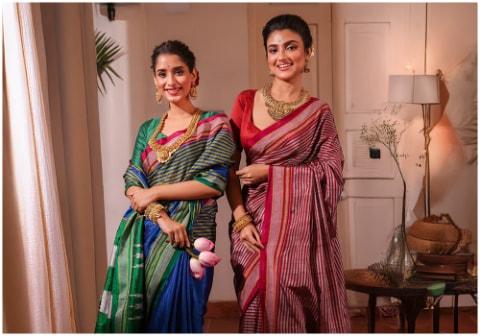
In the colorful tapestry of Indian handlooms, few garments strike a balance between daily durability and festive elegance quite like the Ilkal saree. Hailing from the Bagalkot district of Karnataka, this six-to-nine-yard wonder is more than just a piece of clothing; it is a symbol of culture, a testament to skilled craftsmanship, and a beloved attire for women across the country.
If you have ever admired a saree with a striking ruby-red border and a distinct, elegant pallu, chances are you were looking at an Ilkal. But what makes this saree so special? Let’s dive into the story of this Karnataka gem.
A History Etched in Stone and Silk
To understand the Ilkal saree, we must look back—far back. This weave is believed to have originated around the 8th Century AD. The town of Ilkal, where these sarees are born, derives its name from the Kannada word ‘lakallu,’ which means slope. This is a nod to the town’s unique geography, surrounded by leveled and sloping hills.
History tells us that a community of weavers migrated down the western border and settled in this ancient handloom center. They found an abundance of cotton in the region, which became the foundation of their craft. For centuries, the art of weaving Ilkal sarees has been a family affair. It is a skill passed down from generation to generation, with women often playing a crucial role in keeping the tradition alive.
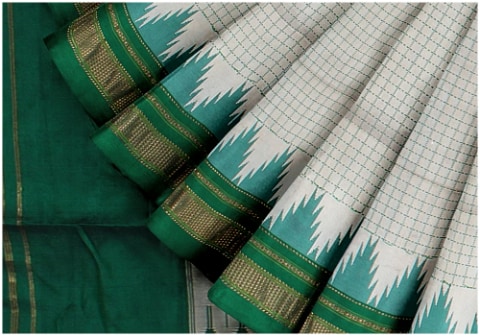
While it started as a local craft supported by chieftains in Bagalkot and Bellary, the Ilkal saree has traveled far beyond its humble beginnings. Today, it is recognized globally as a masterpiece of Indian heritage.
The Magic of the Make: Cotton Meets Silk
One of the most defining features of an Ilkal saree is its fabric blend. It is designed for comfort without compromising on shine. Typically, the body of the saree is woven with breathable cotton, while the border and pallu are made with luxurious silk (or sometimes artificial silk). This combination makes the saree perfect for India’s weather—cool enough for hot days but dressy enough for functions.
The Unique "Tope Teni" Technique
What truly sets the Ilkal saree apart from every other saree in India is a specific weaving technique called "Tope Teni" or the "looping technique."
In most sarees, the body and the pallu are woven together as one continuous piece of fabric. However, in an Ilkal saree, the body and the pallu are woven separately. They are then joined together using a series of intricate loops. If you look closely at an authentic Ilkal saree, you can see this beautiful, functional joint. This technique is exclusive to this region and is a hallmark of authenticity.
The Dyeing Process
Before the loom starts clicking, the yarns go through a rigorous dyeing process.
- Cold Water Dyeing: Used primarily for lighter or specific shades, where yarns are soaked in soap and dye solutions for hours.
- Hot Water Dyeing: A more intense process where yarns are boiled in tanks with colorful dyes to ensure the color penetrates deep into the fiber.
This attention to detail ensures that the vibrant colors of an Ilkal saree—especially that signature red—stay bright for years.
Distinguishing Features: How to Spot an Ilkal
You don’t need to be a textile expert to recognize an Ilkal saree. You just need to look for a few specific design elements that give this drape its character.
1. The Ruby Red Border
While Ilkal sarees come in various colors—including deep purples, greens, and indigos—the border is almost always a striking, bright red. This contrast creates a bold, monochromatic look that is instantly recognizable.
2. The Border Designs
The borders aren't just plain red strips; they carry specific traditional motifs. The four most common types are:
- Chikki Paras: Features miniature triangles nestled between broad stripes.
- Gomi: Looks like small angle brackets or arrows within stripes.
- Zari: A more festive version featuring intricate embroidery with gold or silver threads.
- Gayatri: A beautiful series of rounded motifs along the edge.
3. The Pallu
The pallu of an Ilkal saree is its crowning glory. It usually features bold red and white bands. These geometric patterns are simple yet striking. The most famous pattern found on the pallu is the "Tope Teni" design, which looks like the jowar (sorghum) crop, reflecting the agricultural roots of the weavers.
4. Kasuti Embroidery
Sometimes, to add extra flair, Ilkal sarees are embellished with Kasuti embroidery. This is a traditional form of folk embroidery from Karnataka that uses geometric patterns to create motifs like chariots, elephants, lotus flowers, and palanquins.
Cultural Significance: A Symbol of Strength
In the past, the Ilkal saree was a status symbol, often worn by high-society women to showcase their wealth and taste. However, its significance runs deeper than just fashion.
The saree is considered a symbol of a woman’s integrity and inner strength. Because the fabric is durable and the weave is tight, it represents resilience. It is a garment that withstands the rigors of daily life while maintaining its grace.
In Karnataka and neighboring Maharashtra, you will often see women wearing Ilkal sarees for everything from working in the fields to attending weddings. It is a versatile piece of fabric that transcends social barriers. Whether it is a simple cotton version for daily wear or a silk-blend version with heavy Zari work for a festival, the Ilkal saree fits every occasion.
Why You Should Own an Ilkal Saree
If you are looking to build a sustainable, ethnic wardrobe, the Ilkal saree is a must-have. Here is why:
- Comfort: The cotton body makes it incredibly soft and breathable, perfect for long days.
- Versatility: You can dress it up with heavy silver jewelry for a bohemian look or wear it with simple gold studs for a classic office look.
- Heritage: When you buy an Ilkal saree, you are supporting a centuries-old community of weavers in places like Kamatgi, Nidagundi, and Kolhar.
- Durability: These sarees are known to last. The unique knotting technique of the pallu ensures it doesn't tear easily from the body of the saree.
Conclusion
The Ilkal saree is a beautiful example of how functionality and beauty can coexist. It carries the history of the 8th century, the geography of the rocky hills of Karnataka, and the skilled touch of generations of weavers.
Whether you drape it for a special puja or wear it to work, the Ilkal saree wraps you in a legacy of elegance. It is not just a garment; it is a piece of art that tells a story of red borders, looped pallus, and the timeless spirit of India.