Arunachal Pradesh, the "Land of the Dawn-Lit Mountains," is a breathtaking expanse of verdant valleys, dense forests, and snow-capped Himalayan peaks. This remote northeastern state is home to a remarkable mosaic of over 26 major tribes and numerous sub-tribes, each with its own distinct language, customs, and artistic traditions. The culture here is not just a part of life; it is life itself, deeply intertwined with the natural world and expressed through vibrant festivals, intricate crafts, and stunning handwoven textiles.
The state's unique identity is rooted in its diverse tribal heritage, where every pattern, color, and garment tells a story. The cold, mountainous climate has shaped a clothing tradition centered on warmth and functionality, utilizing wool and thick cottons in layered ensembles. These ancient weaving and dyeing techniques, passed down through generations, continue to inspire contemporary fashion with their raw, earthy beauty and powerful symbolism. This guide invites you to explore the rich and colorful world of Arunachal Pradesh's traditional style.
Traditional Clothing / Ethnic Wear
The traditional attire of Arunachal Pradesh is a visual celebration of tribal identity, with each community showcasing its unique patterns, colors, and weaving techniques. The clothing is not merely for adornment but is a language that communicates social status, marital status, and tribal affiliation.
Women’s Attire
Women's clothing is characterized by its vibrant colors, geometric patterns, and masterful weaving.
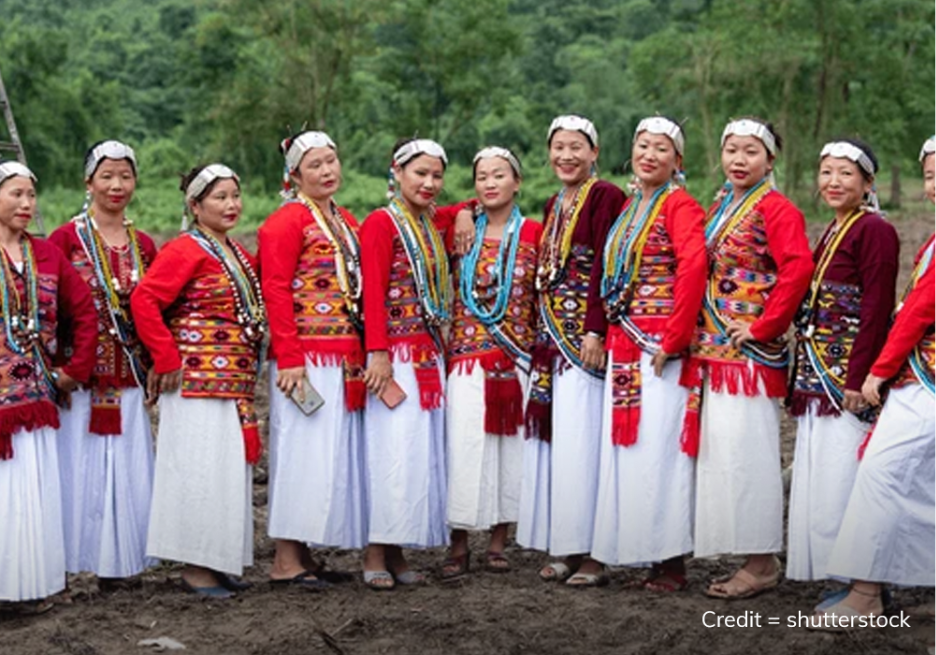
- Wraps and Skirts: The primary garment is typically a sleeveless chemise or a long piece of cloth wrapped around the body as a skirt. The Apatani tribe, for example, wears a wrap-around skirt, while women from the Adi tribe wear a skirt called a gale. These garments are woven from cotton or wool and feature bold, geometric patterns.
- Shawls and Jackets: To combat the cold, women wear intricately woven shawls and jackets. These are often dyed in deep reds, blacks, and yellows, and are decorated with patterns that are unique to each tribe.
- Fabrics and Colors: The fabrics are handwoven from locally sourced cotton and wool. The colors are brilliant and symbolic, derived from natural dyes, with black, red, yellow, and green being prominent.
Men’s Attire
Men’s attire is functional, reflecting a life connected to nature, hunting, and farming, yet it is also highly decorative.
- Loincloths and Jackets: A sleeveless jacket made of wool or cotton, often in a striking black or red, is a common upper garment. This is traditionally paired with a loincloth, a simple strip of fabric passed between the legs and held by a waistband.
- Shawls: Like the women, men wear handwoven shawls for warmth and as a marker of their tribe. These shawls can be decorated with tribal motifs, beads, and even animal hair.
- Headgear: Perhaps the most striking accessory for men is the traditional headgear. This can range from a simple bamboo cap to an elaborate headdress adorned with feathers, boar tusks, and hornbill beaks, signifying the wearer's status and achievements as a warrior or hunter.
Jewelry & Accessories
Jewelry in Arunachal Pradesh is bold, organic, and deeply symbolic, made from materials sourced directly from the environment.
- Beaded Necklaces: Multi-stranded beaded necklaces are a staple for both men and women. Made from colorful glass beads, stones, and seeds, these necklaces, known as lekemen or ador, are a sign of wealth and social standing.
- Earrings and Headpieces: Large, heavy earrings made from bamboo, beads, or silver are common. Women from tribes like the Apatani are also historically known for their distinctive nose plugs. Headpieces made of cane, beads, and feathers are worn during festivals.
Crafts, Textile Techniques & Prints
The heart of Arunachal's stylistic heritage lies in its weaving and dyeing traditions, skills that are passed down from mother to daughter.
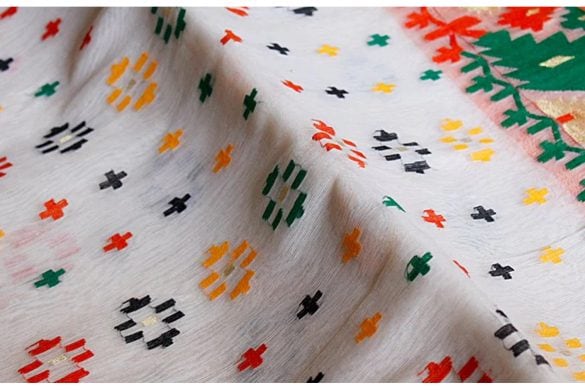
- Handwoven Shawls and Textiles: Weaving is an integral part of life for many tribes. Using simple loin looms, women create stunning textiles with complex geometric and abstract patterns. Each tribe has its own repertoire of motifs, which can represent natural elements, animals, or mythological symbols.
- Tribal Patterns: The patterns are not just decorative; they are a form of identity. The zig-zag lines, diamonds, and triangular motifs found on the textiles of the Adi, Apatani, and Mishmi tribes are distinct and instantly recognizable.
- Natural Dyeing Techniques: Traditionally, all colors were derived from natural sources like plants, roots, and minerals. The deep reds, rich indigos, and bright yellows are all created using age-old dyeing techniques that are sustainable and environmentally friendly.
Cultural Context – Lifestyle, Tradition & Heritage Influences
The clothing of Arunachal Pradesh is a direct response to its environment and a reflection of its rich tribal culture. The cold climate necessitates the use of warm fabrics like wool and the practice of layering garments. The wrap-style clothing is practical for a life of farming and foraging in the hills.
The clothing and accessories are deeply embedded in the social and spiritual fabric of the community. The patterns on a shawl can tell you which tribe the wearer belongs to, while a man's headdress can narrate his life's achievements. The connection to nature is paramount; materials like bamboo, cane, feathers, and seeds are not just resources but are considered sacred elements that connect the wearer to the spirit of the forest. This animistic worldview is central to the identity and aesthetics of the people.
When & How These Styles Are Worn Today
While traditional attire is reserved for special occasions in urban areas, it is still a part of daily life in many remote villages.
- Everyday vs. Special Occasions: A simple handwoven shawl or jacket might be worn for warmth on a daily basis. For festivals like Losar, Solung, or Nyokum, people don their most elaborate traditional outfits, complete with intricate jewelry and magnificent headgear.
- Modern Reinterpretations: The bold patterns and vibrant colors of Arunachal's textiles are increasingly inspiring contemporary designers. You can find jackets, dresses, and bags featuring tribal motifs. The handwoven shawls and scarves are popular as statement accessories that can be paired with modern outfits.
- Styling Tips:
- Drape a colorful Arunachal shawl over a simple dress or a jeans-and-t-shirt combination to add a touch of bohemian chic.
- Incorporate a beaded necklace as a statement piece to elevate a casual or formal look.
- Use a woven textile as a decorative throw or wall hanging to bring a piece of tribal art into your home.
Why It Matters – Heritage, Identity & Fashion Inspiration
Preserving the textile and craft traditions of Arunachal Pradesh is crucial for safeguarding the unique cultural identity of its diverse tribes. Each handwoven fabric is a repository of ancestral knowledge, stories, and skills. Supporting these crafts helps sustain the livelihoods of artisans, particularly women, who are the primary custodians of this heritage.
In a world of homogenized fashion, the authentic, handcrafted styles of Arunachal Pradesh offer a powerful and inspiring alternative. They showcase the beauty of sustainable practices, the richness of cultural diversity, and the timeless appeal of designs that are deeply connected to nature and community.
Explore the Spirit of the Mountains
The stylistic heritage of Arunachal Pradesh is a vibrant and powerful expression of tribal identity, artistic skill, and a deep reverence for nature. From the intricate geometry of a handwoven shawl to the majestic splendor of a hornbill headdress, every element tells a story of a people and their land.
We encourage you to discover this captivating world. Consider adding a piece of Arunachal's artistry to your life, whether it's a beautifully woven scarf, a bold beaded necklace, or a unique piece of textile art. By doing so, you are not only embracing a stunning aesthetic but also celebrating and supporting one of India's most precious and diverse cultural legacies.