Goa, India's sun-drenched coastal jewel, is a land of idyllic beaches, swaying palm trees, and a culture that dances to a unique rhythm. Its vibrant spirit is a captivating blend of Indian traditions and over 450 years of Portuguese influence, creating a heritage that is both familiar and exotic. From its whitewashed churches and colorful colonial-era homes to its spirited carnivals and laid-back susegad lifestyle, Goa’s identity is unlike any other.
This unique cultural fusion is beautifully reflected in its traditional clothing and textile crafts. The tropical climate, with its warm and humid weather, has always favored lightweight, breathable fabrics. At the same time, the state’s long history as a Portuguese colony introduced European sensibilities that merged with local styles, creating a distinctive fashion landscape. Today, these rich traditions continue to inspire modern and resort wear, weaving a story of coastal charm and cross-cultural elegance.
Traditional Clothing / Ethnic Wear
Goan attire is a fascinating mix of indigenous and colonial styles, characterized by its comfort, color, and unique silhouettes. The clothing reflects a relaxed coastal lifestyle while honoring a rich and layered history.
Women’s Attire
The traditional clothing for Goan women showcases a beautiful interplay between Indian and Portuguese aesthetics.
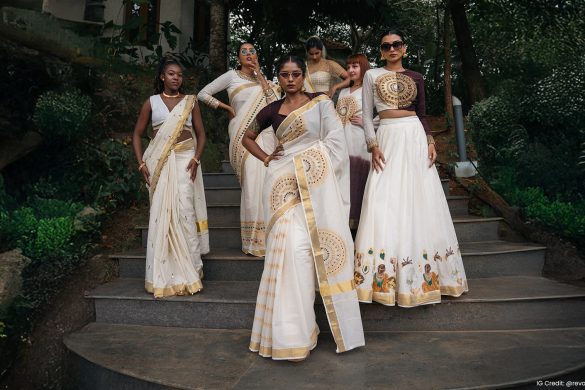
- Kunbi Saree: This is the original garment of the indigenous Kunbi tribe of Goa. It is a simple yet striking cotton saree, typically in a deep red color with a distinctive checkered pattern. Worn draped just below the knee, it was designed for women working in the paddy fields. The Kunbi saree is a powerful symbol of Goa’s pre-colonial heritage.
- Pano Bhaju: This is a traditional Christian outfit, consisting of a pano (a wrap-around sarong or lungi) and a bhaju (a loose blouse with lace trim). It is a beautiful example of cultural fusion, combining an Indian-style lower garment with a European-inspired blouse.
- Indo-Portuguese Dresses: Goan Catholic women traditionally wore elaborate gowns and dresses inspired by European fashion, often featuring lace, frills, and intricate embroidery. These floor-length dresses, known as vestidos, were worn for special occasions and church services.
Men’s Attire
Men's traditional wear in Goa is simple, comfortable, and well-suited to the tropical climate, with clear Western influences.
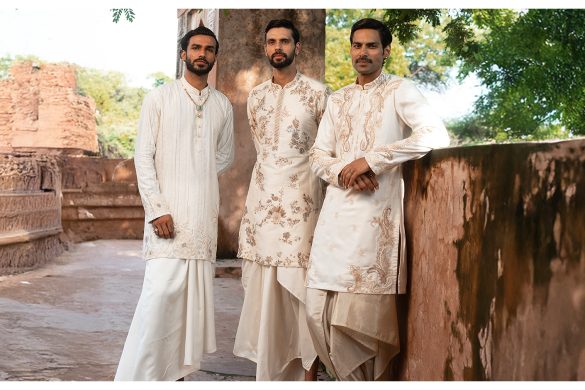
- Dhoti and Kurta: For Hindu men, a simple cotton dhoti paired with a kurta or shirt has been the traditional attire for daily wear and religious ceremonies.
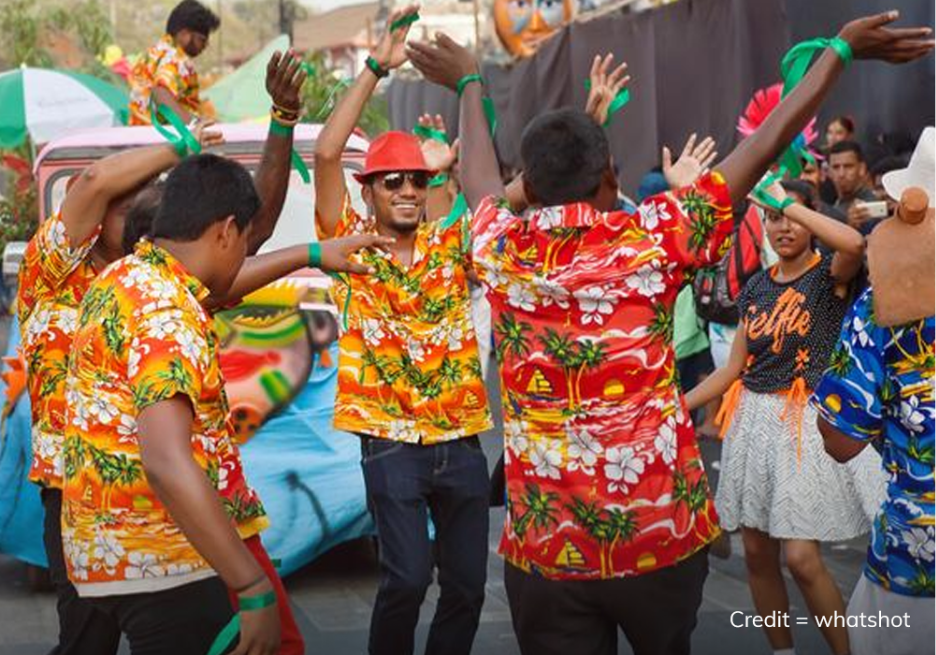
- Western-Inspired Shirts: Due to the long period of Portuguese rule, trousers and shirts became common attire for men much earlier than in other parts of India. Brightly colored, often floral-printed shirts are now synonymous with the Goan holiday vibe.
- Accessories: A simple cloth shawl and a hat for sun protection were common accessories.
Jewelry & Accessories
Goan jewelry reflects both its Hindu and Christian traditions, with a special emphasis on intricate gold craftsmanship.
- Gold Ornaments: Goan goldsmiths are renowned for their skill. Traditional Hindu jewelry includes pieces like the galsiri (a necklace of gold and coral beads) and the pake (leaf-shaped ear cuffs).
- Bangles and Anklets: Stacks of glass bangles and simple gold or silver anklets are common accessories for women.
- Rosaries and Crosses: For the Christian community, delicate gold crosses and rosaries are important pieces of jewelry, worn as symbols of faith.
Crafts, Textile Techniques & Prints
While not as famous as other textile hubs, Goa has its own unique craft traditions that are deeply connected to its history and environment.
- Kunbi Weaving: This is the most significant handloom tradition of Goa. Weavers use simple pit looms to create the iconic checkered Kunbi sarees from pure cotton. The craft had nearly vanished but is now being revived by local designers and cooperatives who are working to preserve this important piece of Goan heritage.
- Crochet Lacework: A skill introduced by the Portuguese, crochet and lace-making became a popular pastime for Goan women. Intricate lace was used to adorn blouses, dresses, and household linens, adding a touch of European delicacy to local textiles.
- Natural Dyeing Techniques: The traditional Kunbi sarees were colored using natural dyes extracted from local plants and minerals. The deep red color, for instance, was often derived from iron ore found in the region.
Cultural Context – Lifestyle, Tradition & Heritage Influences
Goa’s clothing and crafts are a direct product of its coastal geography, relaxed lifestyle, and unique historical journey. The tropical climate makes light, airy fabrics like cotton a necessity. The designs, from the knee-length Kunbi saree to the loose-fitting Pano Bhaju, are practical for a life lived by the sea and in the fields.
The most profound influence on Goan style is its history of Portuguese colonization. This led to a widespread adoption of Western-style clothing, particularly among the Goan Catholic community. However, instead of completely replacing local attire, it merged with it, creating a unique Indo-Portuguese aesthetic. Traditions of modesty were expressed differently in the Hindu and Christian communities, with the former favoring the saree and the latter adopting more tailored dresses and blouses. The vibrant folk traditions of Goa, including dances like the Fugdi and Dhalo, are occasions where traditional garments like the Kunbi saree are worn with great pride.
When & How These Styles Are Worn Today
While Western clothing is now predominant in daily life, Goan traditional styles are experiencing a revival, celebrated for their cultural significance and unique charm.
- Everyday vs. Special Occasions: While the Pano Bhaju and traditional gowns are now reserved for cultural performances and special festive occasions, the spirit of Goan style lives on in the brightly colored, comfortable clothing favored by locals and tourists alike. The Kunbi saree is being revived for both festive and daily wear by those passionate about heritage.
- Modern Reinterpretations: Contemporary designers are re-imagining Goan traditions for the modern wardrobe. The Kunbi saree’s checkered pattern is being used on dresses, scarves, and shirts. The relaxed silhouette of the Pano Bhaju has inspired modern resort wear. Crochet and lace details are a popular embellishment on contemporary clothing.
- Styling Tips:
- Pair a revived Kunbi saree with simple terracotta or silver jewelry for an earthy, authentic look.
- Incorporate a piece with crochet or lace detailing into your outfit for a touch of vintage Goan elegance.
- Embrace the Goan spirit with brightly colored floral or printed shirts, paired with linen trousers or shorts for a perfect holiday look.
Why It Matters – Heritage, Identity & Fashion Inspiration
Preserving the craft traditions of Goa, especially the art of Kunbi weaving, is about safeguarding a vital part of the state's indigenous identity. It is a connection to a history that predates colonial influence and a testament to the resilience of local culture. Supporting these crafts helps sustain the livelihoods of artisans and ensures that these unique skills are not lost to time.
In a world full of fast fashion, the authentic, handcrafted, and culturally rich styles of Goa offer a refreshing and inspiring alternative. They provide a blueprint for a relaxed, joyful, and sustainable approach to fashion, proving that true style is a beautiful blend of heritage, comfort, and personal expression.
Discover the Susegad Style of Goa
Goa's stylistic heritage is a captivating tale of cultural fusion, coastal living, and artistic resilience. From the rustic charm of the Kunbi saree to the delicate elegance of Portuguese lace, every element speaks of a land that embraces its past while living fully in the present.
We encourage you to explore this world of relaxed elegance. Consider seeking out a handwoven Kunbi textile, a piece of clothing with delicate crochet work, or simply embrace the vibrant, easy-going spirit of Goan fashion in your own style. By doing so, you are not only adopting a beautiful and comfortable aesthetic but also celebrating a unique cultural legacy that is as warm and inviting as a Goan sunset.